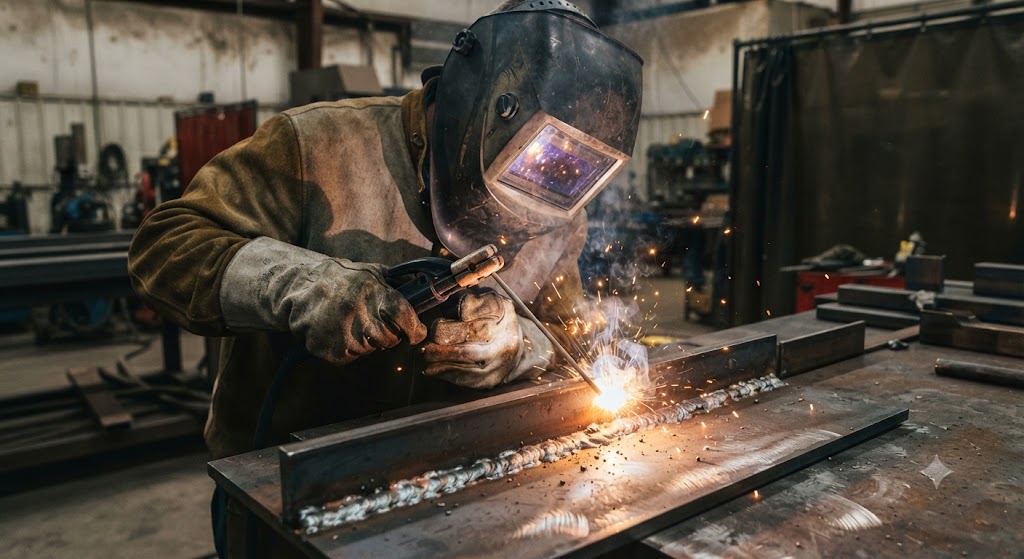
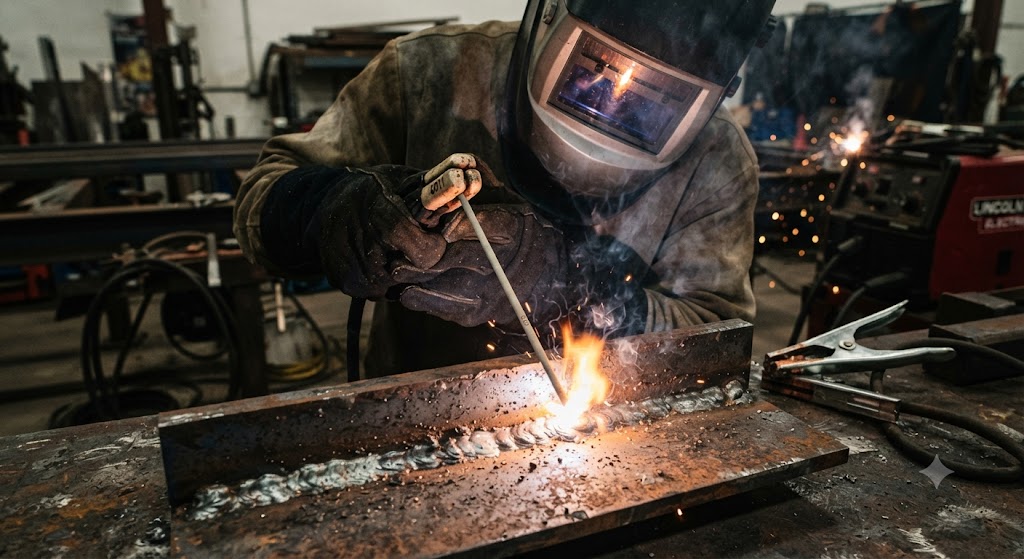
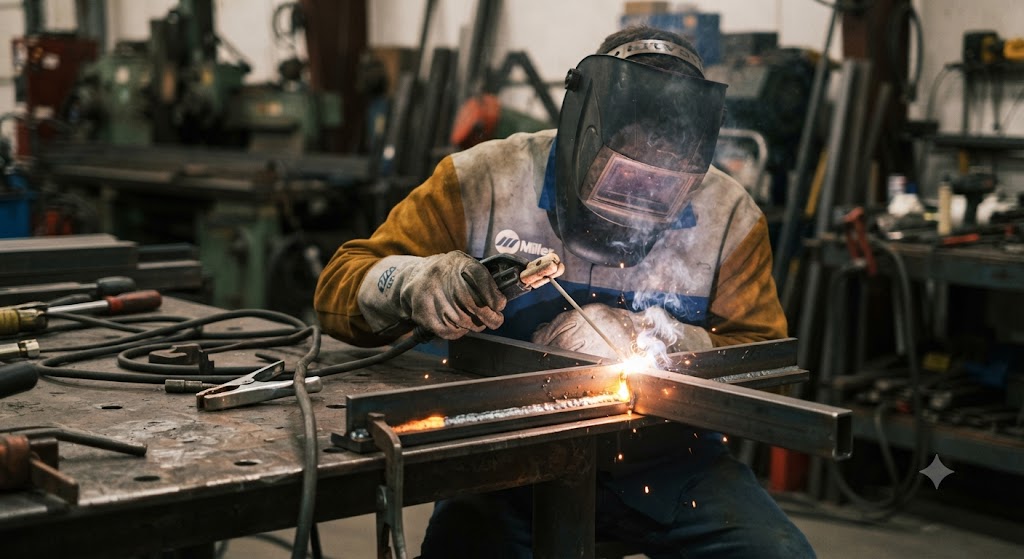
Alambre de soldadura con núcleo fundente para acero inoxidable: configuración para trabajos en interiores y exteriores
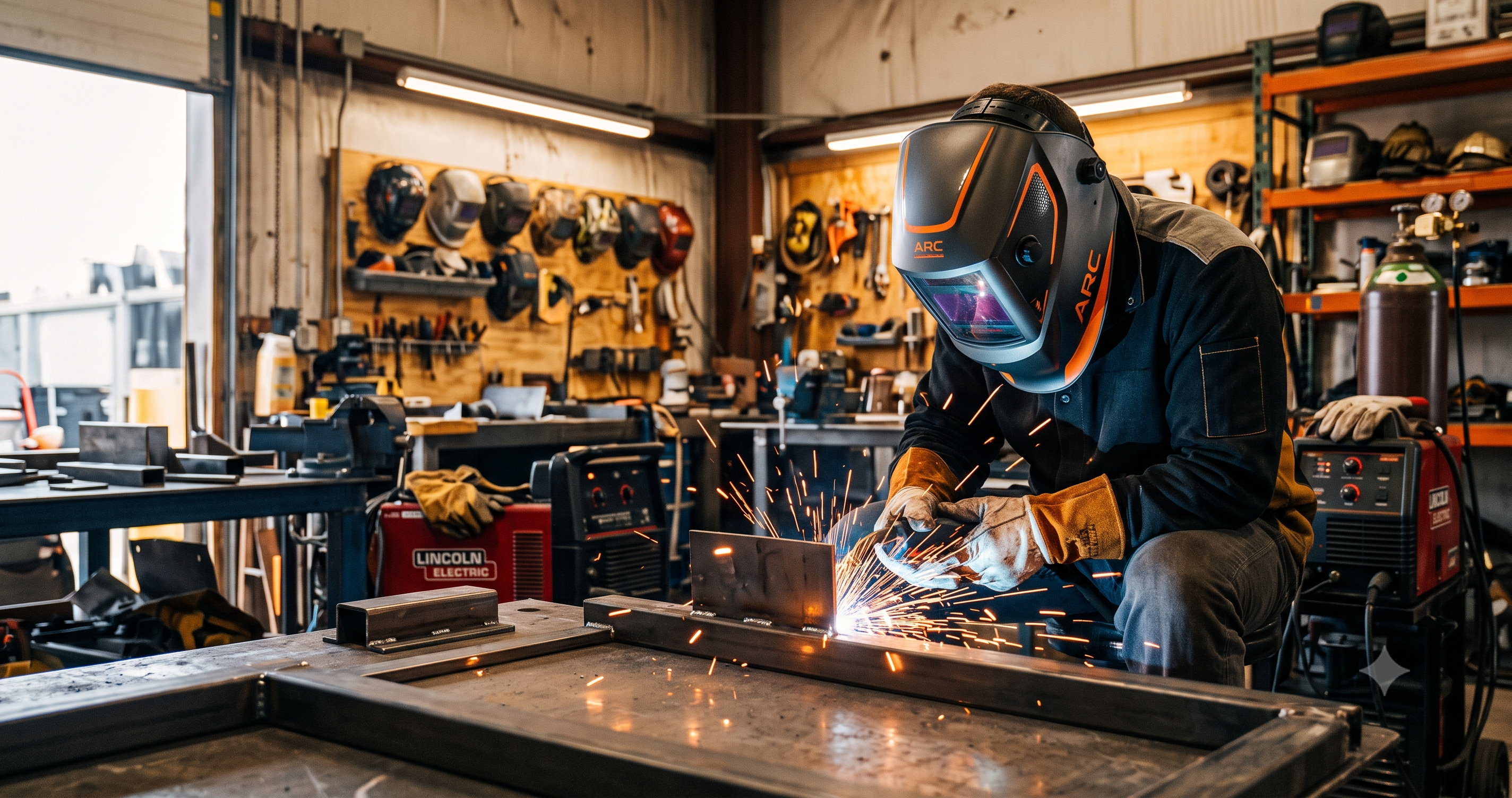
A cracked stainless handrail on an outdoor stairway is the job that convinces people gasless stainless wire exists for a reason. The rail is bolted in place, the wind comes off the parking lot, and nobody is carrying a bottle of tri-mix up two flights of stairs for a six inch repair.
Stainless flux core handles that job. It also produces a weld that looks nothing like the TIG bead next to it, and that is the honest tradeoff you accept.
What stainless flux core wire is
Flux core welding wire for stainless steel is a tubular wire with a stainless alloy sheath and flux inside. The most common self-shielded type is E308LFC-O, which suits 304, 304L, 308, 308L and related austenitic grades. The flux generates its own shielding and forms slag over the bead, so no external gas is required.
The direct answer for setup: run E308LFC-O on DC electrode negative, keep stickout around 1/2 inch to 3/4 inch, drag the gun, use lower heat than you would on carbon steel because stainless holds heat, and chip every pass. Expect a duller, rougher bead than a gas-shielded stainless weld, and expect more fume.
Matching the wire to the base metal
Getting the alloy right matters more on stainless than on mild steel, because the wrong filler produces a joint that corrodes faster than the metal around it.
| Base metal | Common self-shielded wire | Notes |
|---|---|---|
| 304, 304L, 308, 308L | E308LFC-O | The standard choice for most stainless fabrication |
| 321, 347 | E308LFC-O | Generally acceptable for repair work |
| 316, 316L | E316LFC-O | Use the matching grade for marine and chemical exposure |
| 430 ferritic | E308LFC-O | Often used for repair, check service conditions |
| Stainless to mild steel | 309 type filler | Do not use 308 for dissimilar joints |
That last row matters. Welding stainless to carbon steel with 308 filler produces a brittle joint. A 309 type filler is the correct answer, and it is worth ordering specifically rather than making do with what is on the shelf.
Wire worth buying, and the downside of each
Blue Demon 308LFC-O in 0.035 inch
The Blue Demon 308LFC-O 0.035 inch 10 pound spool is the wire most fabrication shops reach for when they want a working supply rather than a repair spool. It runs consistently, feeds well through a standard liner, and the alloy chemistry is what you expect it to be.
The flaw is spool size for occasional users. A 10 pound spool of stainless flux core left on a machine for a year in a humid shop will absorb moisture, and damp stainless flux core produces porosity that is very visible against the bright metal. Buy this if you use stainless regularly. Skip it if your stainless work amounts to a repair every few months.
YESWELDER E308LFC-O in 0.030 inch
The YESWELDER stainless flux core wire in 0.030 inch, 2 pound spool is the right size for occasional work and the smaller diameter suits thinner stainless, which is what most people are actually repairing: handrails, brackets, light tube.
What it gives up is arc smoothness on heavier sections. On 1/4 inch stainless the smaller wire runs cold unless you push the machine, and you end up making more passes than the job needs. Anyone welding heavier stainless plate should step up a diameter.
ARCCAPTAIN E308LFC-O in 0.035 inch
The ARCCAPTAIN stainless flux cored wire in 0.035 inch is a middle option, sold in sizes that suit a home shop, with reasonably low spatter for a self-shielded stainless wire.
Its weak point is consistency across spools compared with the long-established brands. For repair work this rarely matters. For anything where the joint chemistry needs to be defensible, use a wire from a manufacturer publishing full certification data.
Settings, indoors and out
Stainless conducts heat more slowly than carbon steel and expands more when hot. Both facts change your setup.
Run cooler than you would on mild steel. Roughly 10 to 15 percent lower heat input for the same thickness. Stainless holds the heat you put in, so the puddle keeps growing after you would expect it to stop.
Watch distortion. Thin stainless warps dramatically. Tack frequently, at closer intervals than you would on steel, and skip around the joint rather than running one continuous bead.
Stickout around 1/2 inch to 3/4 inch, drag angle 15 to 20 degrees, same as carbon steel flux core.
Outdoors, this process shines. No gas to blow away, and light wind is not a problem.
Indoors, ventilation stops being optional. Stainless contains chromium, and welding converts some of it to hexavalent chromium, which OSHA regulates under a dedicated standard. That is not a formality, it is a carcinogen. Use extraction at the arc, not just an open window.
What the finished weld looks like
Set expectations honestly. Self-shielded stainless flux core produces a bead that is darker, rougher and more heavily oxidised than gas-shielded MIG or TIG. The slag is heavier and clings harder than mild steel slag, and the heat-affected zone discolours across a wider band.
After cleaning, most people wire brush with a dedicated stainless brush, then either passivate with a pickling paste or accept the appearance. Using a brush that has touched carbon steel embeds iron particles and causes rust spots on stainless within weeks, which is one of the most common and most avoidable mistakes on stainless work.
Where this process is the wrong tool
- Food contact, sanitary or pharmaceutical work. These require clean, crevice-free welds that only TIG produces.
- Thin decorative stainless. Warping and appearance both work against you.
- Anything where corrosion resistance is critical and inspected. The heavier oxidation and slower cooling of self-shielded welds work against the passive layer.
- Indoor shops without fume extraction. Hexavalent chromium is the reason.
For those jobs, TIG with a matching filler and back purging is the process, and there is no shortcut around it.
Machines that run stainless flux core
Any wire feed machine capable of DC electrode negative will run it, though wire quality and drive system quality matter more with stainless than with mild steel because the wire is stiffer.
The YESWELDER 165A dual voltage multiprocess machine handles flux core, MIG, stick and lift TIG on either voltage, which makes it a practical single machine for a shop that occasionally works in stainless. The included gun is basic and benefits from a liner upgrade for stainless work, and support is thinner than the legacy brands.
For better feeding on stiffer stainless wire, a machine with a well-engineered drive like the Millermatic 142 makes a noticeable difference. It is a 120 volt machine capped around 3/16 inch though, so anyone welding heavier stainless will want more capacity.
Final verdict
Stainless flux core is a repair and field process, and inside that role it is genuinely valuable. E308LFC-O on the right base metal, DC electrode negative, cooler settings than mild steel, a drag angle, and a stainless-only wire brush afterwards.
What separates a good stainless flux core repair from a bad one is not the arc at all. It is the housekeeping: a dedicated brush, thorough slag removal, and enough restraint in heat input that the panel does not oil-can. Those are three habits, not three skills, and they are worth more than any wire upgrade you could buy.
Frequently asked questions
What flux core wire is used for stainless steel? E308LFC-O is the standard self-shielded wire for 304 and 308 grade stainless. E316LFC-O suits 316 grades, and a 309 type filler is required for joining stainless to carbon steel.
Do you need gas for stainless flux core wire? Not for self-shielded types like E308LFC-O. Gas-shielded stainless flux core also exists and produces cleaner results with the addition of a shielding gas mix.
What polarity for stainless flux core? DC electrode negative for self-shielded wire, the same as self-shielded mild steel flux core.
Does stainless flux core weld look as good as TIG? No. Expect a darker, rougher bead with heavier slag and broader discolouration. For visible or sanitary work, TIG is the correct process.
Can I weld stainless to mild steel with 308 wire? No. Use a 309 type filler for dissimilar joints. A 308 filler on a stainless to carbon steel joint produces a brittle weld.
Is welding stainless dangerous? Stainless welding generates hexavalent chromium fume, which is a regulated carcinogen. Use effective ventilation or local extraction, particularly indoors.
Why does my stainless weld rust afterwards? Usually iron contamination from a wire brush or grinding disc previously used on carbon steel. Keep stainless brushes and abrasives separate.
What settings should I use for stainless flux core? Run roughly 10 to 15 percent cooler than mild steel of the same thickness, with 1/2 inch stickout and a 15 to 20 degree drag angle. Tack frequently to control distortion.