Alambre soldado galvanizado: tipos de recubrimiento, usos y configuración
Galvanized Welded Wire: What to Buy and How to Use It
The first time you unroll a galvanized welded wire fence and see those shiny silver intersections, you might think it will last forever. It will not. The welds are the weakest point, and if the wire was galvanized before welding, those joints are bare steel exposed to rain, dew, and soil contact. Give it three seasons and the rust starts at every cross point, crawling outward along the grid until the whole panel looks like it was dipped in tea.
Galvanized welded wire is a grid of low-carbon steel wires fused at each crossing point by resistance welding, then coated with zinc to slow corrosion. It comes in rolls and rigid panels, in mesh openings from 1/4 inch up to 6 inches, and in wire gauges from 23 gauge (about 0.6 mm) down to 10 gauge (about 3.4 mm). The specification that matters more than any other is the coating method: galvanized before weld (GBW) or galvanized after weld (GAW).
If you are fencing a garden bed or building a temporary animal enclosure, GBW wire in 16 gauge with 1/2 x 1 inch or 2 x 4 inch mesh will serve for a few years. If you want a fence that survives ground contact, snow load, and a decade of weather, buy GAW wire. The zinc bath covers every weld joint, and the difference in lifespan is not small. It is the difference between replacing the fence in five years and forgetting it exists.
Galvanized Before Weld vs Galvanized After Weld
GBW is the common wire you see at every hardware store. The manufacturer takes pre-galvanized wire, welds it into a grid, and ships it. The welding heat burns off the zinc at every intersection, leaving bare steel. Those exposed joints are where rust begins, and no amount of paint will seal them permanently. GBW wire carries a Class 1 zinc coating, which typically lasts 5 to 7 years outdoors depending on moisture and soil contact.
GAW reverses the process. The wire is welded first, then the entire grid is dipped in molten zinc. Every weld, every cut end, every intersection gets coated. The zinc layer is thicker, the coverage is complete, and the result is a product that can last 15 to 20 years in the same conditions where GBW fails. GAW wire is what you want for anything touching soil, holding livestock, or standing in weather year-round.
| Specification | GBW (Galvanized Before Weld) | GAW (Galvanized After Weld) |
|---|---|---|
| Coating coverage | Wire is coated, welds are not | Entire grid including welds |
| Typical lifespan | 5 to 7 years outdoors | 15 to 20 years outdoors |
| Soil contact | Not recommended | Suitable |
| Surface finish | Smooth, shiny | Slightly rougher, matte |
| Best for | Temporary fencing, garden use | Permanent fencing, animal enclosures |
Who should skip GAW: if you need a short-term barrier for a garden plot you will reconfigure next season, the extra zinc is wasted on you. Buy GBW and move on.
Choosing Galvanized Welded Wire Mesh and Gauge
The mesh opening and wire gauge work together. Smaller openings need lighter wire to stay workable. Larger openings can carry heavier wire for structural strength.
For small animal enclosures like rabbit hutches or chicken coop ventilation openings, 1/2 inch mesh in 19 gauge (about 1 mm) keeps out mice and snakes while letting air through. The wire is thin enough to cut with hand snips and bend around corners. The Amagabeli hardware cloth in 1/2 inch, 19 gauge, hot-dipped galvanized after welding, is the standard for this category. Its flaw is that 19 gauge is genuinely thin. A determined raccoon can bend it, and a large dog can tear it if the panel is not backed by a frame. Skip it if you are fencing against anything bigger than a rabbit.
For general-purpose fencing, garden barriers, and property dividers, 1/2 x 1 inch or 2 x 4 inch mesh in 16 gauge hits the sweet spot. The Fencer Wire galvanized welded fence in 16 gauge with 1 x 1/2 inch mesh is a typical GBW roll. It is stiff enough to hold its shape on T-posts, and the mesh is tight enough to keep out most garden pests. The drawback is the GBW coating. The welds will rust first, and within a few years the intersections will show orange. If you live somewhere with hard winters and road salt, expect it sooner.
For livestock and heavy-duty perimeter fencing, 14 gauge with 2 x 4 inch mesh is the baseline. The YARDGARD 14-gauge galvanized welded wire fence in 2 x 4 inch mesh, 48 inch height, is built for this tier. It is rigid, holds up to animal pressure, and the 14 gauge wire resists bending by hand. Its weakness is the same GBW issue. The welds are uncoated, and in wet climates the rust starts there. If you need this gauge for a permanent installation, look for a GAW or vinyl-coated version instead.
Welded Wire Fabric in Construction
Welded wire fabric, sometimes called welded wire reinforcement, is the same product category applied to concrete. The grid replaces or supplements rebar in slabs, driveways, and walls. The Wire Reinforcement Institute notes that welded wire reinforcement provides tensile bridging that controls crack width when properly bonded within the concrete.
For residential slabs, 6 x 6 inch mesh in 10 gauge (W1.4) is the standard. The spacing refers to the grid pattern, not the wire thickness. Heavier applications use 6 x 6 in 6 gauge (W2.9) or even 4 x 4 patterns. The wire is designated by a letter-number system: W for smooth wire, D for deformed, followed by the cross-sectional area in hundredths of a square inch.
If you are pouring a driveway or a shed pad, 6 x 6 W2.9 mesh on chairs (not just laid on the ground) will keep hairline cracks from widening. The mesh does not prevent cracking. It holds the cracked pieces together so the slab stays serviceable.
Welding and Repairing Galvanized Welded Wire
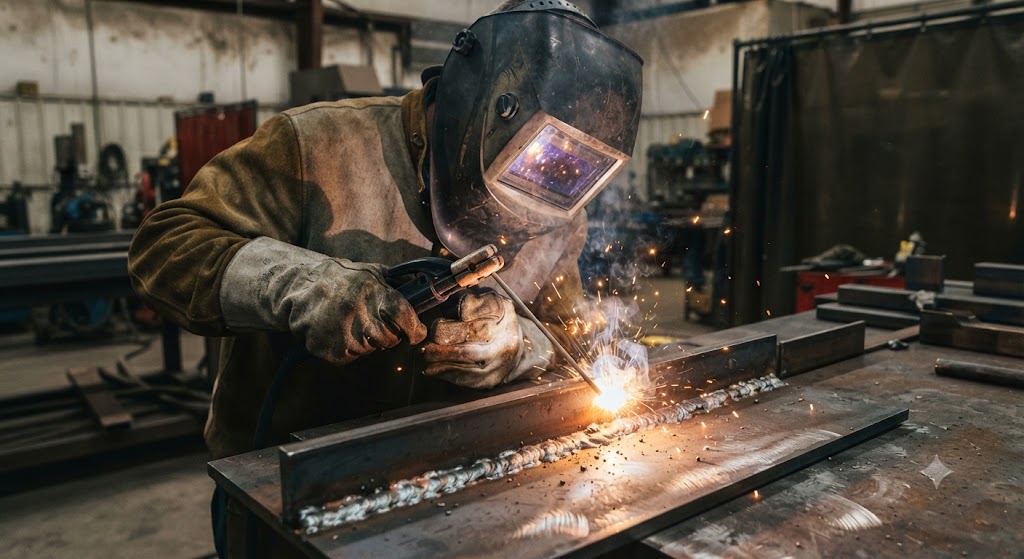
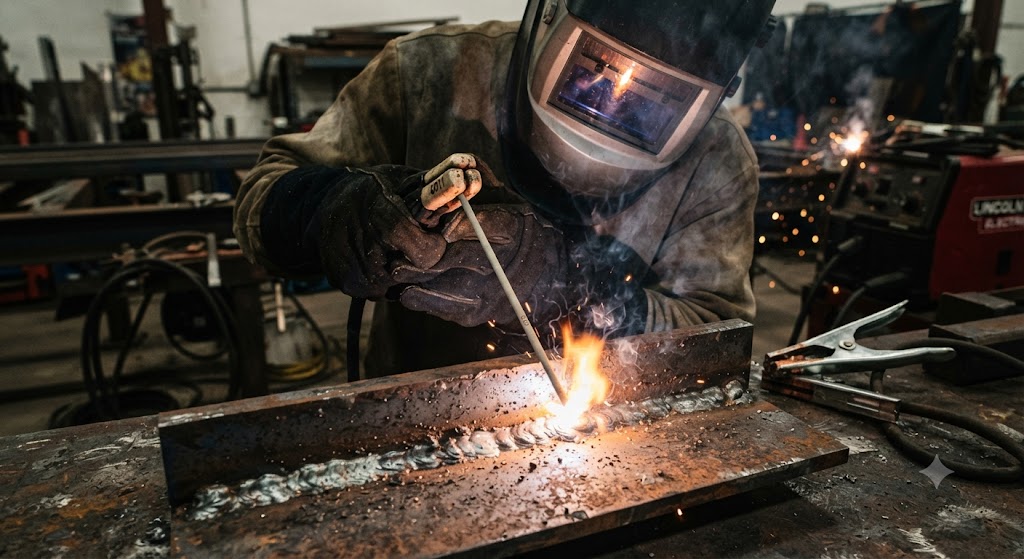
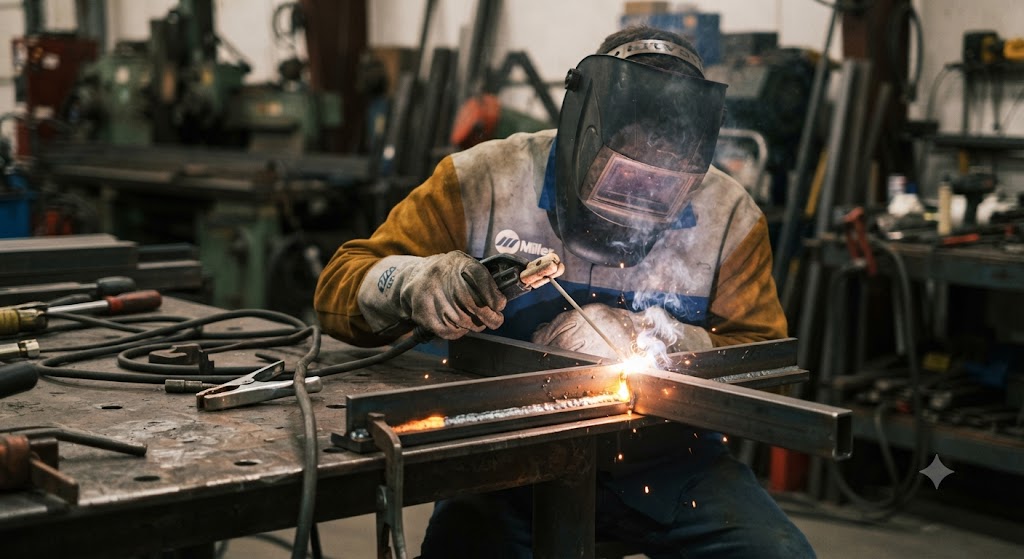
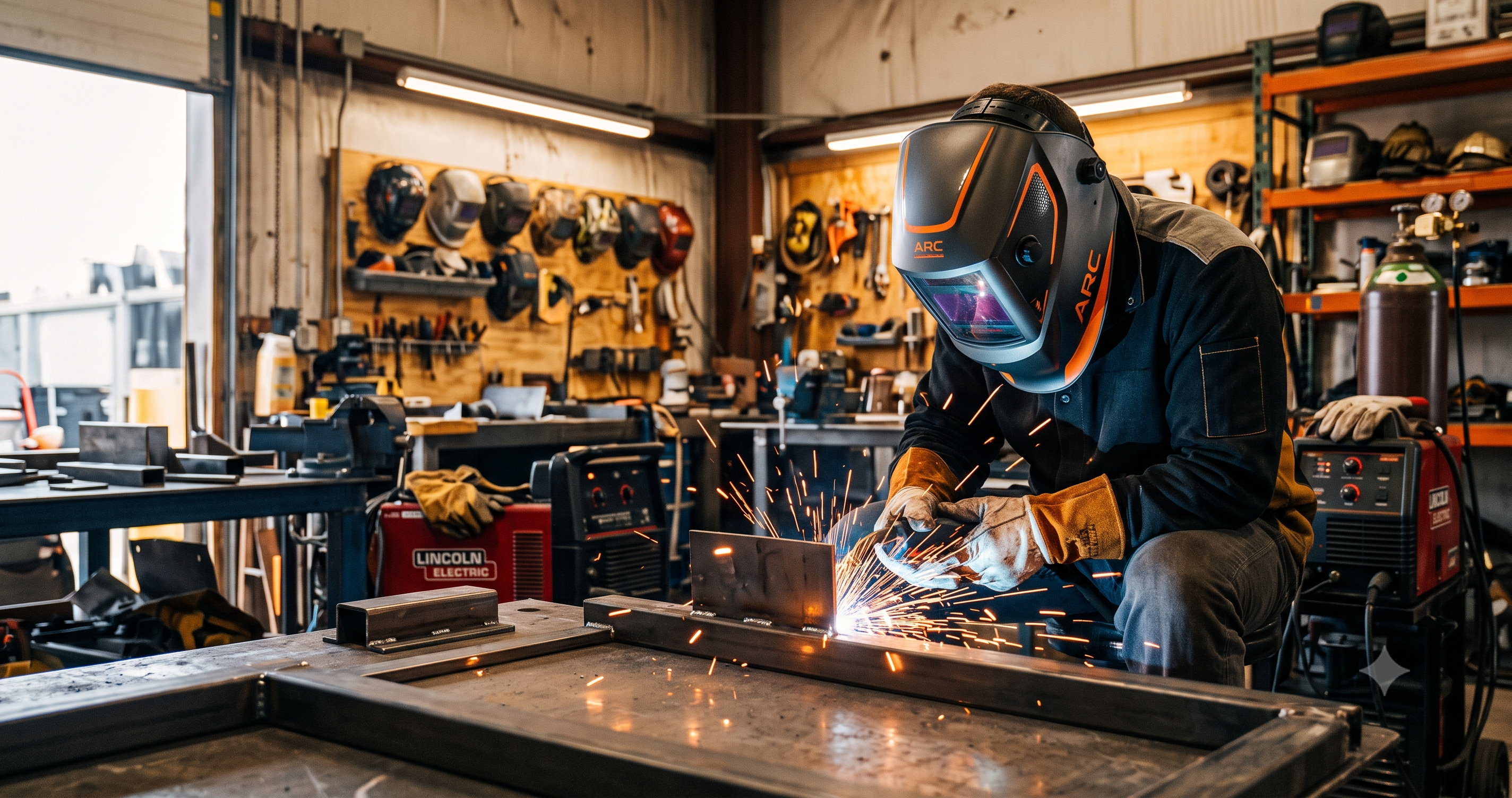
When you need to repair a torn panel or fabricate a custom frame from galvanized welded wire, the zinc coating changes your welding approach. Zinc vaporizes at a lower temperature than steel melts, and welding through galvanizing produces fumes that can cause metal fume fever. Work in ventilated conditions and wear respiratory protection.
For MIG welding galvanized steel, ER70S-6 wire under the AWS A5.18 specification is the standard choice. The higher silicon deoxidizer and manganese deoxidizer content in ER70S-6 handles the zinc contamination better than ER70S-3, which has fewer deoxidizers and is meant for clean steel. ER70S-2 adds a triple deoxidizer blend (aluminum, titanium, zirconium) for even more tolerance to surface contamination, though it is harder to find in spooled MIG form.
Wire diameter matters for control. For thin galvanized mesh (16 gauge and lighter), 0.030 inch wire diameter keeps the heat input low enough to avoid blowing holes. For heavier 14 gauge or structural steel, 0.035 or 0.045 inch wire deposits more metal per pass.
Shielding gas also affects the weld. A 75/25 argon-CO2 mix produces a more stable arc and smoother bead than 100% CO2, especially on thinner material. Pure CO2 penetrates deeper but spatters more and runs hotter, which can be a problem on thin mesh. For galvanized work, the 75/25 mix is easier to control.
If you are working with stainless welded wire mesh instead of galvanized, the filler metal changes. ER308L (AWS A5.9) welds 304 and 308 stainless, and the L designation means low carbon, which resists carbide precipitation and corrosion in the heat-affected zone. ER316L adds molybdenum for chloride resistance, making it the choice for marine or salt-exposed installations.
What to Buy
For a chicken coop or small animal enclosure where predator resistance matters, buy GAW hardware cloth in 1/2 inch mesh. The Amagabeli 1/2 inch hardware cloth is hot-dipped galvanized after welding and covers the coop openings where raccoons and snakes actually test the wire.
For a garden fence or property divider that you want to last but do not need to stop predators, the Fencer Wire 16 gauge galvanized welded wire in 1 x 1/2 inch mesh is adequate. Accept that the welds will rust within a few years and plan to replace or repaint.
For livestock or a dog run where the wire takes daily animal pressure, step up to YARDGARD 14 gauge in 2 x 4 mesh. The heavier wire holds up to leaning, scratching, and pushing. Skip it for small animals that can squeeze through 2 x 4 openings.
The Bottom Line
The galvanized welded wire you buy is defined by two choices: the coating method and the gauge. Get GAW for anything permanent. Get GBW for temporary work where you accept the trade. Match the mesh to the animal or application, and when you need to weld repairs, use ER70S-6 with 75/25 gas and ventilate for the zinc. The fence that lasts is the one where you read the label before you unrolled it.
Frequently Asked Questions
What is welded wire fabric?
Welded wire fabric is a grid of steel wires welded at every intersection, used as reinforcement in concrete slabs, driveways, and walls. It controls crack width by holding concrete pieces together after cracking occurs.
What does galvanized before weld mean?
Galvanized before weld (GBW) means the individual wires were zinc-coated first, then welded into a grid. The welding heat burns off the zinc at the intersections, leaving bare steel that rusts. GBW is the cheaper, more common coating type.
What does galvanized after weld mean?
Galvanized after weld (GAW) means the wire was welded into a grid first, then the entire grid was dipped in molten zinc. Every intersection and cut end is coated, giving the mesh 15 to 20 years of rust resistance versus 5 to 7 for GBW.
Can you weld galvanized welded wire?
Yes, but the zinc coating produces fumes that can cause metal fume fever. Use ER70S-6 MIG wire (AWS A5.18) for its higher deoxidizer content, work in ventilated conditions, and grind the zinc off the weld area when possible.
What gauge welded wire do I need for a dog kennel?
14 gauge is the minimum for a dog kennel where the animal will lean on and scratch the fence. 16 gauge works for small dogs in a supervised run, but a large breed will push through 16 gauge over time.
What is the difference between welded wire and woven wire?
Welded wire has fused joints at every intersection, making it rigid and dimensionally stable. Woven wire (like chicken wire or hex netting) has twisted joints that flex. Welded wire is stronger and more predator-resistant. Woven wire is easier to install over uneven ground.
Does galvanized welded wire rust?
All galvanized steel eventually rusts when the zinc coating is consumed. GBW wire rusts at the welds first because those points are uncoated. GAW wire rusts evenly and much more slowly because the zinc covers the entire surface including welds.
What mesh size keeps out raccoons?
1/2 inch mesh in 19 gauge or heavier keeps raccoons from reaching through. Larger openings like 2 x 4 inches allow raccoons to reach in and grab birds or pull wire apart.
References
- ASTM F2453 - Standard Specification for Welded Wire Mesh Fence Fabric
- AWS A5.18/A5.18M - Specification for Carbon Steel Electrodes for Gas Shielded Arc Welding
- AWS A5.9/A5.9M - Specification for Bare Stainless Steel Welding Electrodes and Rods
- Wire Reinforcement Institute - Welded Wire Reinforcement 101