Soldadura con electrodo revestido de aluminio: amperaje, polaridad y mejores usos
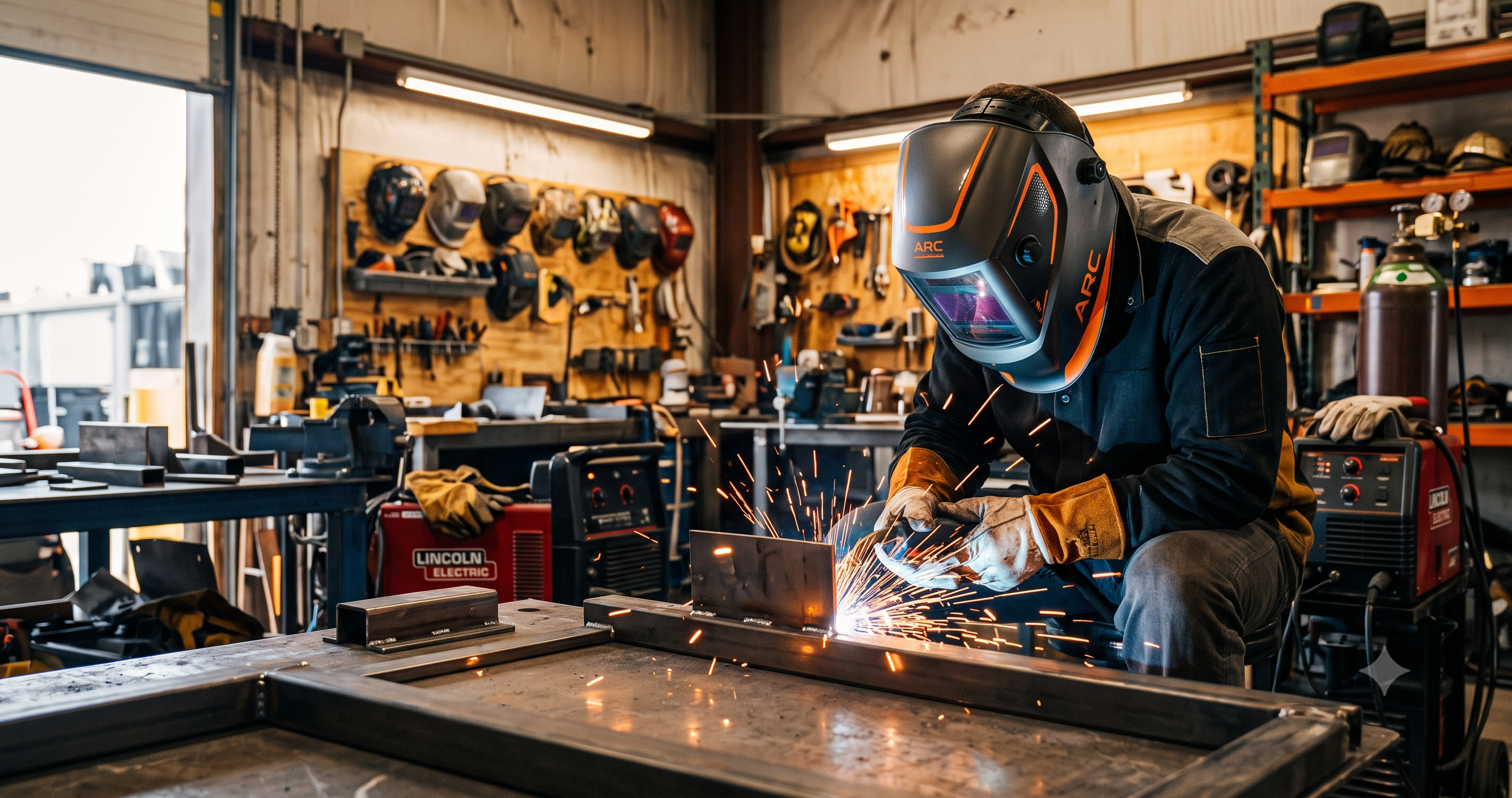
A farmer once brought me a cracked aluminium loader bracket on a Saturday, with the machine sitting in a field two counties from the nearest gas supplier. No argon, no spool gun, no time. That job is the entire argument for aluminium stick welding, and it is also the only kind of job where I would recommend it.
Get the amperage and polarity right and you can put that bracket back to work before dinner. Get them wrong and you will hand back a part with a hole in it.
What aluminium stick welding is
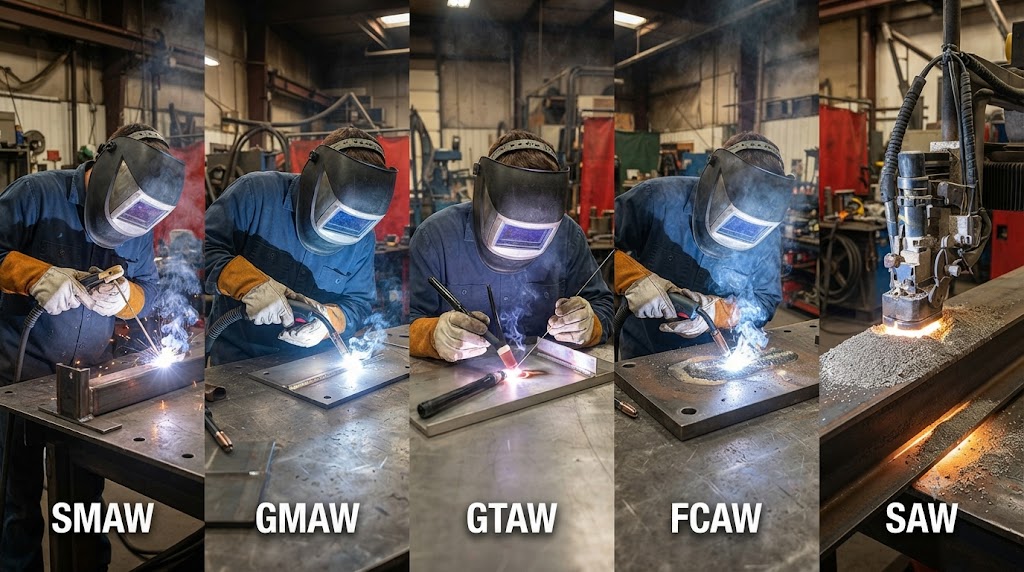
Aluminium stick welding is shielded metal arc welding with a flux-coated aluminium electrode, nearly always an E4043 alloy. The flux shields the puddle and leaves slag behind. It needs no shielding gas and no wire feeder, which is exactly why it survives as a field repair method long after MIG and TIG took over the shop.
The direct answer on settings: run E4043 on DC electrode positive, set 1/8 inch rod between 90 and 125 amps, preheat heavy or cast sections to 300 to 400 degrees Fahrenheit, and travel faster than you would on steel. Those four things account for most of the difference between welders who say this process works and welders who say it does not.
Polarity is not negotiable
E4043 electrodes are direct current electrode positive rods. On DCEP the electron flow drives cleaning action across the oxide layer and puts more heat into the rod, which is what keeps the arc stable through the flux.
An AC transformer welder cannot do this. If you own a Lincoln AC-225, you own a genuinely good steel machine that will never run aluminium rod properly. Trying anyway produces spatter, sticking, and a bead full of gas pockets, and no amount of adjusting will fix it.
What you want is a DC inverter with fine amperage control. The Hobart Stickmate 160 is a fair reference point: DC output, hot start for those difficult first strikes, adjustment in single-amp steps, and light enough to carry to a field. Its real weakness is thermal endurance. Push long beads on thick stock and it will trip out to protect itself, which matters if you fabricate all day and does not matter at all for a bracket.
If your work runs longer and heavier, the Lincoln Electric AC225/DC125 stick welder adds a DC range to a classic transformer body. The tradeoff is honest: DC output tops out well below the AC range, so on aluminium you are working within a narrower window than the machine’s headline number suggests. Anyone who mostly wants a big AC buzz box for 6011 will love it. Anyone whose main job is aluminium should buy a dedicated DC inverter instead.
Amperage, by thickness
These are working starting points, not laws. Every plate, every joint fit-up, and every level of preheat shifts them.
| Material thickness | Rod diameter | Starting amperage | Notes |
|---|---|---|---|
| 3/16 in | 3/32 in | 60 to 90 A | Preheat lightly, travel fast |
| 1/4 in | 1/8 in | 90 to 125 A | The comfortable range for most repairs |
| 3/8 in and up | 5/32 in | 130 to 180 A | Preheat is mandatory, expect multiple passes |
| Under 1/8 in | Not recommended | Use TIG or a spool gun |
The pattern to internalise: set toward the upper end of the range for the first inches, then keep moving. Aluminium wicks heat away from the arc early, then saturates. A setting that felt weak at the start of the bead will burn through by the end of it if you slow down.
Preheat, and why people skip it and regret it
On a cast housing, preheat is not a refinement. Cold cast aluminium sucks heat out of the puddle so fast that your first bead often sits on the surface, bonded to almost nothing, and looks acceptable until it snaps off in your hand.
Bring the part to 300 to 400 degrees Fahrenheit with a propane torch, confirm it with a temperature stick rather than by guessing, and weld in short segments. Let the whole part cool slowly afterward, ideally buried in dry sand or wrapped, because uneven cooling cracks aluminium castings along the fresh weld more often than the weld itself fails.
Rod choice, and the honest downside of each
Blue Demon E4043 1/8 inch rod runs the softest arc of the common options and restarts easily, which matters because aluminium stick welding involves a lot of stopping to chip slag. Its problem is the tube it ships in, which offers little protection against humidity once opened. Buy the smallest quantity that covers your job.
SUA E4043 1/8 inch x 14 inch holds a stiffer, more directional arc that behaves better out of position, on a vertical bracket web or an overhead patch. It sticks more on cold starts, so a first-time stick welder will find it discouraging. Choose it if you have arc-length experience and awkward joints; skip it if this is your first pound of aluminium rod.
Whatever you buy, keep it dry. A heated container like the Lincoln Electric Hydroguard portable electrode oven is worth having if aluminium repair is a regular part of your week. It runs at a fixed temperature with no dial, which limits it to holding rod rather than reconditioning it, and it is more oven than a hobby welder needs.
Best uses, ranked
Strong fit: cast aluminium housings, thick brackets, farm and heavy equipment repair in the field, filling and building up worn sections before machining.
Workable but not ideal: general fabrication in aluminium plate 1/4 inch and thicker where appearance does not matter and the part is not cyclically loaded.
Wrong tool: sheet under 1/8 inch, boat hulls, wheels, anything visible, anything that carries a person, and anything that will vibrate for years.
That last group is where people get hurt, financially or otherwise. Aluminium stick welds carry porosity that a gas-shielded weld does not, and porosity is where fatigue cracks start.
Technique, in the order it matters
- Clean the joint with a stainless brush kept for aluminium only, then weld within the hour before oxide reforms.
- Strike with intent. Scratch-start firmly and hold a short arc. A long arc on aluminium rod means porosity, immediately and visibly.
- Nearly vertical rod angle, small drag, no weave. Weaving overheats the surrounding metal.
- Travel fast, and if you cannot keep up with the puddle, your amperage is too high rather than your hand too slow.
- Chip slag between every pass, without exception. Aluminium slag trapped under a second pass is a guaranteed defect.
What this process asks of your hands
Aluminium stick welding is less forgiving than 6011 on steel, but it is a shorter learning curve than TIG. Most people who can run a decent 7018 fillet can produce a structurally useful aluminium repair within a couple of hours of practice on scrap. The rate limiter is not skill, it is judgment about heat.
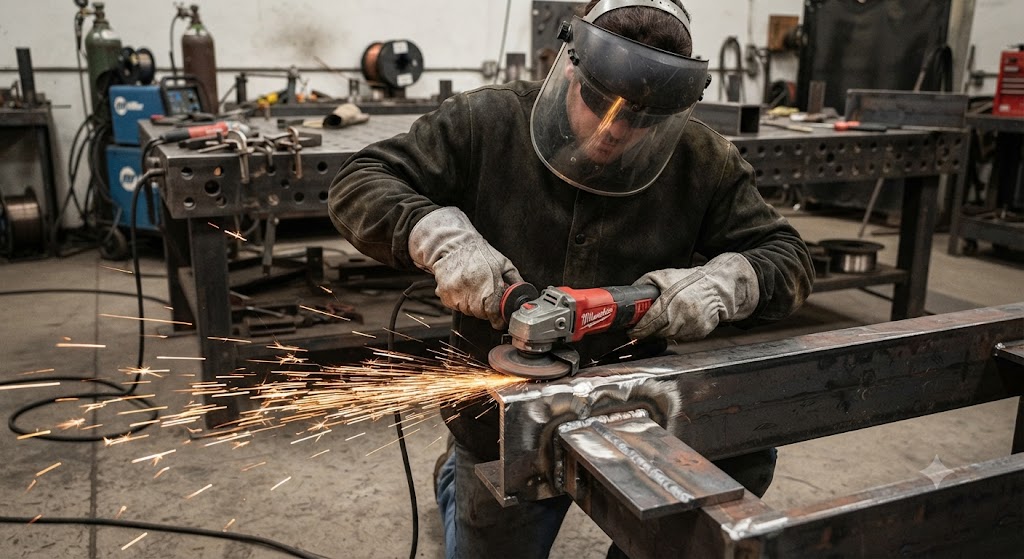
A good glove helps more here than in most stick work because you spend so much time handling hot, preheated parts between passes. The Lincoln Electric traditional MIG and stick glove is thick enough for that and long enough to keep radiated heat off your forearm. The obvious cost is dexterity: you will take them off to do anything fiddly, and their bulk is a nuisance on small parts.
Final verdict
Aluminium stick welding earns its place in one narrow band of work, and inside that band it is genuinely useful. DC positive, high amperage, real preheat, fast travel, dry rod. Do those five things and heavy repairs hold.
Outside that band, be honest with yourself before striking an arc. The best aluminium stick welders are not the ones with the finest bead, they are the ones who put the rod back in the tube and reach for the spool gun on jobs that deserve it. Judgment is the skill; the settings are just arithmetic.
Frequently asked questions
What polarity is used for aluminium stick welding? DC electrode positive. E4043 aluminium electrodes will not run correctly on AC, which is why transformer-only machines cannot do this job.
What amperage is right for 1/8 inch aluminium rod? Between 90 and 125 amps for material 1/4 inch and thicker. Start at the upper end, then keep your travel speed up as the plate heats through.
Do I need preheat for aluminium stick welding? On cast parts and anything 1/4 inch or heavier, yes. Aim for 300 to 400 degrees Fahrenheit and confirm with a temperature indicator rather than guessing by feel.
Can I stick weld thin aluminium sheet? Not practically. Below 1/8 inch the puddle collapses faster than you can react. Use TIG or a MIG spool gun.
Why does my aluminium stick weld look full of holes? Moisture in the flux, a long arc, or an unclean joint. Store rods sealed, hold a tight arc, and brush the joint with a stainless brush used only on aluminium.
How strong is an aluminium stick weld? Structurally usable on heavy repairs, but consistently below a clean TIG or gas-shielded MIG weld because of porosity. Do not use it for load-bearing or safety-critical joints.
Can a portable inverter run aluminium rod? Yes, as long as it produces DC electrode positive with stable output and enough amperage. A dual-voltage DC inverter is the common choice for field repair.