Best Gas for MIG Welding: A Practical Guide
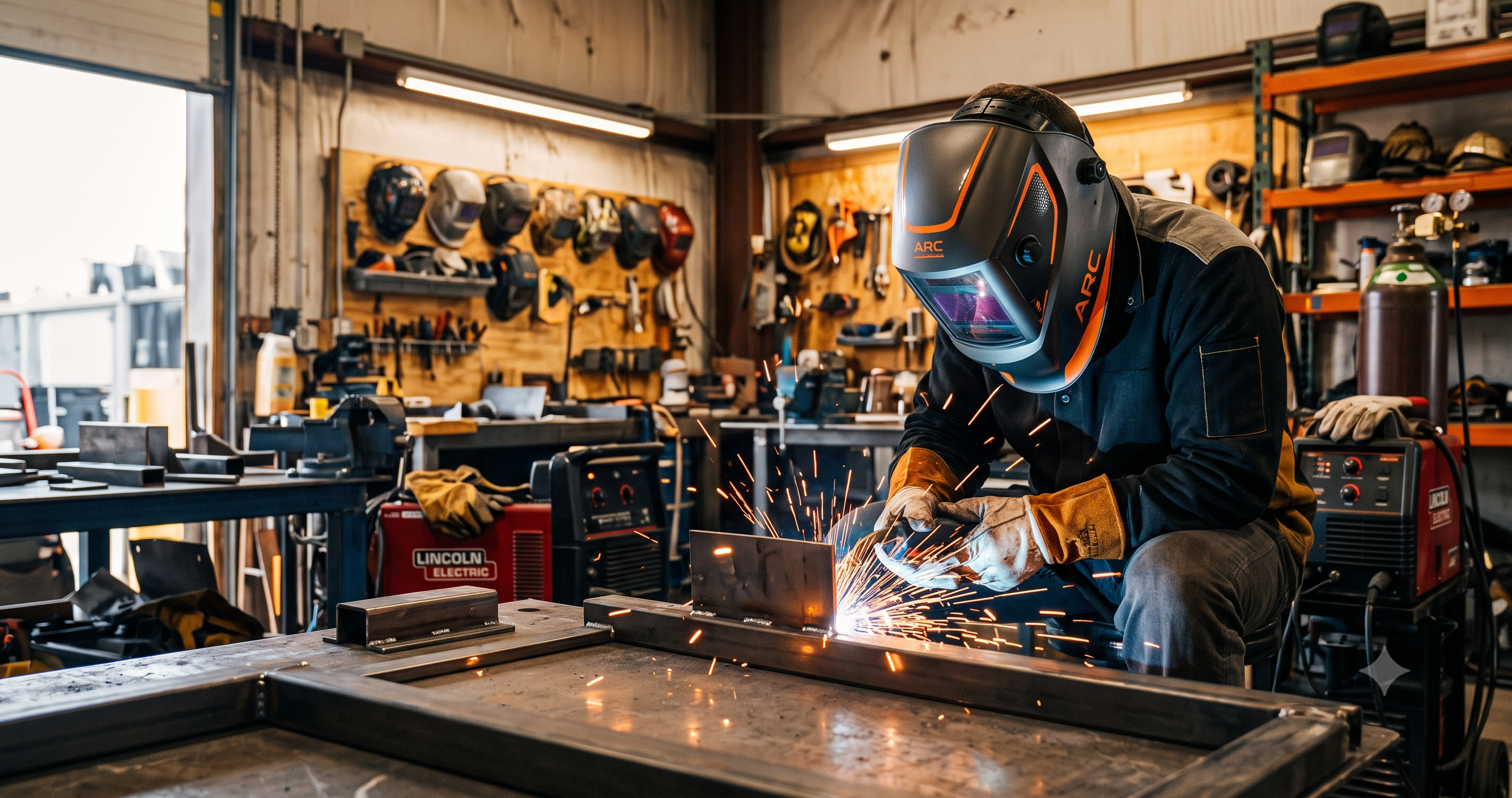
Welders obsess over machines and wire, then treat shielding gas as an afterthought, which is backwards. The gas coming out of your MIG gun has a huge effect on how the weld looks, how deep it penetrates, how much it spatters, and how much cleanup you face. Choosing the right gas is one of the cheapest ways to instantly improve your welds. The catch is that best depends on what metal you are welding, so there is no single answer, only the right match.
This guide compares the common MIG shielding gases in plain terms and tells you which to reach for on steel, stainless, and aluminum.
Why MIG needs shielding gas at all
A quick foundation makes the choices make sense. When metal melts, it reacts eagerly with the oxygen and nitrogen in the air, which contaminates the weld and leaves it weak and porous. Shielding gas flows out of the gun to push the air away and blanket the molten puddle, so it solidifies clean and strong.
Different gases do this job with different personalities. Some run hot and penetrate deeply, some run smooth with little spatter, and some are chemically required for a particular metal. Understanding those personalities is how you pick.
C25: the everyday champion for steel
For mild steel, which is what most people weld most of the time, the best all-around gas is C25, a blend of 75 percent argon and 25 percent carbon dioxide.
C25 hits the sweet spot for steel. The argon gives you a smooth, stable arc with minimal spatter and good-looking beads, while the carbon dioxide adds heat and penetration. The result is clean welds with easy cleanup on everything from thin sheet to moderate plate. If you weld steel and you buy one gas, buy C25. It is the default for a reason and the right answer for the large majority of hobby and shop MIG work. A cylinder such as an 80 cubic-foot 75/25 argon-CO2 bottle lasts a long time for occasional use.
Pure CO2: cheaper, hotter, spattier
Some welders run 100 percent carbon dioxide on steel, and it has real tradeoffs worth knowing.
Pure CO2 is cheaper than C25 and gives even deeper penetration, which can be an advantage on thicker steel. But it comes at a cost: a harsher, less stable arc, noticeably more spatter, and a rougher-looking bead that needs more cleanup. For production shops watching gas costs on thick material, pure CO2 makes sense. For most people who value a clean arc and less grinding afterward, C25’s smoother behavior is worth the small extra cost. Start with C25 unless budget or very thick steel pushes you toward pure CO2.
Argon and tri-mix: stainless and aluminum
When you move off mild steel, the gas has to change, and here it is not just preference but chemistry.
For aluminum, the best gas is 100 percent argon. Aluminum will not weld properly with a CO2-containing blend, so pure argon is required, not optional. A cylinder like this 80-cubic-foot pure argon bottle covers aluminum work. For stainless steel, the best results come from a tri-mix gas, typically helium, argon, and a small percentage of carbon dioxide, or at least a high-argon blend with only a couple of percent CO2. Keeping CO2 low protects the stainless from picking up carbon that would reduce its corrosion resistance. You can weld stainless with C25 in a pinch, but the dedicated blend gives cleaner, more corrosion-resistant welds.
Matching gas to metal at a glance
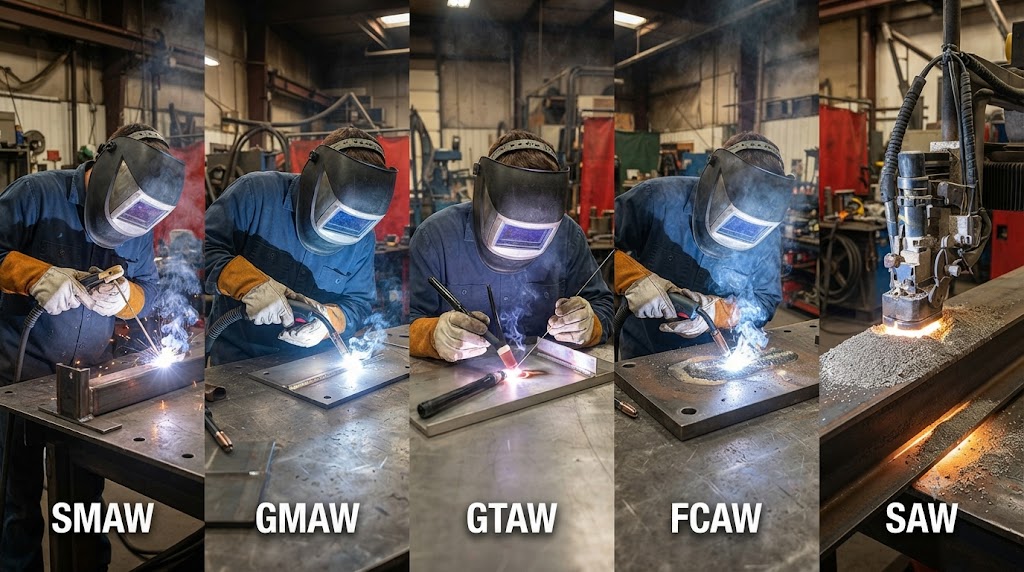
Here is the whole decision compressed. For mild steel, use C25 for the best all-around results, or pure CO2 if you want deeper penetration and lower cost at the price of more spatter. For stainless steel, use a tri-mix or a high-argon low-CO2 blend for clean, corrosion-resistant welds. For aluminum, use 100 percent argon, which is required, not optional. And remember one exception to all of this: self-shielding flux-core wire needs no gas at all, since it produces its own shield, which is why it is popular for outdoor work where any gas would blow away.
What to take away
The best gas for MIG welding depends entirely on your metal, and matching the two is one of the cheapest ways to dramatically improve your welds.
Three things to remember. For mild steel, C25 is the everyday champion, giving smooth arcs and clean beads, while pure CO2 trades spatter and roughness for deeper penetration and lower cost. For other metals the gas is dictated by chemistry, so use 100 percent argon for aluminum and a tri-mix or high-argon low-CO2 blend for stainless. And if you run self-shielding flux-core wire, you need no shielding gas at all, which is what makes it the outdoor choice.
Frequently asked questions
What is the best gas for MIG welding steel? C25, a blend of 75 percent argon and 25 percent carbon dioxide. It gives a smooth, low-spatter arc and clean beads on everything from thin sheet to moderate plate.
What does C25 gas mean? A shielding gas blend of 75 percent argon and 25 percent carbon dioxide. It is the standard all-around choice for MIG welding mild steel.
Can I use 100 percent CO2 for MIG welding? Yes, on steel. Pure CO2 is cheaper and penetrates deeper, but it produces a harsher arc, more spatter, and rougher beads that need more cleanup than C25.
What gas do I use for MIG welding aluminum? 100 percent argon. Aluminum requires pure argon; the CO2 in blends like C25 will not weld aluminum properly, so this is a chemistry requirement, not a preference.
What gas is best for stainless steel MIG? A tri-mix of helium, argon, and a small amount of CO2, or a high-argon blend with only a couple percent CO2. Low CO2 protects the weld’s corrosion resistance.
Do I always need shielding gas for MIG? No. Self-shielding flux-core wire makes its own protective shield as it burns, so it needs no gas cylinder, which is why it is favored for outdoor welding.
Is pure CO2 or C25 better for a beginner? C25. Its smoother arc, lower spatter, and cleaner beads make welding easier to learn and reduce cleanup, which is worth the small extra cost over pure CO2.
References
- American Welding Society, AWS
- Occupational Safety and Health Administration, Welding, Cutting, and Brazing
- National Institute for Occupational Safety and Health, Welding Safety
- Miller Electric, MIG Welders