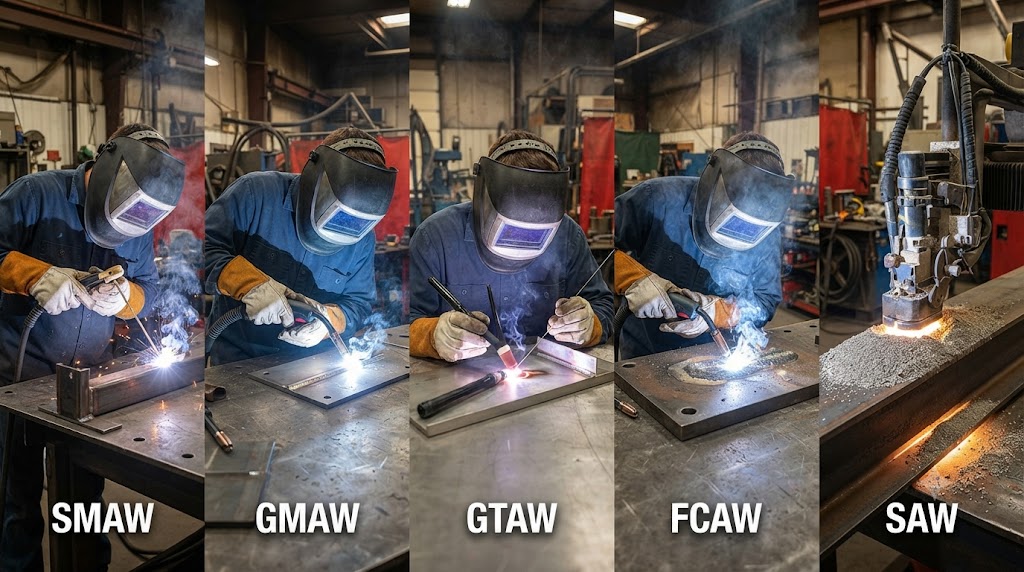
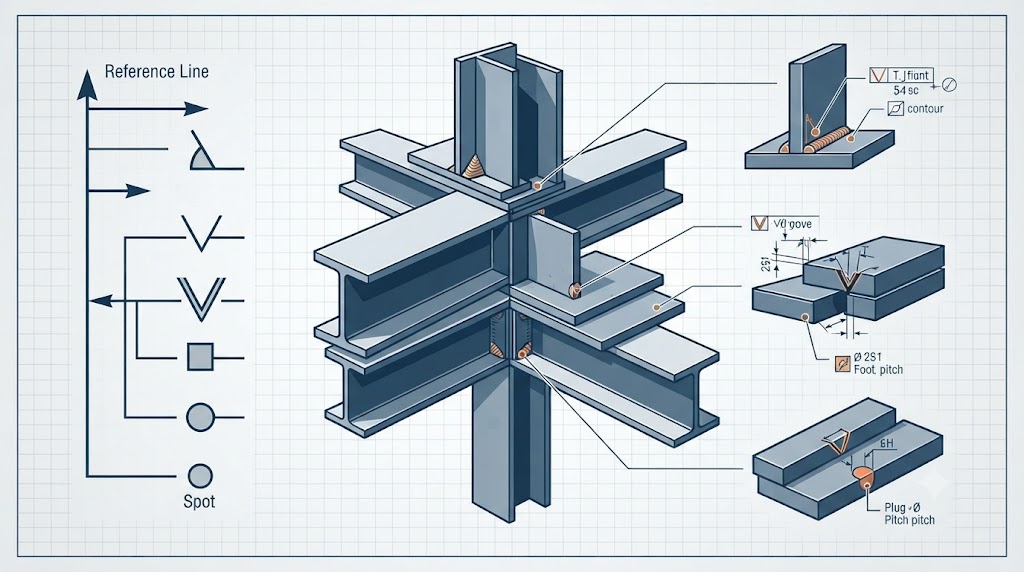
Equipos para soldadura: características importantes en el uso diario
Equipment for Welding: Features That Matter in Daily Use
New welders spend weeks agonizing over which machine to buy and then are surprised, once it arrives, by how much other equipment they need before they can actually build anything. The welder is the headline, but a working shop runs on a whole supporting cast: safety gear, a solid surface, clamps, cleaning tools, and the small accessories that quietly make every job go smoothly. Knowing what that full set is, and what matters about each piece, saves a lot of stop and start frustration.
Equipment for welding is everything a shop needs to weld safely and productively beyond the power source itself: personal protective gear, a work surface and fixturing, cutting and cleaning tools, gas handling equipment where needed, and fire safety. Each category serves the daily work in a specific way, and the features that matter become obvious once you have used them a few times.
Safety equipment comes first
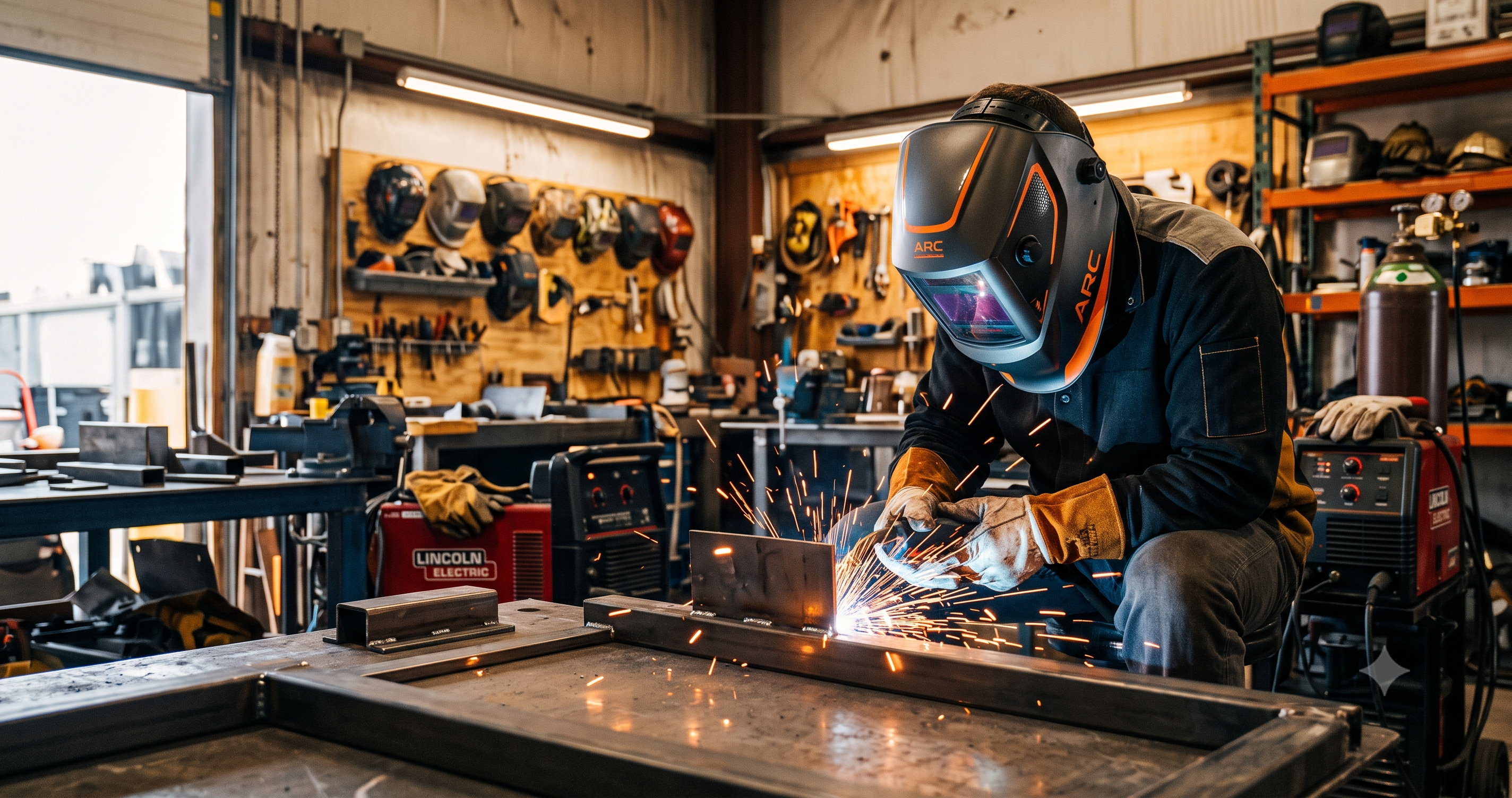
Before anything else, a shop needs the protective gear that makes welding safe to do at all. An auto darkening helmet like the Forney Easy Weld helmet protects your eyes and lets you see the puddle, and heat resistant leather gloves such as the Lincoln Electric welding gloves protect your hands. Add flame resistant clothing, leather boots, fume protection through ventilation or a respirator, and a fire extinguisher within reach. This is not optional equipment, it is the foundation everything else sits on, and it belongs in the budget from day one.
A work surface and fixturing
You cannot build accurately on a wobbly bench. A sturdy steel welding table gives you a flat reference to build against and a conductive surface to ground to. A fixture table with a hole grid, like the Klutch steel welding table with fit up kit, adds the ability to clamp work anywhere on the surface, which is what makes repeatable, square assemblies possible.
Clamps are the equipment you always want more of. Locking C clamp pliers such as this four pack hold parts one handed while you tack, and heavier clamps hold flat stock steady. The daily use feature that matters here is speed: clamps that set and release fast save real time across a day of fitting.
Cleaning and finishing tools
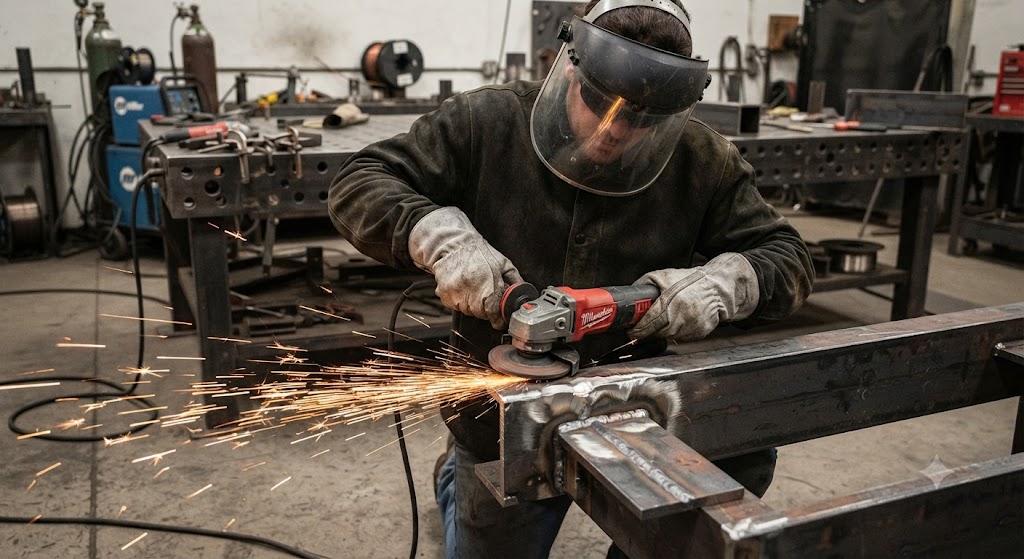
Welding is as much preparation and cleanup as it is arc time. An angle grinder is the workhorse, used to clean metal before welding, grind welds flush, and cut stock, and it is arguably the most used tool in the shop after the welder itself. A wire brush cleans mill scale and rust before welding and knocks down light spatter after. For stick and flux core, a chipping hammer removes slag between passes. Anti spatter compound keeps spatter from sticking to your work and nozzle. None of these are glamorous, but skipping them shows up as porous welds and rough finishes.
| Category | Core pieces | The feature that matters daily |
|---|---|---|
| Safety | Helmet, gloves, FR clothing, extinguisher | Fit, coverage, fast auto darkening |
| Work surface | Steel or fixture table | Flatness and a hole grid for clamping |
| Fixturing | C clamps, table clamps | Fast setting and release |
| Cleaning | Angle grinder, wire brush, chipping hammer | Reliability and comfortable handling |
| Gas handling | Regulator, secured cylinder, cart | Accurate flow and a chained bottle |
Gas handling, where the process needs it
If you run MIG or TIG, gas equipment joins the list: a regulator and flowmeter to set shielding flow, a cylinder sourced from a supplier, and a cart to hold and secure it. The feature that matters is an accurate, readable flowmeter and a properly chained cylinder, since safe gas handling and a clean shield both depend on it. Self shielded flux core skips this category, which is part of why it is a common first setup.
Organizing the shop
As the equipment adds up, a tool cart or storage keeps consumables, tips, clamps, and hand tools sorted and within reach, and a cylinder rack or cart keeps gas bottles secured and mobile. Cable hooks keep leads off the floor where they otherwise get run over. Good organization is itself a piece of equipment in daily use: it turns setup from a hunt into a quick reach.
The features that matter, in short
Equipment for welding is a whole system, not just a machine, and a productive shop needs safety gear, a flat work surface, plenty of clamps, cutting and cleaning tools, and gas handling where the process calls for it. In daily use the features that matter are the practical ones: gear that fits and protects, a table that is flat and clampable, clamps that set fast, and tools that are reliable. Build out that supporting cast and the machine you agonized over can finally do its job.
Frequently asked questions
What equipment do I need besides the welder? Protective gear, a sturdy work surface, clamps, an angle grinder and cleaning tools, gas handling equipment for MIG or TIG, and fire safety gear. The machine is only the start.
What is the most used tool after the welder? Usually the angle grinder. It cleans metal before welding, grinds welds flush, and cuts stock, making it the workhorse of most shops.
Do I need a welding table? A sturdy steel table gives a flat surface to build against and to ground to. A fixture table with a hole grid adds clamping anywhere, which makes square, repeatable work far easier.
What cleaning tools should I have? An angle grinder, a wire brush for scale and rust, a chipping hammer for slag with stick and flux core, and anti spatter compound to keep spatter from sticking.
Do I need gas equipment? Only for gas shielded processes like MIG and TIG, which need a regulator, a cylinder, and a cart. Self shielded flux core runs without gas, so it skips this category.
How important is shop organization? More than it sounds. A tool cart, cylinder cart, and cable hooks keep gear sorted, secured, and within reach, turning setup from a hunt into a quick reach every session.
References
- OSHA, Welding, Cutting, and Brazing: https://www.osha.gov/welding-cutting-brazing
- National Institute for Occupational Safety and Health, Welding safety: https://www.cdc.gov/niosh/welding/about/index.html
- American Welding Society, standards and codes: https://www.aws.org/standards-and-publications/codes-and-standards/d1-1/