Máquina de soldar ESAB: modelos rebeldes y renegados revisados
ESAB Welding Machine: What the Rebel and Renegade Lines Actually Deliver
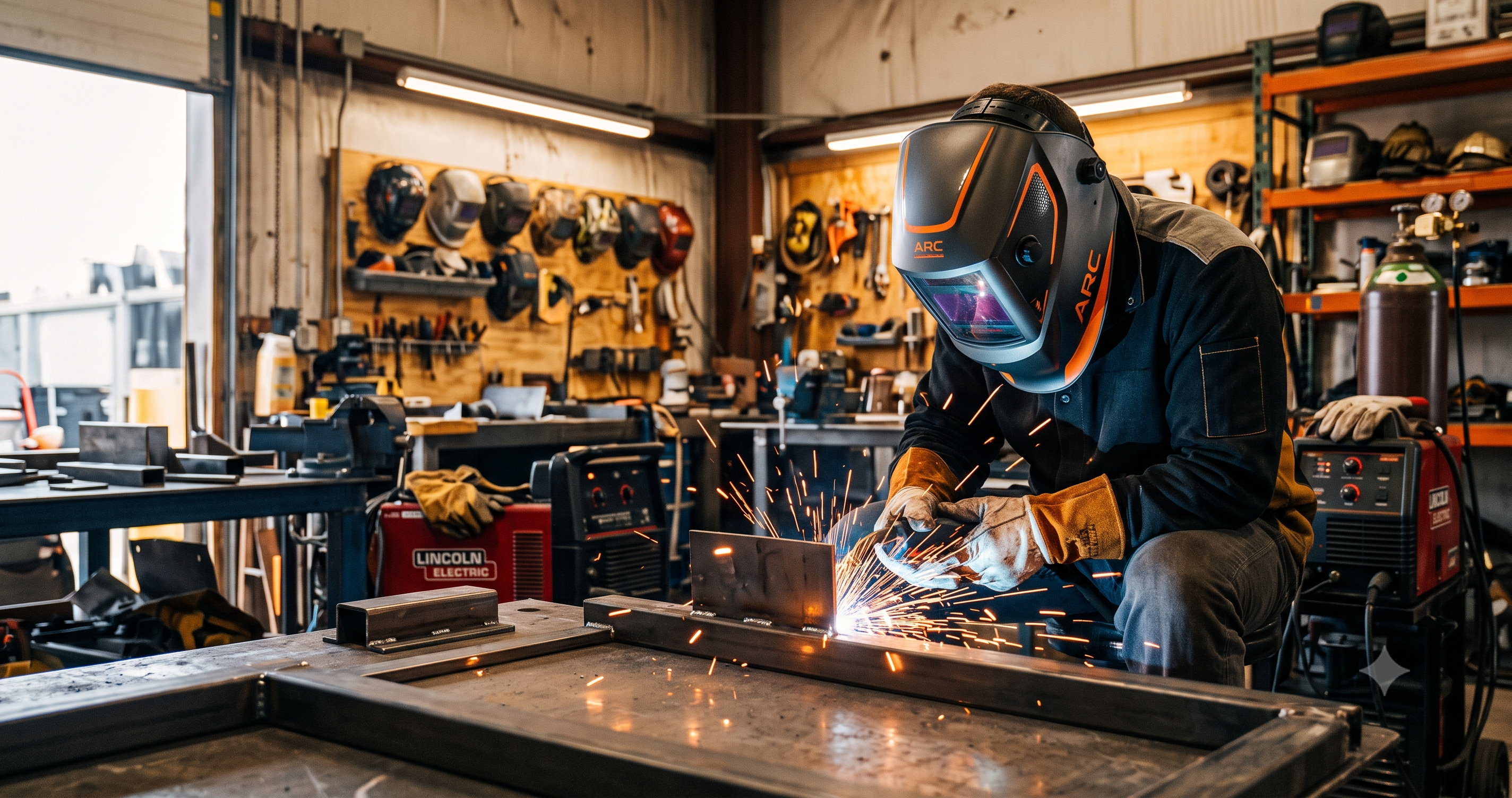
You carried the machine up two flights of stairs because the elevator was out. The railing on the rooftop deck had a cracked weld at the base, and the building manager wanted it fixed before the weekend. Forty pounds on your shoulder, an extension cord plugged into a 120V outlet on the landing, and a small spool of .030 flux-cored wire. That is the kind of job an ESAB welding machine is built for.
An ESAB welding machine in the Rebel or Renegade family is an inverter-based power source that runs multiple processes from one unit. The Rebel line covers MIG, flux-cored, stick, and DC TIG from 120V home-shop work up to 300A industrial fabrication. The Renegade line focuses on stick and TIG, with one battery-powered model that goes where no generator can reach. If you want a single machine that does most things well rather than three machines that each do one thing perfectly, this is the neighborhood to shop in.
The short answer: the Rebel EMP 215ic is the one most people should buy. It runs on 120V or 230V, weighs 40 pounds, and handles anything from sheet metal to 3/8-inch plate. The 235ic gives you more amperage headroom if you weld thicker stock regularly. The 285ic is for industrial work. The Renegade ES 300i is a stick-only powerhouse, and the Renegade Volt ES 200i runs on tool batteries.
Rebel EMP 215ic: The One That Fits in a Car
The Rebel EMP 215ic is a 240-amp multiprocess welder that operates on 120V or 230V input power and weighs just 40 pounds. It runs MIG, flux-cored, DC stick, and DC TIG (lift arc, no high-frequency start). ESAB’s sMIG technology continuously adapts to your welding technique, which means the arc stays stable even if your wire speed or travel speed drifts. The 4.3-inch color display walks you through setup, and the machine comes spool-gun ready for aluminum with an optional Tweco 160-amp gun.
On 230V, the 215ic delivers 240 amps for MIG, 180 amps for stick at 25% duty cycle, and 200 amps for DC TIG at 20% duty cycle. On 120V, you get 130 amps across all processes. Open-circuit voltage is 68V with a VRD that drops it below 35V for safety in damp environments. The machine carries a 3-year warranty.
The flaw: duty cycle at maximum output is roughly 10%, which means about 60 seconds of welding per 10-minute period at 240A. At 200A, you get about 3 minutes. If you are running long beads on thick plate at high amperage, you will spend more time waiting than welding. The TIG implementation is lift-arc DC only, so no aluminum TIG and no high-frequency start for clean scratch-free arc initiation.
Who should skip this: anyone welding material thicker than 3/8 inch on a regular basis, or anyone who needs AC TIG for aluminum. The 215ic will do it, but you will be fighting the duty cycle and wishing for more headroom.
Rebel EMP 235ic: More Headroom, Same DNA
The 235ic steps up to 250 amps of MIG output on 230V while keeping the 120V capability. It weighs 53 pounds, which is 13 pounds more than the 215ic but still manageable for one person to carry. The 235ic supports E6010 electrodes on 120V power, which the 215ic cannot do. That matters if you weld on rusty or painted steel where 6010’s digging arc saves you time on surface prep.
The 235ic uses the same sMIG technology and color display as the 215ic. It accepts 4-inch, 8-inch, and 12-inch wire spools, so you can run production-sized wire without constant spool changes. The machine comes with a Tweco Spray Master 250-amp MIG gun, a 200-amp electrode holder, and Victor argon regulator.
The flaw: at 53 pounds, it is no longer a toss-in-the-trunk machine. The extra weight comes from a larger power section that handles the higher amperage, but it means you will think twice about carrying it up stairs. Like the 215ic, TIG is DC lift-arc only. No aluminum TIG.
Who should skip this: if you only weld occasionally and never touch anything thicker than 3/16 inch, the 215ic does the same job for less. The 235ic earns its keep when you are burning through 3/8-inch plate or running 6010 rod regularly.
Rebel EMP 285ic: Industrial Power, Portable Package
The 285ic is the most powerful Rebel, capable of welding up to 350 amps. It runs the full range of .035 and .045 wire, which means you can use it for spray transfer on thick plate. Two versions exist: a single-phase model that takes 120V to 230V input, and a three-phase model that runs on 460V to 575V. The stick output goes up to 260 amps with adjustable hot start and arc force.
This is the machine you buy when the 235ic is not enough. It handles industrial fabrication, structural work, and production welding without the duty-cycle anxiety of the smaller Rebels. The four-roll wire feed system handles larger spools and heavier wire without slipping.
The flaw: this is an industrial machine that requires industrial power to reach its full potential. On 120V, you are getting a fraction of what it can do. The weight and size make it a workshop machine, not a carry-anywhere tool. And the three-phase version requires shop wiring that most home garages do not have.
Who should skip this: home-shop users, hobbyists, and anyone without a dedicated 230V or higher circuit. If you are not regularly welding material thicker than 1/2 inch, the 285ic is more machine than you need.
Renegade ES 300i: Stick Power in a 33-Pound Box
The Renegade ES 300i is a 300-amp DC stick and TIG welder that weighs 33 pounds. It auto-senses input voltage from 208V to 460V, single-phase or three-phase, and adjusts accordingly. You get 5 to 300 amps of output, enough for electrodes up to 3/16 inch in diameter. Adjustable arc force and hot start controls let you tune the arc for different rods, and it runs E6010 without complaint, which many inverters cannot do.
This is a stick welder’s machine. No MIG, no wire feed, no gas solenoid. Just a clean, stable DC arc in a package you can carry with one hand. The shoulder strap and 33-pound weight make it the most portable 300-amp stick welder on the market.
The flaw: it is stick and DC TIG only. If you need MIG for sheet metal or production work, you will need a second machine. The input voltage range starts at 208V, so no 120V household outlet operation. You need at least a 230V circuit to use it.
Who should skip this: anyone who needs MIG capability, and anyone without 230V or higher power available. If you only have 120V, look at the Rebel line instead.
Renegade Volt ES 200i: The Battery-Powered Wildcard
The ESAB Renegade Volt ES 200i is a stick and live TIG welder that runs on four DeWalt FLEXVOLT 20V/60V 12Ah batteries, on AC mains, or in hybrid mode combining both. On 230V AC power, it delivers 200 amps at 25% duty cycle. On battery power alone, you get up to 140 amps. In AMP+ hybrid mode with 120V input and batteries, you get 150 amps at 25% duty cycle.
The idea is simple: weld where no power exists. Fence lines in the middle of a pasture, pipe on a remote hillside, structural steel on a site with no generator yet. The Volt weighs 51 pounds with batteries installed, which is heavy for a battery tool but light for a welder that produces 200 amps. The TFT LCD display shows battery life and remaining arc time. It includes 10 programmable memory settings and a 6010 mode for cellulosic electrodes.
In real-world testing, 20 minutes of continuous welding left the batteries at 25% charge. That is enough for quick field repairs but not for a full day of production welding. A second set of batteries is recommended for extended use.
The flaw: battery runtime limits you to short jobs. The four-battery system adds weight and complexity, and replacement batteries are a significant additional investment. Users on welding forums have reported batteries being sent back for warranty replacement due to heat and cycling issues. This is a first-generation product with first-generation growing pains.
Who should skip this: anyone with reliable power on site. If you have a generator or a wall outlet, a corded welder will outperform the Volt in every category. The Volt earns its place only when there is no power to be had.
How the ESAB Lineup Compares
| Model | Max Output | Input Power | Weight | Processes | Best For |
|---|---|---|---|---|---|
| Rebel EMP 215ic | 240A MIG | 120/230V | 40 lbs | MIG, Stick, DC TIG | Home shop, light fabrication |
| Rebel EMP 235ic | 250A MIG | 120/230V | 53 lbs | MIG, Stick, DC TIG | Farm, ranch, thicker stock |
| Rebel EMP 285ic | 350A | 120-230V 1ph or 460-575V 3ph | Industrial | MIG, Stick, DC TIG | Industrial fabrication |
| Renegade ES 300i | 300A | 208-460V auto | 33 lbs | Stick, DC TIG | Job site stick welding |
| Renegade Volt ES 200i | 200A (140A battery) | 120/230V or battery | 51 lbs | Stick, DC TIG | Remote field repairs |
The Bottom Line on ESAB’s Lineup
If you are buying one ESAB welding machine for a home shop or small farm, the Rebel EMP 215ic is the pick. It does the most things in the smallest, lightest package. The duty cycle is real-world adequate for everything except sustained high-amperage production welding, and the sMIG feature genuinely helps beginners produce cleaner beads.
If you weld thicker stock regularly, step up to the 235ic. The extra 10 amps of MIG output and the 6010 capability on 120V make a difference on the farm. If you need industrial power, the 285ic is the only Rebel that will keep up.
The Renegade ES 300i is a specialist tool for stick welders who value portability above all else. The Renegade Volt ES 200i is a genuine innovation that solves a real problem, but it is a first-generation product with runtime and battery durability limitations that you should know before buying.
Three things to take with you: none of these machines do AC TIG for aluminum, all of the Rebels share the same lift-arc DC TIG implementation, and the Renegade line is stick and TIG only. If aluminum TIG is on your list, you need a different machine.
Frequently Asked Questions
Is the ESAB Rebel a good beginner welder?
Yes. The sMIG technology on the Rebel EMP 215ic and 235ic automatically adjusts to your welding technique, which helps beginners produce stable arcs without perfect wire-speed settings. The color display and built-in setup guides walk you through material thickness, wire type, and gas selection.
Can the ESAB Rebel TIG weld aluminum?
No. The Rebel line uses lift-arc DC TIG only. Aluminum requires AC TIG with a high-frequency start, which none of the Rebel models support. For aluminum, you can MIG weld with an optional spool gun.
What is the duty cycle on the ESAB Rebel EMP 215ic?
At maximum MIG output of 240 amps on 230V, the duty cycle is approximately 10%, meaning about 60 seconds of welding per 10-minute period. At 200 amps, it improves to roughly 30%. On 120V at 130 amps, the duty cycle is significantly higher because the machine is not working as hard.
Does the ESAB Renegade Volt ES 200i come with batteries?
Yes. The package includes four DeWalt FLEXVOLT 20V/60V 12Ah batteries. You can also run the welder on 120V or 230V AC power, or in hybrid AMP+ mode that combines battery and AC power for additional output.
Can the ESAB Rebel run on a generator?
Yes. The Rebel line is designed to run on generator power. Users on welding forums report running 215ic and 235ic models on portable generators without issues. ESAB specifies a wide input voltage range of 90 to 270V, which accommodates generator power fluctuations.
What is the difference between ESAB Rebel 215ic and 235ic?
The 215ic produces 240 amps max MIG output and weighs 40 pounds. The 235ic produces 250 amps, weighs 53 pounds, and can run E6010 electrodes on 120V power. The 235ic also accepts larger wire spools up to 12 inches and comes with a higher-amperage MIG gun.
Does the ESAB Renegade ES 300i support MIG welding?
No. The Renegade ES 300i is a stick and DC TIG welder only. It does not have a wire feed system or gas solenoid for MIG. If you need MIG capability, look at the Rebel line instead.
What consumables does the ESAB Rebel EMP 215ic use?
The Rebel EMP 215ic uses Tweco-style consumables for the MIG gun, including contact tips, nozzles, and liners. For stick welding, it uses standard OKC 50 connectors for electrode and work cables. Drive rolls and spool adapters are specific to the Rebel series.