Soldadura de aluminio GTAW: configuración que controla el arco
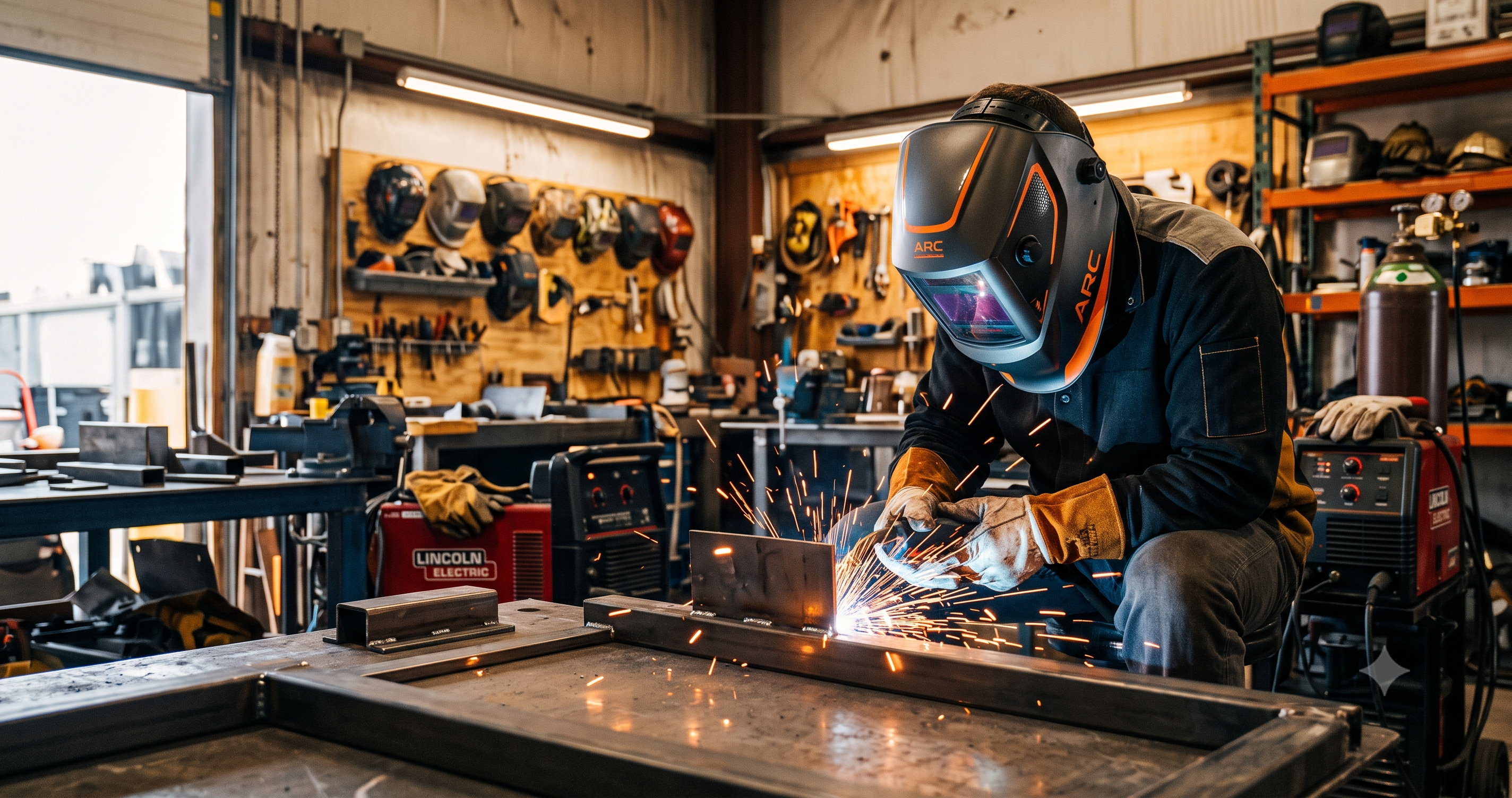
El aluminio es el metal que separa a las personas que poseen una máquina TIG de las que realmente pueden usarla. El acero es indulgente. El aluminio no lo es. Oculta su óxido, arroja calor, pasa de sólido a charco y a agujero en lo que se siente como un latido del corazón y expone cada error de configuración que cometes. La buena noticia es que una vez que la configuración es correcta, el aluminio se vuelve predecible y GTAW en aluminio es una de las cosas más satisfactorias que se pueden hacer con un arco.
Permítame explicarle las opciones de configuración que deciden si su arco de aluminio es controlado o caótico.
Por qué el aluminio necesita aire acondicionado
Este es el hecho más importante sobre el GTAW sobre aluminio. Al aluminio se le forma una capa de óxido resistente que se funde a una temperatura mucho más alta que el metal que se encuentra debajo, y esa capa debe eliminarse para que la soldadura se fusione. La CA (corriente alterna) hace esto automáticamente.
En la mitad positiva del electrodo de cada ciclo de CA, el arco elimina el óxido de la superficie, una acción de limpieza. En la mitad negativa del electrodo, calienta el metal. El aire acondicionado alterna entre los dos, limpiando y calentando al ritmo. DC no puede hacer esto, razón por la cual las máquinas DC que sólo utilizan acero no pueden soldar aluminio correctamente. Si el aluminio está en sus planes, necesita una máquina con capacidad de CA.
Equilibrio AC: la perilla de control de aluminio
Las máquinas TIG de CA modernas le permiten ajustar el equilibrio de CA, la relación entre limpieza y penetración en cada ciclo. Una mayor limpieza (más tiempo de electrodo positivo) amplía la zona grabada y se adapta al aluminio sucio o muy oxidado. Una mayor penetración (más tiempo de electrodo negativo) impulsa el calor más profundamente y estrecha la banda de limpieza.
Un punto de partida común es alrededor del 65 al 70 por ciento del electrodo negativo, que es el valor predeterminado de la Lincoln Square Wave TIG 200 y máquinas similares. Demasiada limpieza desperdicia calor y puede sobrecalentar el tungsteno; muy poco deja óxido en la soldadura. Aprender a leer y ajustar el equilibrio de CA es la mayor parte de lo que significa dominar el GTAW de aluminio.
Elección de tungsteno para aluminio
Los consejos más antiguos decían que el tungsteno puro (verde) se acumulaba en aire acondicionado. Las máquinas inversoras modernas funcionan perfectamente con un 2% de lantano (azul) sobre aluminio, y es la opción versátil para todo uso, por lo que la mayoría de la gente usa un electrodo para todo. En una máquina moderna, un tungsteno lantano con una punta ligeramente truncada funciona bien con aire acondicionado. Un paquete de 10 tungsteno con lantano al 2 % cubre tanto su trabajo de acero como de aluminio.
Gas y flujo
100 por ciento argón es el estándar para el GTAW de aluminio, lo que proporciona un arranque de arco estable y una buena limpieza. Para el aluminio grueso, una mezcla de argón y helio (a menudo 75/25) agrega calor y penetración, lo que ayuda cuando un arco de argón puro no puede calentar lo suficiente una sección pesada. Para la mayoría de los trabajos, lo adecuado es utilizar argón puro a aproximadamente 15 a 20 pies cúbicos por hora.
Selección de relleno
Haga coincidir el relleno con la aleación y el trabajo.
ER4043 fluye fácilmente, resiste el agrietamiento y se adapta a aleaciones y piezas fundidas de la serie 6000. Es la elección general más tolerante y un poco más fácil para los principiantes.
ER5356 es más resistente, se adapta a la serie 5000 y a trabajos estructurales, mantiene mejor el color cuando la pieza va a ser anodizada y es más rígido, por lo que se alimenta bien. Su límite es que no es adecuado para el servicio por encima de los 150 grados Fahrenheit.
Un carrete de varilla TIG de aluminio ER5356 cubre aluminio estructural y marino, mientras que 4043 es la elección para piezas fundidas y reparaciones generales.
Limpieza: no negociable
Aluminum must be clean before you weld. Degrease the joint with acetone, then brush it with a stainless wire brush used only on aluminum, right before welding. That oxide skin melts far hotter than the base metal, so any left behind causes inclusions and a dirty, sluggish puddle. Skipping this step is the fastest way to blame your machine for a problem you created.
Managing heat and the puddle
Aluminum conducts heat away quickly, so it needs more amperage than steel of the same thickness to start the puddle, then it heats suddenly once it gets going. It also does not glow red before it collapses, so you get no visual warning before burn-through. Travel faster than you would on steel, watch the puddle’s shine and shape rather than color, and use the pedal to back off heat the instant the puddle grows too fast. Preheating thick sections gently helps, but do not overheat heat-treated alloys.
The verdict
GTAW on aluminum is not harder because aluminum is stubborn; it is harder because it demands correct setup and gives no room for error. Get the setup right and it becomes predictable, controllable and genuinely rewarding.
Three things decide the outcome. Aluminum requires AC output for its cleaning action, so an AC-capable machine is non-negotiable, and AC balance is the knob you learn to read. Clean the metal every single time, degrease then stainless-brush, because the oxide skin ruins welds no technique can rescue. And respect aluminum’s heat behavior, more amperage to start, sudden heating, no red-glow warning, so travel faster, watch the puddle and ride the pedal.
Master those and the metal that humbled you becomes the one that shows off your control. That is why aluminum is the benchmark.
Frequently asked questions
Why does aluminum need AC for TIG welding? Aluminum forms a tough oxide layer that melts far hotter than the base metal. AC removes that oxide on the electrode-positive half of each cycle (cleaning) while heating the metal on the electrode-negative half, which DC cannot do.
What is AC balance in aluminum TIG welding? It is the ratio of cleaning to penetration in each AC cycle. More electrode-positive time increases cleaning for dirty aluminum; more electrode-negative time increases penetration. A common starting point is around 65 to 70 percent electrode negative.
What tungsten do I use for aluminum GTAW? On modern inverter machines, 2% lanthanated (blue) works well and is the versatile all-purpose choice. Pure tungsten (green) was traditional on older transformer machines but is less necessary now.
What filler rod for aluminum? ER4043 for 6000-series alloys and castings (easy-flowing, crack-resistant) or ER5356 for 5000-series and structural work (stronger, better for anodizing). Match the filler to the alloy.
Do I have to clean aluminum before TIG welding? Yes, always. Degrease with acetone and brush with a stainless brush used only on aluminum, right before welding. The high-melting oxide layer causes inclusions and poor welds if left on.
What gas for aluminum GTAW? 100 percent argon for most work. An argon-helium blend adds heat and penetration for thick aluminum sections where pure argon cannot deliver enough heat.
Why do I keep burning through aluminum? Aluminum conducts heat away fast, then heats suddenly, and it gives no red-glow warning before collapsing. Travel faster than on steel, watch the puddle’s shine, and use the pedal to reduce heat quickly.
Can any TIG machine weld aluminum? Only AC-capable machines. DC-only TIG machines cannot provide the cleaning action aluminum needs, so an AC/DC machine is required for aluminum work.
References
- Miller Electric, All About Tungsten in TIG Welding: Types, Selection and Use
- Lincoln Electric, Square Wave TIG 200 AC balance and frequency specifications
- Miller Electric, Best Practices for Proper Shielding Gas in TIG Welding