GTAW Welding Aluminum: Setup That Controls the Arc
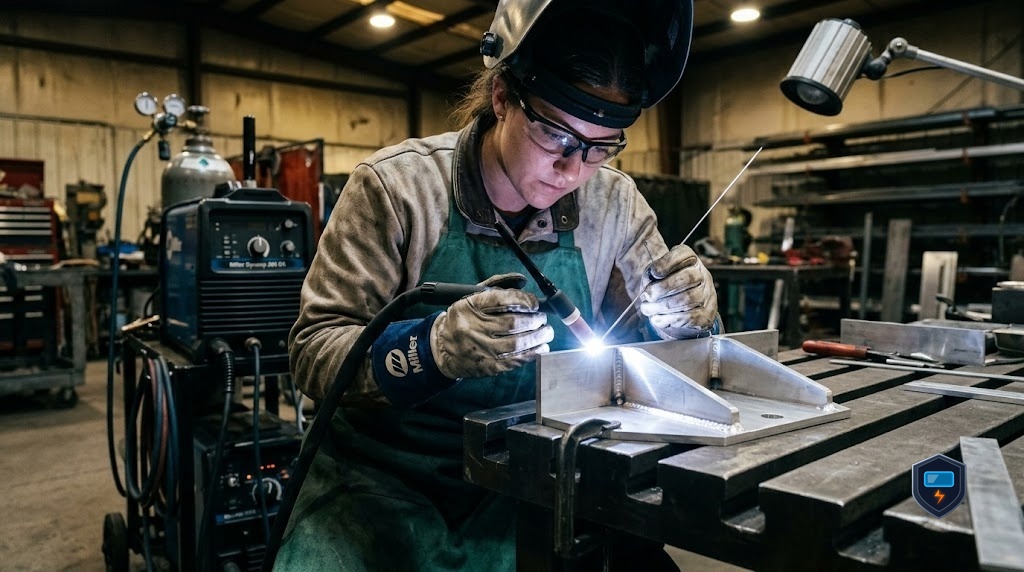
Aluminum is the metal that separates people who own a TIG machine from people who can actually use one. Steel is forgiving. Aluminum is not. It hides its oxide, it dumps heat, it goes from solid to puddle to hole in what feels like a heartbeat, and it exposes every setup mistake you make. The good news is that once the setup is right, aluminum becomes predictable, and GTAW on aluminum is one of the most satisfying things you can do with an arc.
Let me walk through the setup choices that decide whether your aluminum arc is controlled or chaotic.
Why aluminum needs AC
This is the single most important fact about GTAW on aluminum. Aluminum grows a tough oxide skin that melts at a far higher temperature than the metal underneath, and that skin has to be removed for the weld to fuse. AC (alternating current) does this automatically.
On the electrode-positive half of each AC cycle, the arc blasts the oxide off the surface, a cleaning action. On the electrode-negative half, it puts heat into the metal. AC alternates between the two, cleaning and heating in rhythm. DC cannot do this, which is why steel-only DC machines cannot weld aluminum properly. If aluminum is in your plans, you need an AC-capable machine.
AC balance: the aluminum control knob
Modern AC TIG machines let you adjust AC balance, the ratio of cleaning to penetration in each cycle. More cleaning (more electrode-positive time) widens the etched zone and suits dirty or heavily oxidized aluminum. More penetration (more electrode-negative time) drives heat deeper and narrows the cleaning band.
A common starting point is around 65 to 70 percent electrode negative, which the Lincoln Square Wave TIG 200 and similar machines default toward. Too much cleaning wastes heat and can overheat the tungsten; too little leaves oxide in the weld. Learning to read and adjust AC balance is most of what mastering aluminum GTAW means.
Tungsten choice for aluminum
Older advice said pure tungsten (green) balled on AC. Modern inverter machines run 2% lanthanated (blue) perfectly well on aluminum, and it is the versatile all-purpose choice, so most people use one electrode for everything. On a modern machine, a lanthanated tungsten with a slightly truncated point works well on AC. A 2% lanthanated tungsten 10-pack covers both your steel and aluminum work.
Gas and flow
100 percent argon is the standard for aluminum GTAW, giving stable arc starts and good cleaning. For thick aluminum, an argon-helium blend (often 75/25) adds heat and penetration, which helps when a pure-argon arc cannot get a heavy section hot enough. For most work, straight argon at roughly 15 to 20 cubic feet per hour is right.
Filler selection
Match the filler to the alloy and the job.
ER4043 flows easily, resists cracking and suits 6000-series alloys and castings. It is the forgiving general choice and slightly easier for beginners.
ER5356 is stronger, suits 5000-series and structural work, holds color better when the part will be anodized, and is stiffer so it feeds well. Its limit is that it is not suited to service above about 150 degrees Fahrenheit.
A spool of ER5356 aluminum TIG rod covers structural and marine aluminum, while 4043 is the pick for castings and general repair.
Cleaning: non-negotiable
Aluminum must be clean before you weld. Degrease the joint with acetone, then brush it with a stainless wire brush used only on aluminum, right before welding. That oxide skin melts far hotter than the base metal, so any left behind causes inclusions and a dirty, sluggish puddle. Skipping this step is the fastest way to blame your machine for a problem you created.
Managing heat and the puddle
Aluminum conducts heat away quickly, so it needs more amperage than steel of the same thickness to start the puddle, then it heats suddenly once it gets going. It also does not glow red before it collapses, so you get no visual warning before burn-through. Travel faster than you would on steel, watch the puddle’s shine and shape rather than color, and use the pedal to back off heat the instant the puddle grows too fast. Preheating thick sections gently helps, but do not overheat heat-treated alloys.
The verdict
GTAW on aluminum is not harder because aluminum is stubborn; it is harder because it demands correct setup and gives no room for error. Get the setup right and it becomes predictable, controllable and genuinely rewarding.
Three things decide the outcome. Aluminum requires AC output for its cleaning action, so an AC-capable machine is non-negotiable, and AC balance is the knob you learn to read. Clean the metal every single time, degrease then stainless-brush, because the oxide skin ruins welds no technique can rescue. And respect aluminum’s heat behavior, more amperage to start, sudden heating, no red-glow warning, so travel faster, watch the puddle and ride the pedal.
Master those and the metal that humbled you becomes the one that shows off your control. That is why aluminum is the benchmark.
Frequently asked questions
Why does aluminum need AC for TIG welding? Aluminum forms a tough oxide layer that melts far hotter than the base metal. AC removes that oxide on the electrode-positive half of each cycle (cleaning) while heating the metal on the electrode-negative half, which DC cannot do.
What is AC balance in aluminum TIG welding? It is the ratio of cleaning to penetration in each AC cycle. More electrode-positive time increases cleaning for dirty aluminum; more electrode-negative time increases penetration. A common starting point is around 65 to 70 percent electrode negative.
What tungsten do I use for aluminum GTAW? On modern inverter machines, 2% lanthanated (blue) works well and is the versatile all-purpose choice. Pure tungsten (green) was traditional on older transformer machines but is less necessary now.
What filler rod for aluminum? ER4043 for 6000-series alloys and castings (easy-flowing, crack-resistant) or ER5356 for 5000-series and structural work (stronger, better for anodizing). Match the filler to the alloy.
Do I have to clean aluminum before TIG welding? Yes, always. Degrease with acetone and brush with a stainless brush used only on aluminum, right before welding. The high-melting oxide layer causes inclusions and poor welds if left on.
What gas for aluminum GTAW? 100 percent argon for most work. An argon-helium blend adds heat and penetration for thick aluminum sections where pure argon cannot deliver enough heat.
Why do I keep burning through aluminum? Aluminum conducts heat away fast, then heats suddenly, and it gives no red-glow warning before collapsing. Travel faster than on steel, watch the puddle’s shine, and use the pedal to reduce heat quickly.
Can any TIG machine weld aluminum? Only AC-capable machines. DC-only TIG machines cannot provide the cleaning action aluminum needs, so an AC/DC machine is required for aluminum work.
References
- Miller Electric, All About Tungsten in TIG Welding: Types, Selection and Use
- Lincoln Electric, Square Wave TIG 200 AC balance and frequency specifications
- Miller Electric, Best Practices for Proper Shielding Gas in TIG Welding