Miller Digital Elite vs Digital Performance: Which Helmet Is Right for You?
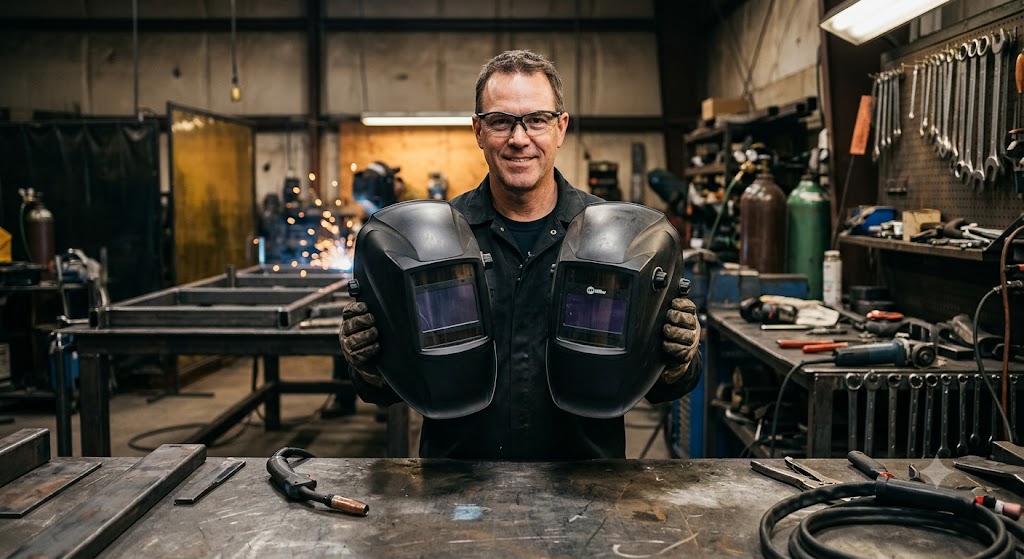
You’re standing in a welding supply store, or more likely squinting at two browser tabs, trying to figure out whether the Digital Elite is worth the step up from the Digital Performance. Miller doesn’t make bad helmets, and that’s exactly the problem: both of these are genuinely good, and the differences aren’t obvious from a quick spec comparison.
The short answer is that the Digital Elite adds X-Mode and a fourth arc sensor. The longer answer involves what those things actually cost you in real welding situations, who benefits from the upgrade, and who’s paying for features they’ll never use.
Both helmets run ClearLight 4x lens technology, a Miller-exclusive optical system that produces noticeably better color rendering, contrast, and brightness than standard 1/1/1/1-rated lenses. The viewing experience through either helmet is meaningfully better than most competitors at or below their price point. The question is which one fits your work.
Auto-darkening welding helmets react to arc light using sensors that trigger an electro-optical ADF cartridge. Sensor count, reaction speed, and operating modes determine how well the helmet performs across welding processes and environments. Miller’s two-helmet lineup separates by sensor count and mode availability, not by lens quality.
What Is the Difference Between Digital Elite and Digital Performance?
The core difference is three features: a fourth arc sensor, X-Mode, and four operating modes versus three.
The Miller Digital Performance runs three arc sensors and three modes: weld, cut, and grind. It uses ClearLight 4x, Miller’s Legacy headgear, and AutoSense technology that reads the ambient welding environment to automatically adjust sensitivity. It’s a lightweight helmet built for efficient welding with superior headgear, as Miller describes it, and that description is accurate.
The Miller Digital Elite adds a fourth arc sensor and a fourth operating mode: X-Mode. X-Mode is Miller’s arc detection technology designed for environments where sensor-based detection struggles, specifically high-frequency TIG starts, plasma cutting, and low-amperage work where the electromagnetic environment can cause false triggers or missed strikes. It also retains all three of the Performance’s modes plus memory function for two preset configurations.
That fourth sensor matters in the same situations where sensor count always matters: out-of-position welding, overhead work, and any application where your body or fixtures can shadow one or more sensors. With three sensors, there’s a meaningful chance of a shadowed trigger in extreme positions.
Which Is Lighter for Long Sessions?
The Digital Performance is lighter. Miller built the Performance line around what they describe as a lightweight helmet with superior headgear for increased efficiency. The shell is trimmed relative to the Elite, and the overall weight difference is noticeable when you’re wearing either helmet for a full shift.
The Elite carries more hardware, primarily due to the additional sensor and the circuitry required to support X-Mode. It’s not dramatically heavier, but welders who wear helmets for six or more hours a day will feel the difference by afternoon. Both use Miller’s Legacy headgear, which is among the better headgear systems available at this tier and distributes weight well across the forehead and crown. The headgear is not the weak point of either helmet.
If you’re doing shorter sessions, the weight difference is negligible. If you’re running full production days, the Performance is the more comfortable long-term wear.
Which Has Better Lens Clarity?
Neither. Both helmets use ClearLight 4x, and the lens technology is identical between them. ClearLight 4x delivers up to four times the visual quality of the minimum ANSI standard for 1/1/1/1-rated lenses, and Miller’s 2.5 light state means you can keep the hood down between passes and still see what you’re doing without lifting.
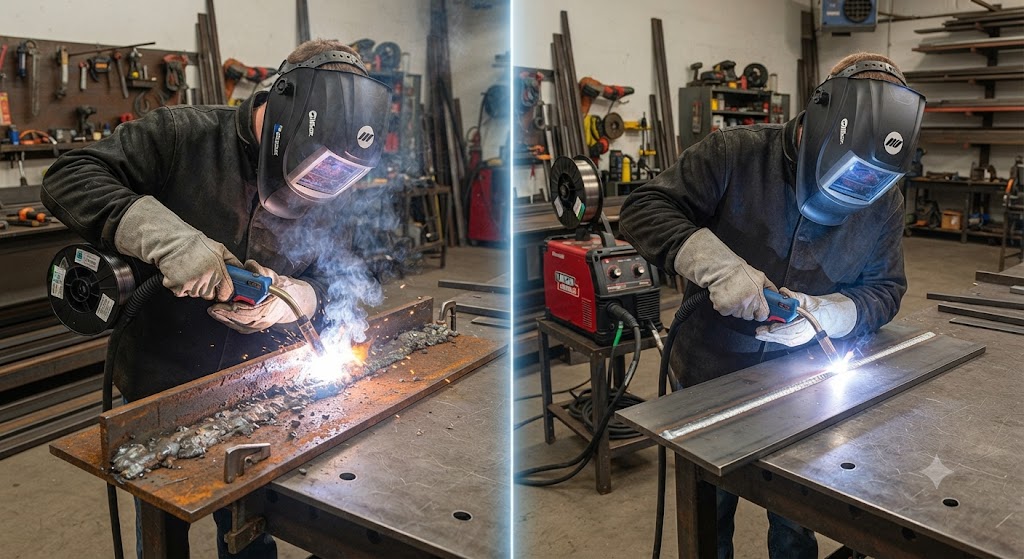
The real-world benefit of ClearLight 4x over standard budget-tier true-color lenses is visible the moment you compare them side by side: better color rendering of the weld pool and base metal, less eyestrain over a long session, and a brighter, more detailed view in the light state. Both helmets deliver that equally.
If your primary concern is lens quality, save yourself the upgrade and buy the Performance. You’re not getting a better view through the Elite.
X-Mode: Who Actually Needs It?
X-Mode was developed for applications where standard arc sensors have reliability problems. The primary use cases are:
- High-frequency TIG starts, where the spark used to initiate the arc can trigger the sensor inconsistently or not at all
- Plasma cutting, where the torch-to-workpiece geometry sometimes shadows sensors
- Outdoor welding in sunlight, where bright ambient light can cause false darkening or desensitize sensors to the actual arc
If you weld indoors, do most of your work in MIG or stick, and don’t run high-frequency TIG, X-Mode will not change your day. The three-sensor Digital Performance will handle your work reliably.
If you run a TIG-heavy shop, do production plasma cutting, or weld in variable outdoor light conditions, X-Mode is the feature that earns the Elite its premium.
Feature and Value Positioning
| Feature | Digital Performance | Digital Elite |
|---|---|---|
| Lens technology | ClearLight 4x | ClearLight 4x |
| Arc sensors | 3 | 4 |
| Modes | Weld, Cut, Grind | Weld, Cut, Grind, X-Mode |
| Memory settings | Not specified | 2 presets |
| Headgear | Legacy | Legacy |
| Light state | 2.5 | 2.5 |
| Weld shade range | 8 to 13 | 8 to 13 |
| Cut shade range | 5 to 8 | 5 to 8 |
| Best for | MIG, stick, general fab | TIG, plasma, outdoor welding |
The Verdict
Buy the Digital Performance if you’re a MIG, stick, or flux-core welder doing most of your work indoors. The lens is identical to the Elite, the headgear is the same, and you get a lighter helmet for everyday use. The only thing you’re missing is X-Mode, and if you don’t need X-Mode, you genuinely don’t need the Elite.
Buy the Digital Elite if you run TIG regularly, do high-frequency starts, cut plasma in varying conditions, or weld outdoors where sunlight competes with the arc. The fourth sensor and X-Mode are real performance advantages in those conditions, not marketing packaging.
The honest flaw in both helmets: the shade range starts at 8 for welding mode, which means neither is ideal for very low amperage TIG work under 20 amps where some welders prefer shade 7 or 8 precisely dialed. Miller’s own spec pages at millerwelds.com have the full technical comparison if you want to cross-reference against your specific process.
Miller Digital Performance on Amazon
Miller Digital Elite on Amazon
FAQ
What is the difference between the Miller Digital Elite and Digital Performance? The Digital Elite has four arc sensors and four modes including X-Mode; the Digital Performance has three sensors and three modes (weld, cut, grind). Both use ClearLight 4x lens technology and the same Legacy headgear.
Which Miller helmet is lighter for long sessions? The Digital Performance is lighter. Miller positioned it as their lightweight, high-efficiency option. Both use the same headgear, but the Performance’s reduced hardware load makes it the better all-day wear for high-volume welding.
Which has better lens clarity? Neither. Both helmets use identical ClearLight 4x lens technology. Lens clarity is not a differentiator between these two models.
What is X-Mode and do I need it? X-Mode is Miller’s arc detection system for environments where sensor-based detection is unreliable: high-frequency TIG starts, plasma cutting, and outdoor welding in bright light. If you weld indoors doing MIG or stick, you don’t need it. If you TIG or plasma cut regularly, it’s a meaningful upgrade.
What is the value difference between these helmets? The Elite carries a higher investment for the additional sensor and X-Mode. For welders who don’t use those features, the Performance delivers equal lens performance and better all-day weight at a lower price point.
Are these helmets ANSI Z87.1 compliant? Miller helmets meet ANSI Z87.1 standards. Full compliance details are available on Miller’s spec sheets at millerwelds.com.
Which is better for TIG welding? The Digital Elite, because X-Mode handles high-frequency TIG starts more reliably and the fourth sensor provides better detection in tight welding positions.
Can I use either helmet for grinding? Yes. Both include a dedicated grind mode with a 2.5 light state, which is Miller’s brighter-than-standard grind shade that lets you keep the hood down during grinding without compromising vision.
References
- https://www.millerwelds.com/en-US/safety-products/helmets/digital-elite-m00471/digital-elite-black-qr-clearlight-4x-296765 (Miller Digital Elite spec page)
- https://www.millerwelds.com/en-US/safety-products/helmets/digital-performance-m00401 (Miller Digital Performance spec page)
- Check on Amazon (Miller Digital Performance Amazon listing)
- Check on Amazon (Miller Digital Elite Amazon listing)
- https://www.millerwelds.com/products/clearlight-welding-helmet-lens-technology (ClearLight 4x technology page)
- https://www.millerwelds.com/technologies/x-mode (X-Mode technology page)
- https://www.osha.gov/laws-regs/regulations/standardnumber/1910/1910.133 (OSHA eye and face protection standard)
URL slug: miller-digital-elite-vs-digital-performance Excerpt: Both Miller helmets use identical ClearLight 4x lenses. The Digital Elite adds X-Mode and a fourth arc sensor for TIG and plasma; the Digital Performance is lighter and equally clear for MIG and stick. Choose based on your process, not the brand tier.