Welding Cap Fabric Guide: Cotton vs FR Fabric, and Why the Label Lies
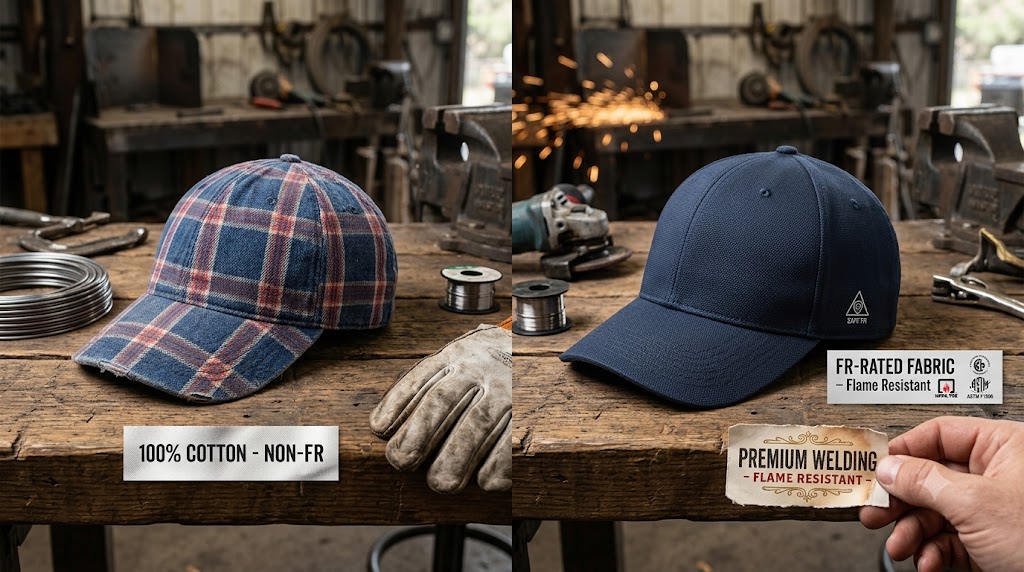
The cheapest welding caps and the good ones can look identical on a table: same paisley print, same six-panel shape, same bill. The difference hides in the fabric, and it is the difference between a cap that self-extinguishes and one that keeps burning against your scalp. This welding cap fabric guide breaks down cotton versus FR fabric so you buy the one that actually protects your head.
The short answer: plain 100 percent cotton resists melting but will ignite and keep burning, while flame-resistant (FR) fabric self-extinguishes when the flame leaves. For serious spark exposure, FR is the safer choice, and the label wording matters more than you would guess.
The trap in the words “100% cotton”
Here is the confusion that catches welders: 100 percent cotton and flame-resistant cotton are not the same thing. Both start as cotton. Only one is treated to self-extinguish.
Plain cotton has one genuine safety advantage over synthetics: it does not melt and drip onto your skin the way polyester does. That is why OSHA generally prefers natural fibers like cotton or wool over meltable synthetics for people working around heat. But plain cotton still ignites, and once lit it will keep burning. A cap that says only 100 percent cotton is telling you what it is made of, not that it will put itself out.
What FR fabric actually does
Flame-resistant fabric is engineered to self-extinguish. When the flame or spark source is removed, FR material stops burning instead of feeding the fire, and it will not melt onto your skin. There are two ways makers get there:
- Treated FR cotton: ordinary cotton run through a chemical process that adds flame resistance. It is more affordable, but the treatment can fade over many wash cycles.
- Inherent FR fabric: fibers that are flame-resistant by their own chemistry, so the protection lasts the life of the garment, usually at a higher price.
The best welding caps state a real standard. Look for wording like ASTM F1506 for arc flash or NFPA 2112 for flash fire, and often an arc rating (ATPV) in calories. A cap that cites a standard has been built and tested to it. One that just says cotton has not.
Cotton vs FR fabric, side by side
- Plain 100% cotton: does not melt, breathable, affordable, but ignites and keeps burning. Fine for light, low-spark work and hair containment, risky in heavy spark zones.
- Treated FR cotton: self-extinguishes, comfortable, budget-friendly, but FR can diminish with repeated washing if you ignore the care instructions.
- Inherent FR fabric: self-extinguishes for the life of the cap, most durable protection, costs more.
The washing catch nobody mentions
Treated FR cotton has a maintenance string attached: harsh detergents, bleach, and repeated high-heat washing can strip the flame-resistant treatment over time. If you buy treated FR, follow the manufacturer’s laundering guidance, skip the bleach, and do not assume a years-old, heavily washed cap still performs like new. Inherent FR sidesteps this because the resistance is built into the fiber, not applied on top.
How to choose your welding cap fabric
- Heavy stick, overhead, or high-spark work: choose FR fabric, ideally with a stated ASTM or NFPA rating. Inherent FR if you want set-and-forget durability.
- Light TIG, bench work, hair containment: treated FR cotton is a smart middle ground, and even plain cotton beats any synthetic that can melt.
- Anything around real fire or plant hazards: FR, no shortcuts, and mind the wash rules.
- Never: a polyester or blended novelty cap in the spark path. Meltable synthetics are the worst choice near heat.
A good example of a rated option is a flame-resistant 100 percent cotton welding cap that lists ASTM F1506 and NFPA 2112 compliance, which is exactly the label language you want to see.
The verdict
When you read a welding cap listing, do not stop at 100 percent cotton. Plain cotton will not melt, but it will burn, and only flame-resistant fabric self-extinguishes. Buy FR for real spark exposure, prefer inherent FR if you hate babying your gear, and if you choose treated FR cotton, respect the wash instructions so the protection you paid for is still there next year.
Frequently asked questions
Is a 100% cotton welding cap safe? Cotton is safer than meltable synthetics because it does not drip onto skin, but plain cotton still ignites and keeps burning. For real spark exposure, choose flame-resistant fabric.
What does FR mean on a welding cap? FR means flame-resistant: the fabric self-extinguishes when the flame source is removed instead of continuing to burn, and it will not melt onto your skin.
What is the difference between treated and inherent FR? Treated FR is regular fabric chemically processed to resist flame, and the treatment can fade with washing. Inherent FR is flame-resistant by the fiber’s own chemistry, lasting the life of the cap.
Does washing ruin a flame-resistant welding cap? It can on treated FR cotton if you use bleach, harsh detergents, or repeated high heat. Follow the care label. Inherent FR is not affected the same way.
What standards should a welding cap meet? Look for ASTM F1506 (arc flash) or NFPA 2112 (flash fire), sometimes with an arc rating in calories. A stated standard means it was tested to it.
Why not just wear a regular ball cap? Many ball caps are polyester or blends that melt when hit with sparks, which is the worst outcome near your scalp. Use a purpose-made FR or cotton welding cap instead.
References
- American Welding Society, Flame-Resistant Apparel: The Science Behind the Fabric: https://www.aws.org/magazines-and-media/welding-digest/flame-resistant-apparel-the-science-behind-the-fabric-and-five-myths-busted/
- Ratermann Manufacturing, Welding Safety: Flame-Retardant Clothing and PPE (notes OSHA preference for cotton or wool over meltable synthetics): https://rmi.rmimfg.com/ratermann-blog/welding-safety-flame-retardant-clothing-ppe
URL slug: welding-cap-fabric-cotton-vs-fr Excerpt: A welding cap that says 100 percent cotton is telling you what it is made of, not that it will put itself out. Here is cotton versus FR fabric, treated versus inherent, and the wash rules that keep protection intact.