Welding Cap Fabric Guide: Cotton vs FR Fabric
A welding cap is a small piece of gear, but the fabric it is made from is a genuine safety decision, not just a comfort preference. The wrong fabric on your head near sparks can melt into your scalp, which is exactly the kind of injury protective gear exists to prevent. The choice usually comes down to plain 100 percent cotton or flame-resistant treated fabric, and understanding the difference helps you buy the right cap. This guide breaks it down.
Should a Welding Cap Be 100 Percent Cotton?
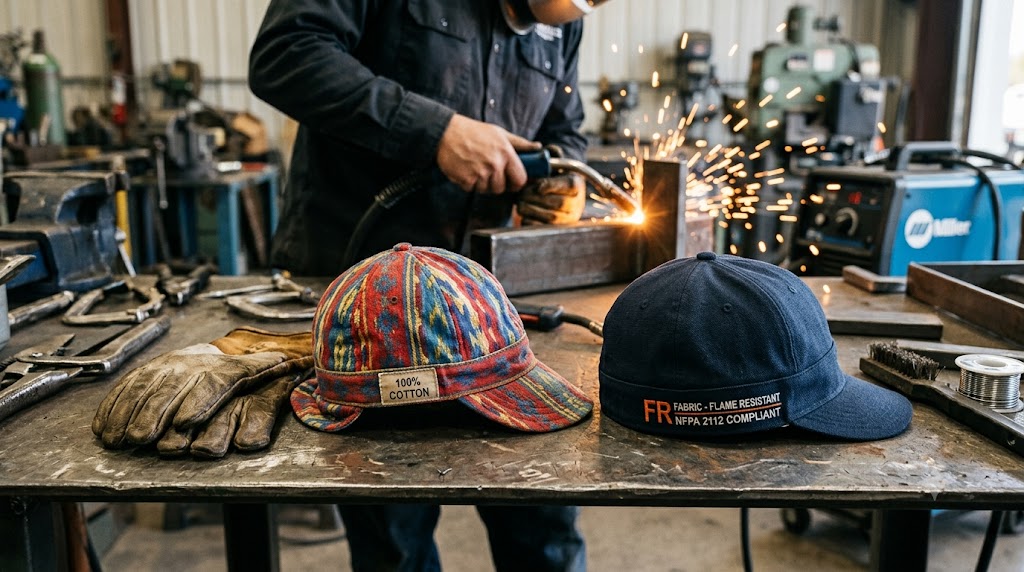
At minimum, yes, a welding cap should be 100 percent cotton if it is not FR-treated. This is the baseline safety requirement, and the reason is straightforward: cotton is a natural fiber that chars and burns rather than melting. Synthetic fibers like polyester and nylon melt when exposed to enough heat, and molten synthetic fabric sticks to skin and causes severe burns. A cotton cap, when exposed to a spark, may scorch or develop a small burn hole, but it will not melt onto your scalp.
So the first rule of welding cap fabric is simple: never wear a cap containing meltable synthetic fibers in a welding environment. 100 percent cotton is the accepted minimum standard for a basic welding cap.
What FR Fabric Adds
Flame-resistant (FR) fabric goes a step beyond plain cotton. FR fabric is either inherently flame resistant or, more commonly for welding caps, cotton treated with a flame-resistant finish. FR-treated cotton resists ignition and self-extinguishes rather than continuing to burn. Where a plain cotton cap can catch and sustain a small flame if a spark ignites it, an FR cap resists ignition and stops burning when the ignition source is removed.
For higher-heat and higher-spark environments, FR fabric provides a meaningful additional margin of safety. It is the standard for professional and industrial welding apparel, where the increased protection justifies the added cost.
Are FR Treated Caps Better Than Plain Cotton?
For safety, yes, FR-treated caps offer better protection than plain cotton. Plain cotton resists melting but can still ignite and burn. FR-treated cotton resists ignition and self-extinguishes, which is a genuine safety improvement in high-spark work.
The considerations are cost and laundering. FR-treated caps cost more than plain cotton caps. And the FR treatment can degrade over time with repeated washing, especially if washed improperly. FR garments should be laundered according to the manufacturer’s instructions to preserve the flame-resistant properties. Some FR fabrics are inherently flame resistant (the property is built into the fiber and does not wash out), while others are treated (the property can diminish over many wash cycles). Check which type you are buying if longevity of the FR property matters to you.
For occasional light welding, a quality 100 percent cotton cap is adequate and economical. For professional daily welding, heavy spark exposure, or any work where safety standards require FR apparel, an FR cap is the better choice.
Does Synthetic Fabric Melt Near Sparks?
Yes, and this is the central safety point of this entire guide. Polyester, nylon, and other synthetic fabrics melt when exposed to sufficient heat. Near welding sparks and spatter, a synthetic cap can melt, and molten synthetic material adheres to skin and causes deep, severe burns that are worse than the burn from an ignited natural fiber. This is why synthetic fabric is unacceptable for any head covering worn in a welding environment. Do not wear a synthetic beanie, synthetic ball cap, or synthetic cooling cap while welding.
Breathability and Comfort
Beyond safety, fabric affects comfort. Plain cotton breathes reasonably well and is comfortable in moderate conditions. FR-treated cotton is similar in breathability to plain cotton, since it is cotton underneath the treatment. Some caps use FR fabrics engineered for moisture-wicking and cooling, which combine spark safety with better hot-weather comfort. If you weld in hot conditions, look for a cap that combines FR protection with moisture management rather than compromising safety with a synthetic cooling fabric.
What to Choose
- Occasional or light welding: a quality 100 percent cotton welding cap is safe and economical.
- Professional or heavy welding: an FR-treated cotton cap for the added ignition resistance and self-extinguishing property.
- Hot conditions: an FR moisture-wicking cap that combines cooling with spark safety; never an untreated synthetic cooling cap.
- Never: any cap containing meltable synthetic fibers in a welding environment.
Browse cotton welding caps on Amazon
Browse FR welding caps on Amazon
The Bottom Line
Welding cap fabric is a safety decision. The absolute minimum is 100 percent cotton, which chars rather than melting. FR-treated cotton is the better choice for professional and heavy welding, resisting ignition and self-extinguishing, at a higher cost and with attention to proper laundering to preserve the FR property. Synthetic fabrics melt near sparks and cause severe burns, so they must never be worn while welding. Choose cotton at minimum, FR for serious work, and never synthetic.
Frequently Asked Questions
Should a welding cap be 100 percent cotton? At minimum, yes, if it is not FR-treated. Cotton chars and burns rather than melting, so it will not melt onto your scalp near sparks. 100 percent cotton is the accepted minimum standard for a welding cap.
Are FR treated caps better than plain cotton? For safety, yes. Plain cotton resists melting but can ignite and burn. FR-treated cotton resists ignition and self-extinguishes, offering better protection in high-spark work. FR caps cost more and require proper laundering to preserve the treatment.
Does synthetic fabric melt near sparks? Yes. Polyester, nylon, and other synthetics melt near welding heat, and molten material sticks to skin causing severe burns. Synthetic fabric is unacceptable for any head covering worn while welding.
Does the FR treatment wash out over time? Some FR fabrics are inherently flame resistant and do not wash out. Others are treated, and the property can diminish over many wash cycles, especially with improper laundering. Follow the manufacturer’s washing instructions and check which type you are buying.
What is the best welding cap fabric for hot weather? An FR moisture-wicking fabric cap combines spark safety with cooling. Plain 100 percent cotton is also acceptable and breathes reasonably. Never use an untreated synthetic cooling cap in spark exposure.
References
https://www.osha.gov https://www.nfpa.org https://www.lincolnelectric.com
SEO Title: Welding Cap Fabric Guide: Cotton vs FR Fabric