Welding Pants Buying Guide: FR vs Regular Denim and What Actually Protects You
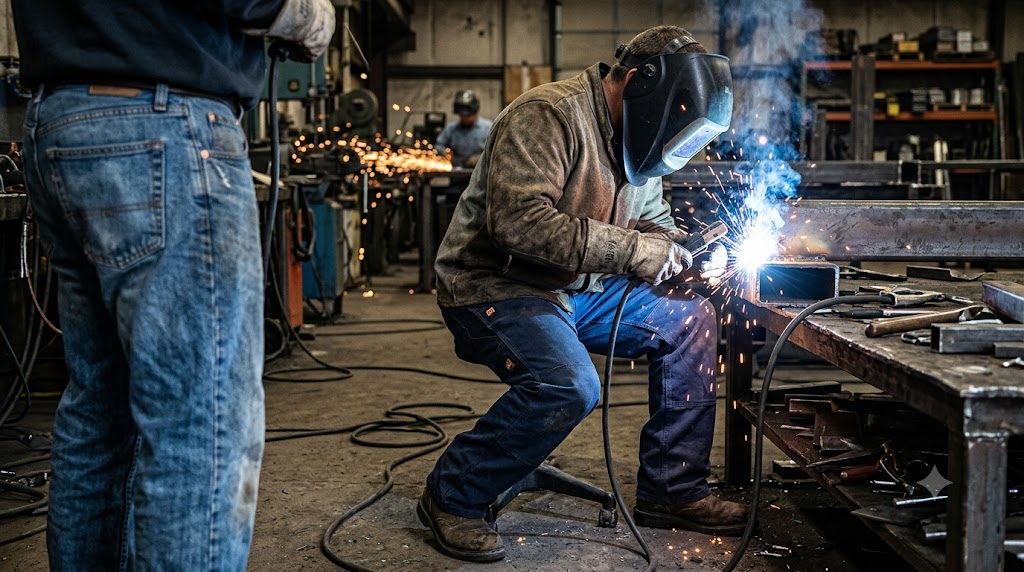
A welder in rural Texas once described the smell of burning denim as “the worst kind of reminder.” He’d been running a quick tack job in his regular jeans when a spatter hit the knee, and cotton denim caught. It self-extinguished, but the skin underneath didn’t come away clean. Regular jeans can ignite from welding spatter. FR pants are rated to self-extinguish. That gap is the whole argument.
Welding pants are work trousers made from materials rated to resist ignition, self-extinguish after a flame source is removed, and protect the wearer from short-duration flash fire and arc flash hazards. The two primary materials are flame-resistant (FR) cotton and FR denim, though canvas, duck, and blended aramid fabrics are also used.
The direct verdict: FR-rated pants are not optional for production welding. Regular denim can ignite from hot spatter and will continue to burn after contact ends. FR cotton or FR denim self-extinguishes. For MIG, stick, and plasma cutting work, FR pants are the correct choice every time. The only exception is hobbyist or very occasional TIG work where spatter is minimal and the risk profile is carefully assessed.
Why Regular Denim Fails in a Welding Environment
Untreated cotton denim is combustible. It has a relatively low ignition temperature, and once lit by welding spatter, it continues to burn on its own. In a welding environment, where hot spatter can travel several feet from the arc, denim pants are a genuine burn hazard.
FR denim and FR cotton are made from either inherently flame-resistant fibers or from cotton treated with a permanent FR chemical compound. When flame contact ends, FR fabric self-extinguishes. The fabric may char, but it does not continue to burn.
OSHA 29 CFR 1910.252(b)(3) requires that employees exposed to welding hazards be protected by appropriate PPE, and the standard’s guidance explicitly extends to protective clothing including pants. OSHA’s 2012 interpretation of this standard states that if welders are exposed to flash fire or short-duration flame, employers should provide flame-resistant clothing.
NFPA 2112, the standard for flame-resistant garments for flash fire protection, is the most common benchmark for FR workwear. NFPA 70E adds arc flash protection requirements for electrical work environments where arc flash is a specific hazard.
FR Cotton vs. FR Denim: The Real Difference
FR cotton (like Black Stallion’s F9 series or the original Carhartt FR canvas) is treated cotton fabric - the FR rating is baked in via fiber treatment. It’s typically heavier, stiffer, and more heat-tolerant than FR denim.
FR denim is cotton denim woven or treated to FR specifications. It looks and wears more like regular jeans, which is why welders adopted it heavily once brands like Carhartt and Wrangler started producing it. The comfort advantage is real. A 12.5-ounce FR denim pant moves differently than a stiff FR canvas dungaree.
The tradeoff: FR denim tends to be lighter weight and slightly less protective against sustained heat exposure than heavier FR canvas or duck. For light-to-medium MIG, TIG, and short stick runs, FR denim works well. For extended stick welding, overhead work with heavy spatter, or plasma cutting with significant dross, heavier FR canvas provides more margin.
Carhartt FR Pants: The Workhorse Pick
Carhartt’s FR line is the most recognized name in FR workwear among US welders. Their Rugged Flex FR series brought stretch-denim comfort to a product category that had always prioritized protection over wearability.
The Carhartt FR Rugged Flex Relaxed Fit Jean (12.5 oz, 99% cotton/1% spandex) is certified to NFPA 2112 and NFPA 70E. The FR rating survives washing - a key spec, because some FR treatments degrade over time and wash cycles. The relaxed fit gives enough room to work in without looking like a dungaree.
Named flaw: the cuff design. Carhartt’s FR jeans have a standard hem that some welders have to cuff up to avoid dragging. Cuffed bottoms trap spatter. If you’re running overhead stick work or heavy spatter jobs, the cuff becomes a collection point for hot metal. Look for a cuffless or hemmed-to-length option, or order a shorter inseam.
Carhartt FR Rugged Flex Relaxed Jean
Wrangler FR Pants: The Value Alternative
Wrangler RIGGS Workwear FR jeans are the other name you’ll encounter constantly. The original fit and relaxed fit options are well-regarded for everyday wear, NFPA 2112 certified, and typically available at a lower price than Carhartt FR.
The Wrangler FR Relaxed Fit Jean (available in 94% cotton/5% polyester at 14.75 oz for the original fit, lighter blends for the RIGGS line) has strong rep among pipeline welders and IBEW members who spend all day in FR. The heavier denim weight gives better protection against arc flash and flame exposure than lighter competitors.
Where Wrangler FR falls behind Carhartt: the Rugged Flex stretch technology in Carhartt’s denim gives noticeably better mobility. Wrangler’s FR jeans fit and move more like a traditional jean - comfortable but less forgiving when you’re kneeling, squatting, or working in tight positions.
Other FR Brands Worth Knowing
Bulwark FR and Red Kap make heavy-duty FR workwear that’s more common in industrial and utility settings than in the fab shop. Bulwark’s Arc Flash pants are the go-to for electrical utility work where NFPA 70E compliance is mandatory.
Black Stallion (by Revco) makes welding-specific FR pants in both FR cotton and FR stretch denim, with a cuffless design built specifically for welding. Dickie’s offers budget FR options, though the protection ratings and wash durability are lower than Carhartt or Wrangler.
Can You Wear Regular Jeans While Welding?
In a controlled hobbyist setting with minimal spatter - clean TIG work on thin gauge stainless, for example - the actual flame risk from regular denim is low. Many hobbyist welders do exactly this without incident.
But “without incident so far” is not the same as “protected.” Regular denim can and does ignite from hot spatter. For any production or commercial welding, FR pants are the correct choice, full stop. They are also the legally correct choice in OSHA-regulated workplaces where the employer’s hazard assessment identifies flash fire or arc flash exposure.
Comparison Table: FR Pants Head to Head
| Feature | Carhartt FR Rugged Flex | Wrangler FR Relaxed | Bulwark FR |
|---|---|---|---|
| Standard | NFPA 2112, 70E | NFPA 2112, 70E | NFPA 70E, 2112 |
| Fabric Weight | 12.5 oz | 14.75 oz (original) | Varies by model |
| Stretch | Yes (4-way flex) | No | No |
| Named Flaw | Cuffable hem, traps spatter | Less mobility than Flex | Higher price for trades use |
| Best For | Mixed welding and movement | Heavy production, pipeline | Electrical utility |
FAQ
What makes pants safe for welding? FR-rated fabric - either inherently flame-resistant fiber or FR-treated cotton - that self-extinguishes after flame contact ends. The fabric should be certified to NFPA 2112 (flash fire) or NFPA 70E (arc flash) depending on your work environment. Look for a cuffless hem to avoid spatter traps.
Do welders need FR-rated pants? For production MIG, stick, and plasma cutting work, yes. OSHA 29 CFR 1910.252(b)(3) and OSHA’s 2012 interpretation letter both point toward FR clothing as the expected protection when welders face flash fire or spatter exposure. Employers with formal hazard assessment programs are expected to provide FR PPE.
Can regular jeans be worn while welding? Regular denim can ignite from welding spatter and will continue to burn after the spatter lands. For very limited, low-spatter TIG work in a hobbyist setting, some welders accept the risk. For commercial, production, or OSHA-regulated welding, FR pants are required.
What does NFPA 2112 mean on FR pants? NFPA 2112 is the National Fire Protection Association’s standard for flame-resistant garments for flash fire protection. Pants certified to NFPA 2112 have been tested to verify they self-extinguish and meet minimum heat transfer and char length requirements.
How long do FR pants last? Most quality FR pants (Carhartt, Wrangler, Bulwark) are rated for 50 to 100 wash cycles while maintaining FR protection. After that, the FR treatment may degrade. Check the label’s wash count rating and replace when you’ve hit it.
Are Carhartt FR pants worth the price over Wrangler FR? For welders who prioritize mobility - lots of kneeling, crouching, confined space work - the Rugged Flex stretch denim is worth the premium. For production stand-welding or pipeline work where you’re mostly upright, Wrangler FR’s heavier denim weight gives comparable protection at a lower spend.
What is the best FR pant for overhead stick welding? A heavier FR canvas or duck pant (9 oz and above) with a cuffless hem gives the best protection for overhead work with heavy spatter. Bulwark’s heavier canvas options or Black Stallion’s welding-specific FR cotton line are designed for this kind of exposure.
References
- https://www.osha.gov/laws-regs/standardinterpretations/2012-01-12
- https://www.osha.gov/laws-regs/regulations/standardnumber/1910/1910.252
- https://www.nfpa.org/codes-and-standards/nfpa-2112-standard-development/2112
- https://www.nfpa.org/codes-and-standards/nfpa-70e-standard-development/70e
Slug: welding-pants-fr-vs-regular-denim Excerpt: Regular jeans can catch fire from welding spatter and keep burning. FR denim and FR cotton self-extinguish. Here’s how to choose welding pants that actually protect you, with picks from Carhartt, Wrangler, and Bulwark.