1/2 x 1 Welded Wire: Specs, Uses and Buying Tips
You are standing in the hardware store aisle staring at a roll of wire. The label reads “1/2 x 1, 16 gauge, GBW, galvanized.” You know you need welded wire for a dog kennel and a garden fence, but the label does not tell you whether this specific roll will still be standing in three years or rusting at every joint by next spring. The difference is in three numbers: the mesh, the gauge, and the coating process.
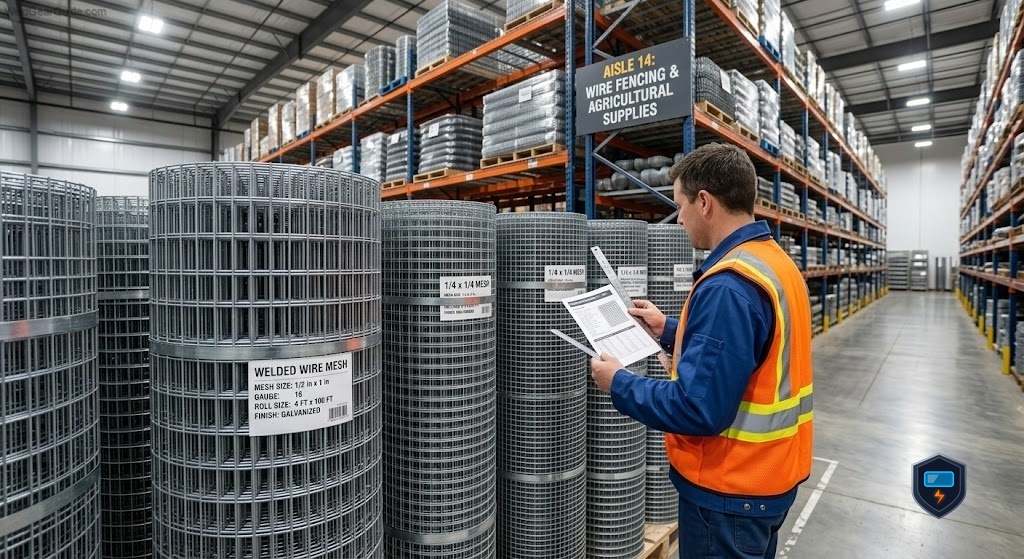
1/2 x 1 welded wire is a galvanized steel mesh grid with rectangular openings measuring 1/2 inch by 1 inch, fused at every intersection by resistance welding. The 1/2 inch dimension is the narrow spacing between wires, and the 1 inch is the wider spacing. It is commonly manufactured in 16 gauge (about 1.6 mm diameter) and sold in rolls from 24 inches to 48 inches wide and 10 to 100 feet long. The galvanization is typically galvanized before weld (GBW), meaning the wire was coated with zinc before being welded into a grid.
For most home and garden applications, 1/2 x 1 welded wire in 16 gauge GBW is the right choice. It is stiff enough to hold its shape on T-posts, tight enough to exclude medium-sized pests, and light enough to cut with hand snips. For dog kennels or areas with heavy animal pressure, step up to 14 gauge. For concrete reinforcement, skip this mesh entirely and use 6 x 6 welded wire fabric instead.
Reading 1/2 x 1 Welded Wire Specifications
Three numbers define the product. The mesh opening (1/2 x 1 inch) controls what can pass through. The wire gauge (16, 14, or 19) controls strength and rigidity. The coating process (GBW or GAW) controls lifespan.
Sixteen gauge wire has a diameter of about 0.062 inches (1.6 mm). It is rigid enough to stand on its own between posts spaced 8 to 10 feet apart, but you can still bend it by hand with effort. Fourteen gauge is about 0.080 inches (2 mm) and requires pliers to bend. Nineteen gauge is about 0.040 inches (1 mm) and is flexible enough to wrap around curves.
The Fencer Wire 16 gauge galvanized welded wire with 1 x 1/2 inch mesh is a representative GBW roll. It comes in multiple widths and lengths, and the Class 1 galvanized zinc coating is adequate for above-ground use. Its flaw is the coating. Because it is galvanized before welding, every intersection is bare steel. In a wet climate or with soil contact, the welds rust within a few years. Skip it for anything that touches the ground or needs to last more than 5 years. Look for a GAW alternative instead.
Where 1/2 x 1 Wire Works
This mesh size hits a useful middle ground. The 1/2 inch narrow dimension keeps out rats, snakes, and most garden pests. The 1 inch wider dimension keeps the wire lighter and more workable than a full 1/2 x 1/2 inch hardware cloth, which uses more wire per square foot.
Dog kennels: 16 gauge 1/2 x 1 mesh works for small to medium dogs in a supervised run. For large breeds that lean on the fence, 14 gauge is the minimum. The 1/2 inch spacing prevents a dog from getting its snout stuck or reaching through.
Garden fencing: The mesh excludes rabbits, groundhogs, and most rodents while letting air and light through. Attach it to wood posts or T-posts with wire ties or hog rings. A 4 foot height handles most garden pest pressure.
Property dividers and enclosures: 1/2 x 1 wire makes a clean, semi-transparent boundary that does not block sight lines. It works for compost bin walls, tool storage enclosures, and trash can barriers.
Deck railing infill: Some builders use 1/2 x 1 welded wire as infill panels between wood or metal railing posts. The mesh is rigid enough to hold flat in a frame, and the small openings meet most residential building code requirements for gap size. Check your local code for the maximum allowed opening, which is typically 4 inches for guardrails but can be stricter for specific applications.
1/2 x 1 vs 6 x 6 Welded Wire for Concrete
If you are pouring a slab, you might be tempted to use 1/2 x 1 welded wire as reinforcement. Do not. The mesh is too fine and too light for structural concrete work.
Concrete reinforcement uses welded wire fabric with much larger openings and heavier wire. The standard residential specification is 6 x 6 inch mesh in 10 gauge (W1.4), meaning 6 inch grid spacing with wires that have a cross-sectional area of 0.014 square inches. For heavier slabs like driveways, 6 x 6 in 6 gauge (W2.9) is common.
The Wire Reinforcement Institute explains that welded wire reinforcement provides tensile bridging across cracks when properly bonded within the concrete. The large grid spacing allows concrete to flow through and bond to the wire, while the heavier gauge provides actual structural tensile capacity. A 1/2 x 1 mesh in 16 gauge has neither the spacing for concrete flow nor the cross-section for structural value.
Use 6 x 6 welded wire fabric for slabs, driveways, and shed pads. Use 1/2 x 1 welded wire for fencing and enclosures. They are different products for different jobs.
Welding and Fabricating with 1/2 x 1 Welded Wire
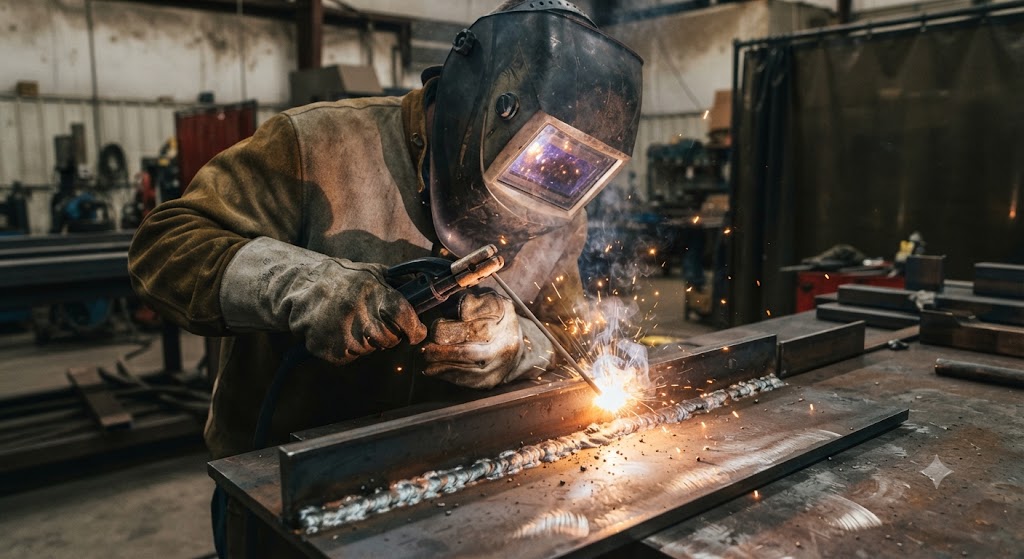
When you need to join panels, repair a broken weld, or fabricate a custom frame, MIG welding is the practical method. For galvanized 1/2 x 1 wire, ER70S-6 (AWS A5.18) is the standard filler. The silicon deoxidizer and manganese deoxidizer content in ER70S-6 tolerates the zinc coating better than ER70S-3, which is meant for clean, new steel. ER70S-2 offers even more deoxidizer capacity with its triple blend of aluminum, titanium, and zirconium, but it is less commonly available in MIG spools.
Wire diameter should match the material thickness. For 16 gauge mesh, 0.030 inch wire keeps the heat input low enough to avoid burn-through on the thin wire. For 14 gauge mesh, 0.035 inch gives more deposition without excessive heat.
Shielding gas affects the weld quality on thin mesh. A 75/25 argon-CO2 mix runs cooler and cleaner than 100% CO2, with less spatter and a more stable arc. Pure CO2 penetrates deeper but generates more heat and spatter, which can blow holes in 16 gauge wire.
If you are working with stainless welded wire mesh, the filler changes. ER308L (AWS A5.9) handles 304 and 308 stainless. ER316L adds molybdenum for chloride resistance in marine settings. Both carry the L designation for low carbon, which prevents carbide precipitation in the heat-affected zone.
Making the Right Call
The right 1/2 x 1 welded wire is 16 gauge for general use, 14 gauge for heavy animal pressure, and always GAW if the wire touches soil. If you are pouring concrete, use 6 x 6 W2.9 mesh instead. If you are welding repairs, use ER70S-6 with 75/25 gas and ventilate for the zinc fumes. The roll you buy should match the job you are doing, not the one the packaging suggests.
Frequently Asked Questions
What does 1/2 x 1 welded wire mean?
It means the mesh has rectangular openings measuring 1/2 inch by 1 inch, welded at every intersection. The 1/2 inch is the narrow spacing and the 1 inch is the wider spacing.
What gauge is 1/2 x 1 welded wire?
The most common gauge is 16 gauge (about 1.6 mm diameter). Some manufacturers offer 14 gauge for heavier duty and 19 gauge for lighter applications.
Can I use 1/2 x 1 welded wire for a dog kennel?
Yes, for small to medium dogs. Use 16 gauge for supervised runs and 14 gauge for large breeds that lean on the fence. The 1/2 inch spacing prevents snouts from getting stuck.
Can I use 1/2 x 1 welded wire for concrete reinforcement?
No. Concrete reinforcement requires welded wire fabric with larger openings (typically 6 x 6 inches) and heavier wire (10 gauge or thicker). The fine mesh of 1/2 x 1 wire does not provide structural tensile capacity.
What is GBW vs GAW in welded wire?
GBW means galvanized before welding. The wire is coated with zinc, then welded, leaving bare steel at every joint. GAW means galvanized after welding. The entire grid is dipped in zinc, covering every joint. GAW lasts much longer, especially in ground contact.
Can I weld galvanized 1/2 x 1 welded wire?
Yes, using ER70S-6 MIG wire (AWS A5.18) with proper ventilation. The zinc coating produces fumes that can cause metal fume fever. Use 0.030 inch wire diameter for 16 gauge mesh and 75/25 argon-CO2 shielding gas for the cleanest bead.
What is welded wire fabric?
Welded wire fabric is a grid of steel wires welded at every intersection, used as reinforcement in concrete. It is designated by spacing and wire size, such as 6 x 6 W2.9, meaning 6 inch spacing with wires having 0.029 square inch cross-section.
References
- ASTM F2453 - Standard Specification for Welded Wire Mesh Fence Fabric
- AWS A5.18/A5.18M - Specification for Carbon Steel Electrodes for Gas Shielded Arc Welding
- AWS A5.9/A5.9M - Specification for Bare Stainless Steel Welding Electrodes and Rods
- Wire Reinforcement Institute - Welded Wire Reinforcement 101