1x2 Welded Wire: Tighter Mesh, Tougher Choices
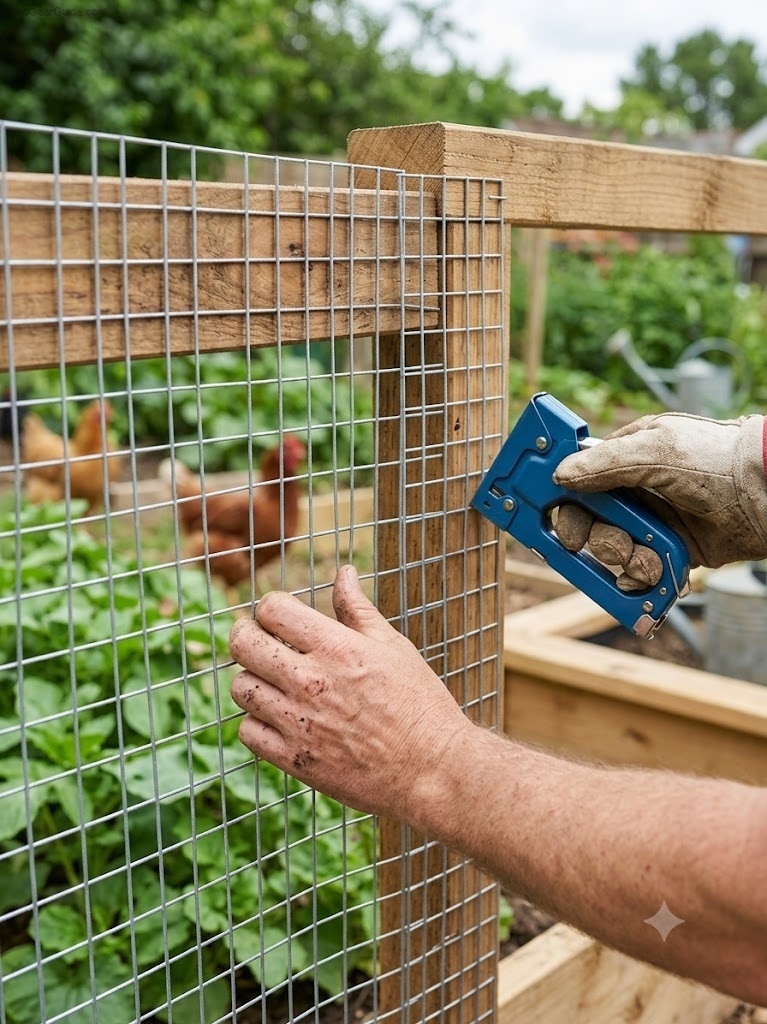
A groundhog ate every bean plant in my garden in one night. The 2x4 welded wire fence around it looked intact, but the openings were large enough for a fat groundhog to squeeze through, eat his fill, and walk back out. I replaced the bottom 2 feet with 1x2 welded wire and the garden survived the rest of the season.
1x2 welded wire is a steel mesh fence with rectangular openings measuring 1 inch by 2 inches, welded at every wire intersection. The tighter mesh blocks animals that walk through 2x4 openings: rabbits, groundhogs, raccoons, small dogs, and poultry. It is the step-down mesh you use when 2x4 is too open and hardware cloth is too small or too flimsy.
For garden protection, poultry enclosures, and small animal control, 14-gauge 1x2 welded wire in a galvanized finish is the standard choice. If you need the fence to last more than 10 years outdoors, look for galvanized after weld or PVC-coated options.
When 1x2 Beats 2x4
The 2x4 mesh is the default for a reason: it is less expensive, easier to find, and works for large dogs and property boundaries. But it fails at one specific job, and that job is keeping small animals in or out.
An adult rabbit can squeeze through a 2-inch by 4-inch opening. So can a groundhog, a small raccoon, and any chicken that decides to wander. If you are fencing a garden, a poultry run, or a small animal enclosure, 1x2 mesh is the minimum opening size that actually works.
The 1 by 2 opening is still large enough for chipmunks, mice, and snakes to pass through. If you need to block those, step down to 1/2-inch hardware cloth. But for rabbits, groundhogs, and poultry, 1x2 is the right balance of opening size and wire strength.
Gauge and Coating Options
1x2 welded wire is almost exclusively 14 gauge. The tighter mesh pattern means more wires per square foot, which adds rigidity even at the lighter gauge. You do not see 12.5 gauge 1x2 mesh commonly because the 14 gauge is already stiff enough for the applications it serves.
The coating options are the same three as any welded wire:
Galvanized Before Weld (GBW) is the standard at big box stores. The zinc coating burns off at the welds during manufacturing, leaving bare steel at the intersections. Expect 5 to 8 years before rust shows at the welds in moderate climates.
Galvanized After Weld (GAW) seals every intersection. It is harder to find in 1x2 mesh but worth seeking for permanent installations. Louis Page carries GAW 1x2 mesh and notes that galvanizing after welding provides superior corrosion resistance at every cross point.
PVC Coated adds a vinyl layer over galvanized wire. The coating makes the fence nearly invisible from a distance, which is why black PVC-coated 1x2 mesh is popular for garden borders and residential properties. The coating also adds a second corrosion barrier, extending life to 15 to 30 years.
The Rolls Worth Buying
Critterfence 1x2 Black PVC-Coated Welded Wire (3 ft. x 100 ft.)
The Critterfence 3x100 Metal Fence is a 1x2 welded wire with a black PVC coating over galvanized steel. The base wire is 16 gauge before coating and 15 gauge after coating, which is lighter than the 14-gauge standard. The coating is salt spray tested and rated for soil contact, meaning you can bury the bottom without the coating degrading.
The honest flaw: the 16-gauge base wire is thin. This fence will stop rabbits and groundhogs, but it will not stop a determined large dog from pushing through. The PVC coating also adds enough thickness to the wire that the actual opening size is slightly smaller than 1x2, which is fine for animal exclusion but can make the fence look denser than expected.
Who should skip this: anyone fencing for large dogs or livestock. The wire gauge is too light for animal containment beyond small creatures. Use it for garden protection and pest exclusion, not for a dog run.
Garden Zone 1x2 Mesh 14-Gauge Galvanized (24 in. x 25 ft.)
The Garden Zone 432425 is a shorter, lighter roll of 14-gauge galvanized 1x2 mesh. At 24 inches tall and 25 feet long, it is designed for small garden projects: protecting individual beds, lining the bottom of an existing fence, or creating a compost bin.
The flaw: the 24-inch height is too short for most full fence applications. It works as a bottom extension on an existing 2x4 fence, but on its own it will not stop a raccoon that can climb over 24 inches. The galvanizing is before weld, so expect rust at the intersections within a few years.
Who should skip this: anyone building a full-height fence. This is a supplemental roll for patching, extending, or small projects, not a primary fence.
Midwest Air Technologies 1x2 Mesh 14-Gauge (60 in. x 100 ft.)
The Midwest Air Technologies 309226A is the full-height, full-length roll: 60 inches tall, 100 feet long, 14 gauge, galvanized before weld. This is the roll you buy when you are fencing a large garden or animal enclosure and need 1x2 mesh at fence height.
The flaw: the listing sells as a quantity of two rolls, which means you are buying 200 feet of fence, not 100. Check the quantity before ordering. The galvanizing is Class 1 GBW, so the rust timeline is 5 to 8 years at the welds. The 14-gauge wire is adequate for rabbits and poultry but will bend if a large dog leans on it.
Who should skip this: if you only need 50 feet of fence, buying a 200-foot pack is wasteful. Look for a single-roll listing or buy from a local supplier where you can purchase exactly what you need.
Installation: Getting 1x2 Mesh Right
1x2 welded wire is stiffer than 2x4 mesh because the tighter grid has more welds per square foot. This makes it harder to bend around corners but easier to keep flat on a straight run.
Post spacing. Keep posts at 6 feet for 1x2 mesh. The tighter grid is heavier per square foot and will sag between posts if you stretch the spacing. For PVC-coated mesh, use 5-foot spacing because the coating adds weight.
Bottom treatment. For garden fencing, bury the bottom 2 to 3 inches or fold it outward and pin it to the ground with landscape staples. This stops animals from digging beneath. For PVC-coated mesh rated for soil contact, burying is fine. For GBW mesh, burying accelerates rust at the welds.
Fastening. Use galvanized wire ties or fence clips, not zip ties. The tighter mesh means more attachment points per post, which takes more time but produces a fence that does not rattle in the wind or sag over time.
The Last Word on 1x2 Mesh
1x2 welded wire is the mesh you buy when 2x4 is too open and hardware cloth is too small. It is the right choice for garden protection, poultry enclosures, rabbit control, and as a bottom extension on existing 2x4 fences. Buy 14 gauge for rigidity, look for galvanized after weld or PVC coating if you want the fence to last more than a decade, and keep your posts at 6 feet. If you are fencing for large dogs, this is not the mesh. Step up to 12.5 gauge 2x4 instead.
Frequently Asked Questions
What is 1x2 welded wire used for?
1x2 welded wire is used for garden fencing, poultry enclosures, rabbit control, and small animal exclusion. The 1 by 2 inch openings block rabbits, groundhogs, and small raccoons that can squeeze through 2x4 mesh.
Can rabbits get through 1x2 welded wire?
No. Adult rabbits cannot fit through a 1 by 2 inch opening. 1x2 mesh is the standard choice for rabbit exclusion in gardens and agricultural settings.
What gauge is 1x2 welded wire?
14 gauge is the standard for 1x2 welded wire. The tighter mesh pattern adds rigidity, so 14 gauge is sufficient for most applications. PVC-coated versions may have a 16-gauge base wire that becomes 15 gauge after coating.
Is galvanized before weld or galvanized after weld better for 1x2 mesh?
Galvanized after weld (GAW) is significantly better because it seals every wire intersection with zinc. Galvanized before weld (GBW) burns off the coating at the welds, creating rust points. GAW is harder to find but worth it for permanent installations.
Can I use 1x2 welded wire for a dog fence?
1x2 mesh in 14 gauge works for small dogs. For medium to large dogs, 1x2 mesh is too light. Use 12.5 gauge 2x4 mesh instead, which is stronger and has larger openings that are fine for dog containment.
How tall should a 1x2 welded wire fence be?
For garden protection, 36 to 48 inches is typical. For poultry enclosures, 48 to 60 inches. For full fence height, 60 to 72 inches. Add a 24-inch bottom extension of 1x2 mesh to an existing 2x4 fence for a two-mesh approach.
Does PVC-coated welded wire last longer than galvanized?
Yes. PVC coating adds a second barrier against corrosion and extends the fence life to 15 to 30 years. The coating also makes the fence less visible, which is preferred for residential and garden applications.