6011 Welding Rod: The Full Guide
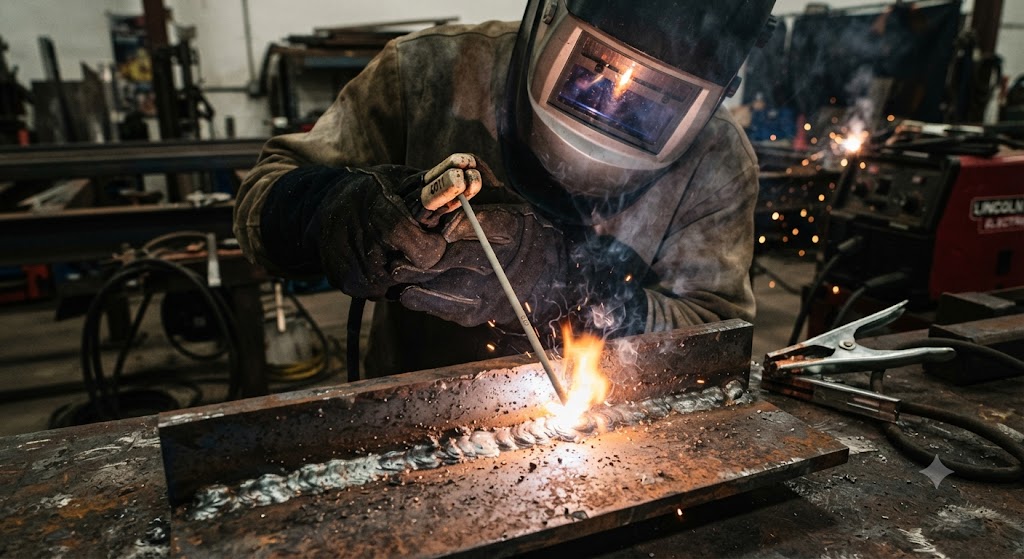
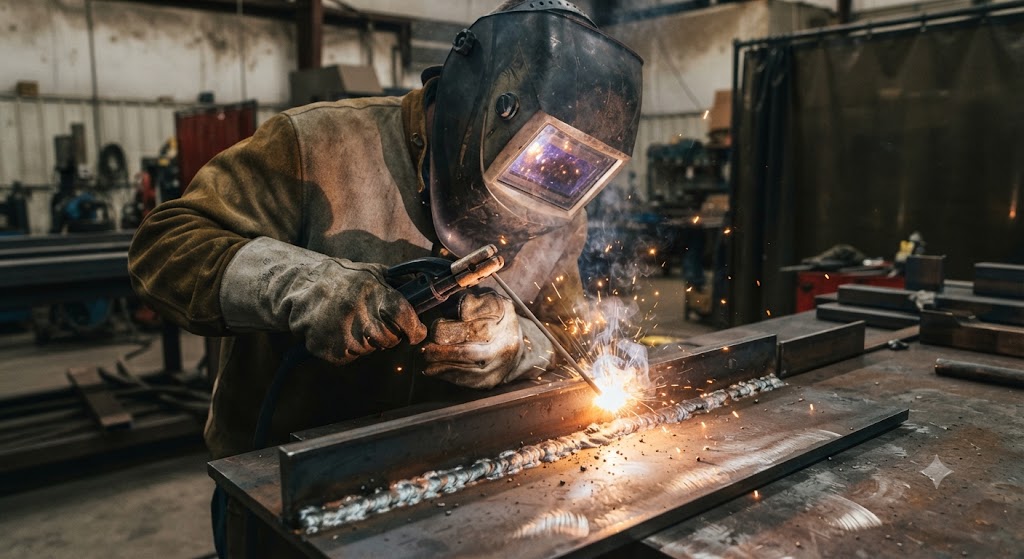
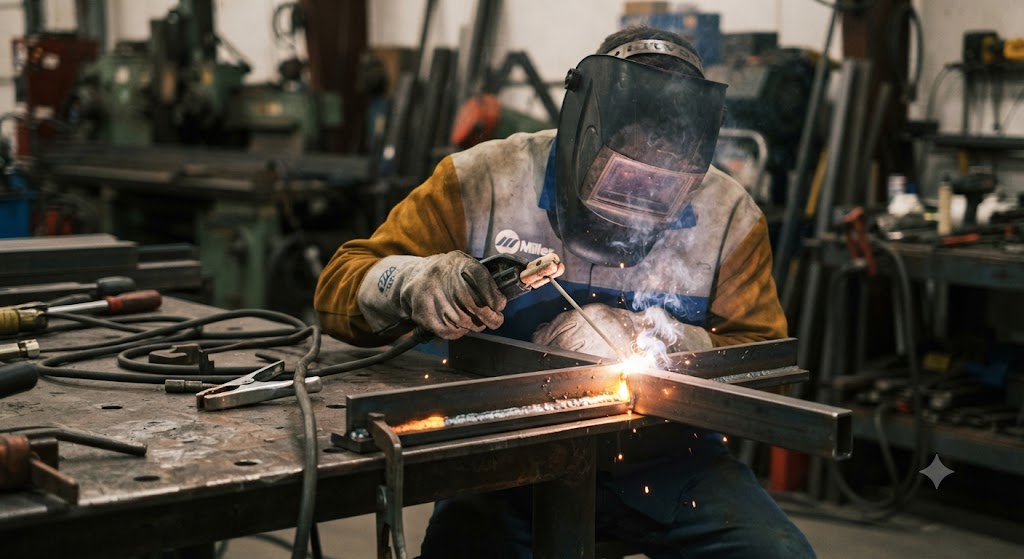
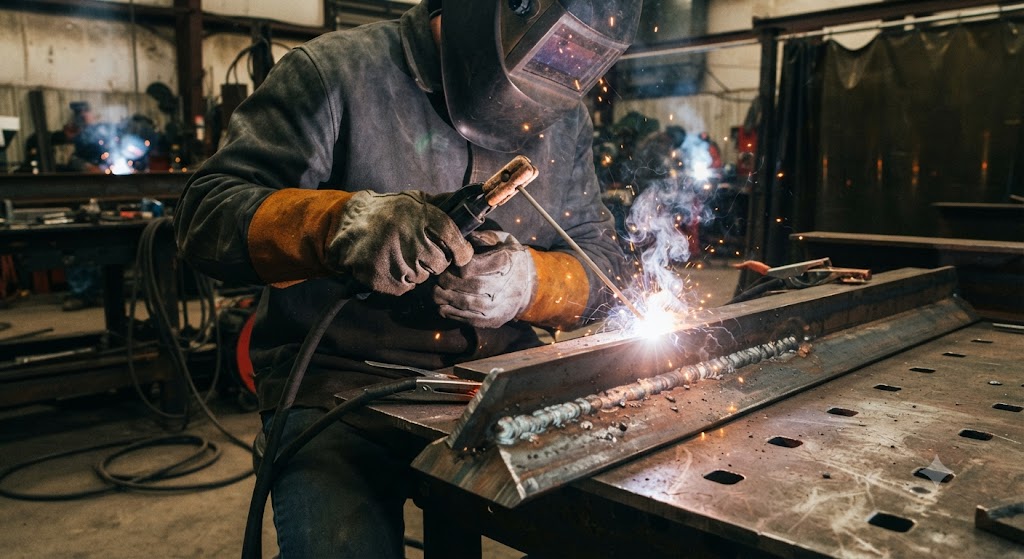
Picture the worst piece of steel on the farm: rusted, flaked with old paint, maybe still greasy, and you need it fixed today with the basic AC buzzbox in the corner. Reach for a fussy low-hydrogen rod and you will fight it all afternoon. Reach for 6011 and it bites straight through the mess and lays a bead anyway. That is the whole personality of this rod, and it is why it lives in nearly every farm and repair shop in the country.
The 6011 welding rod is a fast-freeze, deep-penetrating stick electrode rated at 60,000 PSI that runs on both AC and DC and welds through rust, paint, dirt, and galvanized coatings. Its willingness to run on an AC machine and cut through contamination makes it the go-to for repair, farm, and maintenance work. The trade-off is a rougher, more spattery arc and a less tidy bead than a low-hydrogen rod. Here is how to get the most out of it.
What the name tells you
Decoding E6011: the 60 means 60,000 PSI minimum tensile strength, the 1 means all positions including vertical and overhead, and the 1 in the fourth spot designates a high-cellulose potassium coating that runs on both AC and DC and produces deep penetration with a fast-freezing puddle. That fast-freeze quality is what lets it weld vertical and overhead well, because the puddle sets quickly instead of sagging.
6011 versus 6010: the key difference
This is the comparison that matters most, because the rods are close cousins. Both 6010 and 6011 dig deep, freeze fast, and handle dirty metal. The critical difference is current: 6010 runs on DC electrode positive only, while 6011 runs on both AC and DC. That single fact is why 6011 is the people’s rod. If you own an inexpensive AC-only stick machine, or an older transformer buzzbox, 6010 simply will not run for you, but 6011 will. 6010 is often considered to have a slightly cleaner, more surgical arc for pipeline work, but you need a DC machine to enjoy it. 6011 trades a little arc refinement for the freedom to run anywhere.
Why welders keep it on the shelf
- It welds dirty metal. Rust, paint, oil, dirt, and galvanized coatings that would ruin a 7018 bead are exactly where 6011 shines. It burns through contamination and still penetrates.
- It runs on basic AC machines. No DC required, so it works with the most basic stick welders.
- Deep penetration. The digging arc reaches into the joint, which is valuable on repair work where you cannot always prep the metal.
- All-position and fast-freeze. It handles vertical and overhead thanks to the quick-setting puddle.
The honest drawbacks
6011 is a workhorse, not a show pony. Its arc is aggressive and spattery, so you will clean up more spatter than with a smooth low-hydrogen rod, and the bead is rougher and less pretty. It is a 60,000 PSI rod, a step below 7018 in strength, and it is not the rod for code-critical structural joints where low-hydrogen welds are specified. If your work needs to look clean or meet strict structural specs, 6011 is the wrong tool. It also produces a fair amount of slag and smoke, so ventilation matters, especially on galvanized steel where zinc fumes are a real hazard.
Technique notes
6011 rewards a slightly different touch than a smooth rod:
- Use a whipping or stepping motion. Many welders whip 6011 forward and back to manage the fast-freezing puddle and control heat.
- Expect to keep the arc tight. The digging arc likes to be kept short for control.
- Run it on AC or DC electrode positive. It is happy on both; DCEP often gives a bit more penetration and control.
- Ventilate on coated metal. Because 6011 is often used on galvanized and painted steel, use fume extraction and a proper respirator.
Which 6011 to buy
The most common general-purpose diameter is 1/8 inch, which suits a wide range of repair and fabrication on typical steel thicknesses. Pick your quantity based on how much you weld.
- Hobart 770459 E6011 1/8-inch electrodes (5 lb) are a great choice for the occasional user and home shop who wants a trusted brand in a manageable quantity. Hobart’s 6011 runs clean for the type and lights easily on AC, and the 5 lb box is right for someone who is not welding every day. Its only real limitation is quantity: heavy users will burn through it quickly.
- Hobart 770460 E6011 1/8-inch electrodes (10 lb) are the same reliable rod in a larger quantity, the sensible pick for regular farm and repair work where you go through rod steadily and do not want to reorder constantly.
- Forney 31210 E6011 1/8-inch electrodes are a strong alternative brand for AC and DC machines, well suited to rusty and painted steel repair. Forney is a staple of farm-store shelves for good reason, and this rod delivers the classic 6011 dig.
How they compare: choose the Hobart 5 lb if you weld occasionally and want a smaller quantity, the Hobart 10 lb if you weld regularly and want fewer reorders, and the Forney if you prefer that brand or find it more available. All three deliver the deep-penetrating, dirty-metal-friendly performance 6011 is known for.
Who should skip 6011: if your machine is DC and you want the cleanest possible pipeline-style root pass, 6010 may suit you better. If you need clean, high-strength structural welds on prepped steel, reach for 7018 instead. And if you are a first-timer who wants easy, tidy practice beads on clean thin steel, 6013 will be less frustrating to learn on.
The bottom line
6011 is the rod you want when the metal is ugly and the machine is basic. It runs on AC or DC, penetrates deep, and welds through rust, paint, and galvanizing that would defeat a low-hydrogen rod. Accept the spatter and rougher bead as the trade-off for that versatility. For most home and farm shops, a box of Hobart or Forney 1/8 inch 6011 belongs on the shelf right next to your 7018.
FAQ
What is a 6011 welding rod used for? Repair, farm, and maintenance welding on dirty, rusty, painted, or galvanized steel, especially with AC machines. It penetrates deep and welds all positions at 60,000 PSI.
What is the difference between 6010 and 6011? Both dig deep and handle dirty metal, but 6010 runs on DC electrode positive only, while 6011 runs on both AC and DC. That makes 6011 the choice for inexpensive AC-only welders.
Can 6011 weld through rust and paint? Yes. That is one of its main strengths. Its digging arc burns through rust, paint, oil, dirt, and galvanized coatings and still penetrates the joint.
Is 6011 good for beginners? It is useful and forgiving about metal condition, but its aggressive, spattery arc is harder to control than a smooth 6013. New welders often learn on 6013 first, then add 6011 for dirty-metal work.
What current does 6011 run on? Both AC and DC. DC electrode positive often gives slightly more penetration and control, but 6011 runs fine on a basic AC machine, which is a big part of its appeal.
Is 6011 as strong as 7018? No. 6011 is a 60,000 PSI rod, while 7018 is 70,000 PSI with a low-hydrogen, crack-resistant weld. Use 7018 for structural and code work, and 6011 for penetration on dirty metal.
References
- Hobart Brothers, technical articles and product documentation on E6011 stick electrode characteristics (manufacturer documentation), hobartbrothers.com.
- The Fabricator, articles comparing 6010, 6011, and 7018 stick electrodes, thefabricator.com.
- Lincoln Electric and Miller Electric stick electrode selection guidance on E6011 current and applications (manufacturer documentation).