7018 Welding Rod: The Full Guide
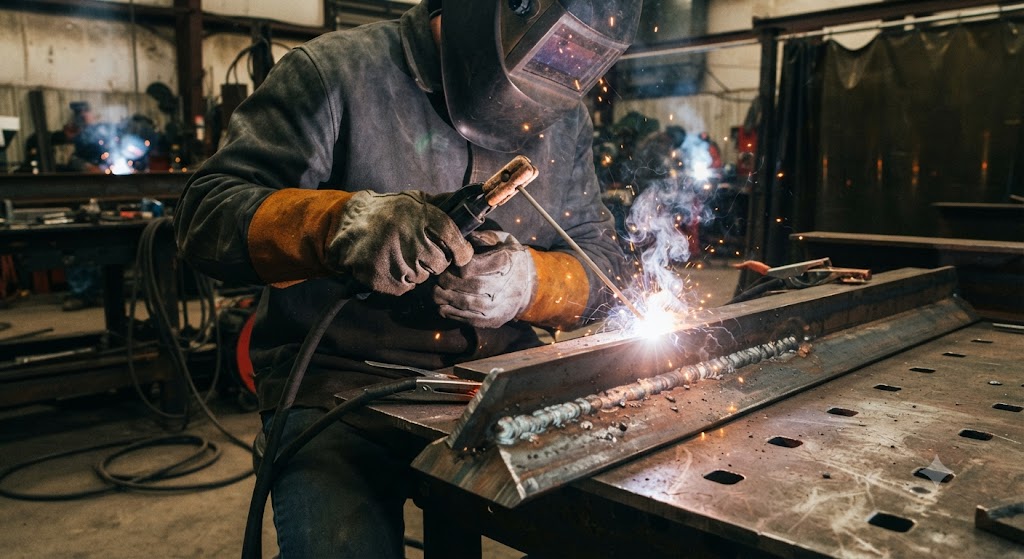
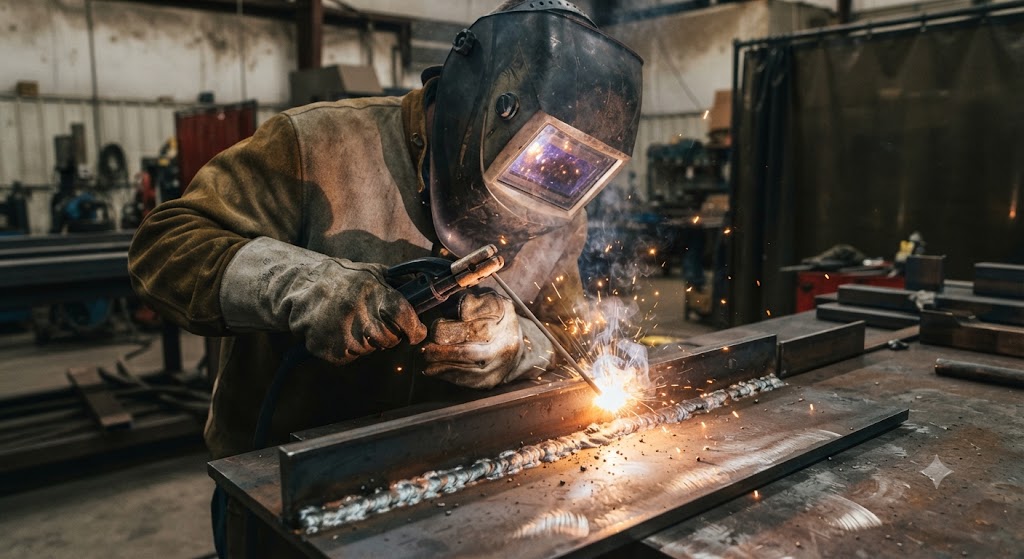
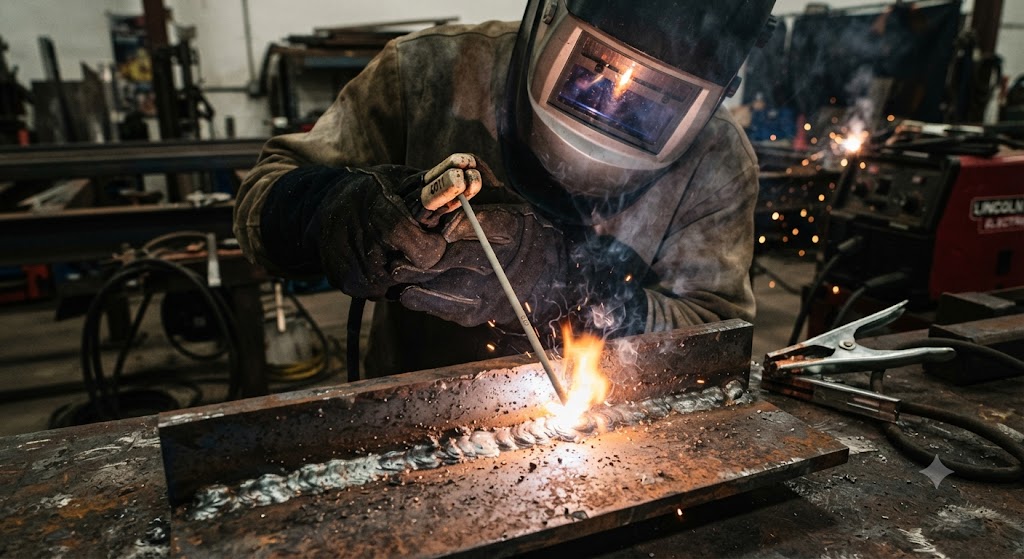
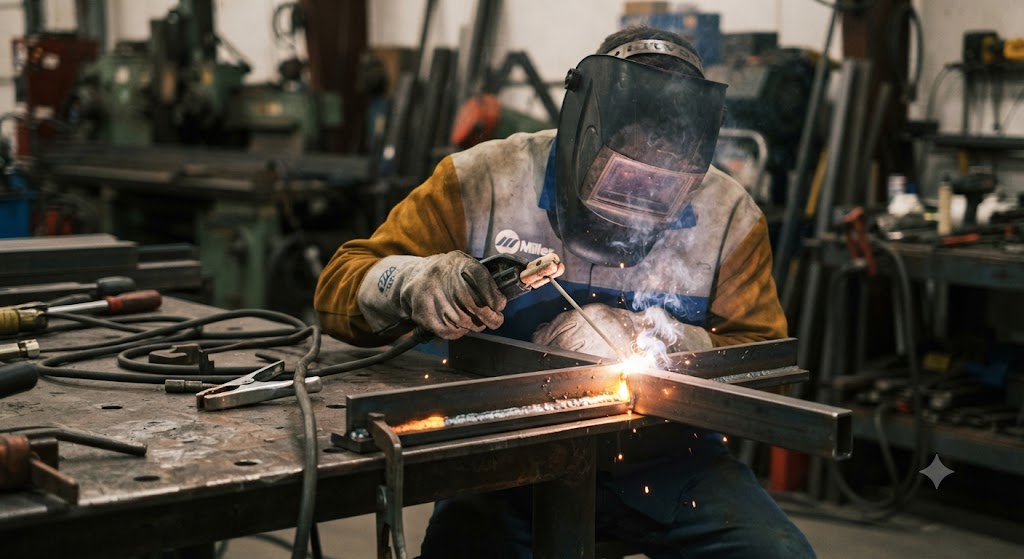
There is a reason 7018 is the rod that structural welders trust with joints that hold up buildings and bridges. Strike an arc with a good stick of it and the difference is immediate: the arc is smooth and quiet, the puddle is controllable, and the bead peels its slag and looks like it belongs on a spec sheet. Then you leave a box open on a humid bench for a weekend, run a bead, and watch tiny cracks appear, and you learn the other half of the 7018 story the hard way.
The 7018 welding rod is a low-hydrogen, all-position stick electrode rated at 70,000 PSI tensile strength, prized for strong, crack-resistant, clean-looking welds on structural and heavy mild steel. Its strength comes from a low-hydrogen flux coating, and that same coating is its one real weakness: it absorbs moisture and must be kept dry. Understand both and 7018 becomes the most rewarding rod in your kit.
What the name tells you
Breaking down E7018 the AWS way: the 70 means 70,000 PSI minimum tensile strength, the 1 means all positions including vertical and overhead, and the 8 designates a low-hydrogen, iron-powder flux coating that typically runs on AC or DC electrode positive. That low-hydrogen coating is the whole point. By keeping hydrogen out of the weld metal, 7018 avoids the hydrogen-induced cracking that can plague high-strength steel welds, which is exactly why codes and structural work lean on it.
Why welders love it
7018 earns its reputation on a few fronts:
- Strength and toughness. The 70,000 PSI weld metal is strong and ductile, holding up under load and resisting cracking, which is why it is a staple of structural steel, heavy equipment, and pressure work.
- A smooth, quiet arc. Compared with a snappy 6010 or 6011, 7018 runs soft and stable, making it easier to control a clean puddle once you get the technique.
- Beautiful beads and easy slag. The iron-powder coating lays a flat, attractive bead, and the slag tends to peel cleanly, which speeds up multi-pass work.
- All-position capability. With the right technique it runs flat, horizontal, vertical, and overhead.
The catch: moisture is the enemy
Here is the flaw you cannot ignore. The low-hydrogen coating that makes 7018 strong is hygroscopic, meaning it pulls moisture out of the air. A rod that has absorbed too much moisture can reintroduce hydrogen into the weld, undoing the whole benefit and risking cracking, porosity, and weakened joints.
That is why serious shops store 7018 in a heated rod oven and only pull out what they will use in a shift. For home and hobby use you do not necessarily need a full oven, but you do need to respect the principle: keep rods in a sealed, dry container, do not leave them exposed on a damp bench, and if a rod has clearly been sitting out in humidity, do not trust it for critical work. Some 7018 rods carry an MR (moisture resistant) designation, meaning the coating is formulated to resist moisture pickup longer, which is a genuine advantage if your storage is not ideal.
The honest bottom line on the drawback: 7018 asks more of you than a forgiving rod like 6013. If you will not store it properly, its greatest strength quietly becomes a liability.
Technique notes
7018 rewards a few habits:
- Run a tight arc. 7018 likes a short arc length, almost dragging. A long arc invites porosity and defeats the low-hydrogen benefit.
- Clean your metal. Unlike 6011, 7018 does not like to weld through heavy rust, paint, or mill scale. Prep the joint.
- Set current for the diameter. Match your amperage to the rod size and metal thickness, and lean on DC electrode positive for the smoothest results where your machine allows.
Which 7018 to buy
Diameter is the first decision. A 3/32 inch rod is friendly to smaller machines and thinner structural work, while 1/8 inch is the workhorse size for general structural and heavier plate.
- Forney E7018 AC 3/32-inch electrodes are a smart pick if you run a smaller or AC-capable machine and want that smooth low-hydrogen bead without needing a big DC welder. The smaller diameter is easier to control while you build 7018 technique. Its limitation is the 3/32 size itself: for thick plate you will want to step up to 1/8 inch.
- Forney E7018 3/32-inch electrodes are another solid option in the same easy-to-run diameter for general mild steel structural work, giving you the classic 7018 arc and slag behavior at a size that suits home shops.
- Lincoln Excalibur 7018 MR electrodes are the step up for anyone who wants premium arc characteristics and the MR moisture-resistant coating. If you weld intermittently and cannot guarantee a perfectly dry rod oven, that MR formulation is real insurance, and the arc quality is what many welders consider best-in-class. The trade-off is that it is a more premium line than the general Forney rods.
How they compare: the Forney rods are the sensible everyday choice for a home or farm shop building 7018 skills, while the Lincoln Excalibur MR is the pick when weld quality and moisture resistance matter most, such as intermittent use or more demanding joints.
Who should skip 7018: if you are still learning to strike and hold an arc, or you mostly weld thin, dirty, or rusty steel, start with 6013 or 6011 instead. 7018 is a rod to grow into, and it will frustrate you on contaminated metal or with an unstable arc.
The bottom line
7018 is the rod you reach for when the weld has to be strong, clean, and trustworthy. Learn its tight-arc technique, weld on clean metal, and above all keep it dry. Do that and few rods reward you more. Choose the Forney 3/32 for approachable everyday structural work, or the Lincoln Excalibur MR when you want top arc quality and moisture protection built in.
FAQ
What is a 7018 welding rod used for? Structural and heavy mild steel work that demands strong, crack-resistant welds, such as building frames, heavy equipment, and pressure jobs. It is a low-hydrogen, all-position rod rated at 70,000 PSI.
Why does 7018 have to be kept dry? Its low-hydrogen flux coating absorbs moisture from the air, and a damp rod can put hydrogen into the weld and cause cracking and porosity. Store it sealed and dry, or in a rod oven.
What does the MR in 7018 MR mean? MR stands for moisture resistant. The coating is formulated to resist moisture pickup longer than standard 7018, which helps if you cannot store rods in a heated oven.
Can 7018 run on AC? Many 7018 rods have AC-capable versions, and some are designed specifically for AC machines. Standard 7018 also runs well on DC electrode positive. Check the box for your machine type.
Do I need to clean metal before welding with 7018? Yes. Unlike 6011, 7018 does not weld well through heavy rust, paint, or scale. Clean the joint for the best, strongest results.
What size 7018 rod should I use? Use 3/32 inch for smaller machines and thinner structural work, and 1/8 inch for general structural work and thicker plate. Match amperage to the rod diameter and metal thickness.
References
- Hobart Brothers, technical articles on E7018 low-hydrogen electrode characteristics and storage (manufacturer documentation), hobartbrothers.com.
- Lincoln Electric, Excalibur 7018 MR product and specification documentation (manufacturer documentation), lincolnelectric.com.
- The Fabricator, articles on 7018 arc characteristics and low-hydrogen electrode handling, thefabricator.com.