7024 Welding Rod: The Complete Guide
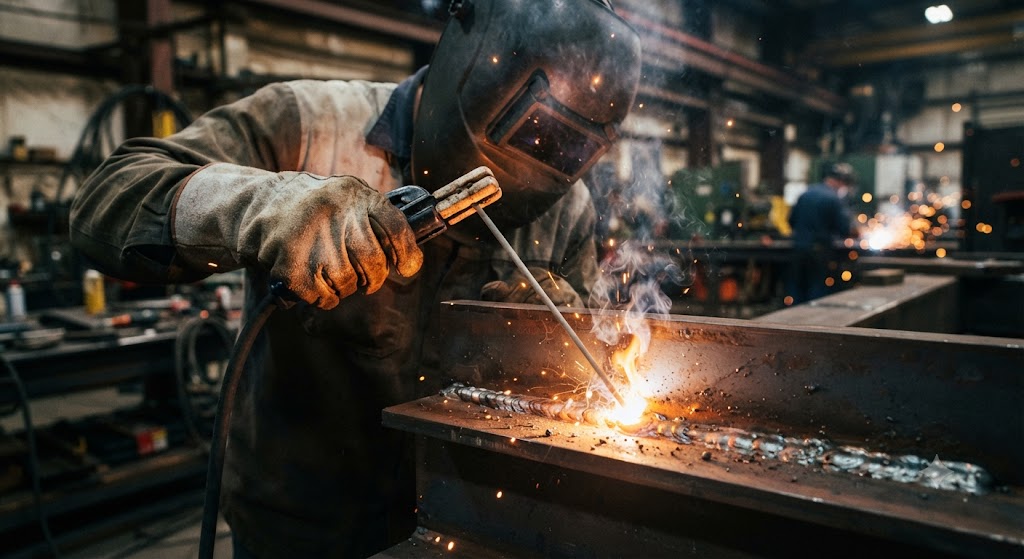
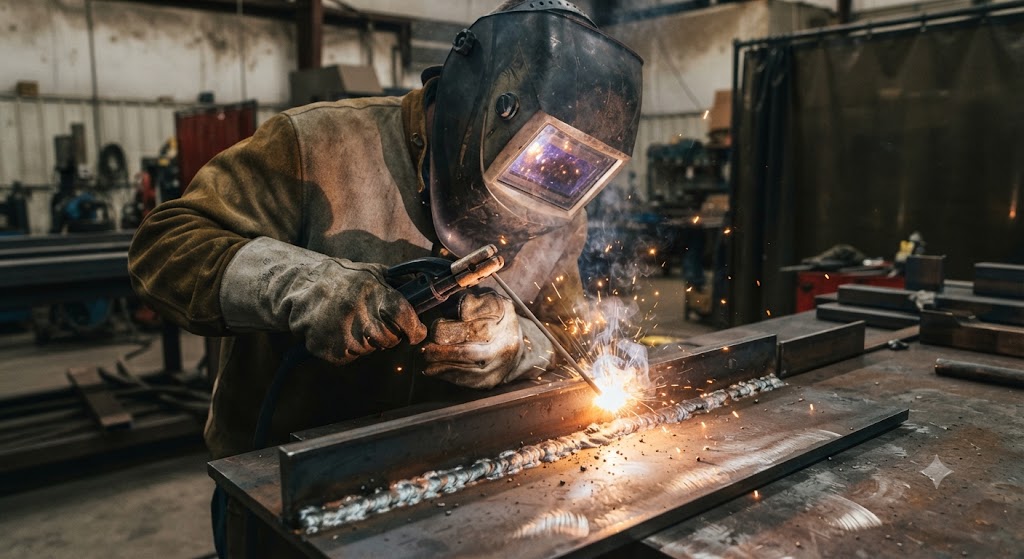
Ask a production welder about the rod they can run all day without thinking, and more than a few will grin and say “jet rod.” Drop a 7024 into the holder, drag it along a flat fillet, and it lays a fat, smooth bead so fast it feels like cheating. There is a reason it earned a nickname. On long, flat, repetitive welds, nothing pours metal quite like it.
The 7024 welding rod, often called a jet rod or drag rod, is an iron-powder mild steel stick electrode rated at 70,000 PSI that is built for high-deposition, single-pass welds in the flat and horizontal positions. Its thick iron-powder coating lets you drag it right along the joint for fast, clean fill, but that same design limits it to flat and horizontal work only. Here is what it does well and where it stops.
What the name means
Decoding E7024: the 70 is 70,000 PSI minimum tensile strength, the 2 means flat and horizontal positions only, and the 4 designates an iron-powder coating. That middle digit is the crucial one. Unlike the all-position 6013, 7014, or 7018, the 2 in 7024 tells you this rod is not made to weld vertical or overhead. Its puddle is too fluid and its deposition too high to hold out of position.
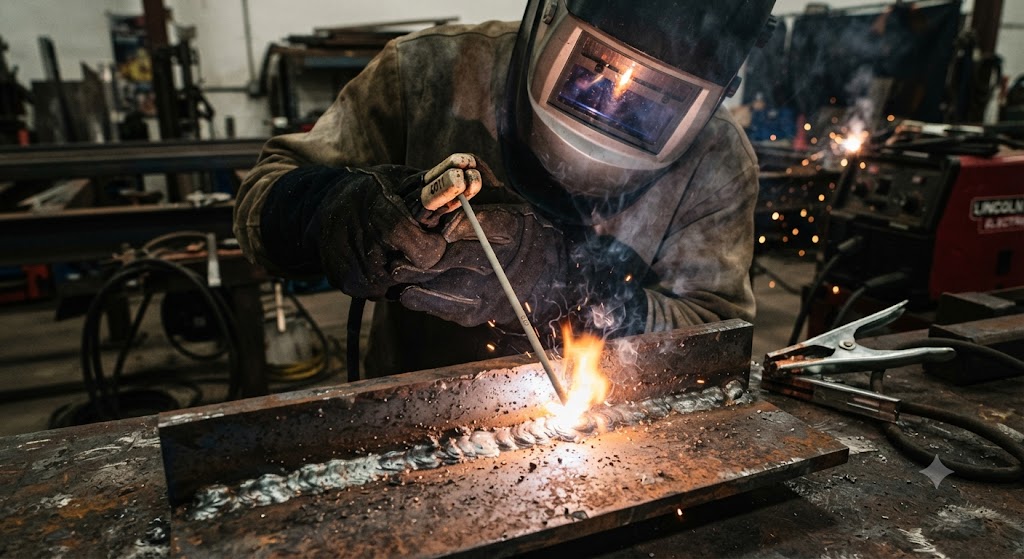
What you get in exchange is speed. The heavy iron-powder coating deposits a lot of metal fast, with a quiet, stable arc, low spatter, shallow penetration, and a heavy slag that peels off easily to reveal a finely rippled bead.
Direct answer: what is 7024 used for?
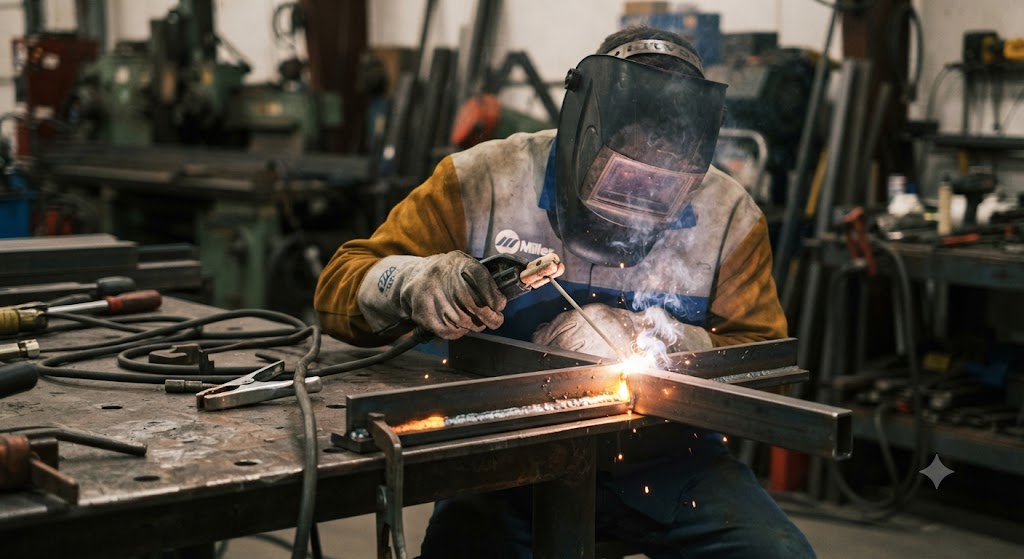
7024 is used for large, long, flat or horizontal welds where you need to lay a lot of metal quickly in a single pass: shipbuilding, heavy plate fabrication, deck welding, and other production work with the joint positioned flat. Because you can literally drag the rod along the joint, it is fast and easy to run once the work is set up flat.
Where 7024 is the wrong tool: anything vertical or overhead, thin sheet metal, dirty or rusty steel, and structural joints that need deep penetration. Its shallow penetration and flat-only design mean it is a specialist, not a general repair rod. One honest caution from welders who use it daily: 7024 is not the rod for structural code work that requires deep fusion or low-hydrogen properties. It is a fast fill rod for flat production, full stop.
Why they call it a jet rod
“Jet rod” is a nickname that grew out of Lincoln’s Jetweld trade name for its 7024-class electrode, and it stuck because the rod deposits metal so fast it feels like it is flying along the joint. “Drag rod” is the other common nickname, because the technique is exactly that: rest the heavy flux coating against the work and drag, letting the coating maintain arc length for you. That self-regulating drag is what makes 7024 so easy and quick on flat work.
Amperage and technique
Because 7024 deposits so much metal, it runs at higher amperage than a same-size 6013 or 7014. Follow the box, start toward the middle of the range, and let the drag technique do the work:
- Drag, do not whip. Rest the coating on the joint and pull steadily.
- Keep it flat or horizontal. This rod will not behave vertical or overhead.
- Run clean metal. Shallow penetration means it welds over dirt rather than through it.
- Expect heavy slag that peels easily. That is normal and part of the smooth finish.
It runs on AC or DC, and welders debate which they prefer; try both on your machine and use whichever gives the steadier arc.
Which 7024 to buy
7024 is often a production consumable sold in larger quantities, and the classic named products are Lincoln’s Jetweld 1 and ESAB’s Sureweld 7024, both established manufacturer lines you can source through welding suppliers. On general marketplaces it is most commonly found in bulk cans:
- E7024 1/8-inch stick electrodes (bulk sealed can) are an option if you want a large, hermetically sealed quantity for steady flat production welding. The obvious limitation is quantity: a big can is only worth it if you weld a lot of flat fillets, so it is overkill for occasional use.
If you only weld flat joints occasionally, you may be better served by a versatile all-position rod like 7014 for clean steel or 6011 for dirty steel, rather than committing to a production quantity of a flat-only specialist. For high-volume flat fabrication, though, a named line like Lincoln Jetweld 1 or ESAB Sureweld 7024 from a welding supplier is the professional’s choice.
Who should skip 7024: hobbyists, anyone welding out of position, and anyone doing structural or repair work on varied joints. 7024 earns its place only when you have lots of flat or horizontal welds to fill fast.
The bottom line
7024 is a one-trick specialist, and the trick is speed on flat and horizontal welds. Its heavy iron-powder coating drags along the joint and pours metal fast with a clean, rippled bead, which is why production welders love it. But it will not weld vertical or overhead, it wants clean metal, and it is not a deep-penetration structural rod. Match it to long flat fillets and it is unbeatable; ask it to do anything else and reach for a different rod.
FAQ
What is 7024 welding rod used for? Large, long, flat or horizontal single-pass welds where you need to deposit a lot of metal quickly, such as heavy plate and deck fabrication. Its iron-powder coating makes it fast and easy to drag along the joint.
Why is it called a jet rod? The nickname comes from Lincoln’s Jetweld trade name for its 7024-class rod and stuck because the electrode deposits metal so fast. It is also called a drag rod, after the technique of dragging the coating along the joint.
Can 7024 be used out of position? No. The 2 in E7024 means flat and horizontal only. Its fluid, high-deposition puddle will not hold on vertical or overhead welds.
Does 7024 penetrate deeply? No. It has shallow penetration by design, favoring fast fill on clean metal over deep fusion. For deep penetration use 6010 or 6011; for structural strength use 7018.
What technique does 7024 use? The drag technique: rest the heavy flux coating on the joint and drag steadily. The coating maintains arc length for you, which is part of why it is so easy on flat work.
Is 7024 good for beginners? It is easy to run on flat joints, but its flat-only limitation and production focus make it a poor first rod. Beginners are better served by 6013 for general learning.
References
- Lincoln Electric, Jetweld 1 (E7024) and Murex 7024 product documentation with mechanical properties (manufacturer), lincolnelectric.com.
- Hobart Brothers and ESAB iron-powder electrode documentation (manufacturer).
- Inweld Corporation, 7024 electrode data sheet, AWS A5.1 E7024 description and applications (manufacturer).