Aluminum Brazing Rod: Do Low-Temperature Rods Actually Work?
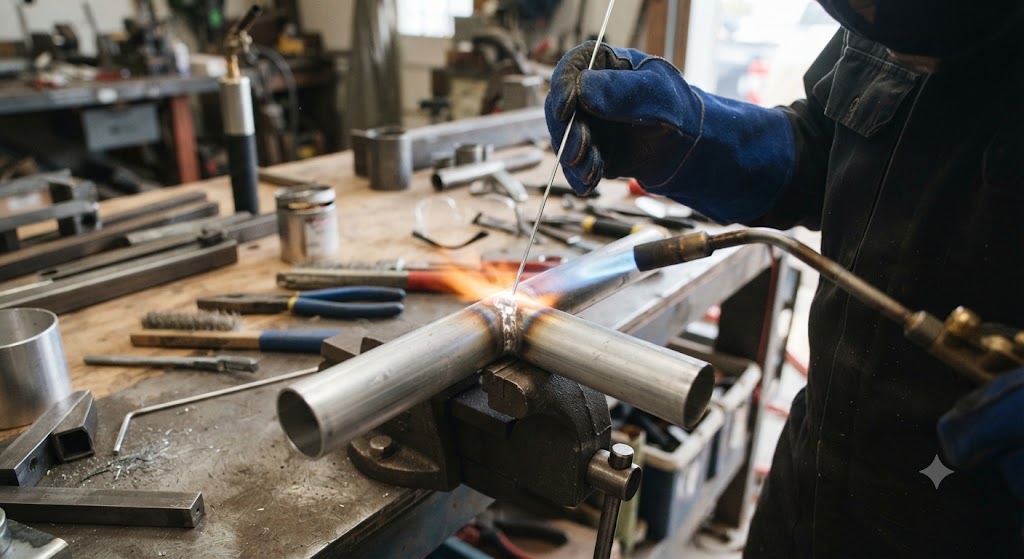
You have seen the demos: a guy with a propane torch and a magic-looking rod fixing a cracked aluminum part on a bench, no welder in sight, narrated like it is the easiest thing in the world. Then you try it at home and end up with a puddle of collapsed aluminum and a rod that would not stick. Low-temperature aluminum brazing rods are real and genuinely useful, but the demos leave out the part that trips everyone up: the technique is fussy, and the window between working and ruined is narrow.
An aluminum brazing rod is a low-temperature filler (melting around 720 to 750 degrees Fahrenheit) that lets you repair aluminum with a common propane or MAPP torch, since aluminum itself does not melt until about 1,220 degrees Fahrenheit. They do work, on aluminum-to-aluminum repairs, when you clean the metal and control the heat. Here is how they work, where they shine, and how to actually get one to stick.
How low-temperature aluminum rods work
The clever idea behind these rods is the temperature gap. Aluminum melts at about 1,220 degrees Fahrenheit, but these rods melt at roughly 720 to 750 degrees Fahrenheit. That gap means you can heat the aluminum base until it is hot enough to melt the rod on contact, without melting the aluminum itself. The rod then flows into the joint and bonds to the aluminum. Because the melting point is low, you can do it with an ordinary propane or MAPP torch instead of a welder.
That is the appeal: aluminum repair without a TIG welder, argon, or a spool gun. The catch is that same narrow gap, which makes heat control the whole ballgame.
Direct answer: do they actually work?
Yes, low-temperature aluminum brazing rods work for aluminum-to-aluminum repairs, when used correctly. They are genuinely useful for:
- Repairing aluminum gutters, windows, doors, and siding.
- Fixing cracked castings, brackets, and non-structural parts.
- Filling holes and joining thin aluminum where welding would be tricky.
The honest caveats: they take practice, the heat control is unforgiving, and the joint, while strong for repairs, does not match the strength of a proper TIG or MIG aluminum weld. Independent testing (such as the well-known Project Farm comparison) shows real differences between brands in melting behavior and joint strength. Treat them as a capable repair tool, not a replacement for fusion welding on structural work.
The technique that makes them stick
Most failures come down to technique, not the rod. Here is what actually works:
- Clean the aluminum thoroughly. Aluminum forms an invisible oxide layer instantly, and the rod will not bond through it. Wire-brush the joint (with a stainless brush used only on aluminum) right before brazing.
- Heat the base metal, not the rod. Bring the aluminum up to temperature and touch the rod to the hot metal so the metal melts the rod. If you melt the rod with the flame directly, it will not bond.
- Scrape or tin to break the oxide. Once the rod flows, scrape the joint with the rod or a tool to break through the oxide so the filler wets the surface.
- Watch the heat closely. Because the base aluminum melts not far above the rod, too much heat collapses the part. Aluminum does not glow before it melts, which is what makes it treacherous, so go by how the rod behaves, not by color.
Where they fall short
Be realistic about the limits. These rods are for aluminum-to-aluminum repair, not for joining aluminum to steel or other metals in a structural way. The joint strength is good for repairs but below a true fusion weld, so they are not for aircraft, load-bearing structures, or anything safety-critical. And the narrow temperature window means thick or heavy aluminum that sinks a lot of heat can be hard to bring up to temperature without a bigger torch. Match the torch to the mass of the part.
Which aluminum brazing rods to buy
Here are dependable options for torch-based aluminum repair.
- Bernzomatic AL3 aluminum brazing and welding rods are a widely available choice for repairing aluminum windows, doors, gutters, and siding, working at a low temperature with a propane or MAPP torch. Their limitation is the narrow working window common to all low-temperature aluminum rods, so heat control matters.
- 50-pack aluminum brazing rods (1/16 inch) give you plenty of rod for practice and multiple repairs on aluminum and cast aluminum with an oxygen-propane or oxygen-acetylene flame. The trade-off is that a large count rewards practice, since these rods take technique to master.
- YEJJET aluminum brazing rods (1/16 inch, flux-cored) are a beginner-friendly flux-cored option designed to flow and fill easily on aluminum repairs. As a flux-cored rod it is convenient, but you still need clean metal and controlled heat for a good bond.
How to choose: for household aluminum repairs, a well-known rod like Bernzomatic AL3 is a solid start. For practice or many repairs, a larger count lets you build the technique. Whatever you buy, clean the aluminum, heat the base metal, and control your torch.
Who should skip these rods: anyone needing a structural or safety-critical aluminum joint. For that, use proper TIG or MIG aluminum welding, not low-temperature brazing.
The bottom line
Low-temperature aluminum brazing rods really do work for aluminum-to-aluminum repairs, letting you fix gutters, castings, and thin aluminum with a common torch and no welder. The secret is technique: clean the oxide off, heat the base metal so it melts the rod (not the flame melting the rod), scrape to break the oxide, and watch the heat because aluminum collapses without warning. Just know the limits, since these are capable repair rods, not a substitute for fusion welding on structural work.
FAQ
Do low-temperature aluminum brazing rods actually work? Yes, for aluminum-to-aluminum repairs when used correctly. They join gutters, castings, brackets, and thin aluminum with a common torch. They take practice, and the joint is strong for repairs but below a true TIG or MIG weld.
What temperature do aluminum brazing rods melt at? Roughly 720 to 750 degrees Fahrenheit, well below aluminum’s own melting point of about 1,220 degrees Fahrenheit. That gap lets you melt the rod on the hot base metal without melting the aluminum itself.
Can you braze aluminum with a propane torch? Yes. Because these rods melt at a low temperature, a propane or MAPP torch provides enough heat for small to medium repairs. Heavy aluminum that sinks a lot of heat may need a larger torch to reach temperature.
Why won’t my aluminum brazing rod stick? Usually because of the oxide layer or wrong technique. Clean the aluminum right before brazing, heat the base metal so it melts the rod (do not melt the rod with the flame directly), and scrape the joint to break through the oxide so the filler wets the surface.
Are aluminum brazing rods as strong as welding? They make strong repair joints but do not match the strength of a proper TIG or MIG aluminum weld. Use them for repairs and non-structural work, not for aircraft, load-bearing structures, or safety-critical joints.
Do you need flux for aluminum brazing rods? Some rods are flux-cored and need no separate flux, while others benefit from a compatible flux. Either way, the metal must be mechanically cleaned of its oxide layer right before brazing for the rod to bond.
References
- Bernzomatic AL3 aluminum brazing and welding rod product documentation, including working temperature and tensile strength (manufacturer), bernzomatic.com.
- Project Farm independent comparison testing of low-temperature aluminum brazing and welding rods (established review channel).
- American Welding Society brazing fundamentals and aluminum joining guidance, aws.org.