Copper Brazing Rod: The Right Way to Join Copper
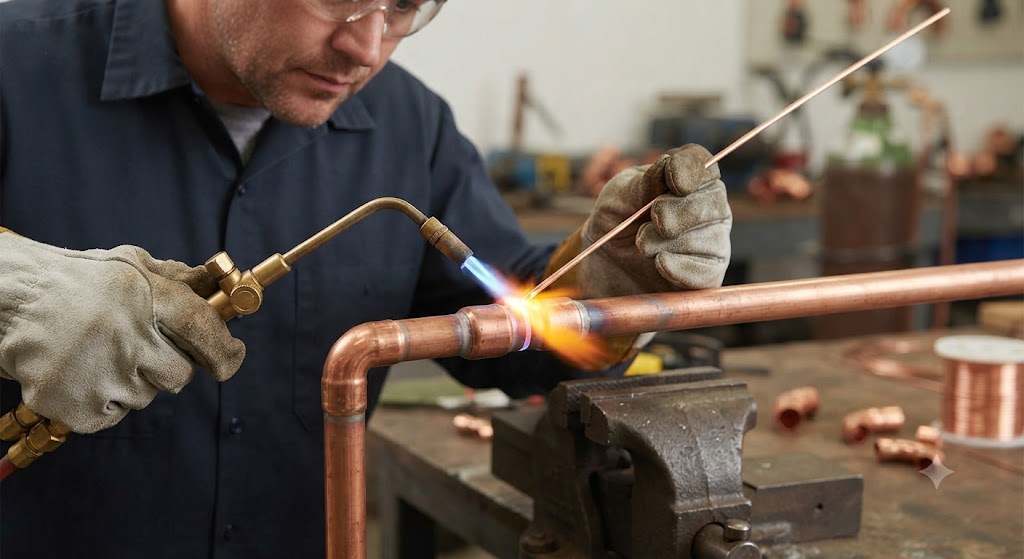
If you have ever soldered a copper pipe and later watched it weep at the joint, you already understand why brazing copper is a different, stronger game. Brazing runs hotter than soldering and makes a far stronger bond, which is why refrigeration and air conditioning lines are brazed, not soldered. The rod that does it is often misunderstood, because the best copper brazing rod for copper-to-copper joints does something no other brazing rod does: it fluxes itself.
A copper brazing rod for joining copper is typically a copper-phosphorus (BCuP) alloy, where the phosphorus lets it self-flux on copper so no separate flux is needed for copper-to-copper joints. It is the standard for HVAC, refrigeration, and plumbing copper connections. Here is how to use it and choose the right one.
Why copper-phosphorus is special
Most brazing needs flux to clean the joint and help the filler flow, but copper-phosphorus rods have a built-in trick. The phosphorus in the alloy acts as a fluxing agent when brazing copper to copper, chemically cleaning the joint as it heats. That means no separate flux, no flux residue to clean off inside a sealed refrigeration line, and a faster, cleaner job. This self-fluxing behavior only works on copper (and copper to copper), which is exactly where these rods are used most.
Copper-phosphorus rods come in two flavors: silver-free (higher melting) and silver-bearing (with 2 to 15 percent silver added for lower melting, better flow, and more ductility). Both self-flux on copper.
Direct answer: which copper brazing rod to use
Match the rod to the joint:
- Copper to copper, close-fitting joints (plumbing, refrigeration): a silver-free copper-phosphorus rod (BCuP-2), which self-fluxes and needs tight joints.
- Copper to copper with wider gaps, or vibrating lines (AC and refrigeration compressors): a silver-bearing copper-phosphorus rod (like 15 percent silver, BCuP-5), which flows into gaps and adds ductility.
- Copper to brass: a copper-phosphorus rod (silver-bearing preferred), but use flux on the brass side.
- Copper to steel or iron: do not use copper-phosphorus, because phosphorus embrittles the joint. Use a silver BAg rod with flux instead.
For pure copper-to-copper work, the silver-free rod is the standard; add silver when you need gap-filling or vibration resistance.
How silver content changes copper rods
Within the copper-phosphorus family, adding silver changes the behavior in useful ways:
- Silver-free (BCuP-2): higher melting range (roughly 1,310 to 1,475 degrees Fahrenheit), needs close-fitting joints, and is the everyday copper-to-copper rod.
- Silver-bearing (BCuP-5, 15 percent silver): wider, lower melting range that flows into looser joints and fills gaps, plus more ductility for vibrating refrigeration and AC lines.
So the choice within copper rods comes down to joint fit and vibration: tight, still joints do fine with silver-free rods, while loose or vibrating joints benefit from silver-bearing ones.
The self-fluxing exception, and its limits
The self-fluxing property is the headline feature, but know its boundaries so you do not get caught out:
- Copper to copper: self-fluxing, no separate flux needed.
- Copper to brass: the brass side contains zinc, which the phosphorus does not clean well, so you need flux.
- Steel, iron, and nickel: copper-phosphorus rods must not be used at all, because phosphorus forms brittle compounds. Switch to a silver BAg rod with flux.
Getting this wrong is the classic error: reaching for a self-fluxing copper rod on a steel joint. It flows, it looks fine, and then it cracks.
How to braze copper joints
Good copper brazing is mostly about fit-up and heat:
- Clean and fit the joint. Copper-phosphorus rods rely on capillary action, so the joint should fit closely. Clean the copper bright with an abrasive pad.
- Heat the joint evenly. Heat the copper (not the rod) until it reaches brazing temperature, moving the flame to spread heat around the joint.
- Touch the rod to the hot joint. When the copper is hot enough, the rod melts on contact and capillary action draws it into the joint. Let the metal, not the flame, melt the rod.
- For refrigeration lines, purge with nitrogen. Flowing nitrogen through the tubing while brazing prevents internal oxide scale that could contaminate the system.
Which copper brazing rods to buy
Here are dependable options for copper work.
- Harris 0 phos-copper brazing rod is the silver-free copper-to-copper standard, self-fluxing on copper for plumbing and refrigeration close-fit joints. Its limitation is the higher melting range, so it wants tight joints and is not for steel or iron.
- Harris Stay-Silv 15 phos-copper-silver brazing rod adds 15 percent silver for a wider melting range that fills gaps and adds ductility on vibrating AC and refrigeration lines, still self-fluxing on copper. The trade-off is that, as a phos-copper rod, it must not be used on ferrous metals.
- 15% silver brazing rods,AWS BCuP-5 are another silver-bearing copper option that flows cleanly into copper joints by capillary action. The same phos-copper caution applies: copper and brass only, not steel.
How to choose: for tight copper-to-copper joints, a silver-free rod is all you need. For wider gaps or vibrating lines, choose a 15 percent silver rod. Use flux on the brass side of copper-to-brass joints, and never use these on steel.
Who should skip copper-phosphorus rods: anyone joining copper to steel or iron, who needs a silver BAg rod with flux to avoid brittle joints.
The bottom line
The right rod for joining copper is a copper-phosphorus (BCuP) alloy, and its standout feature is self-fluxing on copper-to-copper joints, so no separate flux is needed. Silver-free rods handle tight copper joints, while silver-bearing rods (like 15 percent silver) flow into gaps and add ductility for vibrating HVAC and refrigeration lines. Just remember the boundaries: flux the brass side of copper-to-brass joints, purge refrigeration lines with nitrogen, and never use copper-phosphorus rods on steel or iron.
FAQ
What brazing rod do you use for copper? A copper-phosphorus (BCuP) rod, which self-fluxes on copper-to-copper joints so no separate flux is needed. Silver-free rods suit tight joints, while silver-bearing rods (like 15 percent silver) fill gaps and add ductility for vibrating lines.
Do you need flux to braze copper? Not for copper-to-copper joints with a copper-phosphorus rod, because the phosphorus self-fluxes. You do need flux for copper-to-brass joints and any joint using a silver BAg rod on steel or stainless.
Can you braze copper to steel with copper brazing rod? No. Copper-phosphorus rods must not be used on steel or iron because phosphorus forms brittle compounds. Use a silver BAg rod with the proper flux to join copper to steel.
What is the difference between silver-free and silver-bearing copper rods? Silver-free copper-phosphorus rods have a higher melting range and need close-fitting joints. Silver-bearing rods (like 15 percent silver, BCuP-5) melt lower, flow into wider gaps, and add ductility for vibrating refrigeration and AC lines.
Why braze copper instead of soldering it? Brazing runs hotter and makes a much stronger joint than soldering, which is why refrigeration, air conditioning, and pressurized copper lines are brazed. Soldering is fine for lower-demand plumbing but is not as strong.
Why purge copper lines with nitrogen when brazing? Flowing nitrogen through the tubing while brazing prevents internal copper oxide scale from forming. That scale can flake off and contaminate a refrigeration or AC system, so nitrogen purging is standard practice on those lines.
References
- Harris Products Group, phos-copper and Stay-Silv brazing alloy documentation, including melting ranges and self-fluxing behavior (manufacturer), harrisproductsgroup.com.
- American Welding Society AWS A5.8 filler metal classification for BCuP copper-phosphorus alloys, aws.org.
- ASHRAE and HVAC industry guidance on brazing copper refrigerant lines with nitrogen purging (industry standard practice), ashrae.org.