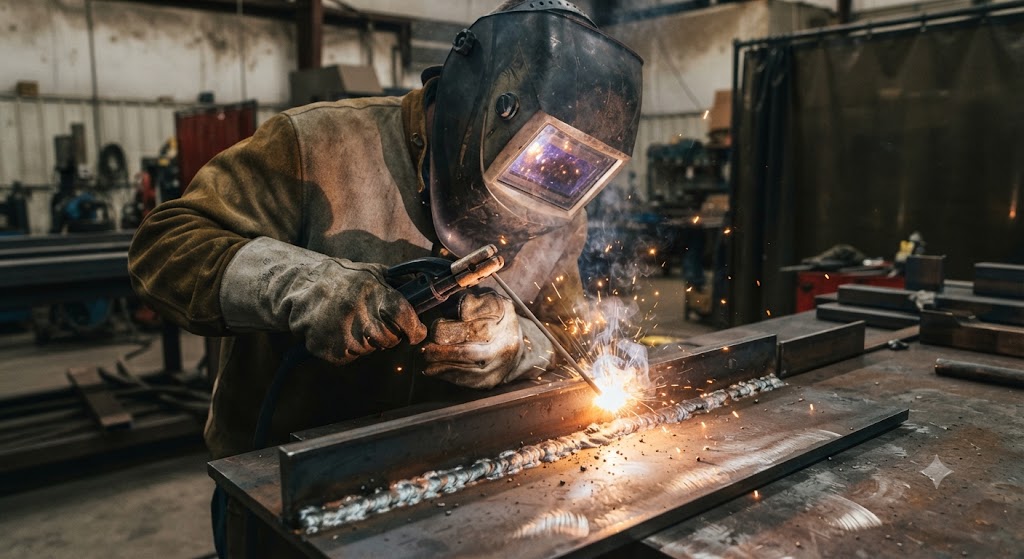
Flux Core Welding Wire: The Complete Buying Guide
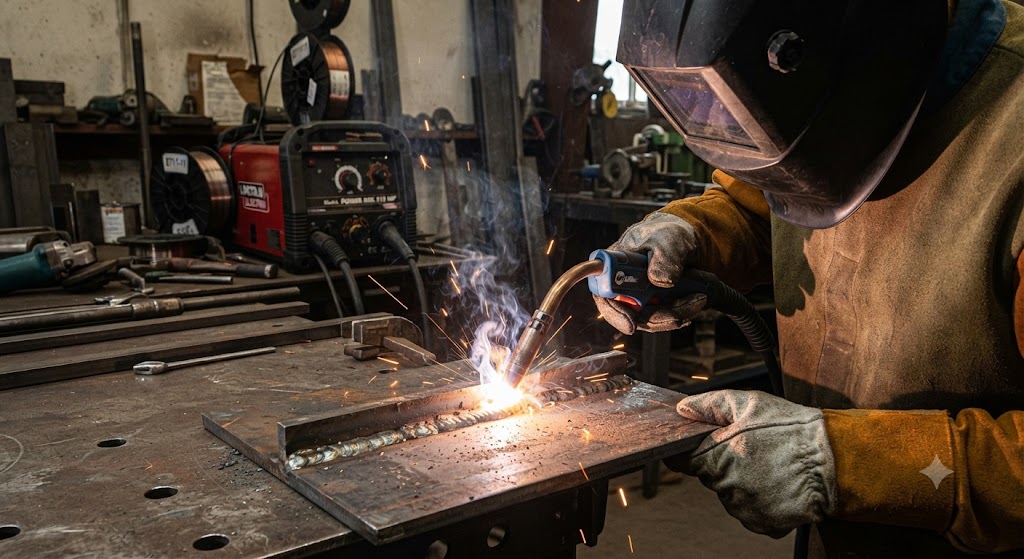
Flux core is the process that lets you weld in the wind, out in a field, on rusty steel, with a basic machine and no gas bottle in sight. That freedom is exactly why so many first welders start here. The wire does double duty, carrying its own shielding inside, which is either the best feature or the source of endless confusion depending on which type you grab off the shelf.
Flux-cored welding wire is a tubular wire filled with flux that shields the weld as it burns, and it comes in two kinds: self-shielded (gasless, portable) and gas-shielded (needs a bottle, for heavier work). The most common gasless wire for beginners is E71T-GS. Choosing the right flux-cored wire means knowing which type your machine and job call for, then setting your polarity correctly. Here is the guide.
Self-shielded versus gas-shielded
The biggest source of confusion with flux core is that there are two families:
- Self-shielded flux core (like E71T-GS and E71T-11) creates its own shielding gas as the flux burns, so it needs no external gas bottle. It is portable, works outdoors and in wind, and is what runs on most entry-level wire feed welders. This is what most people mean by “flux core.”
- Gas-shielded flux core (dual shield) still needs an external shielding gas, combining a flux core with gas coverage for high deposition on thick metal and out-of-position work. It is a production wire, not a beginner gasless option.
For home and field use, self-shielded is almost always the answer. Gas-shielded flux core is for heavy fabrication where its speed and quality on thick steel justify the gas bottle.
Direct answer: which flux-cored wire should you buy?
Start from your machine and your work:
- Beginner or portable gasless welding on thin to medium steel: E71T-GS, a single-pass self-shielded wire that runs smooth with low spatter.
- Gasless welding needing multiple passes or a bit more strength: E71T-11, a self-shielded wire rated for limited multi-pass work.
- Heavy, thick, or out-of-position production welding with a gas bottle: a gas-shielded (dual shield) flux-cored wire.
Then pick diameter by thickness: .030 inch for thinner steel and small machines, .035 inch for general to heavier work. For most first-time flux core users on a small welder, E71T-GS in .030 inch is the natural starting point.
E71T-GS versus E71T-11
These two self-shielded wires look identical but differ in capability. E71T-GS is a single-pass wire, meaning it is designed for one pass on thin to medium steel, ideal for beginners, light repairs, and small welders. E71T-11 is a general-purpose self-shielded wire rated for limited multi-pass welding, so it handles slightly thicker builds where you need more than one pass. Both run without gas and work outdoors. If you are learning or doing light work, E71T-GS is simplest; if you need to build up thicker joints, E71T-11 gives you more room.
The polarity rule people miss
Here is the setup detail that trips up nearly every flux core beginner: self-shielded flux-cored wire runs on DC electrode negative (DCEN), the opposite polarity from solid MIG wire, which runs DC electrode positive (DCEP). If you switch from solid wire to gasless flux core and forget to swap the polarity, you get a terrible, spattery, weak weld and wonder what is wrong. Check your machine’s chart, set DCEN for gasless flux core, and the arc transforms. Many small welders label this right at the terminals.
A second detail: flux-cored wire is softer than solid wire and can crush under smooth drive rolls. Use knurled or U-groove drive rolls made for tubular wire to prevent feeding problems.
Which flux-cored wire to buy
These self-shielded options cover most home and field needs.
- INETUB BA71TGS E71T-GS self-shielded flux-core wire (.030 inch, 10 lb spool) is a well-regarded gasless wire for thin-gauge steel, running smoothly with a stable arc and no gas bottle, great for beginners and outdoor work. Its limitation is that E71T-GS is single-pass, so it is not meant for heavy multi-pass builds.
- YESWELDER E71T-GS gasless flux-core wire (.035 inch, 2 lb spool) is a convenient smaller spool for occasional repairs and small machines, welding without gas and holding up in windy conditions. The smaller spool is handy for light use but works out to less wire per spool for heavy projects.
- Blue Demon E71T-11 self-shielded flux-core wire (.035 inch, 10 lb spool) steps up to a multi-pass-capable gasless wire with low spatter and easy slag removal, a better pick when you need to build thicker joints. As a heavier-duty wire, it is more than a light one-pass repair strictly requires.
How to choose: for learning and light gasless work, start with E71T-GS in .030 inch. If you need multiple passes or a bit more strength, move to E71T-11. Reserve gas-shielded (dual shield) wire for heavy production where you have a gas bottle.
Who should skip flux core: someone welding only clean, thin sheet indoors with a gas bottle, where solid ER70S-6 gives a cleaner weld with far less spatter and slag.
The bottom line
Flux-cored wire carries its own shielding, and the key is knowing which kind you have: self-shielded (gasless, portable, for most home and outdoor work) or gas-shielded (needs a bottle, for heavy production). Start with E71T-GS for learning, step up to E71T-11 for multi-pass work, and always set your polarity to DC electrode negative for gasless wire. Match diameter to thickness and use knurled drive rolls, and flux core delivers on its promise: welding almost anywhere, no gas required.
FAQ
What is flux-cored welding wire? A tubular wire filled with flux that shields the weld as it burns. Self-shielded types need no gas bottle and work outdoors, while gas-shielded (dual shield) types still need shielding gas for heavy, out-of-position work.
What is the best flux-cored wire for beginners? E71T-GS, a single-pass self-shielded (gasless) wire that runs smoothly with low spatter on thin to medium steel. In .030 inch it suits most small wire feed welders.
What is the difference between E71T-GS and E71T-11? E71T-GS is a single-pass self-shielded wire for thin to medium steel, ideal for beginners. E71T-11 is a self-shielded wire rated for limited multi-pass welding, better for building up slightly thicker joints. Both run without gas.
What polarity do I use for flux-cored wire? Self-shielded flux-cored wire runs on DC electrode negative (DCEN), the opposite of solid MIG wire (DCEP). Forgetting to switch polarity is the most common cause of a bad gasless flux core weld.
Does flux-cored wire need gas? Self-shielded flux-cored wire does not need gas, which makes it portable and good outdoors. Gas-shielded (dual shield) flux-cored wire does require an external shielding gas.
Why is my flux core wire feeding poorly? Flux-cored wire is softer than solid wire and can crush under smooth drive rolls. Use knurled or U-groove drive rolls designed for tubular wire, and check tension.
References
- Miller Electric, solid versus flux-cored wire selection and self-shielded versus gas-shielded guidance (manufacturer), millerwelds.com.
- Hobart Brothers, weldability of gas- and self-shielded flux-cored wires (manufacturer), hobartbrothers.com.
- Lincoln Electric flux-cored (FCAW) wire documentation and AWS A5.20 classification, lincolnelectric.com.