Gas Tungsten Arc Welding Machine: Anatomy and Choice
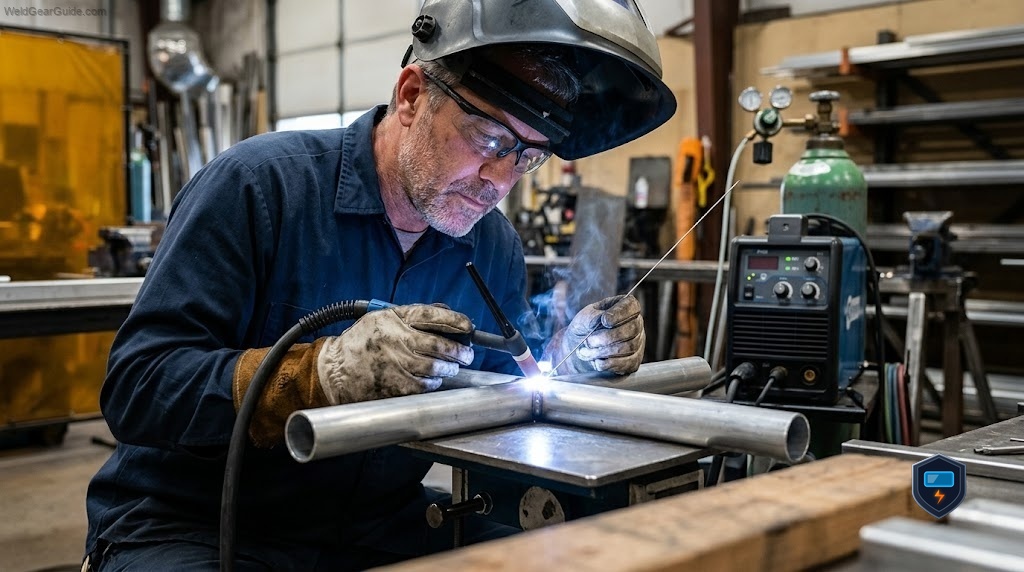
Gas tungsten arc welding machine is the full, formal name for what most people call a TIG machine. The mouthful is worth decoding, because the name describes exactly how the machine works: it delivers a controlled arc from a tungsten electrode under a shield of gas. Understand the parts that make that happen and you will both choose a machine more wisely and use the one you own more confidently.
So let me walk through the anatomy, then how those parts translate into a buying decision.
The machine’s job
A gas tungsten arc welding (GTAW) machine has one core job: deliver a stable, controllable electric arc from a non-consumable tungsten electrode, while shielding gas protects the weld. Everything on the machine exists to control that arc, its current type, its amperage, and how it starts. Get command of those three and you have command of the weld.
Anatomy of the machine
The power source. The heart of the machine, converting incoming electricity into welding current. Modern machines are inverters, which are lighter, more efficient and more adjustable than old transformers. The power source sets whether the machine can output AC, DC, or both.
The current-type control (AC/DC). DC electrode negative for steel and stainless; AC for aluminum and magnesium, because AC cleans aluminum’s oxide layer. A machine’s AC/DC capability decides which metals it can weld, making this the most important single feature.
The amperage control. Sets the heat. On better machines this is paired with a foot pedal or amptrol that varies amperage in real time, which is central to TIG control, letting you ramp up to start and taper down to fill.
The arc-start system. High-frequency start jumps the arc without the tungsten touching the work, avoiding contamination. Lift and scratch start are simpler alternatives found on basic machines.
The AC controls (on AC/DC machines). AC balance sets the cleaning-to-penetration ratio for aluminum; AC frequency focuses or widens the arc. These are the knobs that make good aluminum welds possible.
The pulse control. Cycles current between high and low many times per second, controlling heat on thin metal and producing even beads.
The gas system. A regulator and flowmeter feed shielding gas (almost always argon) through the torch. Some machines add pre-flow and post-flow timing to protect the tungsten and cooling weld.
The torch. Holds the tungsten and directs the gas. Air-cooled torches (like the 150-amp WP-17 or CK17 style) handle most hobby work; water-cooled torches suit long, high-amperage welding.
How the parts create control
Control in GTAW comes from these parts working together. The power source and current-type control decide what metal you can weld and how the arc behaves. The amperage control and foot pedal let you rule the heat moment to moment. The arc-start system gets you a clean start. The AC and pulse controls fine-tune the arc for aluminum and thin metal. And the gas system keeps the whole thing shielded. A good machine gives you direct access to these; a basic one hides or omits some, trading control for simplicity or price.
Choosing a machine from the anatomy
Now the anatomy becomes a buying guide:
- AC/DC or DC-only? AC/DC if you will ever weld aluminum. This is the decision people most often regret getting wrong.
- Enough amperage? Match it to your thickest common material; 200 amps suits most home and light-professional shops.
- The right arc start and controls? HF start, a foot pedal, and (for aluminum) AC balance and frequency are the features worth having.
- Input voltage? Dual voltage adds flexibility; single-voltage 230V maximizes output.
Whatever you choose, plan for consumables: a stock of 2% lanthanated tungsten, filler rod for your metals, and a quality air-cooled TIG torch as a spare.
The verdict
A gas tungsten arc welding machine is a TIG machine, and its formal name describes its job: deliver a controlled tungsten arc under a gas shield. Understanding its anatomy, power source, current-type control, amperage and pedal, arc start, AC and pulse controls, gas system and torch, makes both choosing and using one far clearer.
Three things to hold onto. The machine exists to control the arc through current type, amperage and arc start, so those are what you learn to command. Its AC/DC capability decides which metals it can weld, making that the most important feature and the most common buying regret when gotten wrong. And the control features, HF start, foot pedal, AC balance and frequency, pulse, are what separate a capable machine from a basic one, so choose based on the work you do.
Know the anatomy and the mouthful of a name turns into a clear picture of exactly what you are buying and using.
Frequently asked questions
What is a gas tungsten arc welding machine? It is the formal name for a TIG machine, which delivers a controlled electric arc from a non-consumable tungsten electrode while shielding gas protects the weld. GTAW and TIG refer to the same machine.
What are the main parts of a GTAW machine? The power source, current-type (AC/DC) control, amperage control with foot pedal, arc-start system, AC balance and frequency controls, pulse control, gas regulator and flowmeter, and the torch that holds the tungsten and directs the gas.
What is the most important feature to choose? Whether the machine is AC/DC or DC-only, because that decides which metals it can weld. AC is required for aluminum, so buy AC/DC if aluminum is anywhere in your plans.
Why do modern GTAW machines use inverters? Inverter power sources are lighter, more efficient and more adjustable than old transformers, allowing precise control of current type, amperage, pulse and AC settings in a portable package.
What does the foot pedal do? It varies amperage in real time, letting you ramp heat up to start the puddle and taper it down to fill the crater. This real-time control is central to GTAW heat management.
What is high-frequency start? A system that initiates the arc without the tungsten touching the work, avoiding contamination. It is cleaner and more convenient than lift or scratch start found on basic machines.
How many amps do I need? Match amperage to your thickest common material, roughly 1 amp per 0.001 inch of steel thickness. A 200-amp machine suits most home and light-professional shops.
Air-cooled or water-cooled torch? Air-cooled torches (like a 150-amp WP-17 or CK17 style) handle most hobby and light-professional work. Water-cooled torches suit long, high-amperage welding where an air-cooled torch would overheat.
References
- Miller Electric, How a TIG Welder Works and When to TIG Weld
- Lincoln Electric, Square Wave TIG 200 TIG Welder specifications
- Wikipedia, Gas tungsten arc welding