Plastic Welding Rod: The Complete Buying Guide
A cracked plastic bumper tab or a split kayak hull used to mean a trip to the parts counter or the recycling bin. Plastic welding changes that. With the right heat and the right rod, you can actually fuse thermoplastic back together into a repair that holds, no glue, no epoxy, no crossed fingers. The catch that trips up beginners is that plastic is not one material, and the rod has to match the plastic you are fixing.
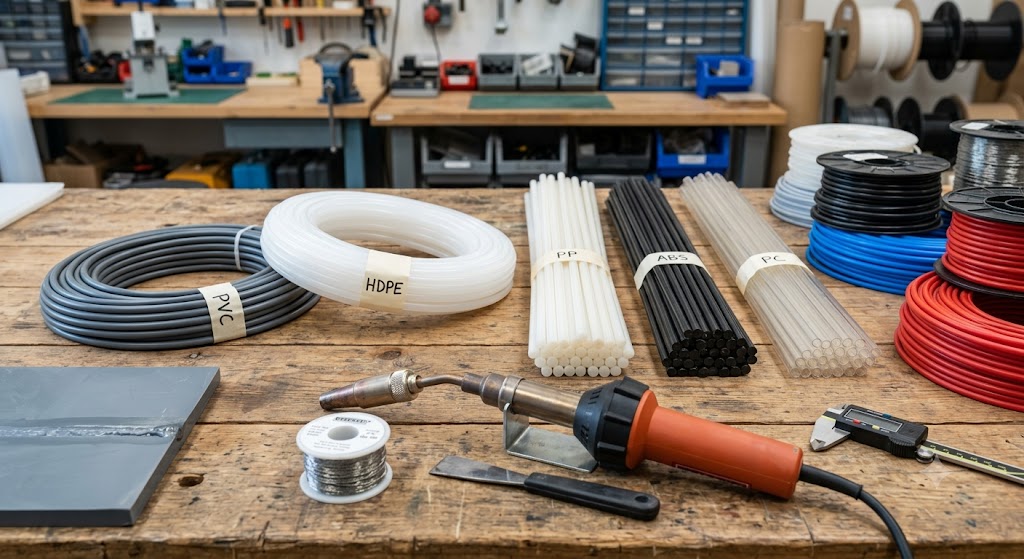
A plastic welding rod is a length of thermoplastic filler that melts and fuses into a matching plastic base material when heated, most often with a hot-air plastic welder. The single most important rule is matching the rod to the type of plastic you are repairing (ABS, polypropylene, polyethylene, PVC, and so on), because mismatched plastics will not bond. Here is how to identify your plastic, pick the right rod, and make the repair hold.
How plastic welding works
Plastic welding is more like metal welding than gluing. A tool (usually a hot-air welder, sometimes an airless iron) heats both the base plastic and the filler rod to their melting point, and you press the softened rod into the joint so the two fuse as one piece as they cool. Because it is a true fusion, a good plastic weld can restore much of the part’s original strength, unlike an adhesive sitting on the surface.
That also means it only works on thermoplastics, the kind that soften and remelt with heat (ABS, PP, PE, PVC, PC, nylon, and TPO). Thermoset plastics, which char instead of melting, cannot be welded this way.
Direct answer: how to choose the right rod
Choosing a plastic welding rod comes down to one question: what plastic is the part made of? Match the rod to it.
- Identify the base plastic. Look for a recycling symbol or molded code on the part, such as ABS, PP, PE, HDPE, PVC, PC, PA (nylon), or TPO. Many automotive parts are marked on an inside surface.
- Match the rod to that plastic. ABS rod for ABS parts, polypropylene rod for PP, and so on. This is not optional, because dissimilar plastics do not fuse.
- Match the rod color if appearance matters, since rods come in various colors to blend with the part.
A multi-plastic rod assortment (a kit with ABS, PP, PE, and other rods) is the practical choice for most people, because it covers whatever part comes across the bench. When you cannot read the code, test-melt a hidden spot or use a kit and match by behavior.
Why matching the plastic matters so much
This is the mistake that ruins first attempts. Plastics only fuse with compatible plastics, so an ABS rod will not bond to a polypropylene bumper no matter how carefully you weld. Polypropylene and polyethylene are especially notorious because they are common (bumpers, tanks, containers) and do not bond to most other plastics or to glue. If your repair keeps peeling or refusing to stick, the odds are you have a rod-to-plastic mismatch. Identify the base plastic first, every time, and the weld has a chance.
Temperature and technique
Getting the heat right is the other half of the job:
- Use the right temperature. Each plastic has its own melting range. Too cold and the rod will not fuse; too hot and you scorch or bubble the plastic. Hot-air welders with adjustable temperature help you dial it in.
- Prep and clean the joint. Bevel a crack into a V, and clean the area so no dirt or oil contaminates the weld.
- Melt both surfaces together. Heat the base and the rod at the same time and press the rod in so they flow into one, rather than laying rod on top of cold plastic.
- Reinforce if needed. For structural cracks, embedding a stainless mesh backer (included in many kits) adds strength.
Which plastic welding gear to buy
Most people are best served by a kit that includes a welder and an assortment of rods.
- Multi-plastic welding rod kit with ABS, PP, PE, PA,PC and TPO rods is a smart starting point because it covers the common plastics you will meet and includes reinforcing stainless mesh for structural repairs. Its limitation is that a rod assortment is only as useful as your ability to identify the base plastic, so learn to read the recycling codes.
- JOUNJIP plastic welding kit with 80W welder bundles a welding iron with rods for automotive and general repairs like bumpers, kayaks, and tanks, which is convenient if you do not already own a plastic welder. The trade-off is that iron-style welders give less temperature control than a dedicated hot-air unit for finicky plastics.
- Polyvance Mini-Weld Model 7 airless plastic welder is the step up for serious or repeat repairs, praised for consistent heat and ease of use on plastics like ABS, HDPE, and polycarbonate. It is more welder than a one-time repair needs, so it makes sense if you expect to weld plastic regularly.
How to choose: for occasional repairs, a rod kit plus a basic welder covers most jobs. For frequent or higher-quality work, invest in a dependable hot-air or airless welder with good temperature control, and buy rods to match the plastics you repair most.
Who should skip a premium welder: someone with a single one-time repair, who is fine with a basic kit. Save the dedicated welder for repeat use.
The bottom line
Plastic welding turns cracked thermoplastic parts into real repairs, but only if the rod matches the base plastic. Identify the plastic by its recycling code, choose a matching rod (a multi-plastic kit is the safe bet), dial in the right temperature, and fuse both surfaces together rather than gluing rod on top. Do that and a broken bumper or tank comes back to strength; skip the plastic match and it will peel every time.
FAQ
What is a plastic welding rod? A length of thermoplastic filler that melts and fuses into a matching plastic base when heated, usually with a hot-air plastic welder. It creates a true fusion repair, unlike glue that sits on the surface.
How do I know which plastic welding rod to use? Identify the base plastic by its recycling symbol or molded code (ABS, PP, PE, PVC, PC, PA, TPO), then match the rod to it. Dissimilar plastics do not bond, so the match is essential.
Can you weld any plastic? Only thermoplastics, which soften and remelt with heat (ABS, PP, PE, PVC, nylon, polycarbonate, TPO). Thermoset plastics char instead of melting and cannot be welded this way.
Why won’t my plastic weld stick? Usually a rod-to-plastic mismatch, especially with polypropylene or polyethylene, which do not bond to most other plastics. Identify the base plastic and use a matching rod, at the correct temperature, on a clean joint.
Do I need a special tool to weld plastic? Yes, a plastic welder that heats the rod and base to melting, typically a hot-air welder or an airless iron. Adjustable temperature helps you match each plastic’s melting range.
Is a plastic weld as strong as the original part? A good fusion weld can restore much of the original strength, especially when you bevel the crack and weld both surfaces together. Embedding a stainless mesh backer adds strength for structural cracks.
References
- Polyvance plastic welding guides and Mini-Weld welder documentation, including plastic identification and technique (manufacturer documentation).
- Bob Vila, plastic welder testing and buying guidance (established publication), bobvila.com.
- Manufacturer instructions for hot-air and airless plastic welding kits (ABS, PP, PE, PVC, PC, PA, TPO rod compatibility).