Silver Brazing Rod: How to Choose the Right Percentage
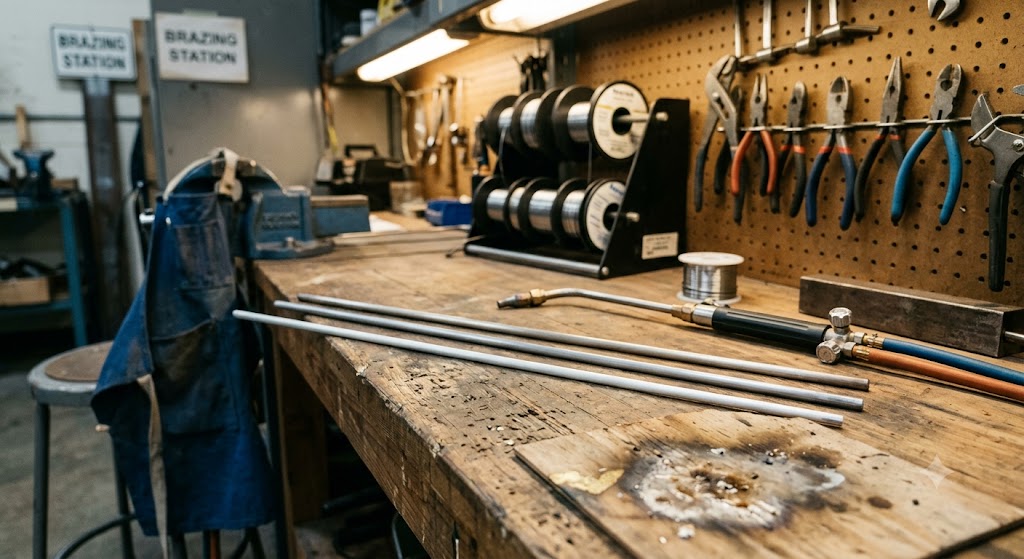
Silver brazing rods sit at the top of the brazing world for a reason. They flow like water into a tight joint, bond to almost anything, and make connections strong enough to trust on pressurized lines. But the shelf is confusing: 0 percent, 5 percent, 15 percent, 45 percent silver, phos-copper this, cadmium-free that. The percentage on the label changes how the rod behaves, and picking the wrong one means a joint that will not flow, will not bond, or is not right for the metal in front of you.
A silver brazing rod is a silver-bearing filler metal that flows into a joint by capillary action, with the silver content (from a few percent up to around 45 percent) affecting its melting range, flow, and which metals it suits. Choosing the right percentage means matching it to your metals and how tight the joint fits. Here is how to decode the percentages.
Two families under the silver umbrella
Before the percentages, know that silver brazing rods split into two chemistries, and it matters:
- Phos-copper-silver rods (BCuP) are copper-based with a few percent silver and some phosphorus (like 5 percent or 15 percent silver). The phosphorus makes them self-fluxing on copper, so they are the go-to for copper and copper-to-brass work, especially in HVAC and refrigeration. Crucially, they must not be used on steel or iron.
- High-silver rods (BAg) contain much more silver (often 30 to 56 percent), usually with copper, zinc, and tin. They melt lower, flow better, and bond to a wide range of metals including steel, stainless, and brass, but they need a separate flux.
So the first question is not just how much silver, but which family, because that determines what you can braze and whether the rod self-fluxes.
Direct answer: which percentage do you need?
Match the rod to your metals and joint fit:
- Copper to copper (plumbing, refrigeration): a phos-copper rod with 0 to 15 percent silver. More silver gives more ductility and gap-filling; 15 percent is the standard for vibrating lines.
- Copper to brass, or copper with wider gaps and vibration: a 15 percent silver phos-copper rod, self-fluxing on copper (use flux for the brass side).
- Steel, stainless, brass, or dissimilar metals: a high-silver BAg rod (often 45 percent), used with the proper flux.
- Maximum flow into tight joints and lowest working temperature: the higher the silver content, the better the flow and the lower the melting range.
A simple way to think about it: higher silver content flows better, fills gaps better, and works on more metals, while lower-silver phos-copper rods are the workhorses for copper.
What the silver percentage changes
The number on the label is not marketing, it changes real behavior:
- Melting range: more silver generally lowers the melting temperature and narrows the range, so higher-silver rods flow at lower heat.
- Flow and gap-filling: higher silver flows more freely into tight joints by capillary action, while a wider melting range (like 15 percent silver phos-copper) helps fill looser, imperfect joints.
- Ductility: more silver makes a more ductile joint, which matters where vibration is involved, such as air conditioning and refrigeration compressor lines.
- Metal compatibility: high-silver BAg rods bond to steel and stainless (with flux); phos-copper rods are for copper and brass only.
That is why a 15 percent silver phos-copper rod is prized for refrigeration lines: the wide melting range fills gaps and the silver adds ductility for vibration.
The steel warning you must not miss
This is the mistake that ruins joints and is easy to make: phos-copper rods must never be used on steel or iron. The phosphorus that makes them self-flux on copper forms brittle iron-phosphide compounds on ferrous metals, giving a joint that can crack and fail. If you are brazing steel or stainless, use a high-silver BAg rod with the correct flux, not a phos-copper rod. Save the phos-copper rods for copper and copper-to-brass work, where the phosphorus is an asset rather than a liability.
Do you need flux?
Flux depends on the family and the metals:
- Phos-copper on copper to copper: no flux needed, the phosphorus self-fluxes.
- Phos-copper on copper to brass: flux needed on the brass side.
- High-silver BAg on steel, stainless, or brass: flux always needed.
When in doubt, use flux. The only reliable no-flux case is phos-copper on copper-to-copper joints.
Which silver brazing rods to buy
Here are dependable options across the range.
- Harris Stay-Silv 15 phos-copper-silver brazing rod is the industry standard 15 percent silver rod for copper and copper-to-brass work, with a wide melting range that fills gaps and adds ductility for vibrating HVAC and refrigeration lines, and it self-fluxes on copper. Its limitation is that, being phos-copper, it must not be used on steel or iron.
- 15% silver brazing rods,AWS BCuP-5 are another 15 percent silver phos-copper option that flows into tight joints by capillary action for clean copper connections. The same phos-copper caution applies: not for ferrous metals.
- Harris 0 phos-copper brazing rod is the silver-free copper-to-copper workhorse, self-fluxing on copper for plumbing and refrigeration. The trade-off is a higher melting range and less gap-filling ductility than silver-bearing rods, so it wants close-fitting joints.
How to choose: for copper plumbing, a phos-copper rod (silver-free up to 15 percent silver) is the pick, with 15 percent silver preferred for vibrating lines and looser joints. For steel, stainless, or brass, step up to a high-silver BAg rod with flux. Higher silver always flows and fills better.
Who should skip phos-copper rods: anyone brazing steel or stainless, who needs a high-silver BAg rod with flux instead, because phosphorus embrittles ferrous joints.
The bottom line
Silver brazing rods are the versatile top tier of brazing, and the silver percentage plus the family tell you how they behave. Phos-copper rods (0 to 15 percent silver) are the self-fluxing choice for copper and brass, with 15 percent preferred for gap-filling and vibrating refrigeration lines, but never for steel. High-silver BAg rods (often 45 percent) flow beautifully and bond to steel, stainless, and brass with flux. Match the family and percentage to your metals and joint fit, use flux for everything except phos-copper on copper, and your joints will flow and hold.
FAQ
What percentage silver brazing rod do I need? Match it to your metals. For copper plumbing and refrigeration, a phos-copper rod with 0 to 15 percent silver works, with 15 percent preferred for vibrating lines and looser joints. For steel, stainless, or brass, use a high-silver BAg rod (often 45 percent) with flux.
What is Sil-Fos brazing rod used for? Sil-Fos is a phos-copper-silver brazing alloy used for copper and copper-to-brass joints, especially in HVAC and refrigeration. The phosphorus makes it self-fluxing on copper, and the silver content adds ductility for vibrating lines.
Does silver brazing rod need flux? It depends. Phos-copper rods self-flux on copper-to-copper joints, so no flux is needed there. Phos-copper on brass, and all high-silver BAg rods on steel, stainless, or brass, require the proper flux.
Can you use silver brazing rod on steel? Use a high-silver BAg rod with flux on steel and stainless. Do not use phos-copper (Sil-Fos style) rods on steel or iron, because the phosphorus forms brittle compounds that can crack the joint.
What does higher silver content do? More silver generally lowers the melting temperature, improves flow into tight joints, and increases joint ductility. That is why high-silver rods bond to more metals and flow better, and why 15 percent silver is favored for vibrating refrigeration lines.
What is the difference between BCuP and BAg brazing rods? BCuP rods are phos-copper-silver, self-fluxing on copper, and are for copper and brass only. BAg rods are high-silver alloys that melt lower, flow better, and bond to steel, stainless, and brass, but always need flux.
References
- Harris Products Group, Stay-Silv and silver alloy brazing filler metal documentation, including melting ranges and applications (manufacturer), harrisproductsgroup.com.
- American Welding Society AWS A5.8 brazing filler metal classification (BCuP and BAg alloys), aws.org.
- Lincoln Electric and Miller Electric brazing filler metal selection guidance (manufacturers), lincolnelectric.com, millerwelds.com.