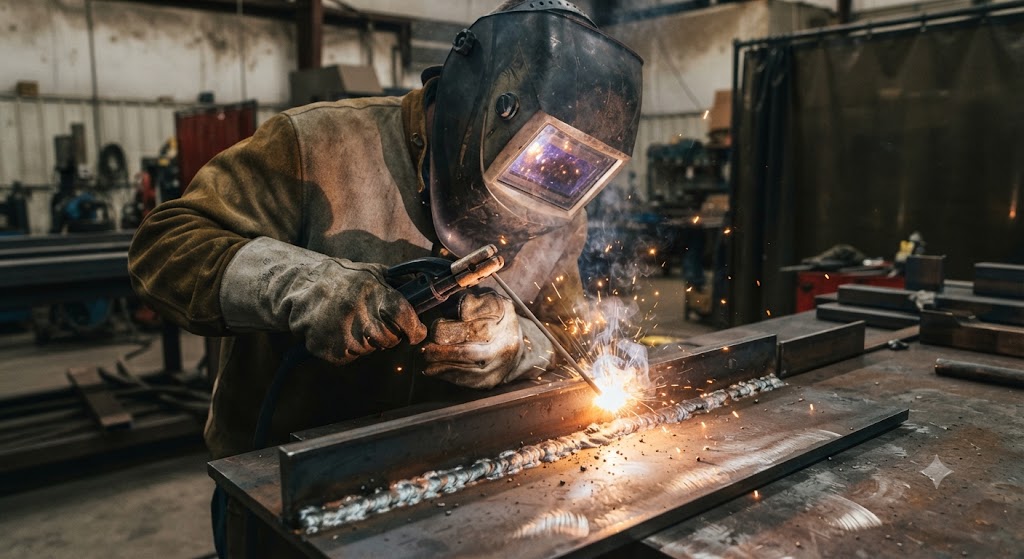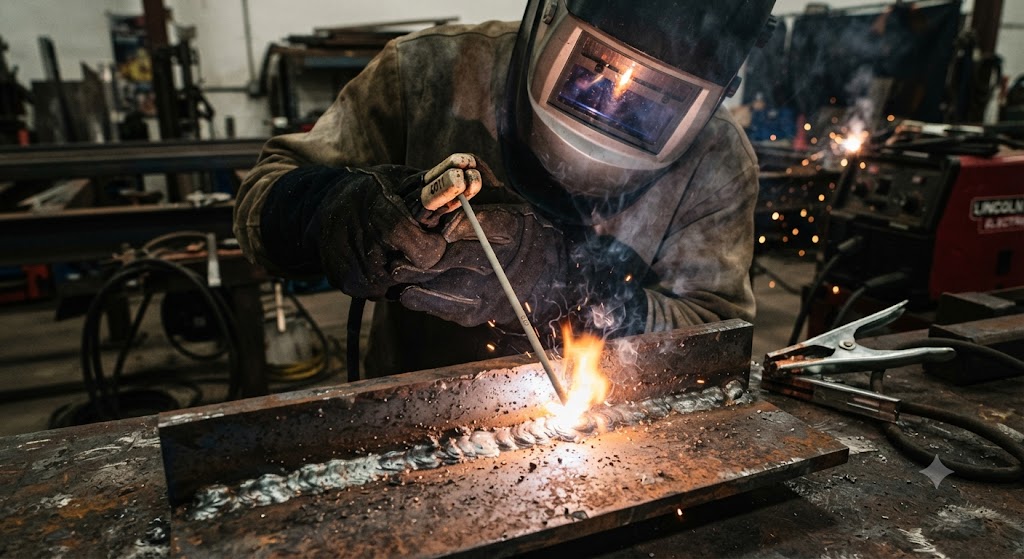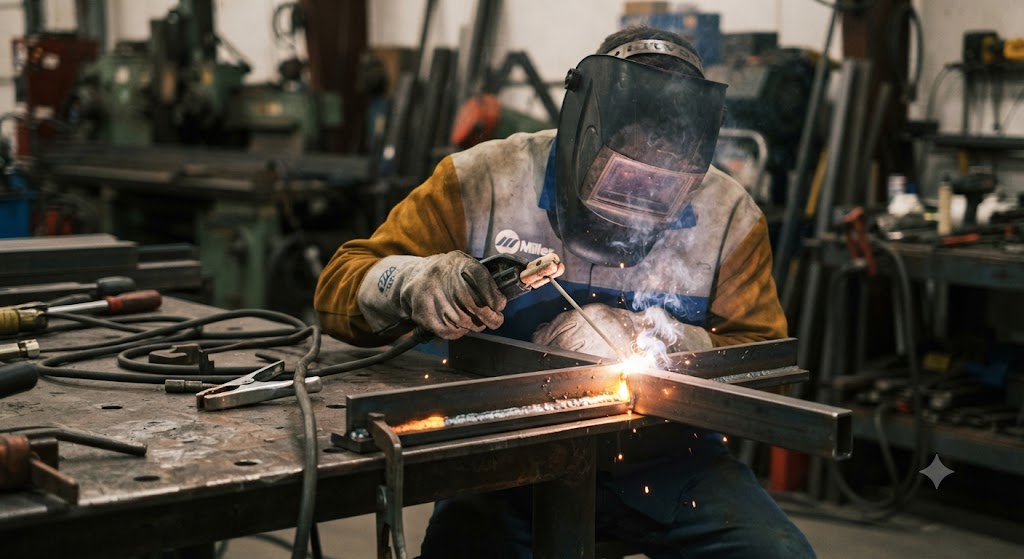
Stainless Steel Welding Rod: The Complete Buying Guide
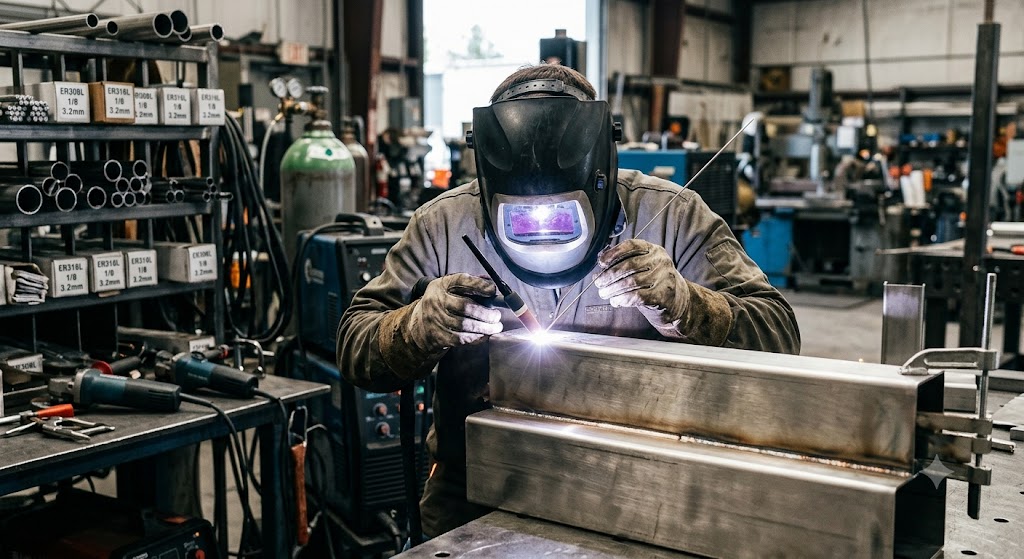
The first stainless repair that rusts on you is a hard lesson. You weld a food-grade bracket or an exhaust flange with whatever rod was in the drawer, and weeks later there is rust bleeding out of the weld. Stainless does not forgive the wrong filler. Match the rod to the base metal and the joint stays corrosion resistant; guess wrong and you have built rust into the repair.
The most common stainless steel welding rod is E308L, used for stick welding the 304 and 304L stainless grades that make up the bulk of everyday stainless, while E309 is the rod for joining stainless to dissimilar metals like mild steel. Choosing the right stainless rod comes down to matching, or deliberately over-alloying, to the metals you are joining. Here is how to get it right.
Reading stainless rod classifications
Stainless stick electrodes use a number that reflects the alloy, followed by a coating code. The two you will meet most:
- E308 / E308L: matches 304 and 304L stainless, the most common austenitic grades. The L means low carbon, which reduces the risk of chromium carbide forming at the grain boundaries (a problem called sensitization that hurts corrosion resistance). For most 304 work, E308L is the default.
- E309 / E309L: an over-alloyed rod used to weld dissimilar metals, most often stainless to mild or carbon steel, and sometimes as a buffer layer. Its extra chromium and nickel tolerate the dilution that happens when you mix stainless with plain steel.
There are others (E316L for more chemical and chloride resistance, for example), but 308L and 309 cover the large majority of general stainless jobs.
Direct answer: which stainless rod do you need?
Start from the metals you are joining:
- Welding 304 or 304L stainless to itself: use E308L. It matches the base metal and keeps the joint corrosion resistant. The low-carbon version is the safe default.
- Welding stainless to mild or carbon steel (dissimilar): use E309 (or E309L). Its extra alloy content handles the mixing of the two metals without cracking or losing corrosion resistance.
- Welding 316 stainless (marine, chemical): use a matching 316L rod for full corrosion resistance.
A useful shortcut: 308L for stainless-to-stainless, 309 for stainless-to-steel. When in doubt joining unknown stainless to mild steel, 309 is the forgiving choice because it is designed for dilution.
Can stainless rods weld mild steel?
Yes, and this is a genuinely useful trick. Stainless rods, especially 309, can weld mild steel and are sometimes used precisely because they tolerate dirty or dissimilar joints and produce a strong, ductile weld. Some welders keep 309 around as a “weld anything to anything” repair rod. The catch is that stainless rods are a premium specialty consumable, so using them on plain steel you could weld with 6011 or 7018 is wasteful unless you specifically need the dissimilar-metal capability. Use stainless rods on mild steel when the joint calls for it, not as an everyday substitute.
Technique notes for stainless
Stainless behaves differently from mild steel, and a few habits matter:
- Manage heat. Stainless holds heat and distorts easily. Use lower heat input, shorter beads, and let the work cool between passes to preserve corrosion resistance.
- Keep it clean. Use dedicated stainless brushes and grinding media so you do not embed carbon steel particles that will rust.
- Chip and brush carefully. The slag from stainless rods peels reasonably well; clean each pass before the next.
- Match filler to service. For corrosion-critical or food-grade work, the right alloy match is not optional.
Which stainless rod to buy
Blue Demon’s E308L-16 is a widely available, well-regarded stainless stick electrode that covers the most common 304 work, and the same brand offers 309 for dissimilar joints.
- Blue Demon E308L-16 stainless stick electrodes are a strong pick for stick welding 304, 304L, 321, and 347 stainless. The extra-low carbon deposit minimizes chromium carbide formation, which protects corrosion resistance, and the controlled ferrite gives good toughness. Its limitation is scope: it is made for matching austenitic stainless, so for joining stainless to mild steel you want a 309 rod instead.
How to round out your stainless kit: keep E308L for stainless-to-stainless work, add an E309/E309L rod for dissimilar joints and forgiving repairs, and reach for 316L only when you specifically need marine or chemical corrosion resistance. That trio covers nearly everything.
Who should skip stainless rods: anyone welding only plain mild steel. Stainless electrodes are a premium consumable for a reason, so use mild steel rods for mild steel work and save stainless rods for stainless and dissimilar joints.
The bottom line
Stainless welding is all about matching the filler to the metal. Use E308L for the common 304 and 304L grades, E309 to join stainless to mild steel, and 316L for marine or chemical service. Keep your heat down, your tools stainless-dedicated, and your alloy match honest, and your welds will stay as corrosion resistant as the base metal. Get the rod wrong and the rust will find the weld first.
FAQ
What rod is used for stainless steel stick welding? Most commonly E308L, which matches 304 and 304L stainless, the most common grades. For joining stainless to mild steel, use E309, and for marine or chemical service use 316L.
What is 308 versus 309 rod used for? E308 (and low-carbon E308L) is for welding 304-type stainless to itself. E309 is over-alloyed for dissimilar-metal joints, most often welding stainless to mild or carbon steel.
Can stainless rods be used on mild steel? Yes. Stainless rods, especially 309, weld mild steel well and tolerate dissimilar or dirty joints. Because stainless rods are a premium specialty consumable, use them for that capability rather than as an everyday mild steel rod.
What does the L in 308L mean? Low carbon. The reduced carbon minimizes chromium carbide formation (sensitization) at the grain boundaries, which protects the weld’s corrosion resistance. It is the safe default for most 304 work.
Why did my stainless weld rust? Usually the wrong filler alloy, embedded carbon steel from shared brushes or grinding media, or too much heat causing sensitization. Match the rod, use stainless-dedicated tools, and control heat.
What rod welds 316 stainless? Use a matching 316L rod to preserve the extra chloride and chemical corrosion resistance that 316 stainless provides, such as in marine environments.
References
- Blue Demon / Welding Material Sales, E308L-16 stainless electrode specifications (manufacturer documentation).
- Lincoln Electric and Hobart Brothers stainless stick electrode selection guides, including 308L, 309, and 316L applications (manufacturer documentation).
- AWS A5.4 stainless steel covered electrode classifications.