TIG Welding Filler Rod: The Complete Buying Guide
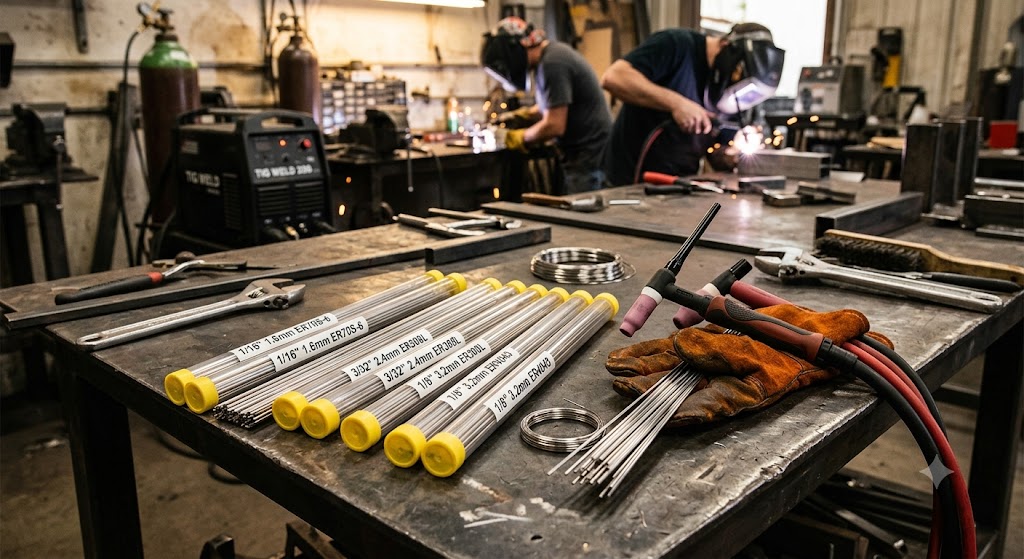
TIG is the process where the filler rod is a separate thing in your other hand, dabbed into the puddle bead by bead. That separation is what gives TIG its control and its clean results, and it is also why choosing the right filler matters so much. The torch makes the puddle, but the rod becomes the weld, so the rod has to suit the metal you are joining.
The TIG welding filler rod you need is matched to your base metal: ER70S-2 or ER70S-6 for mild and carbon steel, ER308L for common stainless, and ER4043 or ER5356 for aluminum. Getting the alloy match right, and the diameter suited to your material thickness, is what separates a strong, clean TIG weld from a weak or cracked one. Here is how to choose.
How TIG filler is classified
TIG filler rods use an ER prefix (electrode or rod) followed by numbers that describe the alloy and strength. The ones that cover most work:
- ER70S-2 and ER70S-6: mild and carbon steel fillers rated around 70,000 PSI. The S-6 has more deoxidizers for welding over mill scale and light contamination; the S-2 is triple-deoxidized and prized for clean, high-quality welds.
- ER308L: the standard stainless filler, matching 304 and 304L stainless, with low carbon for corrosion resistance. (ER309 for dissimilar stainless-to-steel, ER316L for marine and chemical service.)
- ER4043 and ER5356: the two common aluminum fillers. 4043 flows smoothly and resists cracking for general work; 5356 is stronger and stiffer, better for 5000-series aluminum and structural strength.
Direct answer: which filler for which metal?
Match the rod to the base metal:
- Mild and carbon steel: ER70S-2 for clean, high-quality welds, or ER70S-6 when the steel has some mill scale or rust and you want more deoxidizers to fight porosity.
- Stainless steel (304/304L): ER308L. Use ER309 to weld stainless to mild steel, and ER316L for 316 marine or chemical grades.
- Aluminum: ER4043 for general-purpose work and castings, where its silicon content improves fluidity and crack resistance; ER5356 for 5000-series alloys and jobs needing more strength.
A simple principle underlies all of it: the filler should match or complement the base metal’s alloy. When you do not know the exact grade, pick the filler designed for that family and, for aluminum, favor 4043 for general repairs and 5356 for structural strength.
Does TIG filler need to match the base metal?
Yes, and this is the rule that trips up beginners. Unlike a quick MIG or stick job on mild steel where people fudge it, TIG makes clean, precise welds where filler mismatch shows up as weakness, cracking, or lost corrosion resistance. You would not TIG stainless with a steel rod and expect it to resist rust, or weld 6061 aluminum with a mismatched filler and expect full strength. The one deliberate exception is over-alloying on purpose, like using ER309 to bridge stainless and mild steel. Otherwise, match the family.
What size filler rod?
Rod diameter should roughly match your material thickness and the amperage you are running. As a rough guide, thin sheet (around 1/16 inch and under) uses small 1/16 inch or even 0.045 inch filler, general work around 1/8 inch thick uses 3/32 inch filler, and thicker material uses 1/8 inch rod. A practical rule of thumb: the rod diameter should be close to the base metal thickness for thin material, and you can always add filler in more dabs rather than jumping to an oversized rod that chills the puddle. Match amperage to thickness, then pick a filler that suits that heat.
Which TIG filler rods to buy
Start with the two most common families: steel and aluminum.
- Blue Demon ER70S-2 TIG welding rod is a premium, triple-deoxidized mild and carbon steel filler that produces clean welds with minimal porosity, even over light rust and mill scale. It is the everyday steel rod for most TIG work. The limitation is scope: it is for steel, so you will need a separate aluminum and stainless rod for those metals.
- WeldingCity ER4043 aluminum TIG rod is a solid general-purpose aluminum filler, with the silicon content that gives 4043 its smooth flow and crack resistance on castings and general aluminum. For 5000-series alloys or maximum strength, step up to an ER5356 rod instead.
How to build a TIG filler kit: keep ER70S-2 for steel, ER308L for stainless, and ER4043 for general aluminum, adding ER5356 and ER316L as your work demands. Buy the diameters that match the thickness you weld most, usually 1/16 inch and 3/32 inch for a home shop.
Who should skip a particular filler: do not buy aluminum or stainless filler you will not use. TIG filler is bought by metal type, so match your purchases to the metals you actually weld rather than collecting rods you will never dab.
The bottom line
In TIG, the rod becomes the weld, so match it to your metal: ER70S-2 (or S-6 for dirtier steel) for carbon steel, ER308L for common stainless, and ER4043 or ER5356 for aluminum. Size the rod to your material thickness and amperage, and only over-alloy on purpose, as with ER309 for dissimilar joints. Get the match right and TIG rewards you with clean, strong, precise welds; get it wrong and the weakness shows.
FAQ
What filler rod do I need for TIG welding steel? ER70S-2 for clean, high-quality welds on mild and carbon steel, or ER70S-6 when the steel has mill scale or light rust and you want extra deoxidizers to prevent porosity. Both are rated around 70,000 PSI.
Does TIG filler rod need to match the base metal? Yes. TIG makes precise welds where a filler mismatch shows up as weakness, cracking, or lost corrosion resistance. Match the alloy family, except when deliberately over-alloying (like ER309 to join stainless to steel).
What size filler rod for thin sheet metal? Use a small diameter such as 1/16 inch or 0.045 inch for thin sheet, matching the rod roughly to the metal thickness. Add filler in more dabs rather than using an oversized rod that chills the puddle.
What is the difference between ER4043 and ER5356 aluminum filler? ER4043 has silicon for smooth flow and crack resistance, ideal for general work and castings. ER5356 is stronger and stiffer, better for 5000-series aluminum and structural strength.
What is the difference between ER70S-2 and ER70S-6? Both are mild steel fillers. ER70S-6 has more deoxidizers for welding over mill scale and light rust, while ER70S-2 is triple-deoxidized and favored for the cleanest, highest-quality welds.
What TIG filler welds stainless to mild steel? ER309 (or ER309L). Its extra alloy content handles the dilution of joining stainless to carbon steel without cracking or losing corrosion resistance.
References
- Blue Demon / Welding Material Sales, ER70S-2 and ER4043 TIG filler specifications and welding parameters (manufacturer documentation).
- Lincoln Electric and Miller Electric TIG filler metal selection guides for steel, stainless, and aluminum (manufacturer documentation).
- AWS A5.18 (carbon steel), A5.9 (stainless), and A5.10 (aluminum) filler metal classifications.