Welding Rod Holder: How to Choose the Right Stinger
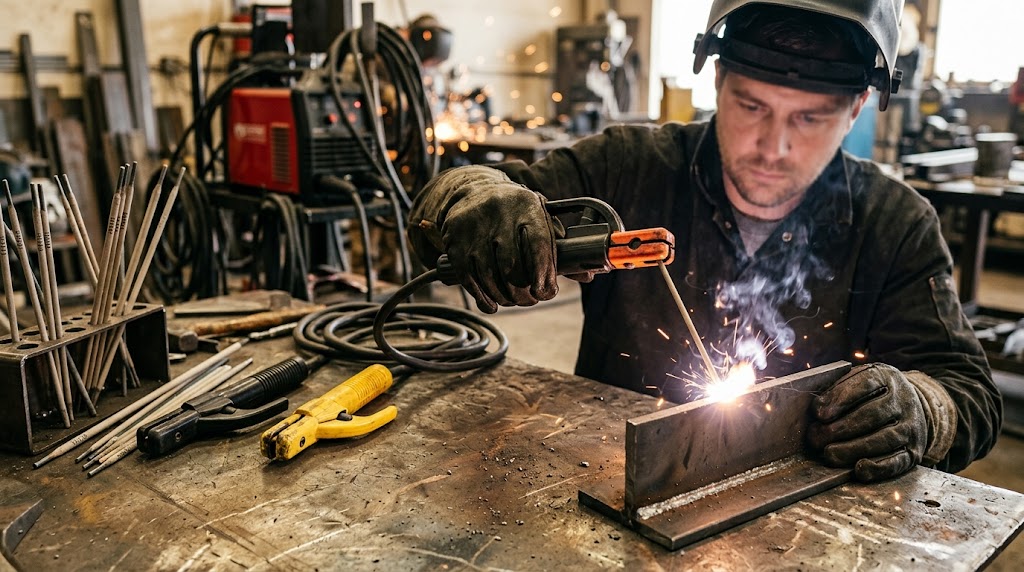
The rod holder is the part of a stick welder you actually hold for hours, and a bad one lets you know fast. Jaws that will not grip, a handle that heats up in your palm, a spring that fights you every time you change rods. It is the least glamorous piece of the setup and the one that most affects whether a long day at the arc feels comfortable or miserable.
A welding rod holder, also called a stinger or electrode holder, is the insulated clamp that grips the stick electrode and carries current to it from the welding cable. Choosing one comes down to matching its amperage rating to your machine, picking jaws that grip the rod sizes you run, and getting a handle that stays cool and comfortable. Here is how to pick the right one.
What a rod holder actually does
The holder does three jobs at once: it clamps the electrode firmly, it conducts welding current from the cable into the rod, and it insulates your hand from that current and the heat. The clamping is usually done by spring-loaded copper alloy jaws, copper because it conducts electricity and heat well. The insulation is the molded handle and jaw covers that keep you from becoming part of the circuit.
Get any of those three wrong and you feel it: weak jaws drop rods, poor conductors run hot and waste power, and thin insulation cooks your hand.
Direct answer: how to choose a rod holder
Match the holder to your machine and your work in three steps:
- Amperage rating. Pick a holder rated at or above your welder’s maximum output. Common ratings are 200, 300, and 500 amps. A 300 amp holder covers most hobby and farm machines; go 500 amp if you run a big industrial machine or weld at high amperage for long stretches.
- Electrode capacity. Check the jaw groove range so it grips the rod diameters you use, typically 3/32 inch through 3/16 inch or larger. Most general holders handle the common 3/32, 1/8, and 5/32 inch rods.
- Comfort and grip. Look for a comfortable, well-insulated handle and strong jaws that grip in multiple angles (many holders have grooves to hold the rod straight, at 45 degrees, and at 90 degrees).
A simple rule: buy a holder rated a little above your machine’s ceiling, with a jaw range that covers your rods, and a handle that feels good in your glove.
Amperage rating: do not undersize it
This is the spec people ignore and regret. A holder rated below your welding current runs hot, and a hot holder transfers that heat to your hand and degrades faster. A 200 amp holder on a machine you run at 180 amps for long beads will get uncomfortably warm. Sizing up to a 300 amp holder for a typical 140 to 200 amp machine gives you margin, and the holder stays cooler and lasts longer. The trade-off is that higher-rated holders are a bit bulkier and heavier, so do not jump to a 500 amp holder for a small machine unless you prize durability over the extra bulk.
Jaw design and cable connection
Two details separate a holder you enjoy from one you tolerate:
- Jaw grip and angles. Spring-loaded copper jaws with multiple grooves let you set the rod straight or angled, which matters for reaching awkward joints. Strong spring tension keeps the rod from slipping under vibration.
- Cable connection. The holder attaches to your welding cable, and the connection must be clean and tight, because a loose or corroded joint runs hot and robs the arc of power. Match the holder to your cable size and make the connection solid.
A holder that grips well and connects tightly simply welds better, with fewer dropped rods and a steadier arc.
Which rod holder to buy
Here are dependable options across the common amperage classes.
- American-style 300 amp electrode holder is a strong everyday choice for hobby and farm machines, with the classic spring-loaded jaw design and a rating that covers most 140 to 250 amp welders. Its limitation is that for sustained high-amperage industrial work you would want to step up to a 500 amp holder.
- WeldingCity 500 amp stinger with accessory kit suits bigger machines and long high-amperage runs, with heavy copper alloy jaws and a bundled accessory kit that is handy if you are setting up from scratch. The trade-off is more bulk and weight than you need for a small hobby welder.
- SSimder 600 amp ergonomic electrode holder is worth a look if hand fatigue is your main complaint, thanks to an ergonomic handle and easy jaw action designed to reduce grip effort over a long day. As a high-rated holder it is heavier duty than a light hobby machine strictly needs.
How to choose: for a typical home or farm welder, the 300 amp holder is the right match. For an industrial machine or all-day high-amperage welding, go with a 500 amp or higher holder, and prioritize an ergonomic handle if you weld for hours at a stretch.
Who should skip a heavy 500 amp holder: casual hobbyists with a small machine. A big holder adds weight and bulk you will notice on light work, so match the rating to your machine rather than buying the biggest one available.
The bottom line
Your rod holder is the tool you hold all day, so choose it deliberately: rate it at or above your machine’s output, confirm the jaws grip your rod sizes, and get a handle that stays cool and comfortable. A 300 amp holder covers most home and farm welders, while a 500 amp holder suits industrial machines. Add a solid, tight cable connection and you will change rods faster, hold a steadier arc, and finish the day with a happier hand.
FAQ
What is a welding rod holder called? It is also called a stinger or an electrode holder. It is the insulated clamp that grips the stick electrode and carries welding current to it from the cable.
What amperage rod holder do I need? Pick one rated at or above your welder’s maximum output. A 300 amp holder covers most hobby and farm machines, while a 500 amp holder suits industrial machines or long high-amperage runs.
What rod sizes does a holder grip? Most general-purpose holders grip common diameters from 3/32 inch through 3/16 inch, covering 3/32, 1/8, and 5/32 inch rods. Check the jaw groove range for the sizes you run.
Why does my rod holder get hot? Usually because it is underrated for your welding current or the cable connection is loose or corroded. Size the holder above your machine’s output and keep the cable connection clean and tight.
Can I hold rods at an angle in the holder? Yes. Most holders have multiple jaw grooves so you can set the rod straight, at 45 degrees, or at 90 degrees, which helps reach awkward joints.
How do I connect a rod holder to my welder? Attach it to the welding cable sized for your machine, making a clean, tight connection. A loose or corroded joint runs hot and weakens the arc.
References
- Lincoln Electric and Miller Electric stick welding equipment guidance, including electrode holder selection and cable connections (manufacturer documentation).
- Tweco electrode holder specifications and amperage ratings (manufacturer documentation).
- American Welding Society stick welding (SMAW) equipment and safety guidance, aws.org.