Welding Rod Types Compared: 6010 vs 6011 vs 6013 vs 7018
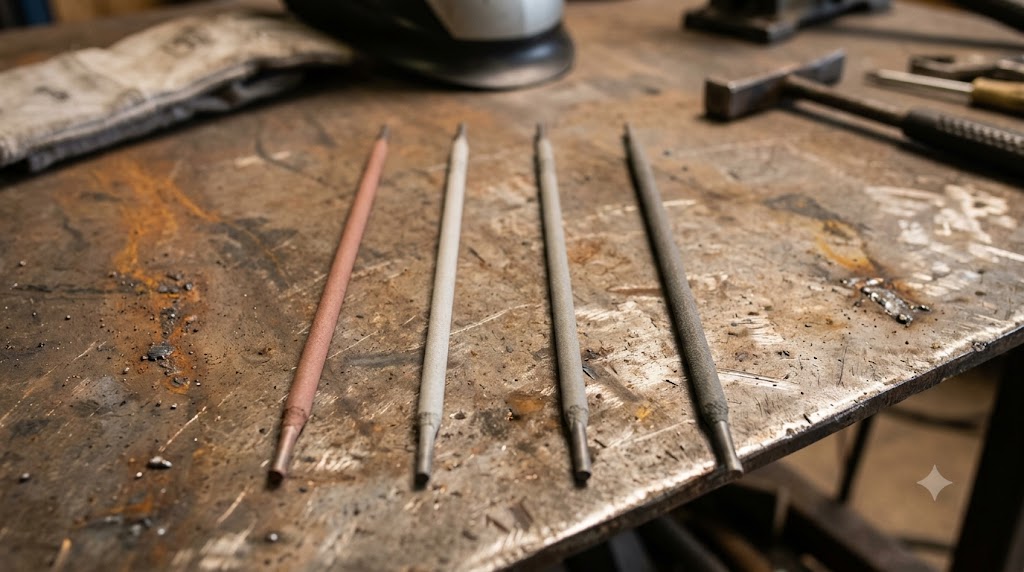
Stand in front of the rod shelf at any welding supplier and the numbers start to blur: 6010, 6011, 6013, 7018, and a dozen more, all looking like nearly identical sticks in different boxes. But those four numbers cover most of what a stick welder actually does, and each one is built for a different job. Pick the right one and the weld almost makes itself. Pick the wrong one and you fight the arc the whole way.
The four most common stick welding rods are 6010 (deep penetration on dirty metal, DC only), 6011 (the AC-capable version of 6010), 6013 (easy, smooth welds on clean thin metal), and 7018 (strong, low-hydrogen structural welds on clean steel). Choosing between them comes down to your power source, the condition of your metal, and whether you need penetration or strength. Here is the head-to-head.
What the numbers mean
Every stick rod’s number tells its story. The first two digits are tensile strength in thousands of PSI (60 means 60,000; 70 means 70,000). The third digit is welding position (1 means all positions). The last digit describes the coating and current type. So 6010 and 6011 are 60,000 PSI all-position rods with different coatings, while 7018 is a stronger 70,000 PSI all-position rod. Small numbers, big differences in behavior.
The four rods, head to head
| Rod | Strength | Current | Penetration | Metal condition | Best for |
|---|---|---|---|---|---|
| 6010 | 60,000 PSI | DC only | Deep | Dirty, rusty | Pipe root passes, dirty steel |
| 6011 | 60,000 PSI | AC or DC | Deep | Dirty, rusty | Dirty steel on AC machines |
| 6013 | 60,000 PSI | AC or DC | Light to medium | Clean | Thin, clean metal, beginners |
| 7018 | 70,000 PSI | AC or DC | Medium | Clean | Structural, strong welds |
6010: the deep-digging pipe rod
6010 uses a high-cellulose coating and runs on DC electrode positive only. It bites deep through rust, paint, and mill scale with a fast-freezing puddle that welders love for pipe root passes and dirty repair work. The trade-off is a harsh, snappy arc that takes practice, and it needs a DC machine.
6011: 6010 that runs on AC
6011 is essentially the AC-capable cousin of 6010. It keeps the deep penetration and ability to weld dirty, rusty metal, but its coating lets it run on AC as well as DC, which makes it the go-to digging rod for the basic AC buzz-box welders many people own. The arc is a touch softer than 6010 but still aggressive. If you have a DC machine and weld pipe, 6010; if you have an AC machine or want one rod for dirty-metal repairs, 6011.
6013: the friendly beginner rod
6013 has a rutile coating that lights easily, runs smooth with low spatter, and leaves easy-to-clean slag. Its lighter penetration makes it ideal for thin, clean sheet metal and general light fabrication, and its forgiving arc makes it the classic learning rod. The catch: that light penetration and preference for clean metal mean it is not the rod for thick structural joints or rusty steel.
7018: the structural workhorse
7018 is the low-hydrogen rod, delivering strong, tough, crack-resistant 70,000 PSI welds for structural steel, heavy equipment, and any job where strength matters. It runs a smooth arc and leaves a beautiful bead on clean metal. Its one real demand is storage: the low-hydrogen coating absorbs moisture, so 7018 must be kept dry to keep its strength benefit.
Direct answer: which one should you buy?
Start from your machine and your metal:
- DC machine, dirty metal or pipe: 6010 for its deep, digging penetration.
- AC machine, dirty or rusty metal: 6011, the AC-friendly deep-penetration rod.
- Thin, clean metal or just learning: 6013 for easy, smooth, forgiving welds.
- Strong or structural welds on clean steel: 7018, kept dry.
For many home welders, the ideal starter kit is exactly two rods: 6011 for dirty metal and repairs, and 7018 for clean, strong welds. Add 6013 if you weld a lot of thin sheet, and 6010 if you run a DC machine and weld pipe.
Which rods to buy
Here are dependable, widely available options for all four:
- Forney E6010 electrodes are a solid deep-penetration rod for DC machines and dirty or rusty steel, with the fast-freeze puddle pipe welders want. The limitation is that it runs on DC only and has a demanding arc, so beginners on AC machines should look at 6011 instead.
- Forney E6011 electrodes bring that same dig-through-dirt penetration to AC or DC machines, making them the versatile repair rod for the buzz-box welders many people own. The trade-off is a rougher arc and more spatter than a smooth rod like 6013.
- Forney E6013 electrodes are the easy-to-run choice for thin, clean metal and beginners, lighting readily with low spatter and easy slag cleanup. The limitation is light penetration, so they are not for thick or structural joints.
- Forney E7018 electrodes deliver the strong, low-hydrogen structural welds this rod is famous for on clean steel. The catch is storage: keep them dry, because the low-hydrogen benefit depends on it.
How to choose: buy 6011 and 7018 first to cover dirty repairs and strong clean welds, then add 6013 for thin sheet and 6010 if you run DC and weld pipe. That covers the large majority of stick welding jobs.
The bottom line
6010, 6011, 6013, and 7018 are not competitors so much as specialists. 6010 and 6011 dig deep through dirty metal (6010 on DC, 6011 on AC or DC), 6013 lays easy welds on thin clean metal, and 7018 gives strong, low-hydrogen structural welds on clean steel. Match the rod to your machine and your metal, and stick welding gets a whole lot easier.
FAQ
What is the difference between 6010 and 6011? Both are 60,000 PSI deep-penetration rods for dirty, rusty metal. 6010 runs on DC only with a slightly sharper arc, favored for pipe root passes, while 6011 runs on AC or DC, making it the choice for basic AC machines.
What is 6013 used for? 6013 is an easy-running rod for thin, clean sheet metal, general light fabrication, and learning. It lights easily, runs smooth with low spatter, and cleans up easily, but has lighter penetration not suited to thick or structural work.
When should I use 7018? Use 7018 for strong, structural, or crack-sensitive welds on clean steel, where its 70,000 PSI low-hydrogen weld metal matters. Keep the rods dry, because moisture undermines the low-hydrogen benefit.
What two rods should a beginner buy? For most home welders, 6011 and 7018 cover the most ground: 6011 for dirty metal and repairs on AC or DC, and 7018 for strong, clean welds. Add 6013 for thin sheet metal.
Which rod penetrates the deepest? 6010 and 6011 have the deepest penetration of these four, digging through rust and mill scale. 6013 has light to medium penetration, and 7018 medium, both preferring clean metal.
Can all of these run on an AC welder? 6011, 6013, and 7018 can run on AC (7018 needs an AC-rated version), while 6010 requires DC. If you have an AC-only machine, choose 6011 over 6010 for deep penetration.
References
- Lincoln Electric and Miller Electric stick electrode selection guides comparing 6010, 6011, 6013, and 7018 (manufacturer documentation).
- Hobart Brothers and Forney Industries electrode data sheets with classification, current, and application details (manufacturer documentation).
- American Welding Society AWS A5.1 carbon steel covered electrode classification system, aws.org.