Wire Brush for Welding: Stainless vs Carbon Steel
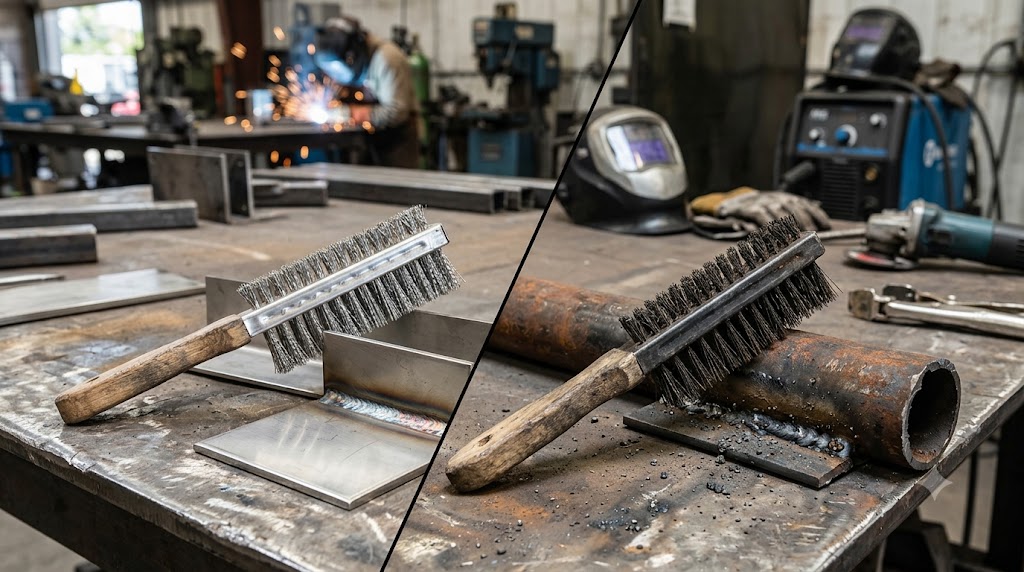
Here is a mistake that quietly wrecks stainless and aluminum work: cleaning it with the same wire brush you used on mild steel. It looks harmless, but that carbon-steel brush leaves microscopic bits of ordinary steel embedded in the surface, and those specks rust and corrode the very metal you were trying to protect. The fix is simple once you know it, and it is one of the first habits good welders build: match the brush to the metal.
For welding, use a stainless steel wire brush on stainless steel and aluminum to prevent contamination, and a carbon steel wire brush on mild steel for general cleaning. Never use a carbon steel brush on stainless or aluminum, because it embeds particles that cause rust. Here is how to choose and use the right brush.
Why the brush metal matters
A wire brush does not just sweep dust; its wires physically scrape and drag across the metal, and tiny particles transfer between the two. That transfer is the whole issue:
- Use a carbon steel brush on stainless or aluminum, and you embed carbon steel particles in the surface. Those particles rust, and on aluminum they cause rapid corrosion and can contaminate future welds.
- Use a stainless steel brush on stainless or aluminum, and there is no reactive carbon steel to leave behind, so the surface stays clean and corrosion-free.
This cross-contamination is why welders keep separate, dedicated brushes and never mix them. It is a small discipline that prevents a frustrating rust problem later.
Direct answer: which brush for which metal
Match the brush to the base metal:
- Stainless steel: stainless steel wire brush only (dedicated, never used on carbon steel).
- Aluminum: stainless steel wire brush, dedicated to aluminum, kept separate even from your stainless-steel brush.
- Mild (carbon) steel: carbon steel wire brush for general cleaning and prep.
- General slag and spatter cleanup on mild steel: carbon steel brush.
The key rule: a carbon steel brush never touches stainless or aluminum. Many welders keep three brushes, one for carbon steel, one for stainless, and one just for aluminum.
Stainless steel brushes
A stainless steel wire brush is the tool for cleaning stainless steel and aluminum without contaminating them. Because the bristles are stainless, they will not leave rust-causing carbon steel particles behind. Use one to clean stainless before and after welding, and to prep aluminum (removing the oxide layer) before TIG or MIG welding it. The critical discipline is keeping the stainless brush dedicated: if you use it on mild steel even once, it picks up carbon steel particles and can then contaminate stainless and aluminum, defeating the purpose. Label it and keep it separate.
Carbon steel brushes
A carbon steel wire brush is the everyday brush for mild steel: cleaning off mill scale, rust, and dirt before welding, and knocking loose slag and spatter after. The carbon steel bristles are stiff and effective on ordinary steel, where contamination is not a concern. This is the brush most welders reach for most often, since a lot of fabrication is mild steel. Just remember its one hard limit: keep it away from stainless and aluminum. For general steel prep and cleanup, a carbon steel brush is the everyday workhorse.
Crimped vs knotted wire, and by hand vs power
A couple more choices shape how a brush performs:
- Crimped wire brushes have wavy, individually flexible bristles, good for general cleaning and lighter surface work.
- Knotted wire brushes twist the wires into stiff bundles for aggressive removal of heavy rust, scale, and slag, common on power (grinder-mounted) wheel brushes.
- Hand brushes give control for touch-up and interpass cleaning; power brushes (wheel or cup brushes on an angle grinder) speed up heavy cleaning over large areas.
Match the same metal rule to power brushes too: a stainless cup brush for stainless and aluminum, a carbon steel one for mild steel.
Which wire brushes to buy
Here are dedicated brushes to cover each metal.
- ALLGET stainless steel wire brush cleans stainless steel and aluminum without leaving rust-causing carbon steel particles, making it the safe choice for those metals. Its limitation is that it must stay dedicated: use it on mild steel and it picks up carbon particles that then contaminate stainless and aluminum.
- Lincoln Electric KH584 carbon steel wire brush (3 x 19 in) is the everyday brush for cleaning mill scale, rust, and slag off mild steel before and after welding. The trade-off is that it must never touch stainless or aluminum, since it embeds carbon steel that causes corrosion.
- MAXMAN wire brush set, carbon and stainless steel (2 pack) gives you both a carbon steel and a stainless brush at once, an easy way to start with a dedicated brush for each metal. Its limitation is that you still need to label and separate them, and add a third dedicated brush if you work aluminum often.
How to choose: get a carbon steel brush for mild steel and a stainless brush for stainless and aluminum, and keep them strictly separate. A combo set is the simplest way to cover both, and dedicate an extra stainless brush just for aluminum if you weld it regularly.
The bottom line
The wire brush rule is simple and worth building into muscle memory: stainless steel brush on stainless and aluminum, carbon steel brush on mild steel, and never a carbon steel brush on stainless or aluminum. Cross-contamination embeds rust-causing particles that corrode the very metals you want to protect, so keep dedicated, labeled brushes for each. Choose crimped wire for general cleaning and knotted wire for heavy removal, and apply the same metal rule to power cup and wheel brushes. Match the brush to the metal and your welds stay clean and corrosion-free.
FAQ
Can you use a carbon steel wire brush on stainless steel? No. A carbon steel brush embeds tiny carbon steel particles in the stainless surface, and those particles rust, causing corrosion and staining. Use a dedicated stainless steel wire brush on stainless steel instead.
What kind of wire brush should I use on aluminum? Use a stainless steel wire brush dedicated to aluminum, kept separate even from your stainless brush. Carbon steel brushes contaminate aluminum and cause rapid corrosion, and a stainless brush removes the oxide layer cleanly before welding.
Why do welders keep separate wire brushes? Because wire brushes transfer particles between metals. A brush used on carbon steel picks up particles that then contaminate stainless and aluminum, causing rust. Keeping dedicated brushes for carbon steel, stainless, and aluminum prevents cross-contamination.
What is the difference between crimped and knotted wire brushes? Crimped wire brushes have wavy, flexible bristles for general cleaning and lighter work. Knotted wire brushes twist wires into stiff bundles for aggressive removal of heavy rust, scale, and slag. Both come in hand and power versions.
Do I need a stainless brush if I only weld mild steel? No. If you only weld mild steel, a carbon steel wire brush handles cleaning and prep fine. You only need a dedicated stainless brush when you work stainless steel or aluminum, to avoid contamination.
Can I use a wire brush on an angle grinder for welding cleanup? Yes. Power cup and wheel brushes on an angle grinder speed up heavy cleaning over large areas. Apply the same metal rule: a stainless cup brush for stainless and aluminum, a carbon steel one for mild steel, and wear eye and face protection since wires can shed.
References
- Lincoln Electric and Miller Electric guidance on stainless steel and aluminum cleaning, brush contamination, and dedicated wire brushes (manufacturers), lincolnelectric.com, millerwelds.com.
- Weiler Abrasives wire brush selection guidance, including crimped vs knotted wire and material-specific brushes (manufacturer), weilerabrasives.com.
- The Fabricator articles on preventing carbon steel contamination of stainless and aluminum, thefabricator.com.