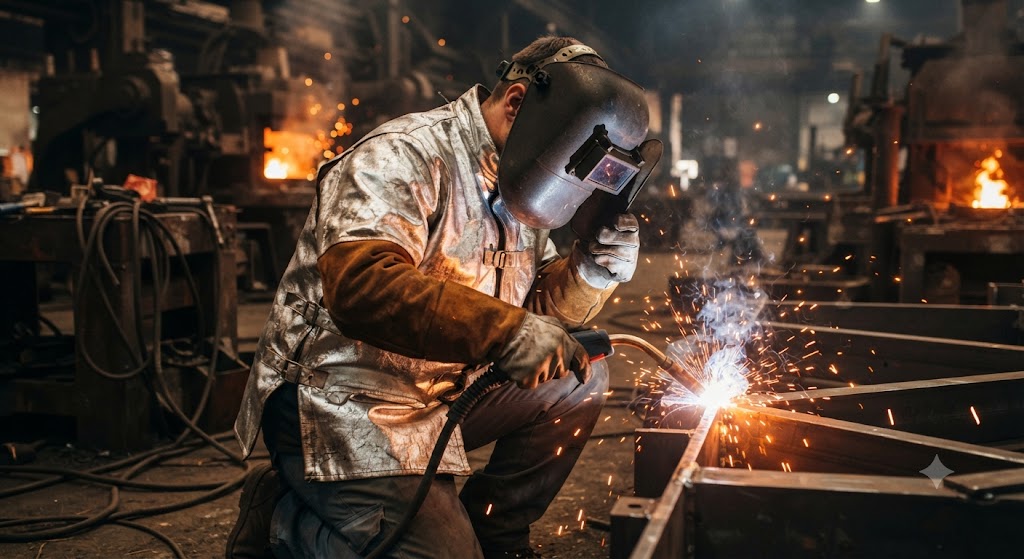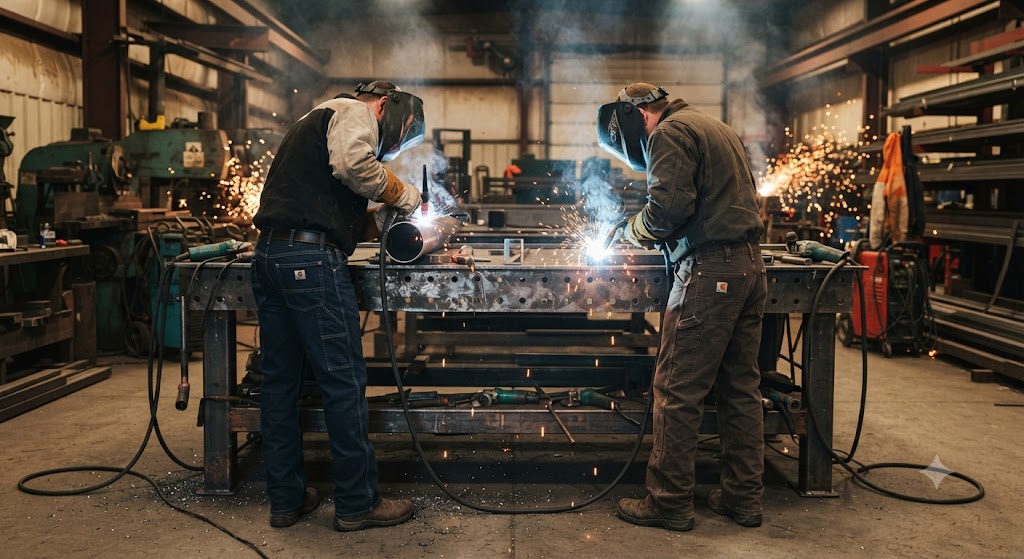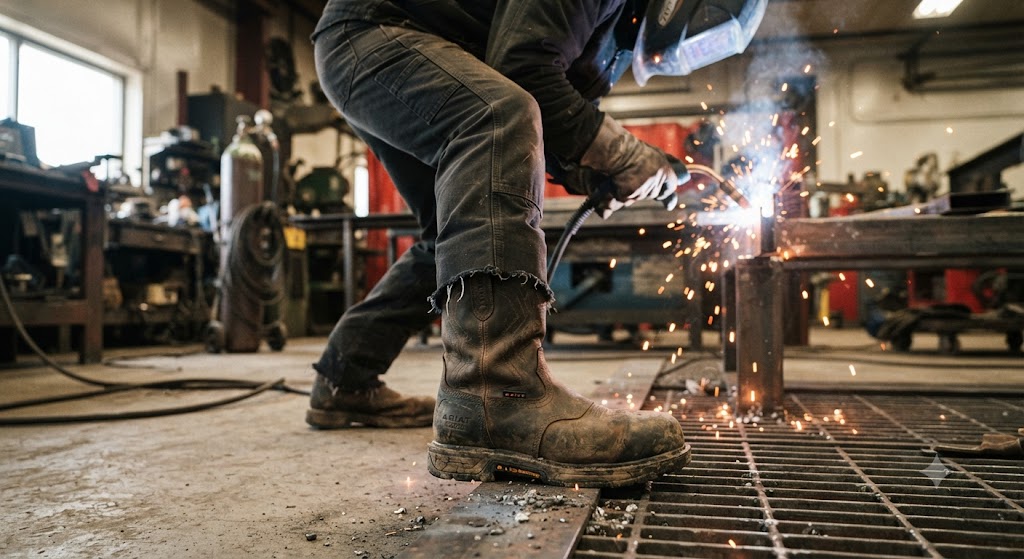
Ariat Welding Boots Review
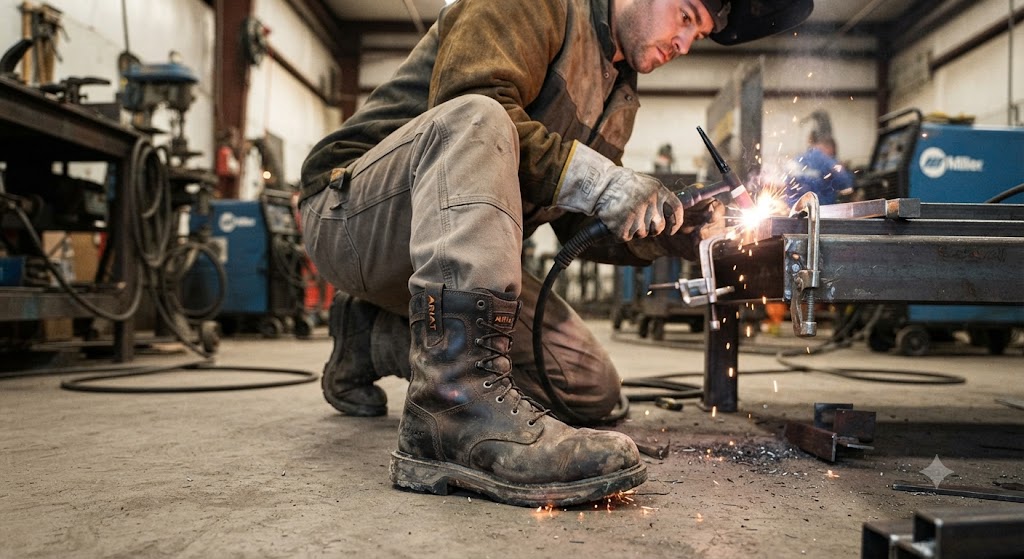
The first time I ruined a pair of work boots in a fab shop, it was slag that did it. A glob of molten steel rolled off my TIG table, landed in the gap where my laces met the tongue, and burned a hole straight through to my sock before I could kick it loose. That day taught me why so many welders quit lace-up boots and go pull-on. If you have been searching for honest Ariat welding boots advice from someone who actually stands on a shop floor, this is the review I wish I had read back then. Ariat is a Western and work brand first, and that Western DNA turns out to matter more for welding than you might think.
I have put Ariat Groundbreakers through spatter, grinding dust, wet yards, and long days on concrete. Here is what holds up, what does not, and which pair fits which welder.
What Makes a Boot a Good Welding Boot
Welding is not like framing houses or stocking a warehouse. The hazards are specific: sparks and slag that can wedge into any seam, radiant heat off the workpiece, sharp offcuts underfoot, and hours of standing still rather than walking. A good welding boot answers each of those.
You want smooth, closed uppers with as few open channels as possible, which is exactly why pull-on ropers and Chelsea styles beat lace-ups for this trade. Sparks slide off leather instead of nesting in laces. You want a heat-tolerant outsole, a defined heel that shrugs debris away, and a toe box that either protects your foot or, at minimum, does not trap heat against it. You also want all-day comfort, because a welder who is shifting weight and fidgeting is a welder laying an ugly bead.
Ariat leans into most of these. The leather uppers are clean, the roper heels shed junk well, and the ATS footbed is genuinely comfortable. Where Ariat gets tricky is in matching the right model to your specific hazards, and that is where most buyers go wrong.
Are Ariat Boots Actually Good for Welding
Short answer: yes, with the right model. Ariat does not build a dedicated “welding boot” the way it builds a dedicated Western boot, so you are choosing a work boot and using it for welding. The good news is that the Groundbreaker line, and Ariat’s pull-on ropers in general, happen to fit welding tasks well because of that Western heritage.
The pull-on design is the biggest win. No laces means no spark traps and easy on and off when you need to dump a hot boot fast. The stacked roper heel keeps slag from riding up the back of the sole and gives you a solid brace when you are seated at a bench welding for hours. The ATS (Advanced Torque Stability) footbed and midsole are the real reason Ariat feels better than most work boots after hour eight on concrete, and standing endurance is underrated in this trade.
The honest limits: leather uppers resist spatter but are not fireproof, so heavy production welders throwing constant slag should still wear leather spats over any boot. The soft toe versions carry no impact rating, and the rubber and EVA outsoles have real heat ceilings, so you do not want to rest a boot directly on hot plate. For most stick, MIG, and TIG work in a shop or on light structural jobs, though, a steel toe Groundbreaker is a smart, comfortable, affordable choice. Pick steel toe unless you have a specific reason not to.
The Ariat Groundbreaker Line for Welders
The Groundbreaker family is Ariat’s budget-to-midrange workhorse, and it is where most welders should start. Within the line you get a pull-on, a square toe, a round soft toe, and a Chelsea, and the differences matter.
The Ariat Groundbreaker Steel Toe Pull-On is my default recommendation for shop welders. It nails the pull-on advantage, the steel toe meets impact protection standards, and it is a genuinely affordable entry into the brand. My verdict: best all-around value for MIG and stick work indoors. The honest flaw is that the mesh lining and non-waterproof leather mean sweaty feet in summer and soaked feet in a wet yard. Skip it if you work outdoors in rain or wash-down environments.
The Ariat H2O Groundbreaker Waterproof Square Steel Toe solves the water problem. The H2O waterproofing is legitimate, and the square toe gives your toes more room. Verdict: the pick for outdoor, pipeline, and wet-yard welders who need a steel toe. The tradeoff is fit. Square toe boxes run wide and boxy, and if you have a narrow foot you will swim in them. Skip it if you prefer a trim, close fit.
The Ariat Groundbreaker Round Toe is the soft toe, round-profile option, and it is the most comfortable Groundbreaker straight out of the box. Verdict: great for TIG work and bench welding where impact risk is low and dexterity and comfort matter most. The serious flaw, and you must respect it, is that this is a soft toe with no impact rating. Skip it entirely if your shop requires safety toe or if you handle heavy stock that could crush a foot.
The Ariat Groundbreaker Chelsea Waterproof Steel Toe is the slip-on Chelsea with elastic side panels, waterproofing, and a steel toe. Verdict: the fastest on and off of the group and the cleanest silhouette for spark shedding, which makes it my quiet favorite for mixed shop days. The tradeoff is that the elastic gore panels are a slight weak point for direct slag compared to solid leather, so heavy overhead welders should look elsewhere. Skip it if you spend your day under showers of spatter.
Comparing the Four Groundbreaker Models
Here is how the four linked models stack up so you can match one to your work.
| Model | Toe | Waterproof | Best for | Main tradeoff |
|---|---|---|---|---|
| Groundbreaker Steel Toe Pull-On | Steel | No | Indoor shop MIG and stick | Not waterproof, warm in summer |
| H2O Groundbreaker Square Steel Toe | Steel | Yes | Outdoor and wet-yard work | Boxy square fit runs wide |
| Groundbreaker Round Toe | Soft | No | TIG and bench, comfort first | No impact rating |
| Groundbreaker Chelsea Steel Toe | Steel | Yes | Fast on and off, mixed days | Elastic gore is a slag weak point |
If I had to own one, it would be the steel toe pull-on for pure value. If I worked outside, the H2O square toe. If comfort ruled and my shop allowed soft toe, the round toe.
How Ariat’s Other Lines Compare
Ariat’s welding-friendly reputation does not stop at the Groundbreaker. The Ariat WorkHog sits a tier up as the premium, more durable pull-on, with better leather and a burlier build that serious daily welders will appreciate. The Ariat Sierra is the classic Western work roper, taller and traditional, and its tall shaft and pronounced heel are excellent at shedding slag. The Ariat Rebar line leans more athletic and modern, which is comfortable but generally features more mesh and open construction than I want near sparks.
For most readers, the Groundbreaker delivers the welding-relevant strengths of these premium lines at a friendlier, budget-conscious price. Step up to the WorkHog only if you are wearing boots out fast or want thicker leather between your foot and the arc.
My Bottom Line on Ariat for the Arc
Ariat earns its place in a welder’s boot rotation not because it markets to us, but because its Western build habits, pull-on uppers, roper heels, and smooth leather, line up with what the trade actually needs. The steel toe Groundbreaker pull-on is the value pick I hand to new welders, the H2O square toe is the one I send outdoors, and the Chelsea is the sleeper for anyone who values speed and a clean profile.
Just respect the limits. Leather is not fireproof, soft toes are not rated for impact, and no outsole loves resting on hot plate. Match the model to your hazards, add spats for heavy production, and Ariat will carry you through a lot of long, sparky days.
Frequently Asked Questions
Are Ariat boots rated for welding specifically? No boot brand certifies a boot as “welding rated.” What you want is a safety toe boot meeting ASTM F2413 impact and compression standards, smooth leather uppers, and a heat-tolerant sole. The steel toe Groundbreakers meet the safety toe standard and the smooth-upper preference welders look for.
Should I get steel toe or soft toe for welding? Get steel toe unless your specific work has zero impact risk and your employer allows soft toe. The round toe Groundbreaker is comfortable but carries no impact rating, so it is for low-risk TIG and bench work only.
Why do welders prefer pull-on boots over lace-ups? Laces create open channels where slag and sparks can lodge and burn through. Pull-on ropers and Chelsea boots present smooth leather that lets debris slide off, and they come off fast if a boot gets hot.
Are the waterproof H2O models worth it? If you weld outdoors, in wet yards, or in wash-down areas, yes. The H2O waterproofing keeps your feet dry through puddles and rain. Indoor shop welders can save money with the standard non-waterproof pull-on.
Can I rest my foot on hot metal in these boots? No. The rubber and EVA outsoles have heat ceilings and will degrade or transfer heat if you press them against hot workpieces. Keep your soles off hot plate and use proper footrests.
Do I still need spats or leggings with Ariat boots? For heavy production welding or overhead work, yes. Leather uppers resist spatter but are not fireproof, so leather spats add a real margin of safety over the boot top and laces area.
How does the square toe fit compare to round toe? The square toe H2O model runs wide and roomy, which suits broad feet but feels sloppy on narrow ones. The round toe fits closer and more traditionally. Order carefully if you are between the two.
Is the Groundbreaker durable enough for daily welding? For light to moderate daily use, yes. If you are burning through boots fast in heavy production, step up to the premium Ariat WorkHog for thicker leather and a burlier build.
References
https://www.osha.gov/laws-regs/regulations/standardnumber/1910/1910.136 https://www.cdc.gov/niosh/topics/ppe/ https://www.astm.org/f2413-18.html https://www.ariat.com/