Best TIG Welding Gloves
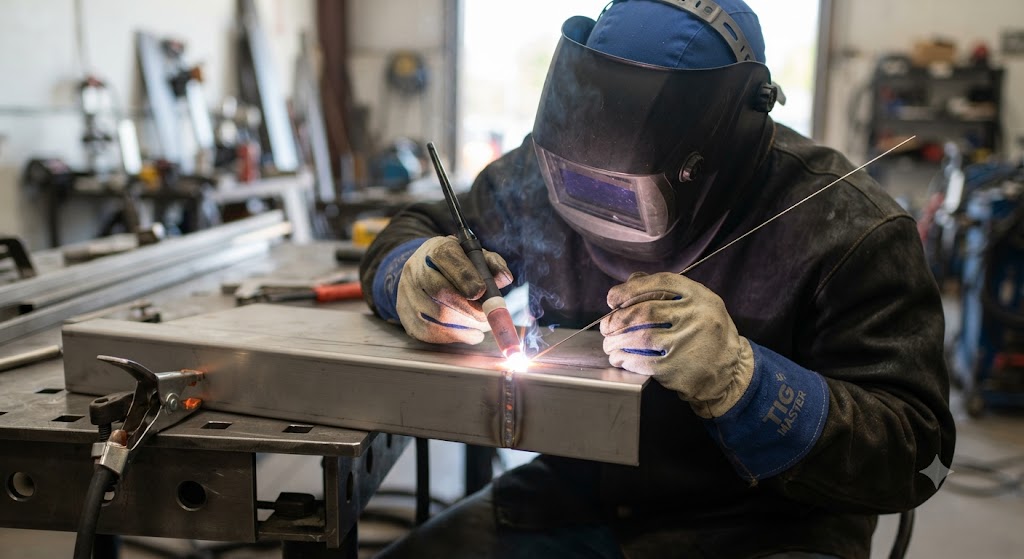
TIG welding punishes a bad glove in a way no other process does. You are feeding filler rod by hand, holding a torch inches from the arc, and riding a pedal, all while trying to lay a bead that looks like a stack of dimes. The best TIG welding gloves disappear on your hands, giving you the finger feel of bare skin with just enough leather to keep the heat off. Get this wrong and your welds wander, because you cannot feel the rod through a thick MIG mitt.
What makes a TIG glove different
A TIG glove is a thin, unlined leather glove built for dexterity rather than raw heat protection. TIG runs at low amperage and produces very little spatter compared to MIG or stick, so the glove does not need to be armor. What it needs is thinness, a seamless or reinforced forefinger for feeding rod, and soft leather that moves with your hand. Almost every quality TIG glove is goatskin, because goatskin has natural lanolin that keeps it supple while still resisting abrasion and punctures.
The cuff on a TIG glove is usually shorter than a stick glove, around four inches, because you are not dodging heavy spatter. The priority is a clean, low-profile fit from fingertip to wrist.
Which TIG gloves should you buy
The Tillman 1328 top grain goatskin TIG glove is the bench standard, and for good reason. It is thin, unlined, sewn with Kevlar thread, and cheap enough to replace often, which you will, because thin TIG gloves wear out faster than thick ones. Its flaw is that the seamless forefinger design offers little padding, so if you drag your hand across hot metal you will feel it. It is a poor choice for anyone who wants one glove to also handle occasional MIG work.
If you drag your torch hand a lot, step up to the Tillman 1338 goatskin TIG glove with GlidePatch. It adds a reinforced straight thumb and a side patch that protects the glove when you drag it along the work, at almost the same price. The downside is the straight-thumb design feels slightly less natural to welders used to a winged thumb.
For welders who run hot or want a touch more heat protection without losing feel, the Black Stallion T50 premium goatskin and FR cotton TIG glove pairs a goatskin palm with a flame resistant cotton back and a DragPatch. It breathes well and takes heat better than an all-leather thin glove. Its weakness is the cotton back is less abrasion resistant than full leather, so it is not the pick for rough handling between welds.
Want a premium all-rounder? The Caiman 1540 goat grain TIG/multi-task glove uses a contoured pattern and a fleece-lined back that adds comfort for longer sessions. It costs more than the Tillman options and the fleece back makes it slightly warmer, so skip it if you weld in a hot shop.
Goatskin versus everything else
Welders occasionally ask about deerskin or kidskin for TIG. Both are softer than goatskin and give even more feel, which is why some pros love them for delicate aluminum work. The trade is durability and heat tolerance: goatskin lasts longer and handles more heat, so it remains the sensible default. Deerskin and kidskin are worth trying only after you know you want maximum feel above all else.
| Glove | Standout | Watch out for |
| Tillman 1328 | Cheap, thin, proven | Little padding |
| Tillman 1338 | GlidePatch for dragging | Straight thumb feel |
| Black Stallion T50 | Breathable FR cotton back | Less abrasion resistant |
| Caiman 1540 | Contoured, comfortable | Warmer, pricier |
Frequently asked questions
What are the best gloves for TIG welding? Thin goatskin gloves. The Tillman 1328 and 1338 are the most popular proven picks, with the Black Stallion T50 and Caiman 1540 as strong alternatives.
Do I need a special helmet for TIG? You need good low-amp sensitivity and a clear lens, but the glove matters just as much. A thick MIG glove will ruin your rod control.
What shade for TIG welding? Most TIG sits in the shade 9 to 13 range depending on amperage, but that is a lens question, not a glove question.
Why is goatskin preferred for TIG? Goatskin is naturally soft and supple thanks to its lanolin, giving the best dexterity while still resisting punctures and abrasion.
Do thinner gloves reduce protection? Yes, but TIG produces little spatter and low heat, so the trade is acceptable. Never use a thin TIG glove for stick or heavy MIG.
How often will I replace TIG gloves? More often than MIG gloves. The thin leather wears through faster, so most TIG welders keep spares on hand.
References
- John Tillman & Co. TIG glove specifications, jtillman.com
- Black Stallion (Revco) T50 spec sheet, blackstallion.com
- PIP/Caiman product data, caimanindustrial.com