Best Welding Boots: A Full Buying Guide for Every Type of Welder
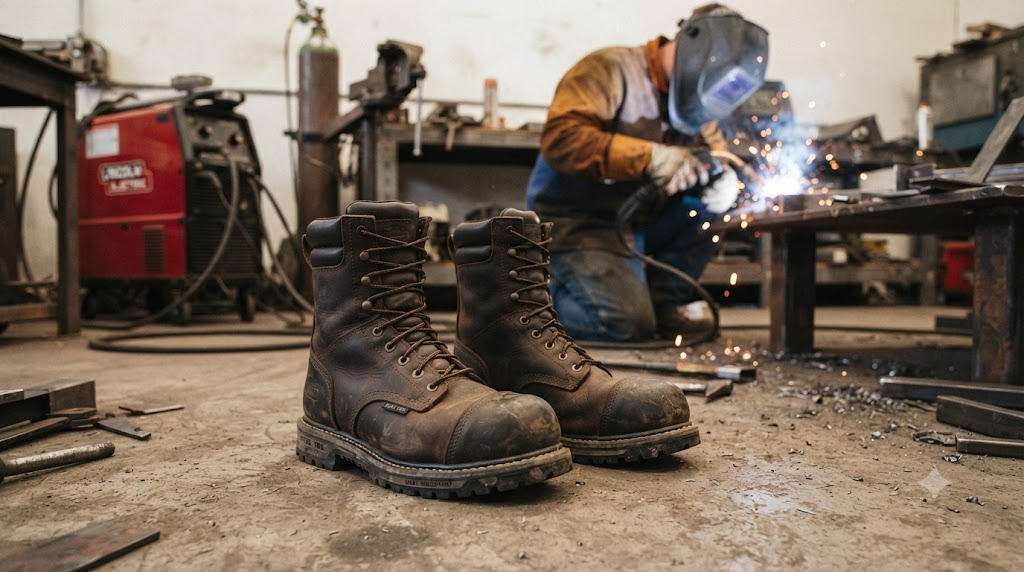
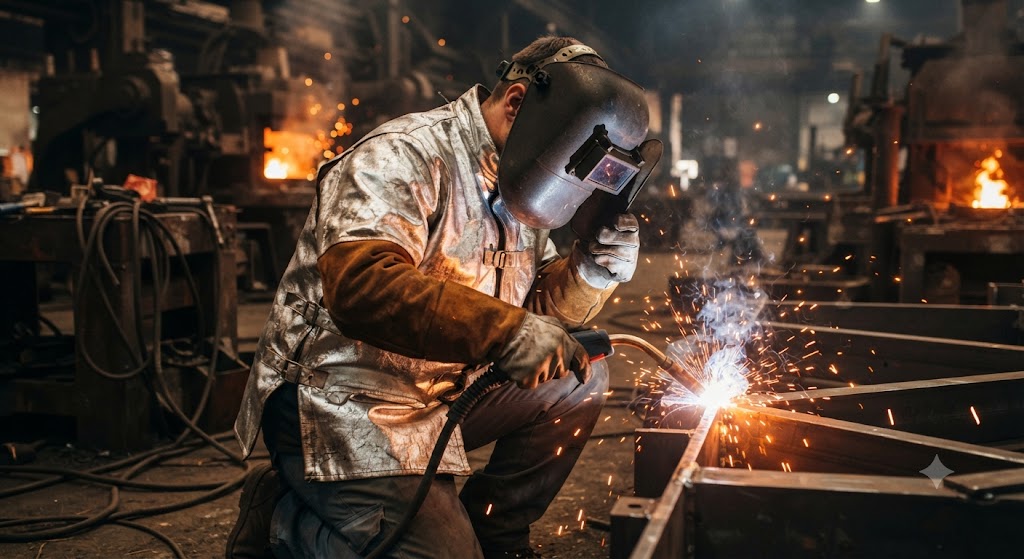
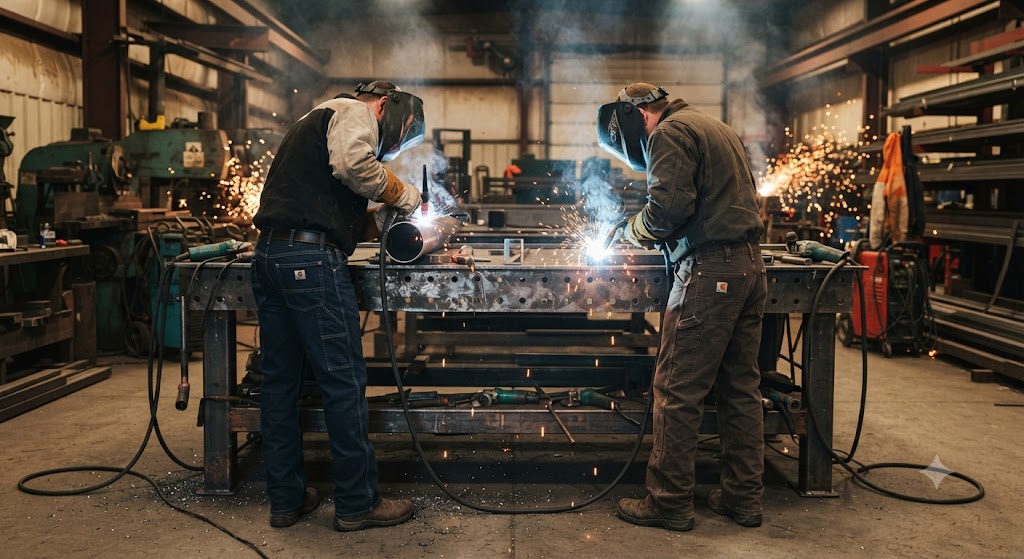
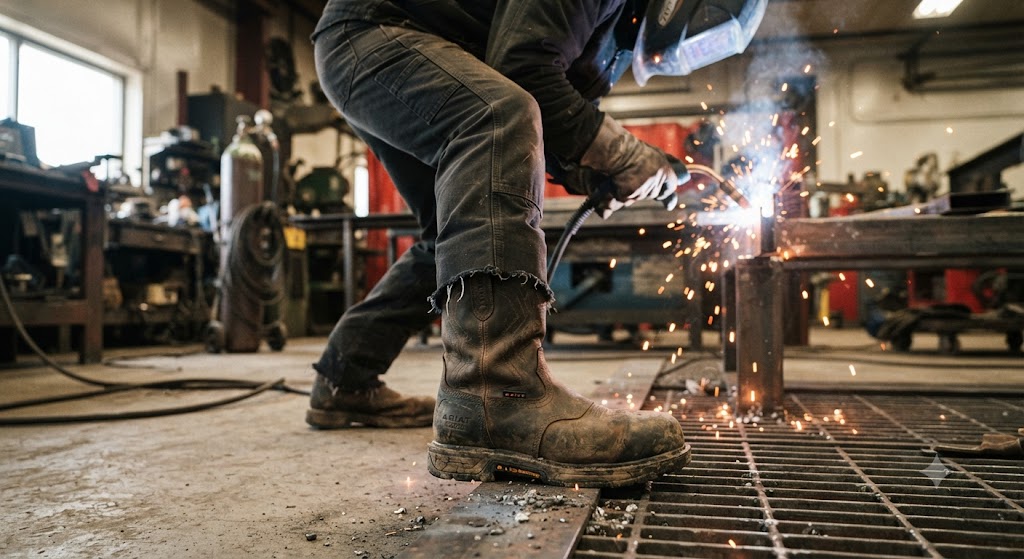
The worst time to think about your boots is when a piece of hot slag has already found the gap between your lace and your tongue. By then you are doing the boot-kick shuffle and hoping the leather held. A good welding boot does not draw attention to itself. It keeps you standing, keeps your feet dry, passes the OSHA inspection, and is still in one piece after six months of real shop work. Here are the boots that actually do that, ranked by who they suit and what they cost you in the long run.
What Makes a Boot a Welding Boot?
A welding boot differs from a general work boot in a few specific ways. The upper needs enough leather thickness to resist weld spatter and spark contact without burning through at the lace area or toe. The construction should minimize exposed synthetic materials near the vamp and tongue. A steel or composite toe cap meeting ASTM F2413 is required under OSHA 29 CFR 1910.136 in any shop where falling or rolling objects are a hazard, which covers nearly every welding environment. An electrical hazard (EH) rating matters in shops where conduit, welding equipment, and live circuits share the floor.
Metatarsal protection is the additional step. An external or internal metatarsal guard covers the bones running from the ankle to the toes, which a steel toe cap alone does not protect. OSHA 1910.136 points to ASTM F2413 as the compliance standard, and ASTM F2413 covers metatarsal protection under a separate designation (Mt/75). For structural shops, heavy fabrication, and any facility where a hazard assessment identifies met-bone risk, a met-guard boot is the right call.
For welding environments specifically, a full-grain leather upper with minimal mesh or synthetic exposure, a slip-resistant outsole rated for oily and wet surfaces, and at minimum a steel toe with ASTM F2413 compliance and an EH rating covers most of what OSHA and your safety officer will ask for.
Our Top Welding Boot Picks
Top Pick: Timberland PRO Pit Boss 6” Steel Toe
The Pit Boss is the most recognized welding and heavy-industry work boot in the market for good reason. The full-grain leather upper is thick enough to absorb moderate spatter without burnthrough. The direct-attach rubber outsole is slip-resistant, oil-resistant, and long-lasting enough to justify the price over a multi-year horizon. The steel toe meets ASTM F2413 for impact and compression; the boot carries an EH rating.
The named flaw is the break-in period. The Pit Boss is stiff out of the box, and the first two weeks are genuinely uncomfortable for anyone coming from a lighter work shoe. The toe box is also narrower than KEEN Utility’s asymmetric cap, so wide-footed wearers will cramp before they break in. If your feet are average-to-narrow and you can give the boot two weeks to conform, the Pit Boss rewards you with long-term durability that lower-tier boots cannot match.
The Timberland PRO Pit Boss does not include a metatarsal guard. Timberland PRO offers a separate 6” Met Guard boot for shops that require met coverage.
Check the Timberland PRO Pit Boss on Amazon
Runner-Up: Ariat WorkHog Wide Square Toe Steel Toe
Arat builds the WorkHog around their ATS Max technology, which uses a four-layer footbed system and a fiberglass shank for torsional stability. The result is a boot that handles 10-hour shifts on concrete better than most steel-toe options, with noticeably less foot fatigue by end of day. The full-grain leather upper handles weld spatter well. The wide square toe gives tradespeople with broader feet the room they need without ordering a size up.
The named flaw is the heel height. The WorkHog uses a cowboy-cut heel profile, which works well in a stand-up or ladder position but creates a slight rocking sensation on perfectly flat concrete floors for welders who spend most of their shift at a fixed workstation. It is not a safety issue, just an ergonomic one. If your shop is all flat floor, the Timberland PRO Pit Boss gives a more planted platform. If you are on uneven ground, scaffolding, or field work, the WorkHog’s ATS system and taller heel earn their place.
Check the Ariat WorkHog Steel Toe on Amazon
Best for Wide Feet and Hot Shops: KEEN Utility Atlanta Cool 2 Steel Toe
KEEN’s asymmetric KEEN.PROTECT toe cap is the widest and most naturally shaped steel cap in this comparison. For welders who spend 8 to 10 hours standing and need real arch support from the stock insole, KEEN’s contoured footbed is genuinely better than what the Timberland PRO or Ariat ship with. The moisture-wicking lining and ventilated construction run meaningfully cooler in warm shop conditions.
The named flaw is the ventilated collar. The mesh zones that make KEEN cool in summer are the same zones that allow spatter to reach the boot collar in heavy stick welding or overhead flux-core work. For that specific use, add leather spats or choose a more sealed boot. For MIG and TIG welding with controlled spatter patterns, KEEN holds up well.
Check KEEN Utility Atlanta Cool 2 Steel Toe on Amazon
Budget Pick: ROCKROOSTER 6” Steel Toe
ROCKROOSTER’s AK series carries genuine ASTM F2413-18 certification and an EH rating at a fraction of the price of Timberland PRO or Ariat. The YKK side zipper is a real convenience feature on long shifts. For hobbyists, part-time welders, or anyone who wants a compliant backup pair to rotate with a premium boot, ROCKROOSTER fills the gap.
The named flaw is upper durability under daily shop conditions. The leather is thinner than full-grain, and delamination at the toe cap area appears in long-term reviews at the 6 to 8-month mark of daily heavy use. As a primary boot for production welding, it is a false economy once you account for the replacement cycle. As a backup pair or occasional-use boot, the value is real.
Check ROCKROOSTER Steel-Toe Work Boots on Amazon
Steel Toe vs. Composite Toe for Welding
For most welding environments, steel toe is the right choice. Steel transmits heat more than composite under prolonged contact, but weld spatter contact is brief, not prolonged, and the steel cap is significantly more resistant to deformation under impact from falling material, which is the actual hazard a toe cap exists for. Composite toe boots (carbon fiber or fiberglass) are better in environments where the boot passes through metal detectors or in cold environments where a steel cap would conduct ground cold into the foot. In a welding shop, steel toe is the standard, and most certified welding environments default to it.
ASTM F2413 covers both steel and composite toe options under the same impact and compression standards. The toe cap material is secondary to the certification level.
Are Metatarsal Guards Necessary for Welders?
Depends on your specific environment. OSHA 1910.136 requires employers to perform a hazard assessment to determine what foot protection is needed. Metatarsal guards are specifically required where ASTM F2413’s Mt/75 designation applies, meaning wherever there is a recognized risk of impact or falling objects striking the top of the foot behind the toes. Foundries, structural steel fabrication shops, and heavy plate work commonly require met guards. General fabrication, welding repair, and maintenance welding typically do not unless a facility hazard assessment identifies the risk.
If your employer requires met coverage, Timberland PRO’s 6” Met Guard boot and similar ASTM-rated met-guard boots are the answer. None of the four boots listed above include built-in metatarsal protection.
Full Comparison Table
| Boot | Toe Type | ASTM F2413 | EH Rated | Met Guard | Waterproof | Best For |
|---|---|---|---|---|---|---|
| Timberland PRO Pit Boss | Steel | Yes | Yes | No | Yes (select) | Primary boot, long concrete shifts |
| Ariat WorkHog ST | Steel | Yes | Yes | No | Yes (WP model) | Long shifts, uneven surfaces |
| KEEN Utility Atlanta Cool 2 | Steel, asymmetric | Yes | Yes | No | Water-resistant | Wide feet, hot shops, MIG/TIG |
| ROCKROOSTER AK232Z | Steel | Yes (F2413-18) | Yes | No | Water-resistant | Budget, hobbyist, backup pair |
The Verdict
If you are welding full-time in a production or structural shop, buy the Timberland PRO Pit Boss. Give it two weeks to break in, replace the insole at the 3-month mark, and it will carry you through a year or more of real work. If you have wide feet or spend shifts in a hot shop where you need the boot to breathe, step to the KEEN Utility Atlanta Cool 2 and add a pair of leather spats for the collar. If your budget is tight or you need a certified backup pair, ROCKROOSTER’s AK series covers the ASTM and EH requirements at a cost that makes rotation viable. Ariat’s WorkHog is the right call for field welders, pipefitters, and anyone working on uneven ground who needs ATS-level stability over a long day.
For every boot on this list, add leather welding spats if you are running stick or flux-core overhead. No lace-up boot survives that environment without them.
FAQ
What is the best boot for welding? For most welders, the Timberland PRO Pit Boss 6” Steel Toe is the top all-around choice: thick full-grain leather, ASTM F2413 compliance, EH rating, and a durable direct-attach outsole. For wide feet or hot shops, KEEN Utility Atlanta Cool 2 is the better fit. Budget welders and hobbyists get genuine ASTM coverage from ROCKROOSTER’s AK series.
Do welders need steel toe or composite toe? Steel toe is the standard for most welding environments. Composite toe is appropriate when the boot needs to pass metal detectors or in cold-weather applications where steel would conduct ground cold. ASTM F2413 applies equally to both; the material is less important than the certification rating for welding shop compliance.
Are metatarsal guards necessary for welders? In structural fabrication, foundry, and heavy plate environments, yes. In general maintenance, hobby, and light fabrication work, typically not, though your employer’s hazard assessment under OSHA 1910.136 governs the actual requirement. None of the four main boots in this guide include built-in met guards; Timberland PRO’s separate Met Guard model is the go-to when met coverage is required.
What does ASTM F2413 mean for welding boots? ASTM F2413 is the standard for protective toe footwear in the United States. The I/75 rating confirms the toe cap withstands a 75 foot-pound impact; C/75 confirms 2,500 pounds of compression resistance. EH rating means the sole resists up to 600 volts. These are the compliance benchmarks OSHA 1910.136 points to when mandating protective footwear in welding and industrial environments.
How long do welding boots last? With daily shop use: premium boots like Timberland PRO and Ariat run 12 to 24 months depending on conditions. Mid-range boots like Wolverine Floorhand run 12 to 18 months. Budget boots like ROCKROOSTER run 6 to 10 months at full-time wear. Rotating pairs and replacing insoles at the 2 to 3-month mark extends lifespan for all categories.
Do I need welding spats in addition to welding boots? For stick welding, overhead MIG, and flux-core production work, yes. Spats protect the lace area and lower ankle that every lace-up boot leaves partially exposed. For TIG and short MIG beads with controlled spatter, spats are helpful but not always required. See the dedicated boot covers guide for specific spat recommendations.
What OSHA standard covers welding boot requirements? 29 CFR 1910.136 requires employers to ensure employees use protective footwear when exposed to hazards from falling or rolling objects, electrical hazards, or similar foot injury risks. ASTM F2413 is the referenced standard for demonstrating compliance. The employer’s hazard assessment determines the specific protection level required at each work site.
References
- https://www.osha.gov/laws-regs/regulations/standardnumber/1910/1910.136
- https://www.astm.org/f2413-18.html
- https://www.timberland.com/en-us/timberlandpro
- https://www.ariat.com/c/workhog
- https://www.keenfootwear.com/pages/keen-utility
URL slug: best-welding-boots-full-buying-guide Excerpt: The best welding boot for most shop welders is the Timberland PRO Pit Boss, but KEEN Utility is the better fit for wide feet and hot shops, and ROCKROOSTER covers the ASTM basics on a budget. This guide covers ASTM F2413, metatarsal guards, steel vs. composite toe, and which boot fits which welder.