Heat Resistant Welding Gloves
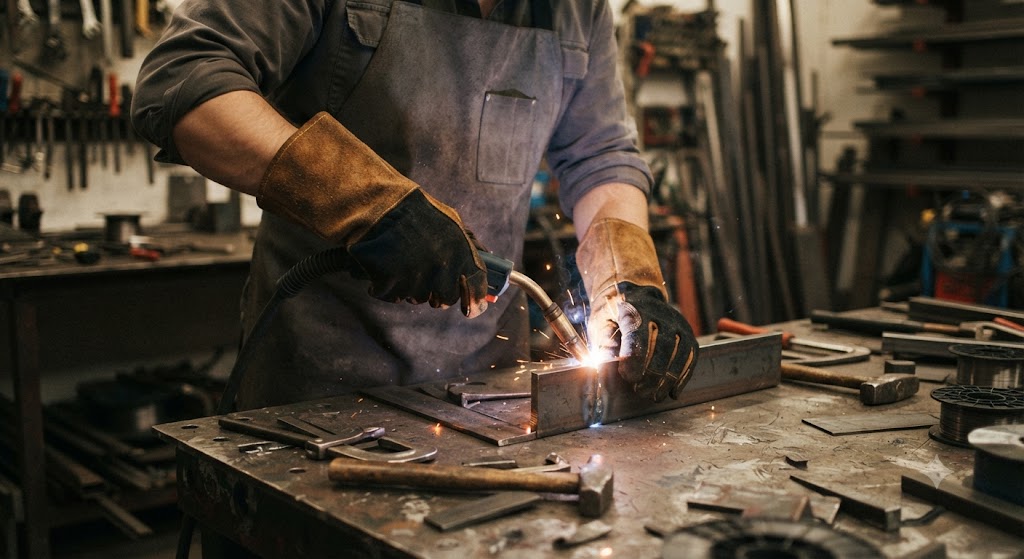
There is a specific kind of welder who searches for heat resistant welding gloves, and it is usually someone who has just burned through a normal pair. Maybe you are forge welding, running a wood stove, handling red-hot stock, or doing heavy stick work where the radiant heat never lets up. Whatever it is, you want a glove that treats sustained heat as its main job rather than an afterthought. Heat resistant welding gloves are thick, insulated, long-cuffed leather gloves built to block prolonged high temperatures, and the good ones are rated to real numbers you can plan around.
What makes a glove heat resistant
Every welding glove resists heat to some degree, but heat resistant gloves are built specifically to handle sustained high temperatures rather than the intermittent heat of normal welding. That means thicker leather, extra insulating linings such as cotton, wool, or aluminized layers, and longer cuffs that shield the forearm. Many are rated to a specific temperature, commonly 932 degrees Fahrenheit, which equals 500 degrees Celsius, for short-contact handling. That rating is for brief contact, not for holding a glowing bar indefinitely, so read it as a ceiling rather than a promise.
The trade for all that protection is dexterity. A true heat resistant glove is closer to an oven mitt than a precision welding glove, so you buy it for heat, not feel.
Which heat resistant gloves should you buy
For forge and general heavy heat, the RAPICCA 16 inch leather welding glove is the popular default, with four-layer insulation rated to 932 degrees Fahrenheit and a 7.5 inch sleeve that shields the forearm. Its flaw is bulk: the heavy insulation makes it clumsy, so it is a poor pick for anything requiring finger feel.
For a Kevlar-stitched heavy leather option, the TOPDC 16 inch welding glove offers thick insulated leather with Kevlar seams at a similar heat rating. The trade is a stiff break-in period.
For MIG crossover use, the YESWELDER 16 inch forge welding glove brings a heavy Kevlar-stitched leather build at a lower price, though sizing runs inconsistent, so order up if between sizes.
For the most extreme radiant heat, the SpecxArmor aluminized heat resistant glove adds a reflective aluminized backing that bounces radiant heat away, aimed at furnace and foundry work. Aluminized layers are less durable to abrasion, so it is a specialist tool, not an everyday glove.
Heat resistant options compared
| Glove | Standout | Watch out for |
| RAPICCA 16 inch | 4-layer insulation, long sleeve | Bulky, low feel |
| TOPDC 16 inch | Kevlar seams, thick leather | Stiff break-in |
| YESWELDER 16 inch | Value, MIG crossover | Inconsistent sizing |
| SpecxArmor aluminized | Reflects radiant heat | Less abrasion resistant |
What the temperature rating really means
A rating like 932 degrees Fahrenheit describes short-contact protection, the ability to briefly grab something that hot without an immediate burn. It does not mean you can grip a glowing workpiece and hold it. Heat soaks through any glove given enough time, so treat the rating as a ceiling for quick handling and keep your contact brief. For actual welding, the rating matters less than the insulation and cuff length, since you are blocking radiant heat rather than gripping hot metal directly.
Frequently asked questions
What are the most heat resistant welding gloves? Thick, insulated, long-cuffed leather gloves, often rated to 932 degrees Fahrenheit for short contact. The RAPICCA 16 inch and aluminized SpecxArmor are top picks.
What does 932 degrees Fahrenheit rating mean? It describes brief-contact protection, meaning you can quickly grab something that hot without an immediate burn. It is not a rating for sustained gripping.
Are heat resistant gloves good for welding? Yes for heavy stick and forge work, but their bulk sacrifices dexterity, so they are poor for TIG or fine work.
Can I use welding gloves for a forge or wood stove? Yes. Heavy heat resistant welding gloves are commonly used for forges, wood stoves, and BBQ because they block sustained heat well.
Do aluminized gloves work better? For radiant heat, yes. The reflective layer bounces heat away, which helps at furnaces and foundries, but aluminized coatings are less abrasion resistant.
Why are heat resistant gloves so bulky? The extra insulation and thick leather that block sustained heat also reduce flexibility. You trade dexterity for protection.
References
- RAPICCA product specifications, rapicca.com
- OSHA hand protection guidance, osha.gov
- NIOSH heat and PPE guidance, cdc.gov