How to Break In New Welding Gloves
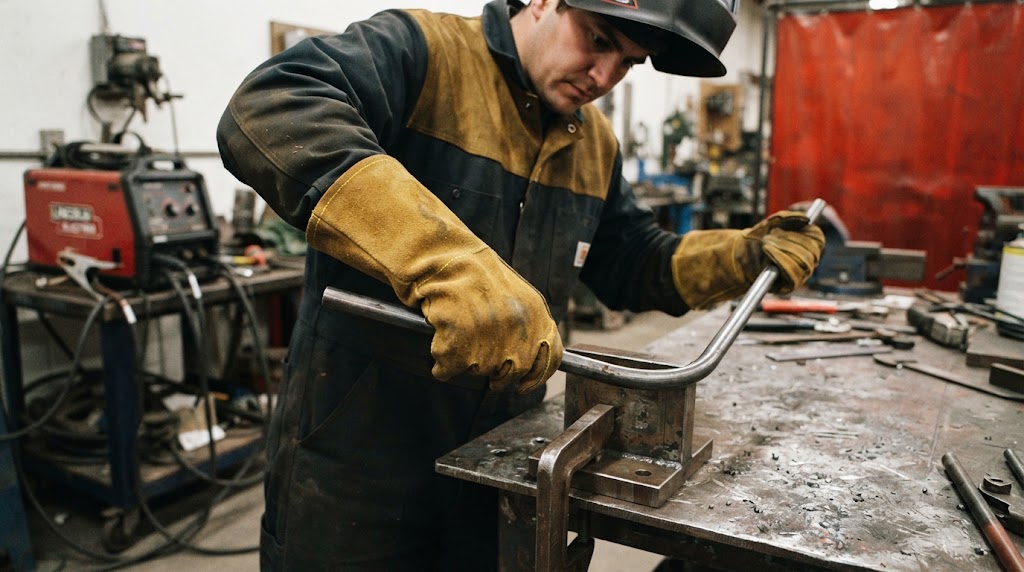
New welding gloves arrive stiff. The fingers do not move where you want them to move, and the first time you hold a TIG torch or try to make a fine adjustment on a small joint, the gloves feel like the obstacle rather than the tool. Some welders leave them on the shelf for a session or two just to avoid the fight.
You do not have to wait. Breaking in welding gloves is a straightforward process, and doing it deliberately gets you to the comfortable, broken-in fit faster than just grinding through sessions until they loosen on their own.
Why new welding gloves are stiff
Leather welding gloves come stiff because the leather is dry and the fibers have not yet adjusted to the shape of the hand inside them. Manufacturers apply a preservative coating or sizing treatment during production that keeps the leather from drying out in storage but also contributes to the initial stiffness.
The heat from a gloved hand, the flexing motion of welding work, and the natural oils from skin are what soften leather over time. Breaking in a glove accelerates that process deliberately.
Method 1: warm water and wear
This is the most common break-in method for full grain leather gloves.
Dip the gloves briefly in warm, not hot, water. They should be damp throughout but not dripping. Pull them on immediately and make a fist, flex the fingers, open and close the hand, and simulate the grip positions you use most: torch grip, electrode holder grip, clamp grip. Keep the gloves on as they dry on your hands.
As the leather dries while shaped around your fingers and palm, it sets to the contour of your hand rather than the flat factory shape. The result is a glove that fits your hand specifically, not a generic hand.
Do not use hot water. Hot water can cause the leather to shrink, particularly at the fingertips and cuffs.
Method 2: leather conditioner
Apply a small amount of neatsfoot oil or a quality leather conditioner to the palm, fingers, and back of the glove with a soft cloth. Work it in evenly, particularly at the flex points across the knuckles and the base of the thumb, where stiffness concentrates. Pull the gloves on and work your hands through their full range of motion while the conditioner is absorbing.
The conditioner softens the leather by restoring moisture to the fibers, and the flex work helps the softened leather conform to the shape of your hand while pliable.
This method is gentler than the water method and is the preferred approach for very fine TIG gloves where you need maximum dexterity and do not want the leather to change shape more than necessary.
Method 3: progressive use
For welders who do not want to apply water or conditioner, progressive use during actual welding sessions breaks the gloves in more slowly but without risk of over-softening.
Wear the stiff gloves for the start of each session, for the work that requires the least dexterity, and remove them when fine control becomes important. As each session progresses the leather warms, softens slightly, and adjusts. After three to five sessions of this approach, most leather welding gloves have broken in sufficiently.
This method takes longer but requires no preparation and carries no risk of shrinkage or over-conditioning.
Does breaking in gloves reduce protection?
No. Flexibility and protection are not inversely related in leather welding gloves. A broken-in glove is not a thinner glove or a compromised glove. The leather is the same weight. The protection against heat transfer and spatter is the same. The difference is that the leather has conformed to the hand, reduced the stiffness that causes hand fatigue, and made fine control movements more natural.
A glove that fights your hand fatigues your grip faster, which means you hold the torch with less control later in the session. A properly broken-in glove reduces that effect.
How long does it take to break in welding gloves?
With the water-and-wear method: one session. With leather conditioner and flex work: one to two applications. With progressive use alone: three to five welding sessions.
The break-in timeline also depends on the stiffness of the specific leather. Heavier MIG and stick gloves with thick cowhide take longer than lighter TIG gloves with goatskin or thin grain leather.
Frequently asked questions
How long does it take to break in new welding gloves? With the warm water and wear method, most gloves are broken in after a single session. With conditioner and flex work, one to two applications. Passive break-in through normal use takes three to five sessions.
What is the fastest way to soften stiff new welding gloves? The warm water and wear method. Dampen the gloves with warm water, put them on, and flex and shape your hands as they dry. The leather sets to your hand shape in the process and softens significantly.
Does breaking in gloves reduce their protection? No. A broken-in glove has the same leather thickness and the same heat and spatter resistance as a new stiff one. The flex and comfort have improved, but the protective properties are unchanged.
Can I use a leather softener designed for other leather goods? Neatsfoot oil and quality saddle soaps work well on welding gloves. Avoid products with silicone additives, which can reduce grip, and avoid petroleum-based products, which can degrade leather over time. Products specifically designed for leather work boots and work gloves are the most reliable choice.
Should I break in new TIG welding gloves the same way as MIG gloves? For TIG gloves, which tend to be thinner and made from lighter goatskin leather, use the conditioner method rather than the water method. The water method is effective but can be more aggressive than necessary for thinner, dexterity-focused TIG gloves.
Is it normal for new welding gloves to cause hand fatigue? Yes. Stiff new gloves require more grip force than broken-in ones, which causes hand muscles to work harder. Breaking them in properly reduces this quickly. If fatigue persists after full break-in, check the glove size: gloves that are too large or too small cause fatigue for different structural reasons.
References
- American Welding Society (AWS), hand protection guidelines for welding
- Occupational Safety and Health Administration (OSHA), hand protection standards for welding environments
- Leather Research Laboratory, University of Cincinnati, conditioning and break-in practices for work leather