Kevlar Stitched Welding Jacket Guide: Why the Thread Matters More Than You Think
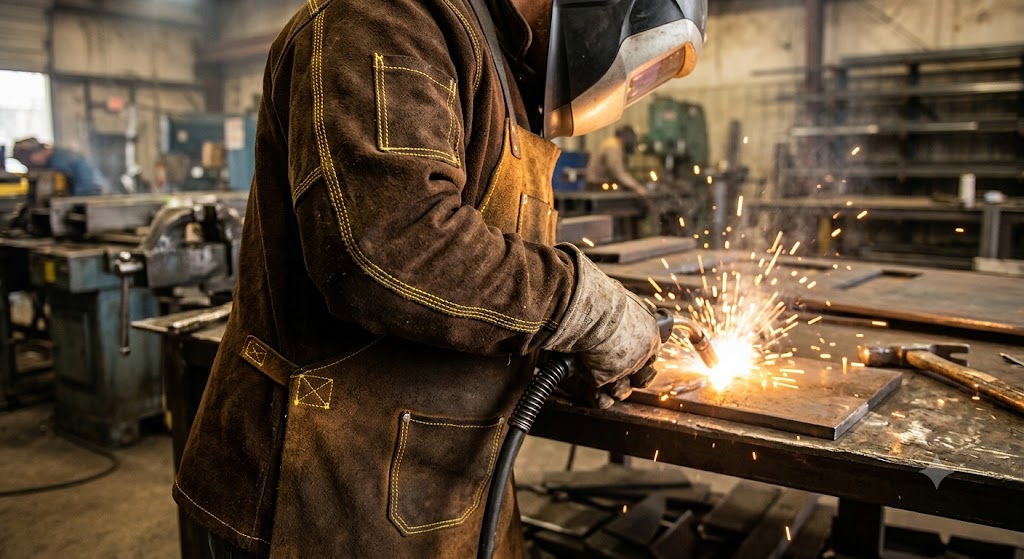
Most welders shop for a jacket by looking at the material: leather or FR cotton, 9 ounce or heavier. Almost nobody looks at the thread holding it together. That is a mistake, because the first thing to fail on a cheap welding jacket is not the fabric, it is the seams. A Kevlar stitched welding jacket solves the exact problem that sends most jackets to the trash, and this guide explains why the thread is worth caring about.
The short answer: Kevlar is a para-aramid fiber that resists heat and refuses to melt, so a jacket sewn with Kevlar thread keeps its seams intact long after ordinary polyester or nylon stitching has burned through and let the panels come apart.
What Kevlar thread actually is
Kevlar is a synthetic para-aramid fiber, the same family of material used in cut-resistant gloves and protective gear. In thread form it brings three things that matter to a welder: high heat resistance, real tensile strength, and the refusal to melt or drip when a spark lands on it. Ordinary polyester or nylon thread, by contrast, will soften, melt, and part when hit with enough heat, even if the surrounding fabric is fine.
That difference is the whole point. Your jacket can be flame-resistant everywhere and still fail if the thread at the seams is not.
Why seams fail before fabric does
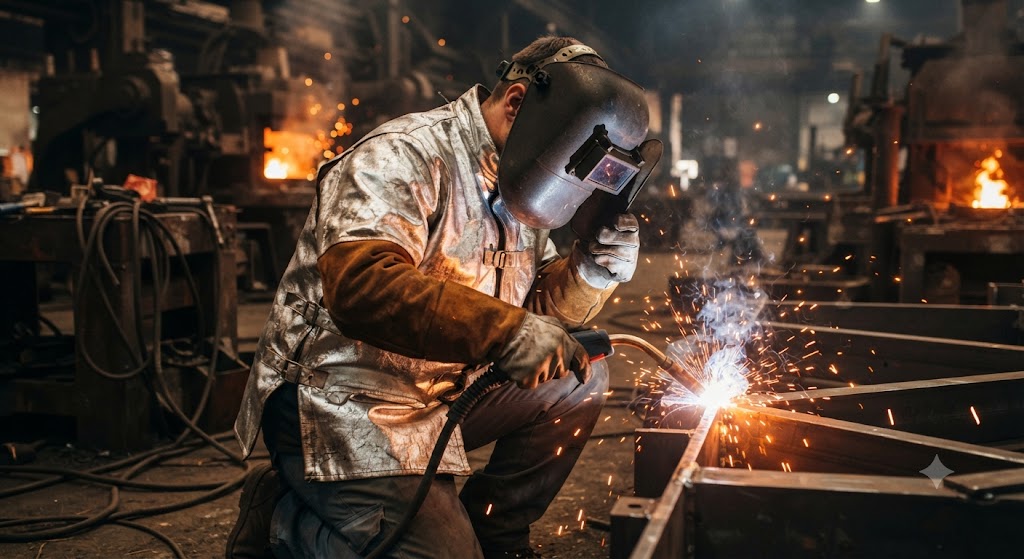
Sparks and spatter do not land evenly. They collect in folds, along the shoulders, and right on the seam lines where the fabric doubles over. A polyester seam sitting in that spark path melts stitch by stitch, and once a seam opens, the panel it held peels away and the jacket is done, even though the leather or cotton around it still looks new.
Kevlar thread sits in that same spark path and does not melt. The seam holds, the panels stay joined, and the jacket lives out the full life of its fabric instead of dying at the stitching. On a leather jacket that you expect to last years, that is the difference between a long service life and a disappointing one.
Where you find Kevlar stitching
The good news is that the better makers already use it. Miller sews its FR cotton jackets with Kevlar thread and guarantees them flame resistant for the life of the garment. Lincoln’s own gloves and many quality leather jackets use Kevlar stitching at the high-wear seams. On the leather side, jackets like the Waylander Durin advertise Kevlar stitching specifically because welders who have worn out a cheap jacket know exactly why it matters.
A solid Amazon-available example on the leather side is the QeeLink split cowhide welding jacket, which is sewn with Kevlar thread through the body and seams, a good demonstration of the feature in a heavy-duty coat.
What Kevlar thread does not do
Here is the honest limit: Kevlar thread protects the seams, not the fabric. It will not make a thin cotton jacket safe for heavy overhead stick welding, and it will not stop the fabric itself from wearing out with age and washing. It also adds a little to the price. Think of Kevlar stitching as insurance on the part that usually fails first, not as a magic upgrade that changes what the jacket is made to do.
One more nuance: Kevlar is strong against heat and tension but has its own quirks in raw thread form, so it is a construction feature you benefit from, not something you need to service or maintain yourself.
How to shop for it
- Read the spec line, not just the material. Look for the words Kevlar stitching or Kevlar thread in the seam description.
- Prioritize it on leather. A leather jacket is a multi-year purchase, so seam longevity pays off most there.
- Do not overpay for it on a throwaway. On the lightest, cheapest FR cotton, the fabric may age out before the seams matter much.
- Pair it with the right fabric for your work. Kevlar seams on the wrong-weight jacket still leave you underprotected for the heat.
The verdict
A Kevlar stitched welding jacket is the quiet upgrade that keeps a good jacket from falling apart at the seams, which is exactly where most jackets die. It matters most on leather and on any jacket you plan to keep for years. Just remember the thread protects the stitching, not the material, so choose your fabric for the heat of your work first, then insist on Kevlar holding it together.
Frequently asked questions
What is a Kevlar stitched welding jacket? It is a welding jacket sewn with Kevlar (para-aramid) thread, which resists heat and does not melt, so the seams survive spark exposure that would part ordinary polyester or nylon stitching.
Why is Kevlar thread better than polyester for welding gear? Polyester melts under heat, and once a seam melts it opens and the panel comes apart. Kevlar resists heat and holds the seam together far longer.
Does Kevlar stitching make a jacket fireproof? No. It protects the seams, not the fabric. You still need the right flame-resistant material for the heat level of your welding.
Do all welding jackets use Kevlar thread? No. Better jackets from makers like Miller do, and many quality leather jackets do, but cheaper jackets often use polyester or nylon thread that fails sooner.
Is Kevlar stitching worth the extra cost? On leather and any jacket you plan to keep for years, yes, because seams are usually the first thing to fail. On a cheap, light throwaway jacket the benefit is smaller.
Can I re-sew a jacket with Kevlar thread myself? It is possible with the right needle and machine, but for most welders it makes more sense to buy a jacket built with Kevlar seams from the start.
References
- Miller Electric, How to Choose the Proper Welding Apparel for Safety: https://www.millerwelds.com/en-US/resources/knowledge-hub/welding-safety/how-to-choose-the-proper-welding-apparel-for-safety
- American Welding Society, Flame-Resistant Apparel: The Science Behind the Fabric: https://www.aws.org/magazines-and-media/welding-digest/flame-resistant-apparel-the-science-behind-the-fabric-and-five-myths-busted/
URL slug: kevlar-stitched-welding-jacket-guide Excerpt: The first thing to fail on a cheap welding jacket is the seams, not the fabric. Here is why Kevlar thread refuses to melt, where the good makers use it, and how to shop for seam longevity without overpaying.