Leather Welding Gloves Stiff and Cracking: How to Soften Them
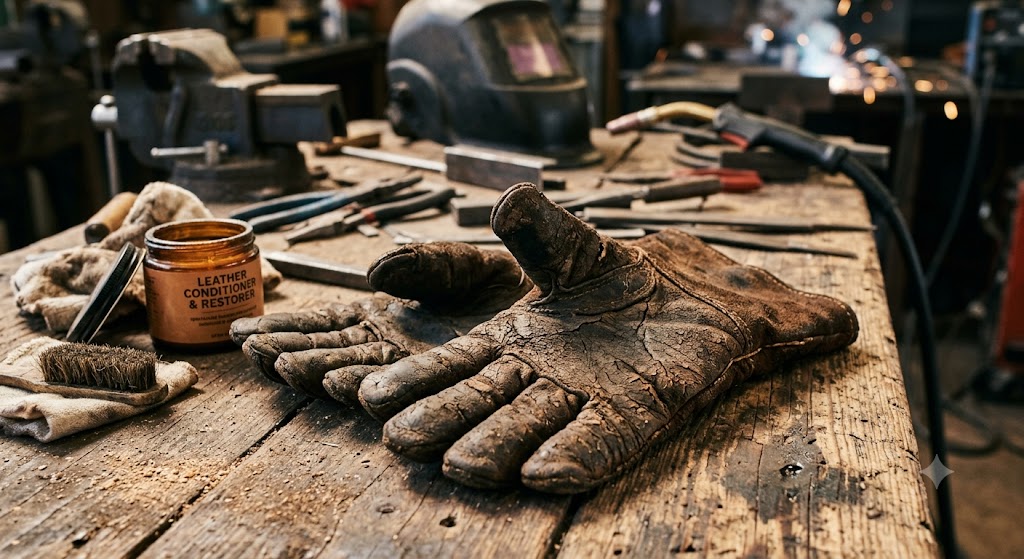
You pick up your gloves and they resist. The leather has set into the shape of whatever position they dried in, fingers half-curled, palm folded. You put them on and feel like you are wearing two pieces of cardboard. By midway through the first weld they have loosened slightly, but the cracks you can see across the knuckles are getting longer every week.
This is not normal wear. It is dehydrated leather, and it is fixable before it becomes a replacement.
Why leather welding gloves get stiff
Leather is animal hide that has been processed and treated, but it is still a material that depends on moisture and natural oils to stay pliable. Heat from welding drives those oils out. Sweat saturates the inner fibers and then evaporates, carrying some of the natural oils with it. Repeated cycles of this, without any maintenance, leave the leather dry, tight, and prone to cracking.
The other major cause is improper drying. Gloves left to dry near a heater, in direct sunlight, or on a hot surface dry too fast. Fast drying causes the fibers to contract unevenly, which creates stiffness and those distinctive surface cracks at flex points like the knuckles and the palm fold.
Once cracks start, they are a structural concern as well as a comfort one. Deep cracks at the palm or knuckles can allow spatter to reach the inner liner or the hand directly.
How to soften stiff welding gloves
Several methods work, and the right one depends on how stiff and how dry the gloves are.
Method 1: neatsfoot oil
Neatsfoot oil is derived from cattle bones and has been used to condition leather for generations. It penetrates deeply into leather fibers and restores flexibility without leaving a waxy surface residue.
Apply a moderate amount to a soft cloth or directly to the glove, working the oil into the palm, knuckles, and back of the hand. Pay extra attention to the cracked areas, working the oil gently into the cracks rather than just across the surface. Let the gloves absorb the oil for at least an hour at room temperature, then wear them for a short session so the heat of your hands helps the oil work into the fibers.
Neatsfoot oil darkens leather slightly. This is cosmetic and has no effect on performance.
Method 2: saddle soap
Saddle soap cleans and conditions at the same time. It is better suited for gloves that are also dirty or have surface buildup in addition to being dry.
Dampen a soft cloth with warm water, work a small amount of saddle soap into a light lather, and apply in circular motions to the entire glove. Wipe clean, let dry away from heat sources, then follow with a leather conditioner or neatsfoot oil once the gloves are fully dry. Saddle soap alone does not provide enough conditioning to fully restore stiff leather.
Method 3: steam
For severely stiff gloves, a brief steam treatment opens the leather pores and makes the fibers more receptive to conditioning. Hold the glove over steam from a kettle or garment steamer for 15 to 30 seconds per section, then immediately work in neatsfoot oil or leather conditioner while the leather is still warm and open.
Do not submerge gloves in water to achieve the same effect. Saturation from immersion is different from brief steam exposure and can cause the gloves to stiffen further as they dry.
Method 4: wearing them warm
For mild stiffness, put the gloves on and flex your hands repeatedly while wearing them. The body heat and natural oils in your palms, combined with the mechanical flex, do break them in over the course of a session. This works best for new gloves or gloves that have only been stored for a short time. For severely dried or cracked leather, this method alone is not enough.
Can cracked welding gloves still be safe?
It depends on the location and depth of the cracks.
Surface cracks on the back of the hand or along the wrist cuff are primarily cosmetic and do not affect protection at the palm or fingers. The gloves are safe to use with regular conditioning to prevent the cracks from deepening.
Deep cracks at the palm, across a finger, or at the base of the thumb are a safety concern. These areas are in direct contact with spatter and heat. A crack at the palm that reaches through the outer leather to the lining means the primary barrier has been breached. Replace gloves that are cracking through at high-contact zones.
How to prevent stiffness and cracking going forward
- Condition every one to two months. A light application of neatsfoot oil or leather conditioner on a regular schedule prevents the dry cycle from getting started.
- Dry away from heat. After a shift, lay gloves flat in a ventilated spot at room temperature, not near a heater, exhaust, or in sunlight.
- Rotate pairs. Giving gloves a full 24 hours to dry and air between heavy-use sessions significantly reduces the accumulation of sweat that drives stiffness.
- Store flat, not crumpled. Gloves compressed into a pocket or toolbox drawer set in the crumpled position. Store them open or on a flat surface.
Frequently asked questions
Why do leather welding gloves get stiff? Heat from welding drives out natural oils. Sweat cycles through the leather repeatedly, taking residual oils with it when it evaporates. Improper drying near heat sources accelerates the process by causing the fibers to contract too quickly.
How do you soften stiff welding gloves fast? Neatsfoot oil is the fastest effective treatment. Apply it generously, work it into the flex points, let it absorb for an hour, then wear the gloves during a session so body heat helps the conditioning penetrate. For very stiff gloves, a brief steam treatment before applying oil works even faster.
Can cracked welding gloves still be safe to use? Surface cracks on the back or wrist are generally cosmetic. Deep cracks at the palm, fingers, or thumb base are a safety concern because they compromise the barrier between spatter and skin. Replace gloves that are cracked through at high-contact zones.
Does neatsfoot oil damage the leather? No. Neatsfoot oil is one of the most leather-safe conditioners available. It darkens leather slightly, which is a cosmetic change only. Pure neatsfoot oil is the preferred option. Compound neatsfoot oil (blended with silicone or petroleum additives) is less ideal for fine leather but is acceptable for working gloves.
How often should you condition welding gloves? Every one to two months for gloves in regular use. Every two to three months for occasional use. If you notice the leather feeling dry or starting to resist flexing, do not wait for the scheduled interval.
Can you use olive oil or vegetable oil on leather welding gloves? Short term, yes. Vegetable-based oils can soften leather in a pinch. Long term, they oxidize and can go rancid inside the leather, eventually producing an unpleasant smell and degrading the fibers. Use a purpose-made leather conditioner or neatsfoot oil for regular maintenance.
References
- Occupational Safety and Health Administration (OSHA), hand protection requirements for welding
- American Welding Society (AWS), personal protective equipment guidance for welders
- Leather Research Laboratory, University of Cincinnati, leather maintenance best practices