Leather Welding Pants: The Complete Guide to Chaps and Apron Pants
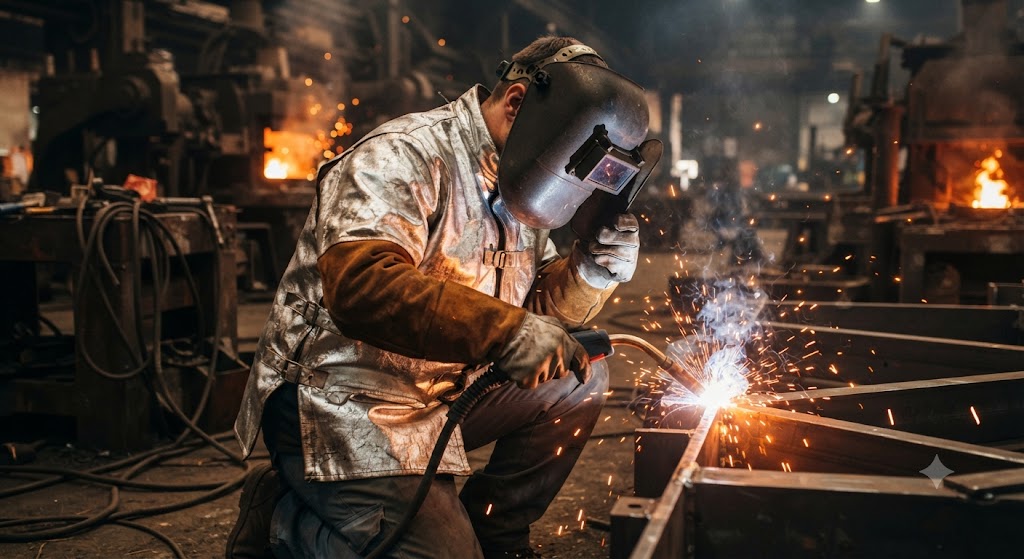
The first time I ran an overhead bead on structural steel without proper leg protection, I paid for it. A gob of slag rolled off the joint, slipped past my cuff, and burned a neat hole through my jeans and into my shin. I finished the pass because that is what you do, but I limped for a week. That is the day I bought my first pair of leather welding pants, and I have never gone back. If you weld heavy, out of position, or anywhere near a foundry floor, this guide is going to save you some skin.
Leather welding pants, whether you call them chaps, split-leg aprons, or apron pants, are the layer that stands between molten metal and your legs. Below I will walk you through when leather beats flame resistant cotton, how split cowhide compares to top grain, why Kevlar stitching matters, and which specific pieces I trust. I will give you an honest verdict on each one, including who should skip it.
What Leather Welding Pants Actually Are
Let me clear up the terminology, because gear sellers love to muddy it. “Leather welding pants” is a loose umbrella. In practice you are usually choosing between two designs.
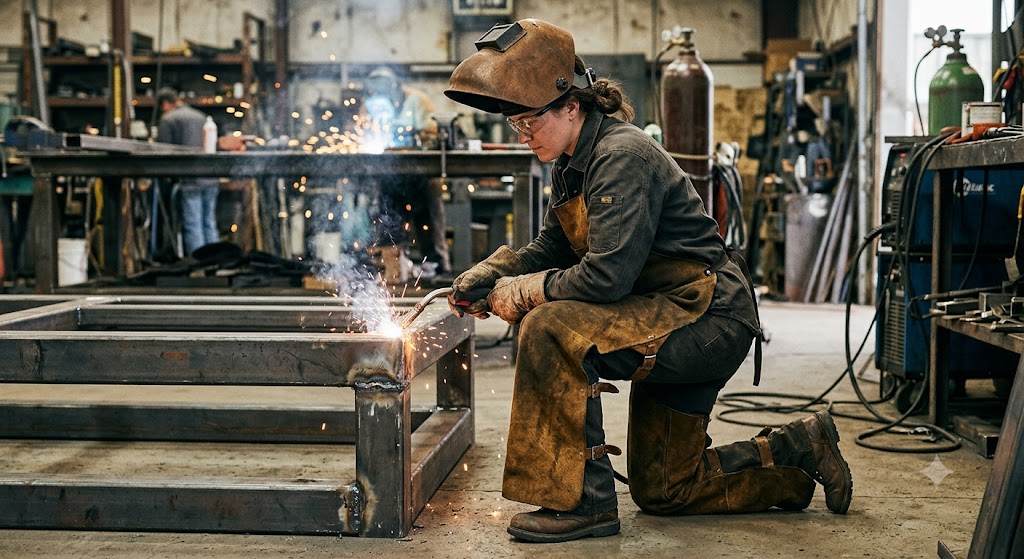
Chaps, sometimes called split-leg aprons, are two leather leg panels connected by a waist belt with an open back. They cover the front and sides of your legs and buckle over your regular work pants. They are not full trousers. Your backside stays in denim or FR cotton, which keeps you cooler and lets you move.
Bib aprons and apron pants extend coverage up over your torso and drop down the front of your legs, often with a split-leg cut at the bottom so you can still walk and climb. These give you chest and stomach protection that chaps do not.
Both are typically made from cowhide, which shrugs off spatter, slag, and radiant heat far better than any woven fabric. Leather chars and resists rather than igniting and melting, which is exactly what you want when hot metal lands in your lap. The tradeoff is weight, stiffness, and heat retention, and we will talk about that honestly.
Do You Actually Need Leather Welding Pants?
Here is the short, direct answer: if you are doing light MIG in a downhand position on thin material, flame resistant cotton pants are probably enough and a lot more comfortable. If you are welding out of position, running stick or flux core on heavy plate, doing pipe, structural, or foundry work, or grinding heavy slag, you want leather. It is not close.
The reason is simple physics. When you weld vertical, horizontal, or overhead, gravity stops working in your favor. Slag and molten droplets fall straight down onto your thighs, knees, and boot tops instead of skittering off a flat workpiece. FR cotton is designed to self extinguish and protect against flash fire, and it does that job well, but a heavy blob of slag will sit on cotton long enough to burn through. Leather takes that same blob and just gets a scar.
I keep both in my locker. For a day of bench work and tacking, I wear FR pants alone. The moment I climb into a joint and start welding uphill, the chaps go on over the top. Think of leather as your out of position and heavy-slag layer, not your everyday uniform. The American Welding Society and OSHA both point to leather and other durable protective clothing for operations with high spatter and heavy sparks, and once you have felt the difference you will not argue.
One more real world note. Leather also protects against radiant heat when you are close to a preheated part or a foundry pour. FR cotton keeps you from catching fire, but it does not block heat the way a leather panel does. On a hot job, that matters.
Split Cowhide vs Top Grain, and Why Stitching Matters
When you shop, you will see “split cowhide” and “top grain” thrown around. Split leather comes from the lower layers of the hide after the top is sliced off. It is thicker, fuzzier, more heat tolerant, and cheaper to produce, which is why almost all dedicated welding chaps use it. Top grain is the smooth outer layer, more supple and abrasion resistant, but generally used for gloves and jackets rather than heavy leg armor.
For welding pants, split cowhide is what you want. The slightly rough surface actually helps because spatter does not slide around as easily and the thickness buys you more burn-through time.
The other detail that separates good gear from junk is the thread. Look for Kevlar or other heat resistant stitching. Cotton or nylon thread will melt or burn at the seams, and once the seams go, the panels flap open right where you need them closed. Every pair I recommend below uses heat resistant thread, and I will not buy anything that does not.
Watch the weight too. Heavier leather protects more and lasts longer but wears you out faster. Goatskin and lighter split panels move better and breathe more, which some welders prefer for long days of moderate work. If you run hot or do a lot of climbing, a lighter goatskin option is worth a look, though I would not reach for it in a foundry.
The Leather Welding Pants I Trust
I have burned through, literally, a lot of gear over the years. These three are the ones I keep recommending to guys in my shop.
Tillman 3840 Premium Side Split Cowhide Chaps
The Tillman 3840 is my default recommendation for most welders who need serious leg protection. It is a side split cowhide, split-leg waist apron design with adjustable straps that cinch over your jeans in seconds. The leather is thick enough for heavy slag and the Kevlar stitching holds up.
My verdict: this is the workhorse. It covers the front and outer thigh where 90 percent of your burns land, and the adjustable leg straps keep the panels from swinging when you crouch into a joint.
The honest flaw: the side split cut leaves your inner thigh and back less protected than a full wrap design, so if you weld in seated positions where slag can roll toward the inside of your leg, you will feel that gap. It is also stiff out of the box and takes a few days to break in.
Who should skip it: light-duty MIG welders on flat stock. You are paying for protection you will not use, and the stiffness will annoy you.
Black Stallion 40WS Split-Leg Cowhide Chaps
The Black Stallion 40WS is the pair I hand to newer welders. It is a split-leg cowhide chap in the same family as the Tillman, with a comfortable belt and solid coverage down to the boot.
My verdict: an excellent all around chap that competes head to head with the Tillman 3840. The belt system feels a touch more forgiving on longer torsos, and the break-in period is shorter in my experience.
The honest flaw: the leg length can run long, and if you are shorter you may get bunching at the ankle that catches on ladders and grinding sparks pool in the folds. Hem it or size carefully.
Who should skip it: anyone who needs torso coverage. These are legs only, so foundry and heavy overhead welders should look at a bib.
Black Stallion 42A Side Split Cowhide Bib Apron
When the job throws heat and slag at your chest as well as your legs, the Black Stallion 42A is what I reach for. It is a side split cowhide bib apron that covers you from chest to lower leg with a split-leg cut so you can still move.
My verdict: the best single piece here for out of position, pipe, and foundry work where droplets come at you from odd angles. The bib catches everything the chaps miss.
The honest flaw: it is hot. Full front coverage means less airflow, and on a summer day in an enclosed bay you will sweat through your shirt. It is also the heaviest option, so your shoulders carry the load all day.
Who should skip it: welders in warm shops doing routine bench work. The extra coverage is not worth the heat penalty unless the job demands it.
A Few Names Worth Knowing
I did not test every option, but a few others come up constantly and deserve a mention. The Tillman 5330 and 5330A chaps are well regarded and worth comparing if you want another premium split-leg option. Steiner leather chaps have a loyal following for their build quality. And if you run hot or want more mobility, goatskin lighter-weight chaps trade some slag resistance for real comfort. I would keep goatskin for moderate work and stay with split cowhide for the heavy stuff.
Chaps vs Bib Apron vs FR Pants
Here is how the three main options stack up when you have to choose.
| Feature | Leather Chaps | Leather Bib Apron | FR Cotton Pants |
|---|---|---|---|
| Leg protection | Excellent | Excellent | Moderate |
| Torso protection | None | Excellent | Full but light |
| Heavy slag burn-through | Very high resistance | Very high resistance | Low to moderate |
| Comfort and breathability | Good, open back | Poor, runs hot | Excellent |
| Mobility | Good | Moderate | Excellent |
| Best for | Out of position, heavy MIG and stick | Pipe, foundry, overhead | Light downhand, all-day wear |
| Worn over street clothes | Yes, over jeans | Yes, over jeans | No, worn as pants |
The pattern is clear. FR pants win on comfort, leather wins on protection, and the bib wins when you need to armor your whole front.
Layering, Fit, and Getting the Most Out of Them
Chaps and aprons are meant to go over something, not replace it. I wear mine over jeans or FR cotton pants, never over bare legs, because the base layer adds a second barrier and keeps the leather off your skin in the heat. Cinch the straps snug so the panels do not swing when you squat, and tuck any loose strap ends so they do not dangle into the arc or catch a spark.
Break your leather in before a big job. New split cowhide is stiff, and a day of wear softens it enough to move naturally. Keep it clean and dry, let it air out after sweaty shifts, and it will last you years. Leather is an investment that pays back every time slag lands where a burn used to happen.
The Bottom Line on Leather Welding Pants
If you weld heavy or out of position, leather is not optional gear, it is the difference between a scarred pair of chaps and a scarred leg. For most welders, a pair of split cowhide chaps like the Tillman 3840 or Black Stallion 40WS covers the jobs that matter. When the heat comes at your chest too, step up to the Black Stallion 42A bib. Keep your FR cotton for the light, cool days, and pull the leather on the moment gravity starts working against you. Your future self, the one without a fresh burn scar, will thank you.
Frequently Asked Questions
Can I just wear jeans for welding? For very light, flat-position MIG on thin stock, heavy denim gives minimal protection, but it will burn through under real slag. For anything heavier or out of position, denim alone is a bad bet. Use FR cotton at minimum and add leather for heavy work.
Are leather chaps better than FR cotton pants? They protect against heavy slag and radiant heat better, yes. But FR cotton is far more comfortable for all-day wear. The right answer is to own both and match the gear to the job.
What is the difference between split cowhide and top grain? Split cowhide comes from the lower hide layers and is thicker and more heat tolerant, which is why welding pants use it. Top grain is the smooth outer layer, more supple, and usually reserved for gloves and jackets.
Why does Kevlar stitching matter? Standard cotton or nylon thread can melt or burn, which opens the seams right where you need protection. Kevlar and other heat resistant threads hold the panels together under spatter.
Do I wear chaps over my pants or instead of them? Over your pants, always. The base layer adds protection and keeps the hot leather off your skin.
Are leather welding pants hot to wear? Chaps have an open back and breathe reasonably well. Full bib aprons run hot because they cover your whole front. In warm shops, plan for the heat and hydrate.
Which is better for overhead and pipe welding, chaps or a bib? A bib apron, because droplets fall from above and hit your chest and stomach, not just your legs. Chaps leave your torso exposed.
How long do leather welding pants last? With reasonable care, keeping them clean, dry, and aired out, a good pair of split cowhide chaps lasts several years of regular use.
References
https://www.osha.gov/welding-cutting-brazing https://www.cdc.gov/niosh/topics/welding/ https://www.aws.org/ https://www.jtillman.com/ https://www.blackstallion.com/