A Practical Look at Leather Welding Sleeves: Materials, Fit and Care
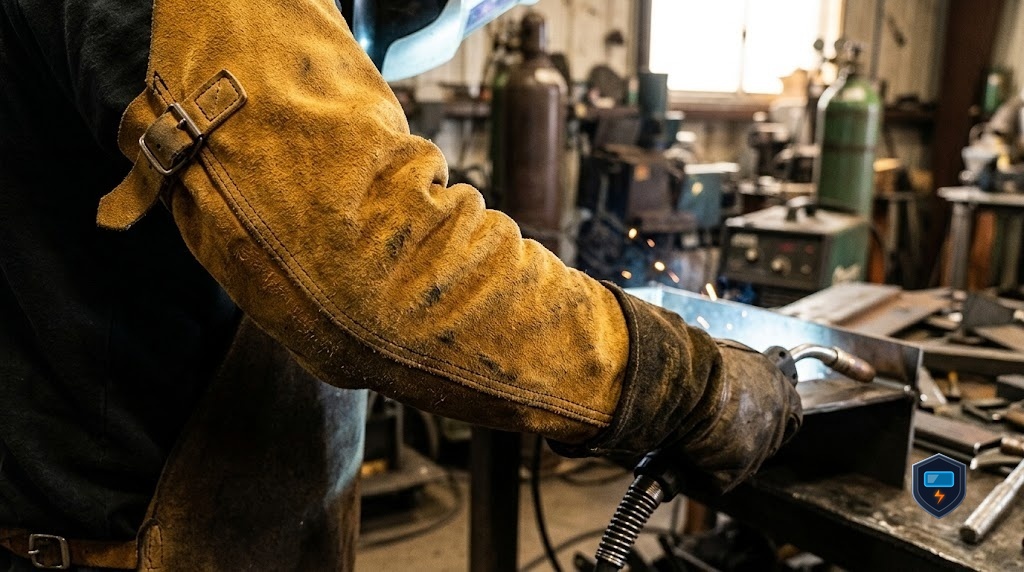
Sometimes a full welding jacket is more than you need. When your torso is out of the spark path but your arms are taking spatter, leather welding sleeves are the smart, cool answer. They cover the forearms and upper arms, slip on in seconds, and let you stay in a regular shirt without cooking in a heavy coat. But sleeves vary in material, fit and length, and the wrong pair either fails to protect or slides down all day. Here is a practical look at leather welding sleeves: the materials, the fit and the care.
When sleeves make sense
Sleeves fit a real gap:
- Arm-only exposure: when sparks hit your arms but not your chest, such as bench MIG work.
- Hot shops: when a full jacket is too warm and you want airflow to your body.
- Layering: as a second layer over a jacket or shirt for extra arm protection during heavy work.
- Quick jobs: when you want protection on fast without suiting up fully.
They are not a full-body solution, for overhead work or heavy spatter across your torso, a jacket still wins.
Materials: leather versus Kevlar
- Split cowhide leather: the most protective, resisting spatter, sparks and radiant heat, best for stick, heavy MIG and grinding. Heavier and warmer.
- Grain leather: smoother and a bit more supple while still protective.
- Kevlar/FR fabric sleeves: lighter and cooler, cut- and heat-resistant, good for lighter welding and handling warm material, but less protective against heavy spatter than leather.
Choose leather for the hottest, sparkiest work and Kevlar/FR fabric when you want lightweight coverage for lighter tasks.
Fit, length and staying put
The biggest complaint about sleeves is slipping, so fit matters:
- Elastic ends: elastic at the wrist and upper arm keeps sleeves in place.
- Adjustable straps: some sleeves add a strap or a connecting back-strap across the shoulders to stop them sliding down.
- Length: enough to cover from wrist to bicep, ideally overlapping your glove cuff so no skin shows.
- Overlap with gloves: the sleeve should meet or tuck with the glove gauntlet to close the gap against sparks.
Kevlar stitching and construction
As with gloves and jackets, look for Kevlar stitching, heat-resistant thread that will not burn out at the seams. Combined with quality leather, it is what keeps sleeves protecting after repeated heat exposure rather than coming apart at the seams.
Care
Leather sleeves last longest with simple care: keep them dry, store them flat or hung, and spot-clean rather than soaking, since water and heat cycles can stiffen leather. Kevlar/FR fabric sleeves can usually be laundered per their label. Inspect the seams and elastic periodically; replace sleeves once the leather is cracked through or the seams fail.
Proven picks
- Leather sleeves: the QeeLink Leather Welding Sleeves in split cowhide with Kevlar stitching and a cotton lining for heat protection with reasonable comfort.
- Everyday leather sleeves: the Leather Welding Work Sleeves, heat- and flame-resistant with Kevlar stitching for general arm protection.
The verdict
Leather welding sleeves are the cool, quick alternative to a full jacket when only your arms need protection, and the right pair depends on material, fit and how well they stay put.
Three things to hold onto. Match the material to the work, split cowhide leather for heavy spatter and radiant heat, and lighter Kevlar/FR fabric for cooler coverage on lighter tasks. Solve the slipping problem with fit, elastic ends, adjustable or back straps and enough length to overlap your glove cuff so no skin shows. And insist on Kevlar stitching and simple care, keeping leather dry and spot-cleaned so the seams and material last.
For arm-only protection in a hot shop or as a second layer, quality leather sleeves like the QeeLink pair do the job without the heat of a full jacket.
Frequently asked questions
What are leather welding sleeves for? They protect your forearms and upper arms from sparks, spatter and radiant heat when a full jacket is unnecessary or too hot, such as bench MIG work where your torso is out of the spark path. They can also layer over a jacket for extra arm protection.
Are leather or Kevlar welding sleeves better? Leather (split cowhide) is more protective against heavy spatter and radiant heat, best for stick and heavy MIG. Kevlar or FR fabric sleeves are lighter and cooler, good for lighter welding and handling warm material. Choose by how much heat and spatter your arms actually take.
How do I stop welding sleeves from slipping down? Look for sleeves with elastic at both the wrist and upper arm, and ideally an adjustable strap or a connecting back-strap across the shoulders. Correct length that overlaps your glove cuff also helps keep them positioned and closes the gap against sparks.
How long should welding sleeves be? Long enough to cover from your wrist to your bicep and overlap your glove’s gauntlet cuff, so no skin is exposed between glove and sleeve. Insufficient length leaves a gap where sparks and spatter can reach your arm.
Do welding sleeves replace a jacket? No. Sleeves protect only the arms, so for overhead work or heavy spatter across the torso, a full jacket is still needed. Sleeves are ideal when only your arms are exposed, when a jacket is too hot, or as a second layer for extra arm protection.
How do I care for leather welding sleeves? Keep them dry, store them flat or hung, and spot-clean rather than soaking, since water and heat cycles can stiffen leather. Inspect the seams and elastic periodically and replace the sleeves once the leather cracks through or the seams fail. Kevlar/FR fabric sleeves can usually be laundered per their label.
Why does Kevlar stitching matter on sleeves? Kevlar is heat-resistant thread that will not burn out at the seams the way ordinary thread can. It keeps the sleeves together under radiant heat and spatter, so the seams do not fail and expose your arms. It is a mark of a durable, serious sleeve.
Can I wear welding sleeves in a hot shop? Yes, that is one of their main advantages. Sleeves let you protect your arms while wearing a regular shirt, so your torso stays cooler and gets airflow instead of being covered by a heavy jacket. Lighter Kevlar/FR fabric sleeves are especially comfortable in heat.
References
- Lincoln Electric, Hand, body and arm protection overview
- Black Stallion (Revco), Leather welding garments
- American Welding Society, Safety and health fact sheets