Miller Welding Gloves Review: Are Arc Armor Gloves Worth It?
The blue Miller logo carries a lot of weight in a welding shop, and it costs a little more too. So when a welder reaches for Miller welding gloves instead of the generic pair hanging next to them, the fair question is whether the Arc Armor line actually delivers on that reputation, or whether you are paying for the badge.
After looking at how the range is built and where welders land on it, the verdict is this: Miller makes a genuinely comfortable, well-fitted glove, especially for TIG, and the money mostly buys you leather quality and fit rather than magic. There is a catch on longevity worth knowing.
What Miller welding gloves are
Everything current sits under Miller’s Arc Armor banner, a protection line Miller launched in 2014 to redesign its gloves, jackets, and helmets around fit and comfort. The gloves split by process the way you would expect: goatskin TIG gloves for feel, lined cowhide MIG and stick gloves for heat, and a multitask glove that tries to do both. You can browse the full lineup on the Miller gloves page.
If you want the two that matter most: the Arc Armor TIG Multitask glove in goatskin (model 263354) is the dexterity pick, and the Arc Armor lined MIG glove (model 263333) is the heat-and-comfort pick. You can see the Miller Arc Armor TIG gloves on Amazon and the Miller Arc Armor lined MIG gloves on Amazon.
Where Miller earns the price
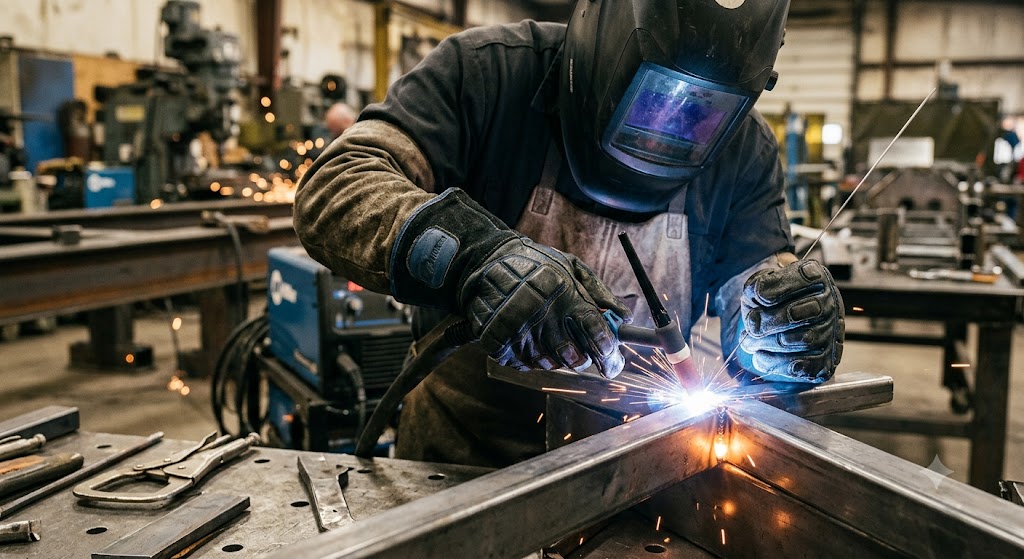
The leather is the story. Miller uses select-grade goatskin on the TIG gloves, and you feel it the first time you pick up filler rod: the fingertips are thin and supple enough to actually roll the wire, which is the whole point of a TIG glove. The MIG gloves add a genuine insulating liner, so long beads on a hot plate do not cook your hand as fast as a thin unlined glove would.
Fit is the other win. The Arc Armor redesign pulled the pattern in closer to a real hand shape, so the gloves feel less like oven mitts and more like gloves. For welders doing all-day bench work, that comfort difference is not marketing, it is fewer hand cramps by lunch.
The honest drawback
Thin goatskin is a trade. The same supple fingertips that make the TIG glove great are the first thing to wear through, and welders who drift the torch hand across sharp edges will find a hole in the index finger sooner than they would on a thick cowhide gauntlet. That is the cost of dexterity, and it is worth it for TIG, but do not expect a delicate glove to last like a heavy one.
The multitask glove is the other soft spot. Trying to be both a TIG and a MIG glove, it lands in the middle: more dexterous than a MIG glove, less protective, less nimble than a dedicated TIG glove. If you know your process, buy the process-specific pair.
Who should skip Miller gloves
If you only run stick and heavy MIG and never touch TIG, you are paying for finesse you will not use. A thick cowhide stick glove from a value brand will protect you just as well for less. And if you are hard on gloves and churn through pairs, a premium goatskin TIG glove is money you will burn through quickly.
How they compare
Against Tillman, the other name welders trust, it is close. Tillman’s goatskin TIG gloves (like the 1328) are the classic benchmark, and Miller’s 263354 matches them on feel while often winning on liner comfort in the MIG models. Against a budget glove, Miller wins clearly on leather grade and fit, and loses on price and raw toughness per dollar. The pattern holds: Miller sells comfort and fit, not indestructibility.
The verdict
Buy Miller Arc Armor gloves if you value fit and dexterity and you weld enough that a comfortable glove pays you back. Choose the goatskin 263354 for TIG and the lined 263333 for MIG. Skip the multitask glove unless you truly switch processes hourly, and skip Miller entirely if your work is all heavy stick, where a cheaper cowhide gauntlet does the same job.
Frequently asked questions
Are Miller welding gloves worth the money? For TIG and all-day MIG, yes. You are paying for select-grade leather and a better fit, which show up as real comfort and dexterity. For occasional heavy stick work, a cheaper glove is fine.
What is Arc Armor? Arc Armor is Miller’s protection line, launched in 2014, covering gloves, jackets, and helmets, redesigned around fit, comfort, and performance.
Which Miller glove is best for TIG? The Arc Armor TIG Multitask glove (263354) in goatskin. Its thin, supple fingertips give the feel TIG welding needs.
Are Miller gloves good for MIG welding? Yes. The lined MIG gloves (like 263333) add insulation for heat, which matters on long, hot beads.
Do Miller gloves last a long time? The cowhide MIG gloves last well. The thin goatskin TIG gloves trade some durability for feel and will wear at the fingertips sooner.
Miller vs Tillman gloves, which is better? Both are excellent. Miller often wins on liner comfort and fit, Tillman on value and its long-proven goatskin. It usually comes down to which fits your hand.
References
- Miller Electric, Gloves (manufacturer product catalog): https://www.millerwelds.com/en-US/safety-products/apparel/gloves
- Miller Electric, How to Choose the Proper Welding Apparel for Safety: https://www.millerwelds.com/en-US/resources/knowledge-hub/welding-safety/how-to-choose-the-proper-welding-apparel-for-safety
URL slug: miller-welding-gloves-review Excerpt: Miller Arc Armor gloves cost more, and mostly the money buys leather grade and fit. Here is which model to pick for TIG versus MIG, the wear trade on thin goatskin, and when a cheaper glove makes more sense.