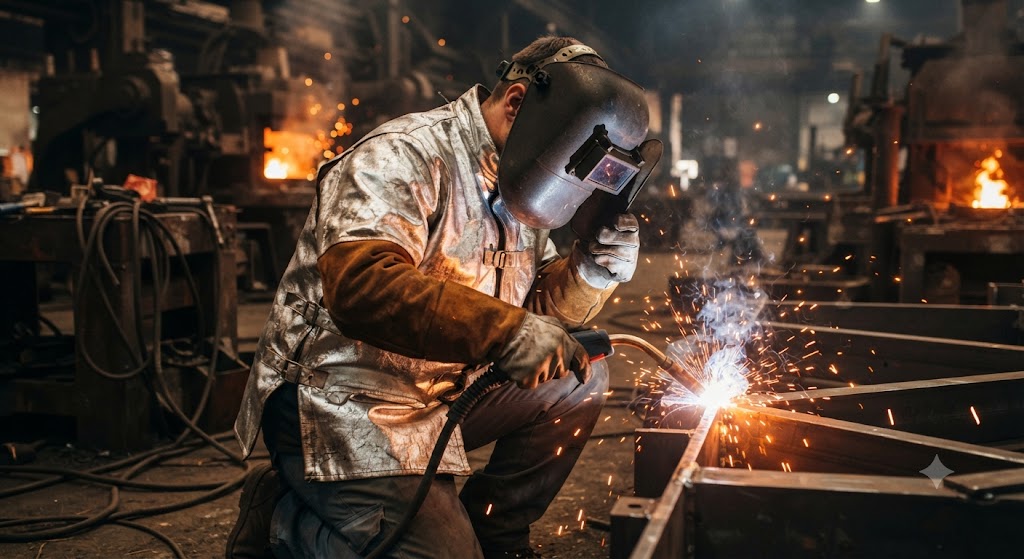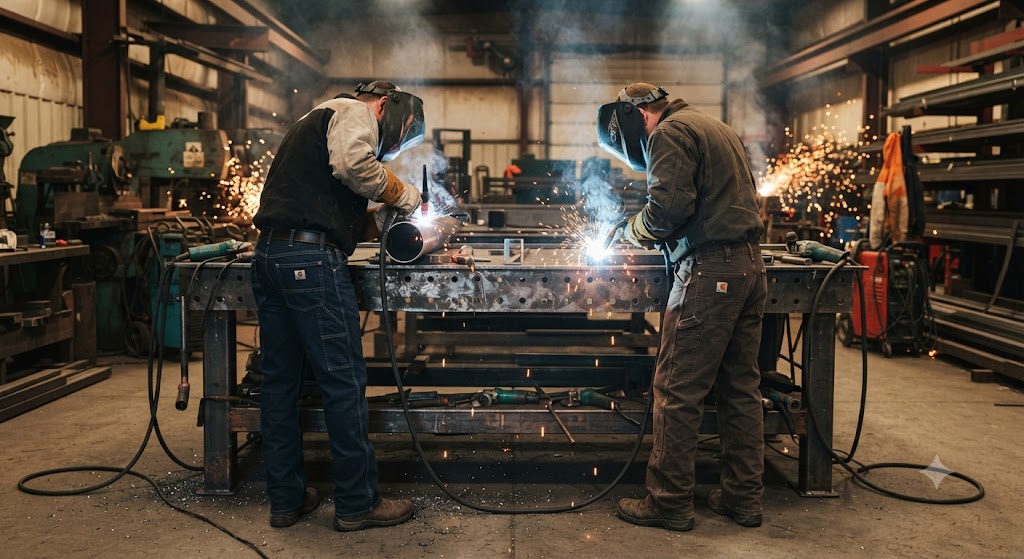
miller welding jacket
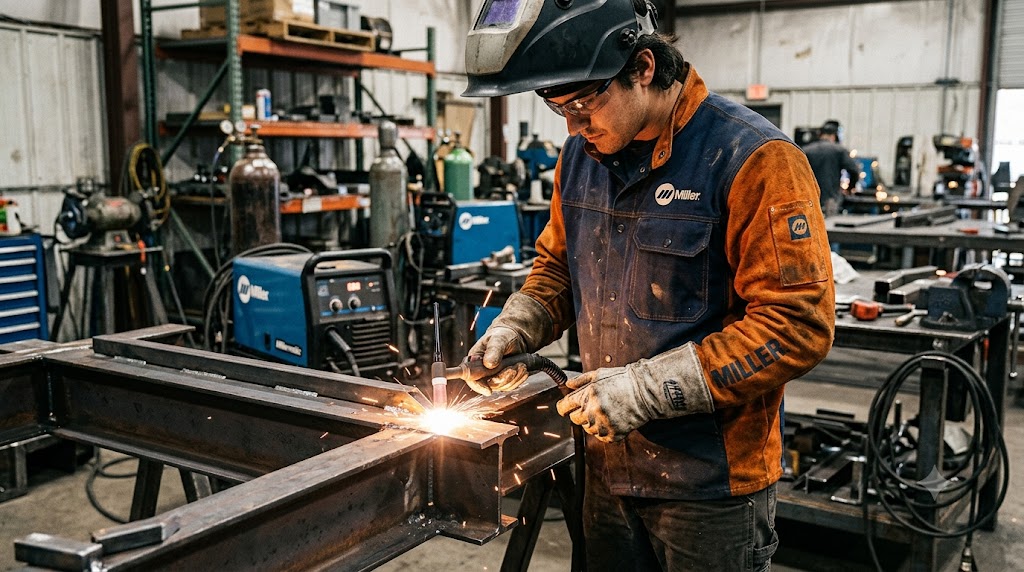
The first time a run of molten spatter rolled off a vertical bead and onto your forearm, you learned exactly why cotton hoodies do not belong in a welding booth. A good miller welding jacket is the difference between shrugging off that spark and stopping to slap out a smoldering sleeve. Miller Electric has spent decades building torso protection for people who actually strike an arc for a living, and the lineup has grown into three clear families: the hybrid WeldX, the lightweight Classic Cloth, and the heavy pigskin leather. This guide walks you through all three, tells you who each one is for, and names the honest flaws so you buy once instead of twice.
What a Miller welding jacket actually is
A welding jacket is flame-resistant (FR) torso and arm protection built to survive sparks, spatter, and radiant heat that would melt or ignite everyday clothing. Miller builds its jackets from three core materials. FR cotton is treated so it self-extinguishes instead of catching and spreading a flame. Leather (Miller uses pigskin) resists direct spatter and abrasion far better than fabric, at the cost of weight and breathability. WeldX is Miller’s engineered leather-like material that aims to split the difference, giving you spatter resistance up front where you need it and softer FR cotton where you do not.
OSHA requires employers to protect workers from the hazards of welding, cutting, and brazing, and the American Welding Society (AWS) reinforces flame-resistant clothing as a baseline for arc work. A jacket is the single most common way welders meet that expectation. The right one covers your chest, shoulders, and forearms, closes cleanly at the collar and cuffs, and does not leave gaps where spatter can find skin.
Which miller welding jacket should you buy
If you want one recommendation and nothing else: get the Miller WeldX Performance welding jacket if you weld regularly and want durability without the full weight of leather. Choose the Miller Classic Cloth navy FR cotton jacket if you run hot, work in warm shops, or do lighter MIG and TIG work. Step up to the Miller pigskin leather welding jacket if you stick weld, do overhead work, or throw serious spatter and need maximum protection.
The rest of this guide explains why, and where each one lets you down.
Miller WeldX Performance: the hybrid workhorse
The Miller WeldX Performance welding jacket uses the tough WeldX material across the front and sleeves, the zones that eat the most spatter, and switches to FR cotton across the back. That layout is smart. You get leather-like spatter and abrasion resistance where the arc actually hits you, and you save weight and bulk everywhere else. For a daily driver in a fabrication shop, this hybrid build is the sweet spot between the flimsy feel of pure cotton and the sauna feel of full leather.
Named flaw: it runs hot and does not breathe well. The WeldX panels seal in body heat, so in a warm shop or during long uninterrupted runs you will feel it. The back panel vents better than the front, but this is not a cool jacket.
Who should skip it: if you work in a hot climate or a shop with no airflow, or if you mostly do light, short welds, the heat trade-off is not worth it. Look at the Classic Cloth instead.
Miller Classic Cloth navy FR cotton: the breathable everyday option
The Miller Classic Cloth navy FR cotton jacket is the one you reach for when comfort keeps you productive. It is lightweight, breathable, and easy to move in, which matters when you are climbing in and out of position all day. FR cotton self-extinguishes and handles the sparks and light spatter typical of MIG and TIG work without weighing you down. The navy color also hides shop grime better than lighter fabrics.
Named flaw: fabric is fabric. It does not shrug off heavy spatter or sustained radiant heat the way leather or WeldX does, and it will wear through faster in high-spatter stick work. Over time and after many wash cycles, expect the FR treatment and the fabric itself to show their age.
Who should skip it: if you do heavy stick welding, gouging, or overhead work with cascading spatter, this jacket is under-gunned. Move up to WeldX or pigskin.
Miller pigskin leather: heavy-duty protection
The Miller pigskin leather welding jacket is the tank of the group. Pigskin resists spatter, abrasion, and radiant heat better than any fabric, and it holds up to the punishment of stick welding, gouging, and overhead work where molten metal rains down. If your priority is maximum protection and long service life, leather earns its keep.
Named flaw: weight and breathability. Leather is heavy, stiffer than cloth until it breaks in, and it traps heat. Long sessions in a warm environment get uncomfortable, and the reduced mobility can slow you down on detail work.
Who should skip it: TIG welders, hobbyists doing light work, and anyone in a hot shop who values mobility and airflow over armor. For that profile, the Classic Cloth or the WeldX hybrid makes more sense.
How to choose between them
Match the jacket to your process and your environment, not to the toughest job you might do once a year. Stick welding and overhead work push you toward leather. Long days of MIG and TIG in a warm shop push you toward cloth. Mixed work where you want durability without full leather weight points straight at WeldX. Then check fit: you want full coverage at the collar, sleeves that reach past your wrists into your gloves, and a clean front closure with no gaps.
Fit, sizing, and care
Welding jackets are meant to be worn over your work clothes, so size for layering rather than a tight fit. Sleeves should overlap your gauntlet gloves so no wrist skin is exposed. Keep the collar high and closed to protect your neck from reflected spatter. For care, follow Miller’s labeled instructions; harsh detergents, bleach, and fabric softeners can degrade flame-resistant treatments on FR cotton, and leather should be kept dry and conditioned rather than machine washed.
Comparison table
| Jacket | Material | Best for | Named flaw | Who should skip it |
| Miller WeldX Performance | WeldX front and sleeves, FR cotton back | Daily fabrication, mixed MIG and stick | Runs hot, does not breathe well | Hot shops and light, short welds |
| Miller Classic Cloth | Navy FR cotton | Warm shops, lighter MIG and TIG | Weaker against heavy spatter and wear | Heavy stick, gouging, overhead work |
| Miller pigskin leather | Pigskin leather | Stick welding, overhead, high spatter | Heavy and poor breathability | TIG, hobbyists, hot low-airflow shops |
The bottom line
There is no single best miller welding jacket, only the right one for how you weld. The WeldX hybrid is the smartest all-rounder for busy shop work, the Classic Cloth keeps you cool and comfortable for lighter jobs, and the pigskin leather is the armor you want when spatter is falling on you from above. Pick based on your process and your shop temperature, size it to layer over your clothes and overlap your gloves, and it will protect you for years.
FAQ
Is a WeldX jacket better than leather? It depends on the job. WeldX gives you leather-like spatter resistance up front with less weight, but pigskin leather still wins for maximum protection during heavy stick and overhead work. WeldX is the better all-day compromise; leather is the better armor.
Will a Miller FR cotton jacket catch fire? FR cotton is treated to self-extinguish, so it resists sustained burning rather than feeding a flame. It is not fireproof, and heavy or repeated spatter can still damage the fabric over time.
Which Miller jacket is coolest to wear in a hot shop? The Classic Cloth navy FR cotton jacket is the most breathable of the three. The WeldX hybrid and the pigskin leather both trap significantly more heat.
What size welding jacket should I buy? Size to fit over your normal work clothes with room to move, and make sure the sleeves extend past your wrists so they overlap your gloves. When in doubt between two sizes, go up for coverage.
Can I machine wash a Miller welding jacket? Follow the labeled care instructions. FR cotton can typically be laundered, but bleach and fabric softeners can harm the flame-resistant treatment. Leather should be kept dry and conditioned rather than machine washed.
Do I really need a welding jacket, or will a cotton shirt do? You need proper protection. OSHA requires employers to guard welders against the hazards of the process, and AWS points to flame-resistant clothing as a baseline. An untreated cotton shirt can ignite and keep burning, which a welding jacket is specifically designed to prevent.
How long does a welding jacket last? It depends on your process and how much spatter it takes. Leather generally outlasts fabric in high-spatter work, while FR cotton wears faster but stays more comfortable. Inspect for burn-through, thin spots, and failed closures, and replace when protection is compromised.
References
- Miller Electric, product information for the WeldX, Classic Cloth, and pigskin leather welding jackets (https://www.millerwelds.com)
- Occupational Safety and Health Administration (OSHA), welding, cutting, and brazing standards and personal protective equipment guidance (https://www.osha.gov)
- American Welding Society (AWS), safety in welding guidance (https://www.aws.org)
- National Institute for Occupational Safety and Health (NIOSH), welding hazard and PPE information (https://www.cdc.gov/niosh)