Welding Boot Covers Buying Guide: Leather Spats That Actually Protect Your Feet
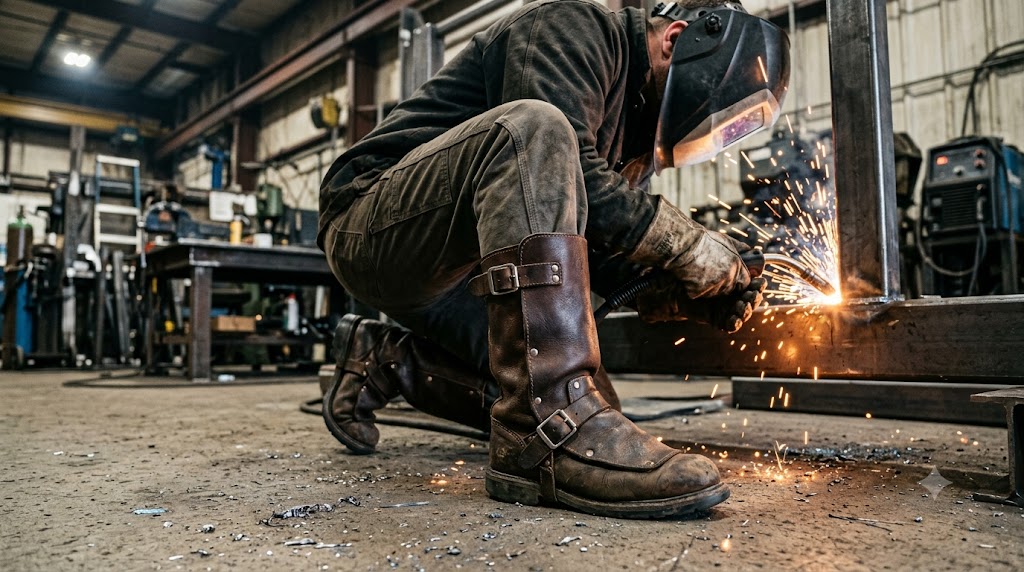
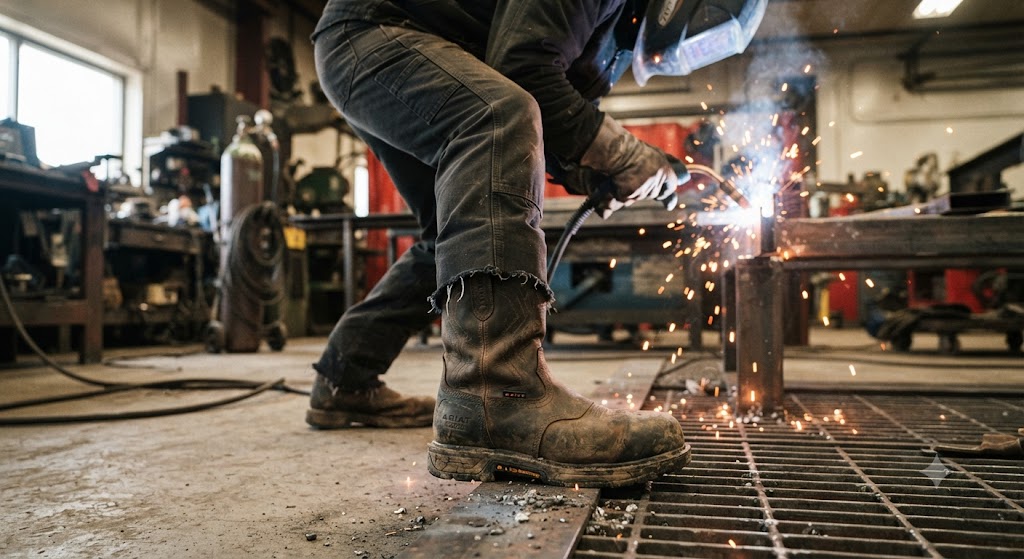
You are two hours into a stick welding session, running 7018 overhead on a structural joint. A marble of spatter rolls off the bead, drops six feet, and lands where your laces cross. If you are wearing leather spats, that spatter bounces off. If you are not, you are cutting laces off your boots at lunch and hoping the leather underneath held. That is the entire argument for welding boot covers, made concrete.
What Are Welding Boot Covers?
Welding boot covers, also called welding spats or boot spats, are removable leather or leather-blend protective shields that strap over the front and sides of your work boots and cover the lace area, the toe cap, and the ankle zone from weld spatter, spark fallout, and heat radiation. A well-fitting pair of spats extends the life of your welding boots significantly, protects your shoelaces from the burnthrough that turns a serviceable boot into a liability, and gives you an added layer of heat resistance on the top of the foot where the leather is thinnest.
Most welding spats are made from split cowhide, the same material used in welding jackets and sleeves. Better models use Kevlar thread for the seam stitching, which resists heat that would melt standard polyester thread at sustained spatter temperatures. The fastening systems vary: simple buckle straps, side-release clips, or a combination of a clip at the ankle and a strap under the boot sole. Fit matters here. A spat that slides off the side of the boot every 20 minutes is worse than no spat at all.
Do You Still Need Welding Boots If You Wear Spats?
Yes. Spats protect the lace area, the toe surface, and the ankle above the boot collar. They do not replace a steel toe cap, an ASTM-certified midsole, a slip-resistant outsole, or an EH-rated construction. OSHA 29 CFR 1910.136 mandates protective footwear based on the hazards present, and a pair of spats worn over standard sneakers satisfies none of those requirements. Welding spats are a supplement to a proper welding boot, not a substitute for one. Think of them as the sleeve on a welding jacket: essential for the arm, useless as a shirt.
That said, spats are a smart addition even over purpose-built welding boots. Boots designed for welding already use heavy leather uppers, but the lace area and the tongue are inherently thinner than the toe box and heel counter. That is exactly where spatter finds gaps. Spats seal that zone.
Leather vs. Synthetic Boot Covers for Welding
Leather is the right material for welding spats. Full-grain and split cowhide both resist spark and spatter contact well enough for standard shop welding. Full-grain is more durable and more resistant to sustained heat; split cowhide is more flexible and less expensive. Aluminized spats (Tillman 530ACK style) exist for extremely high-heat applications like foundry work or plasma cutting at close range, but for most shop welding, split cowhide is the standard.
Synthetic and fabric-based boot covers designed for paint protection or industrial cleanliness are not appropriate for welding. They melt or ignite under spatter contact. If a product does not specifically state leather construction and spark resistance, do not bring it near a welding arc.
Top Welding Boot Cover Picks
Tillman 527CL: The Shop Standard
The Tillman 527CL is a 7-inch side split cowhide shoe and boot protector with an adjustable strap and Kevlar-stitched seams. It is the most widely referenced spat in professional shops and the one most welding instructors point to when a student asks what to put over their boots. The 7-inch height covers the toe, the lace area, and the lower ankle above most work boot collars. The cowhide is stiff enough to deflect spatter cleanly.
The named flaw on the 527CL is the height. At 7 inches, it covers the boot well but leaves a gap at the mid-calf where overhead spatter can still find the boot collar on taller work boots. For high-overhead work or heavy stick welding, Tillman’s 14-inch or 15-inch spat options (the 529 and 530 series) are a better fit. The 527CL is the right call for general shop position welding and MIG/TIG with normal spatter patterns.
Check the Tillman 527CL on Amazon
QeeLink Leather Welding Spats: Extra-Long Option
The QeeLink spats use thick split cowhide with Kevlar stitching and extend longer than standard short spats, covering the lower calf. They are a practical alternative to the Tillman 527CL when you want more height coverage without stepping up to a full leg legging. The fastening uses a simple strap-and-buckle system.
The flaw is the strap tension. On the QeeLink, the buckle strap sits tight under the arch of the boot, and over a long shift it can create pressure on the plantar area. Wearers with high arches or thick insoles report discomfort by hour four or five. The under-boot strap is adjustable, so loosening it slightly reduces the pressure, but then the spat shifts during movement. It is a fit trade-off that the Tillman solves more elegantly with its dual-strap design.
Check QeeLink Leather Welding Spats on Amazon
Spats vs. Full Boots: What Do You Actually Need?
For most shop welding, a proper welding boot plus short leather spats over the lace area is the best combination. The boot handles structural protection (steel toe, ASTM compliance, slip resistance), and the spats handle the lace zone vulnerability that every welding boot has by design.
If your welding work is occasional, brief, or low-spatter (TIG, short MIG beads), spats over a good general work boot are reasonable. If you are running overhead stick or flux-core production work daily, invest in a dedicated welding boot and wear spats on top of it. The boots protect your feet; the spats protect your boots.
Comparison: Short vs. Long Spats
| Feature | Tillman 527CL (7”) | QeeLink Extra Long | Tillman 529 (15”) |
|---|---|---|---|
| Height | 7 inches | 10-11 inches | 15 inches |
| Material | Side split cowhide | Split cowhide | Premium side split cowhide |
| Seam stitching | Kevlar | Kevlar | Kevlar |
| Fastening | Adjustable strap | Strap and buckle | Spring steel clip + strap |
| Best for | General shop welding | General to light overhead | Heavy overhead, structural |
| Under-boot strap | Yes | Yes | Yes |
| Named flaw | Leaves ankle/calf gap on tall boots | Under-arch strap pressure | Stiffer, harder to fit over thicker boots |
FAQ
What are welding boot covers used for? Welding boot covers protect the lace area, toe surface, and lower ankle of your work boots from weld spatter, spark fallout, and heat radiation. They extend the life of your boots and prevent the lace burnthrough that turns a serviceable boot into a trip hazard.
Do I still need welding boots if I wear spats? Yes. Spats cover the exterior surfaces of your boots. They do not replace steel toe protection, ASTM-certified impact and compression resistance, EH-rated insulation, or a slip-resistant outsole. OSHA 29 CFR 1910.136 protective footwear requirements are not satisfied by spats alone. Always wear spats over a proper work or welding boot.
Are boot covers leather or synthetic? For welding applications, always leather. Split cowhide and full-grain leather resist weld spatter and spark contact. Synthetic or fabric covers melt under welding temperatures and are not appropriate for use near a welding arc. Look for Kevlar-stitched seams, which resist heat that would damage standard polyester thread.
What is the difference between welding spats and full welding boots? Welding boots are structural protective footwear with a steel or composite toe cap, ASTM-certified impact and compression resistance, a slip-resistant outsole, and often an EH rating. Spats are exterior leather shields that strap over boots to protect the lace area and toe surface from spatter. They are complementary products, not alternatives.
Do leather welding spats need to be broken in? Yes, briefly. New split cowhide spats are stiff and may resist the buckle strap for the first few uses. After two or three shifts, the leather softens slightly and conforms to the boot shape. Avoid forcing the strap to the tightest setting immediately; let the leather adjust over a few uses.
How do I care for welding spats? Brush off spatter and slag residue after each session. A light application of leather conditioner every few weeks prevents the cowhide from drying and cracking. Check the Kevlar stitching periodically for burn damage; if seams are fraying or pulling away from the leather, replace the spats.
Can I wear welding spats over composite toe boots? Yes. Welding spats fit over any work boot regardless of toe cap material. Composite toe boots are not recommended for high-spatter welding environments regardless of spats (composite materials can degrade under sustained heat), but for light welding work where the composite certification is otherwise acceptable, spats add useful surface protection.