Welding Boot Covers: A Welder's Guide to Spats That Actually Last
The first pair of good boots I ever ruined took about three weeks. I was running a heavy fillet weld overhead, feeling proud of myself, when a fat glob of slag rolled off the joint and landed right on my laces. It burned through two of them and left a black scar across the tongue before I could even flinch. That was the day I learned why welding boot covers exist, and I have worn some form of spat or boot protector on almost every hot job since.
If you have been buying new boots every couple of months because the laces melt and the leather cracks, this guide is for you. I will walk you through what boot covers and spats really do, the differences between leather and aluminized styles, how coverage and strap systems matter, and which product I actually trust enough to link. Let us get your boots living a longer life.
What welding boot covers and spats actually are
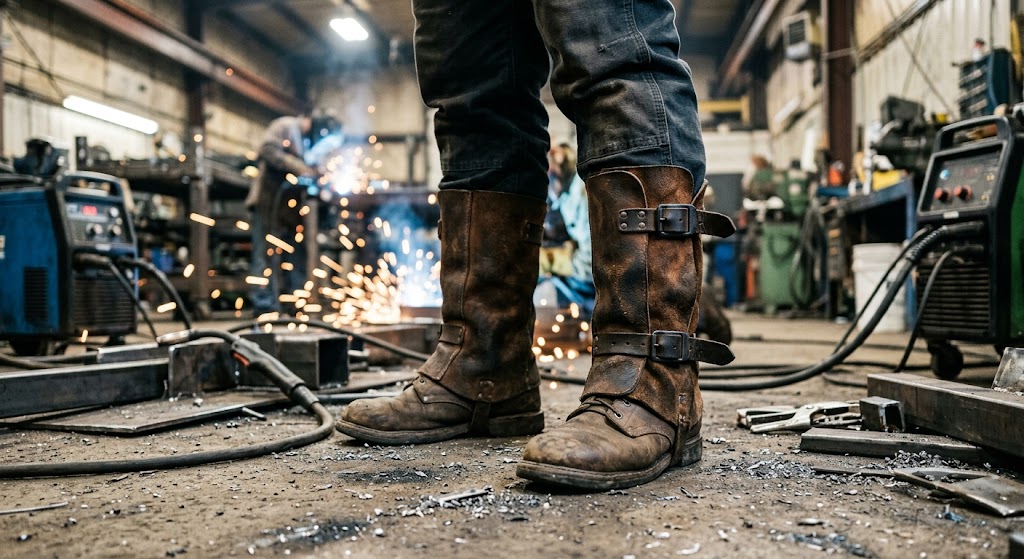
A spat is a short guard that wraps over the top of your boot, covering the laces, the tongue, and the seam where the upper meets the vamp. Boot covers do the same job but often extend a little higher up the ankle or lower leg. People use the terms loosely, and honestly, most welders do too. In the shop we just call them spats.
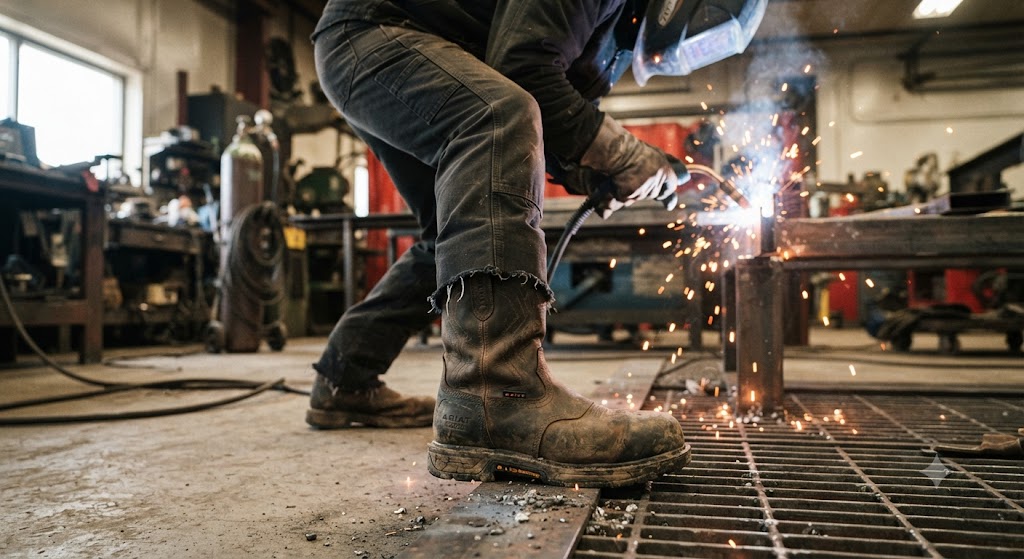
The whole point is simple. Your boots are tough leather, but the laces, the stitching, and the tongue gap are weak spots. Sparks and slag find those gaps like water finds a crack. Molten splatter lands on the laces, burns through, and suddenly your boot flops open. Spats create a smooth, heat resistant shield over that vulnerable zone so the hot stuff rolls off instead of settling in.
They also buy you time. A spat is cheaper to replace than a boot, so you sacrifice the guard instead of the footwear. That is the trade every experienced welder learns to make.
Do you actually need welding boot covers?
Short answer: if you do any position welding, foundry work, or heavy grinding, yes. If you run a light MIG bead on a bench once a month, maybe not. The need scales with how much hot debris ends up falling toward your feet.
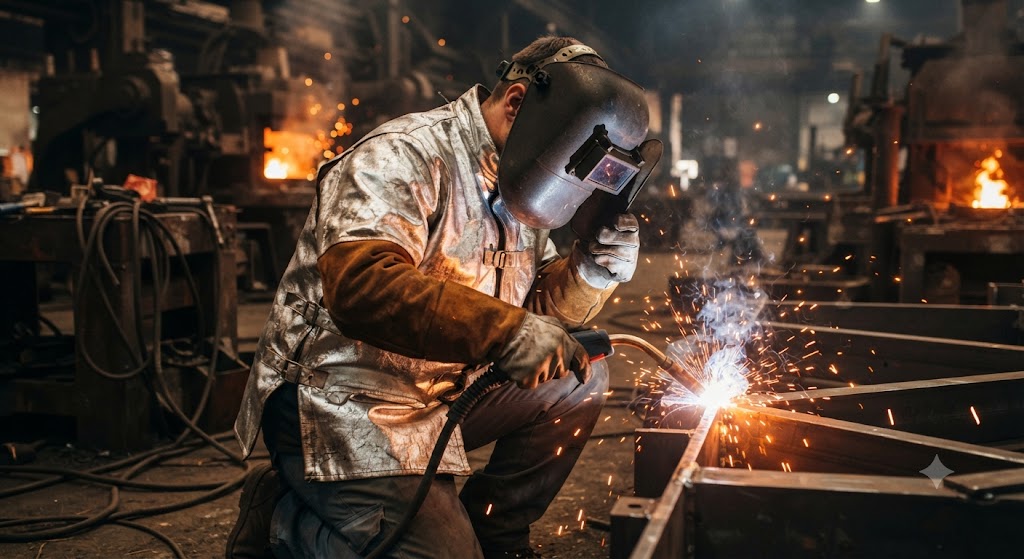
Here is how I think about it. When you weld flat on a table, most spatter goes down and away from you. When you weld vertical, horizontal, or overhead, gravity works against you and everything wants to land on your boots and laces. Overhead work is the worst. I have watched slag stream straight down a leg and pool right on the boot top. Without a spat, that is a burned lace and a scorched tongue every single time.
Foundry and cast work raise the stakes even higher. You are dealing with molten metal splash, radiant heat, and the real chance of a pour going wrong. That is where dedicated high heat protection stops being optional.
There is also the boot lifespan angle, which nobody talks about enough. Good welding boots are an investment. Laces are the first thing to fail, then the tongue stitching, then the toe leather. A spat protects the two weakest of those three. I have gotten well over a year of extra life out of boots simply by keeping a leather spat over the laces. That math favors spats every time.
One more thing. OSHA requires foot protection where there is a hazard of foot injury from hot substances or objects, and spats are a recognized way to guard the boot opening from molten splash. So depending on your shop, this may not be your call to make anyway.
Leather versus aluminized versus Kevlar stitched
Not all spats are built the same, and picking the wrong type for your work is a common rookie mistake. Leather handles sparks and slag beautifully but is not made for sustained radiant heat. Aluminized fabric reflects radiant heat and is the foundry standard, but it is bulkier and can feel clumsy for everyday stick or MIG work. Kevlar stitched leather splits the difference by using heat resistant thread so the seams do not fail before the leather does.
Here is how they stack up.
| Spat type | Best for | Heat handling | Downside | Who should skip it |
|---|---|---|---|---|
| Split cowhide leather | General welding, overhead, position work | Excellent against sparks and slag, good against direct splatter | Not built for sustained radiant heat | Foundry pour crews needing reflective protection |
| Aluminized | Foundry, furnace, casting, high radiant heat | Reflects radiant heat, top tier for molten splash | Bulky, stiffer, overkill for light bench work | Hobbyists doing occasional flat MIG |
| Kevlar stitched leather | Heavy production welding with hot slag | Excellent, seams outlast standard thread | Costs more than plain leather | Budget buyers doing light, infrequent work |
For most welders, leather is the right starting point. It covers the vast majority of arc welding scenarios, it is comfortable enough to wear all shift, and it is forgiving on the wallet. You step up to aluminized only when radiant heat, not just spatter, becomes the main threat.
Coverage, height, and strap systems
The details are where a spat earns its keep. Pay attention to three things: how high it rises, how it fastens, and how well it seals the front gap.
Coverage first. A low spat protects only the laces and the very top of the boot. A taller cover, sometimes called a legging when it runs up the shin, guards the ankle and lower leg too. If you kneel a lot or work in tight overhead spots where slag runs down your leg, taller is safer. If you are mostly upright at a bench, a shorter spat is lighter and less annoying.
Now strap systems. Most spats use either buckle straps or snap closures under the boot. Buckles let you dial in the fit tighter and hold up better over time, in my experience. Snaps are faster to get on and off but can pop loose if the strap runs under a heavy work boot all day. Whatever the system, make sure the strap sits comfortably under the arch and does not slide around when you walk.
Finally, the front seal. A good spat closes cleanly over the tongue with no open channel for slag to sneak through. Cheap ones gap at the top and defeat the whole purpose. Before you buy, look at how the spat overlaps itself at the front, because that overlap is your last line of defense.
The one I trust and link
I keep it honest here, so I only link gear I would actually put on my own feet. The Leather Welding Spats, Split Cowhide Fire Resistant Boot and Shoe Covers are my everyday pick for general and overhead welding.
My verdict: these are a smart, no fuss leather spat that does exactly what a spat should. The split cowhide shrugs off sparks and slag, the coverage reaches high enough to guard the laces and the tongue completely, and the fit works over most standard work boots. For the majority of arc welding, this is all you need.
The honest flaw: split cowhide is thinner than premium full grain leather, so under heavy, sustained slag it will show wear sooner than a top tier spat. It is also a leather product, which means it is not the right choice for foundry radiant heat. If you are pouring molten metal, this is not your spat.
Who should skip it: foundry and furnace crews who need reflective aluminized protection, and anyone wanting the absolute longest lifespan from thick full grain leather with Kevlar stitching. For everyone doing general fabrication, though, it hits the sweet spot.
A few other names come up often and are worth knowing even though I am not linking them. Tillman leather spats and leggings have a long reputation in production shops for durable, taller coverage. Aluminized spats for foundry work are the go to when radiant heat, not just spatter, is the threat. And USA-made Berry-compliant leather boot spats matter if you are on a government or defense contract that requires domestic sourcing. Match the tool to the job.
Bottom line before you buy
If you weld overhead, vertical, or anywhere slag can rain down on your boots, spats are one of the cheapest upgrades you can make to your safety and your gear budget. Start with a solid leather pair like the split cowhide covers above, save aluminized for genuine foundry heat, and check that whatever you buy seals the front gap and straps down snug. Protect the laces and the tongue, and your boots will thank you by lasting a whole lot longer.
Frequently Asked Questions
What is the difference between welding spats and welding leggings? Spats are short and cover the boot opening, the laces, and the tongue. Leggings run higher up the shin and add ankle and lower leg protection. Many welders use the words interchangeably, but leggings simply give you more coverage.
Do welding boot covers replace safety boots? No. Spats are worn over your boots, not instead of them. You still need proper safety footwear underneath, ideally with a protective toe and heat resistant sole. The spat guards the vulnerable top of the boot.
Are leather spats enough for foundry work? Usually not. Leather is excellent against sparks and slag but is not designed for sustained radiant heat. Foundry and furnace work call for aluminized spats that reflect that heat away.
Why do laces melt even when I wear good boots? Laces sit in an exposed gap where slag and splatter collect. The leather around them can be tough while the laces themselves burn through. A spat covers that gap so hot debris rolls off instead of settling on the laces.
How should welding spats fit? They should sit snug over the boot with the strap comfortable under the arch and the front closing cleanly over the tongue with no open gap. A loose spat slides around and lets slag sneak in.
Can I use spats for grinding and cutting too? Yes. Heavy grinding throws hot sparks toward your feet, and cutting produces molten slag. A leather spat protects your boots during both jobs, not just welding.
How long do leather welding spats last? It depends on how much slag they take, but a decent leather pair can serve well for a long stretch of general welding. When the surface leather starts to crack or char through, replace them, because a worn spat stops sealing properly.
Does OSHA require welding spats? OSHA requires foot protection wherever there is a risk of injury from hot substances or objects. Spats are a recognized way to guard the boot opening from molten splash, so your specific shop or job may require them.
References
https://www.osha.gov/laws-regs/regulations/standardnumber/1910/1910.136 https://www.osha.gov/personal-protective-equipment/foot-protection https://www.cdc.gov/niosh/topics/welding/default.html https://www.aws.org/standards/page/safety-and-health