Welding Boots Buying Guide
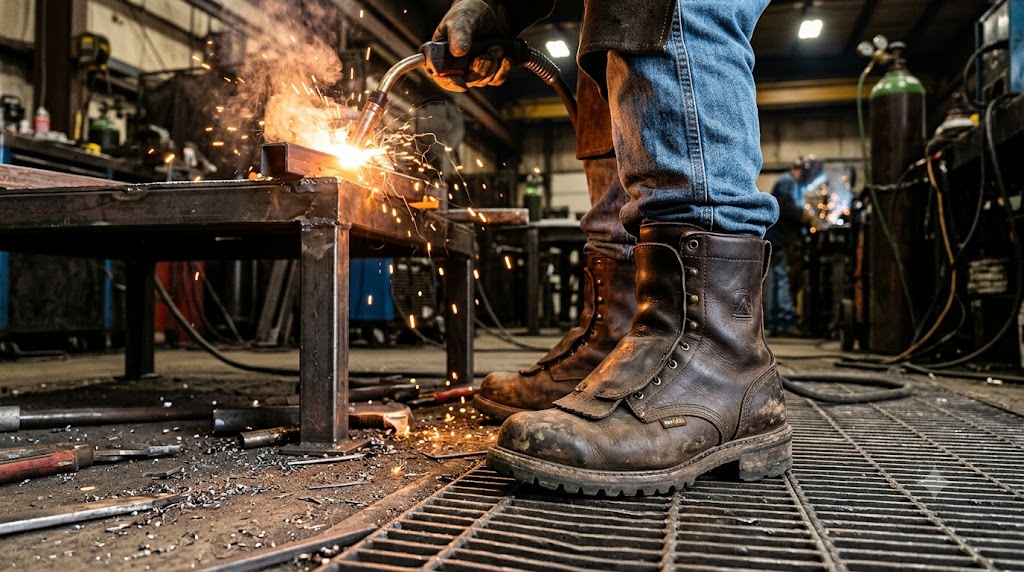
The first pair of boots I ruined, I ruined in about ninety seconds. I was running a stick bead overhead on a trailer frame, a fat glob of slag rolled off the joint, and it found the little strip of synthetic mesh on my running-style work shoes. It melted through, stuck to my sock, and taught me a lesson I have never forgotten. Good welding boots are not a luxury item. They are the difference between finishing your shift and hopping to the first aid kit. This welding boots buying guide is everything I wish someone had told me before I bought that first sad pair, written from years of standing in sparks, grinding dust, and the occasional puddle of coolant.
What Actually Makes a Boot a Welding Boot
A welding boot is not just any steel toe you grab off the shelf. It is a boot built to survive the specific hazards of a hot metal environment: falling slag, UV and spatter, sharp offcuts underfoot, heavy dropped stock, and heat radiating up through the floor.
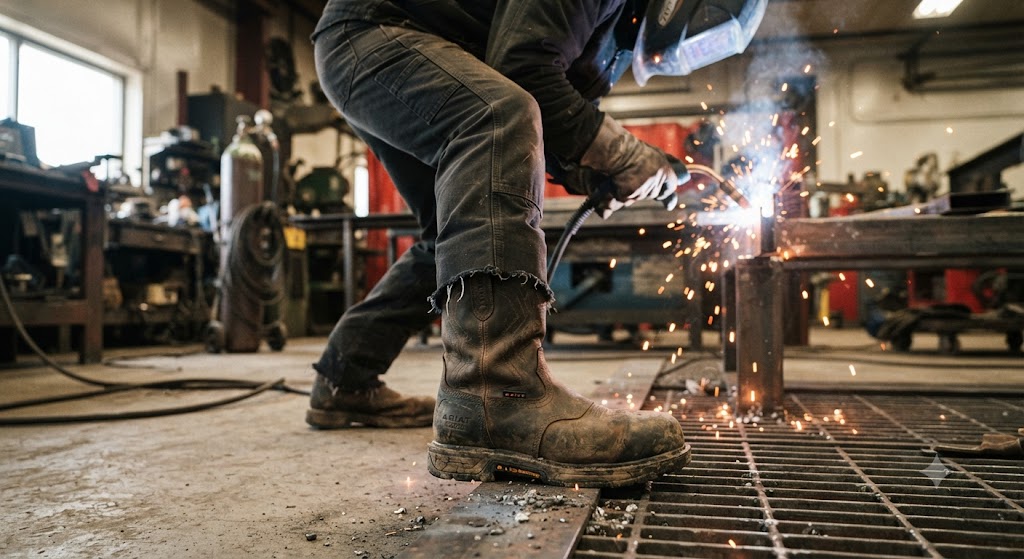
The features that matter most are all-leather uppers with minimal exposed stitching or mesh, a heat-resistant outsole (Vibram is the gold standard), a protective safety toe, and often a metatarsal guard to shield the top of your foot. Height matters too, because a taller shaft blocks sparks from rolling into the boot.
You will also see electrical hazard ratings, waterproofing, and slip resistance thrown around. Those are real benefits, but they are secondary to the core job: keeping molten metal off your skin and heavy things from crushing your toes. Get the fundamentals right first, then optimize for comfort and extras.
What Are the Best Welding Boots and What Should You Look For
If you want the short answer, the best welding boots are all-leather, have a heat-resistant Vibram or equivalent rubber outsole, carry an ASTM F2413 safety rating, and rise at least six inches to keep spatter out. Everything after that is about matching the boot to your body and your work.
Start with the toe. Steel toes are tougher and cheaper, but they conduct heat and cold and add weight. Composite toes are lighter and do not transfer temperature, which is genuinely nice when you are standing on a hot plate or working outdoors in winter, but they are usually bulkier and step up in cost.
Next, decide on entry style. Lace-up boots give you a snug, adjustable fit and better ankle support, but the tongue and laces can catch a stray spark. Pull-on and side-zip boots seal off that gap and let you kick them off fast if something hot gets inside, which is why a lot of production welders swear by them.
Then think about the outsole. You want rubber rated for heat, not the foam-cushioned soles found on athletic-style work shoes, which can soften or deform near heat. Vibram compounds handle high temperatures and resist slag far better.
Finally, consider your floor and your feet. Concrete all day means you want real cushioning and shank support. Wet or outdoor work means waterproofing. Long shifts mean weight matters more than you think. Nail those and you will buy once instead of three times like I did.
Understanding ASTM F2413 and Safety Ratings
Every serious safety boot in the United States is tested against ASTM F2413, the standard that defines protective footwear performance. When you read the label, the code tells you exactly what the boot is rated to do.
You will typically see a marking like this: the letter for the standard year, then I/75 and C/75, which mean impact and compression resistance rated to 75 foot-pounds and 2,500 pounds respectively. After that come optional add-ons. EH means electrical hazard resistance, giving you a secondary layer of protection against live circuits. Mt means metatarsal protection. PR is puncture resistance. WP or a waterproof callout covers moisture.
For welding specifically, prioritize the I/75 C/75 base rating, an EH designation, and Mt if you handle heavy stock that could drop on the top of your foot. OSHA does not mandate a single specific boot, but it does require employers to ensure foot protection where there is a risk of injury, and ASTM F2413 is the recognized benchmark for meeting that duty. If your shop has a safety officer, this is the number they will check.
The Boots Worth Your Money
I have put miles on most of these and borrowed the rest from guys who never take them off. Here is where each one earns its place, and where it does not.
Timberland PRO Pit Boss 6-inch Steel Toe
The Timberland PRO Pit Boss is the boot I hand to every new hire who asks what to buy first. It is a durable, no-drama steel toe with a roomy toe box and solid all-leather build that shrugs off spatter. Verdict: the best all-around starting point for a hobbyist or a shop welder who wants proven gear without overthinking it. The honest flaw is that the stock insole is thin and flat, so on concrete you will want an aftermarket insole within the first week. Skip it if you have narrow feet, because the generous width that most people love will leave you swimming.
Ariat Groundbreaker Steel Toe Pull-On
The Ariat Groundbreaker comes from Ariat’s western riding heritage, and that shows in the easy pull-on fit and comfortable ankle. For welders, the pull-on design is the real selling point: no laces to catch slag, and you can kick them off in a hurry. Verdict: a great pick if you value quick on-off and hate fussing with laces. The tradeoff is that the outsole is not the most heat-hardened here, so for heavy overhead work with constant slag rain I would reach for a Vibram-soled option. Skip it if you need serious metatarsal protection, since this leans comfort over maximum armor.
Thorogood American Heritage 8-inch Steel Toe
The Thorogood American Heritage is a union-made classic, and that tall 8-inch shaft is exactly what you want when sparks are flying. The extra height and the storm welt construction keep debris out and hold up for years of resoling. Verdict: the boot for the welder who wants heritage quality and maximum spark coverage up the ankle. The flaw is a real break-in period, so expect a week or two of stiffness before the leather molds to you. Skip it if you need waterproofing straight out of the box, because the classic leather needs regular conditioning to stay water-resistant.
ROCKROOSTER 7-inch Steel Toe Side-Zip
The ROCKROOSTER 7-inch Side-Zip blends a taller shaft with a side zipper, so you get lace-up support with pull-on convenience. The Vibram-style outsole and cushioned midsole make it a comfortable long-shift option at a friendly budget-to-midrange position. Verdict: the best value for someone who wants height, comfort, and fast entry without stepping up to premium money. The honest tradeoff is that a side zipper is one more moving part, and if you buy cheap zippers they fail, though this one has held up well for me. Skip it if you work around heavy crush hazards, since the safety toe is solid but this is not a met-guard boot.
Carhartt Rugged Flex 6-inch Steel Toe
The Carhartt Rugged Flex is the most walkable boot on this list. If your job is half welding and half moving around the shop, hauling stock, and climbing in and out of a truck, the flexible sole and cushioned comfort are a genuine relief at the end of the day. Verdict: the best hybrid pick for welders who also fabricate, fit, and run parts. The flaw is that the flexibility that makes it comfortable also means the outsole is not as heat-rugged as a stiff Vibram lug, so keep it away from constant slag pooling. Skip it if you spend all day standing in one spot welding, where a stiffer supportive boot serves you better.
Wolverine Floorhand Waterproof Steel Toe 6-inch
The Wolverine Floorhand earns its spot with real waterproofing at an approachable price. If your shop floor gets hosed down, or you weld outdoors and in the rain, dry feet change your whole day. Verdict: the best budget waterproof option for wet environments. The tradeoff is that waterproof membranes trap heat, so in a hot summer shop your feet will sweat more than in an open leather boot. Skip it if you work in a dry, climate-controlled shop, because you will pay for waterproofing you do not need and get less breathability.
KEEN Utility Lansing Mid Steel Toe Waterproof
The KEEN Utility Lansing is the comfort-forward premium pick, with KEEN’s famously roomy toe box, good waterproofing, and an asymmetrical steel toe that actually matches the shape of your foot. Verdict: the best choice if wide feet or all-day comfort are your top priority. The flaw is that the sporty, cushioned build feels less like a traditional heavy welding boot, and the exposed textile accents are something I keep an eye on around heavy spatter. Skip it if you do dirty, high-slag work where an all-leather, low-frills boot will simply last longer.
A quick word on two more I get asked about constantly. The Red Wing 2245 SuperSole is a fantastic welding boot with a heat-resistant outsole, and I would put it against anything here, but you are best off buying it fitted at redwingshoes.com rather than online sight unseen. The CAT Second Shift is a solid, affordable steel toe that many welders start with, though its outsole is built more for general work than sustained heat.
Comparison Table
| Boot | Height | Safety Toe | Entry | Outsole Focus | Waterproof | Best For |
|---|---|---|---|---|---|---|
| Timberland PRO Pit Boss | 6 in | Steel | Lace | Slip and heat | No | All-around starter |
| Ariat Groundbreaker | 6 in | Steel | Pull-on | Comfort | No | Quick on-off |
| Thorogood American Heritage | 8 in | Steel | Lace | Durability | No | Max spark coverage |
| ROCKROOSTER Side-Zip | 7 in | Steel | Lace and zip | Vibram-style heat | Water-resistant | Value and convenience |
| Carhartt Rugged Flex | 6 in | Steel | Lace | Flexibility | No | Fab plus weld hybrid |
| Wolverine Floorhand | 6 in | Steel | Lace | General plus waterproof | Yes | Wet environments |
| KEEN Utility Lansing | Mid | Steel | Lace | Comfort | Yes | Wide feet and comfort |
My Take After All Those Sparks
If you want one boot that does almost everything well, the Timberland PRO Pit Boss is where I point most people, then swap the insole and never think about it again. If sparks are constantly raining on your ankles, the tall Thorogood American Heritage is worth the break-in. If you hate laces and want to kick your boots off fast, the Ariat Groundbreaker or the ROCKROOSTER side-zip will make you happy, with the ROCKROOSTER winning on value and height. For wet floors, the Wolverine Floorhand keeps you dry, and for wide feet or all-day standing, the KEEN Lansing is the comfort champ.
Whatever you choose, buy all-leather, insist on a heat-rated outsole, and match the height and entry style to how you actually work. Do that and your next pair of boots will outlast the job, not melt on the first bead like mine did.
Frequently Asked Questions
Do I really need steel toes for welding? You need a safety toe rated to ASTM F2413 wherever heavy objects could drop on your feet, which is almost every welding and fabrication setting. Steel is tougher and cheaper, while composite is lighter and does not conduct heat or cold, so pick based on your comfort and your crush risk.
Are steel toe or composite toe boots better for welders? Steel toes cost less and resist impact slightly better, but they transfer heat and cold to your foot and set off metal detectors. Composite toes stay temperature-neutral and lighter, which is great near hot plates or in cold shops, but they run bulkier and pricier. Either meets safety ratings.
Why do welders wear pull-on or slip-on boots? Pull-on and side-zip boots have no laces or tongue gap for slag to fall into, and you can kick them off instantly if something hot does get inside. That safety advantage is why many production welders prefer them over traditional lace-ups.
What outsole is best for welding boots? A heat-resistant rubber outsole, with Vibram being the recognized benchmark, handles high temperatures and resists slag far better than soft foam-cushioned athletic soles, which can soften or deform near heat.
How tall should welding boots be? At least six inches, and eight inches if you do a lot of overhead or out-of-position work. A taller shaft blocks sparks and slag from rolling down into the boot, which is one of the most common ways welders get burned.
What does the EH rating mean on welding boots? EH stands for electrical hazard, meaning the boot provides a secondary layer of protection against accidental contact with live electrical circuits. It is a valuable feature for welders working around powered equipment, but it is a backup, not a substitute for proper electrical safety.
Are waterproof boots worth it for welding? If you work outdoors, in the rain, or on floors that get washed down, waterproofing keeps you dry and comfortable. In a dry indoor shop, a waterproof membrane just traps heat and makes your feet sweat, so buy it only if you need it.
How do I make my welding boots last longer? Buy all-leather, condition the leather regularly, keep the outsole free of embedded slag, and rotate pairs if you can. Boots with storm welt construction can often be resoled, which stretches your investment for years.
References
https://www.osha.gov/foot-protection https://www.osha.gov/laws-regs/regulations/standardnumber/1910/1910.136 https://www.astm.org/f2413-18.html https://www.cdc.gov/niosh/topics/ppe/ https://www.aws.org