Welding Boots Where to Buy: Amazon vs Tractor Supply vs Boot Barn
The first pair of welding boots I ever bought came from a gas station rack near a jobsite, and I paid for that shortcut with a molten bead of slag that rolled straight into the gap where a real leather gusset should have been. I still remember hopping around the shop like a fool. So when you type “welding boots near me” into your phone at 6 a.m. before a shift, I get it. You want something today, something that fits, and something that will not let hot metal find your sock. The problem is that the closest option is not always the smartest one, and the cheapest shipping is not always the fastest path to boots that actually protect you.
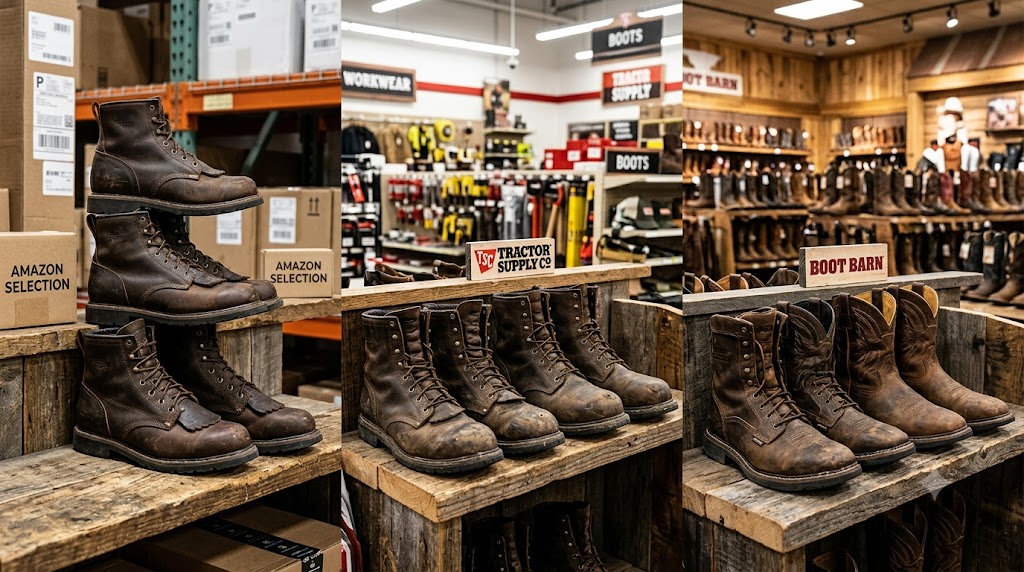
This guide walks you through where to actually buy welding boots, comparing Amazon against Tractor Supply, Boot Barn, Red Wing stores, and the little local welding supply shop that has been there longer than you have been alive. We will talk selection, try-on and fit, width availability, returns, and the safety ratings that matter when sparks are flying.
What Counts as a Real Welding Boot
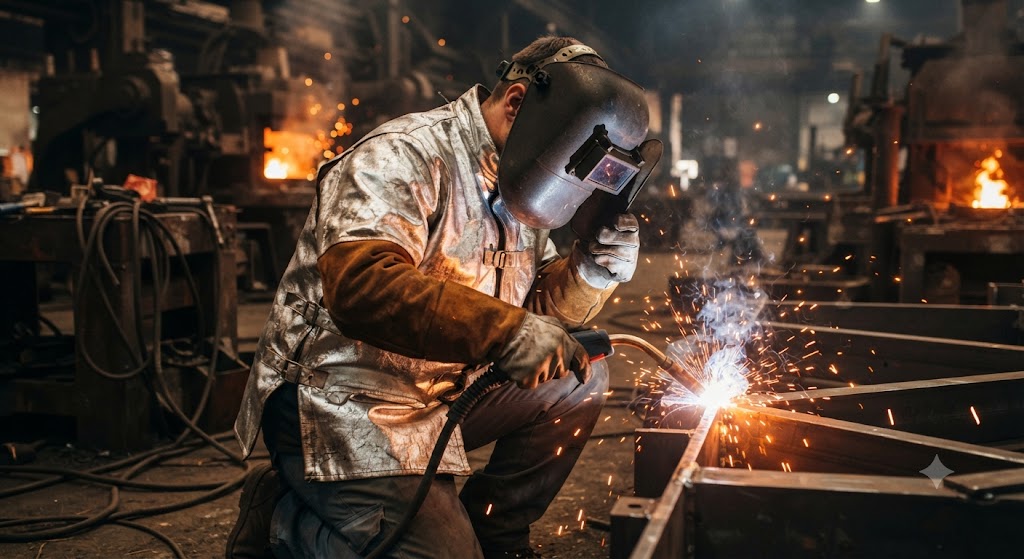
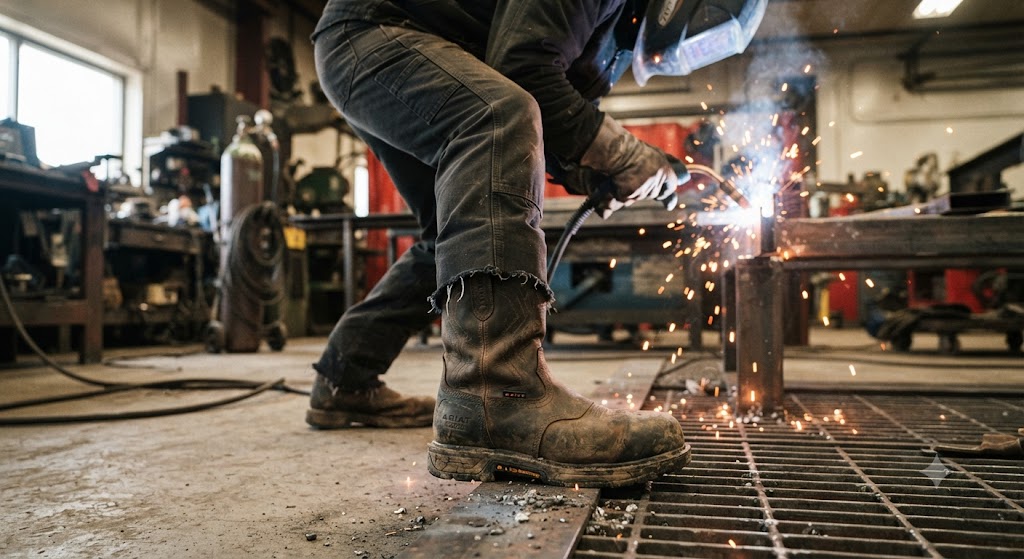
Let me clear something up, because the marketing muddies it. A welding boot is not just any tall work boot. It is a boot built to shrug off heat, spatter, and the occasional dropped stinger. The features I look for are a smooth leather upper with minimal exposed stitching up top, a protective toe (steel or composite), a heat-resistant outsole that will not melt or grip slag, and a pull-on or covered-lace design so molten metal cannot nest in your laces.
Two standards anchor the conversation. OSHA requires foot protection wherever there is a real risk of foot injury from hot materials or falling objects, and it points employers to consensus standards for the actual specs. The relevant one is ASTM F2413, which grades boots for impact and compression resistance at the toe, and adds ratings for things like metatarsal guards and electrical hazard protection. When you shop, you are really shopping for a boot that meets ASTM F2413 and suits the heat you work around. Keep that in your back pocket, because it changes how you evaluate every store below.
So Where Should You Actually Buy Welding Boots?
Here is the honest answer: if you need boots in your hands today and you want to try them on, a Boot Barn or a Red Wing store beats everything, because fit is king and hot spatter punishes a sloppy fit. If you need real width options, unusual sizes, or you want to compare a dozen models side by side without driving all over the county, Amazon wins on selection and returns. Tractor Supply sits in the middle as the convenient rural default, strong on availability and house brands but thinner on dedicated welding-specific models.
The mistake I see new welders make is treating “near me” as the only filter. Proximity gets you a boot fast, but the wrong boot fast is just a faster blister, or worse. My rule of thumb: buy your first serious pair in person if you possibly can, learn your true size and width in a work boot, then reorder online once you know exactly what fits. That single habit saves you the return shuffle for years.
If you cannot get to a store, order two sizes from a retailer with painless returns, wear the better pair on carpet indoors for an evening, and send the loser back. It feels wasteful, but it is far cheaper than limping through a week. Below, I break down each channel, then give you three boots worth ordering as representative examples.
Amazon: Best for Selection, Width, and Returns
Amazon is where I send people who have oddball feet or picky requirements. The catalog is enormous, the width and half-size coverage is the best of any channel, and the return window means you can try boots at home and ship back the misses. The tradeoff is obvious: you cannot try before you buy, and listings sometimes blur real welding boots with generic work boots, so you have to read the specs and confirm ASTM F2413 yourself.
A few boots I keep recommending as solid, widely available examples:
The Ariat Groundbreaker Steel Toe Pull-On is my easy pick for a first pull-on. No laces means no spatter trap, the steel toe meets the impact spec, and Ariat’s fit runs friendly for wide feet. The honest flaw is the outsole, which is comfortable but wears faster on abrasive concrete than a premium welded sole. Skip it if you spend all day grinding on rough slab and want maximum outsole life.
The Thorogood American Heritage 8-inch Steel Toe is the classic American-made moc-toe in a taller, safety-rated build. The 8-inch shaft gives you real coverage up the ankle, the leather is thick, and it breaks in like an old friend. The tradeoff is that it uses laces, so you must keep them tucked or covered, and it runs on the premium side for budget. Skip it if you refuse to fuss with lace management around heavy overhead work.
The ROCKROOSTER 7-inch Steel Toe Side-Zip is the value play, and the side zip is genuinely handy when your hands are tired. It hits the toe rating and offers decent heat resistance for the money. The flaw is consistency: quality control varies pair to pair, so inspect the stitching and zipper the moment it lands. Skip it if you want a heirloom boot rather than a dependable workhorse you replace more often.
Tractor Supply: The Convenient Rural Default
If you live where the nearest big-box is an hour off, Tractor Supply is a lifesaver. You can grab boots the same day, the house brands offer real value, and staff can point you to steel-toe options on the shelf. The catch is that Tractor Supply leans toward general farm and work boots, so dedicated welding features like smooth pull-on uppers and heat-tuned soles are hit or miss. Read the box for ASTM F2413, and do not assume a steel toe alone makes a boot spatter-ready.
Boot Barn and Red Wing Stores: Fit Help You Can Feel
For try-on and fit, Boot Barn stores are hard to beat. Big wall of work boots, staff who understand safety toes, and you can walk around before you commit. Red Wing stores go a step further with careful in-person fitting and a resole culture that keeps a premium boot alive for years. Both shine on getting the right width and the right safety rating in your hands. The downside is a narrower model range at any one location and premium pricing, so you trade selection breadth for fit confidence. Worth it for your primary pair, in my book.
Local Welding Supply Shops and Harbor Freight
Do not sleep on the local welding supply shop. The counter staff often weld themselves, they know which boots survive their regulars, and they stock heat-focused gear the big retailers ignore. Selection is small and prices are not the point; expertise is. Harbor Freight, by contrast, is where you grab last-minute consumables and the occasional bargain, but I would not stake my feet on their boot selection for daily heavy welding. Use it for a backup or a truck spare, not your main protection.
Retail Channel Comparison
| Channel | Selection | Fit Help | Width Availability | Returns | Convenience |
|---|---|---|---|---|---|
| Amazon | Excellent | None (buy blind) | Excellent | Easy, generous window | Ships to you |
| Tractor Supply | Moderate | Basic in-store | Moderate | In-store, straightforward | High in rural areas |
| Boot Barn | Good | Strong | Good | In-store, solid | Regional stores |
| Red Wing stores | Focused | Excellent | Good, with fitting | In-store, resole support | Fewer locations |
| Local welding shop | Limited | Expert | Limited | Varies by shop | Neighborhood, personal |
My Take Before You Buy
Here is where I land after years of ruined socks and a few genuinely great boots. Buy your first serious pair in person at a Boot Barn or Red Wing so you nail size, width, and a confirmed ASTM F2413 rating with someone watching your gait. Once you know your fit, Amazon becomes your reorder engine, with the Ariat pull-on for spatter-safe simplicity, the Thorogood for durable ankle coverage, and the ROCKROOSTER when you want value and a quick side zip. Keep Tractor Supply and the local shop in your rotation for same-day needs. Match the boot to your heat exposure, keep laces covered or gone, and your feet will outlast the boots. That is the whole game.
Frequently Asked Questions
Do welding boots really need to be different from regular work boots? Yes. Welding boots minimize exposed laces and stitching up top, use heat-resistant soles, and add a protective toe. A plain work boot can trap spatter in the laces and melt on a hot floor.
What safety rating should welding boots have? Look for ASTM F2413, which covers impact and compression at the toe and adds ratings for metatarsal and electrical hazard protection. OSHA expects protective footwear wherever hot materials or falling objects pose a real risk.
Are pull-on boots better than lace-up for welding? Pull-on boots remove the lace gap where spatter loves to land, which is why I favor them for heavy work. Lace-ups are fine if you keep the laces tucked under a covered gusset or kilt.
Is steel toe or composite toe better for welders? Both can meet ASTM F2413. Steel conducts temperature more, so it can feel hotter or colder, while composite is lighter and non-conductive. Choose based on comfort and whether you need electrical hazard protection.
Can I just buy welding boots online without trying them on? You can, especially with generous returns. My advice is to order two sizes, test the better pair indoors on carpet, and return the other. Even better, get fitted in person once, then reorder online.
Which store has the best width availability? Amazon typically offers the widest range of widths and half sizes. For in-person width fitting, Red Wing and Boot Barn stores do the best job.
How long do welding boots last? It depends on heat exposure and outsole abrasion. Premium boots with resole options can last years, while value models may need replacing more often. Inspect the toe cap and sole seams regularly.
Are Tractor Supply house-brand boots good enough for welding? They can be for lighter work if the box confirms ASTM F2413 and a proper toe. For heavy spatter and constant heat, lean toward dedicated welding-focused models.
References
https://www.osha.gov/foot-protection https://www.osha.gov/laws-regs/regulations/standardnumber/1910/1910.136 https://www.astm.org/f2413-18.html https://www.cdc.gov/niosh/topics/ppe/ https://www.ariat.com https://www.thorogoodusa.com
SEO Title: Welding Boots Near Me: Where to Buy Guide