Welding Cap Buying Guide
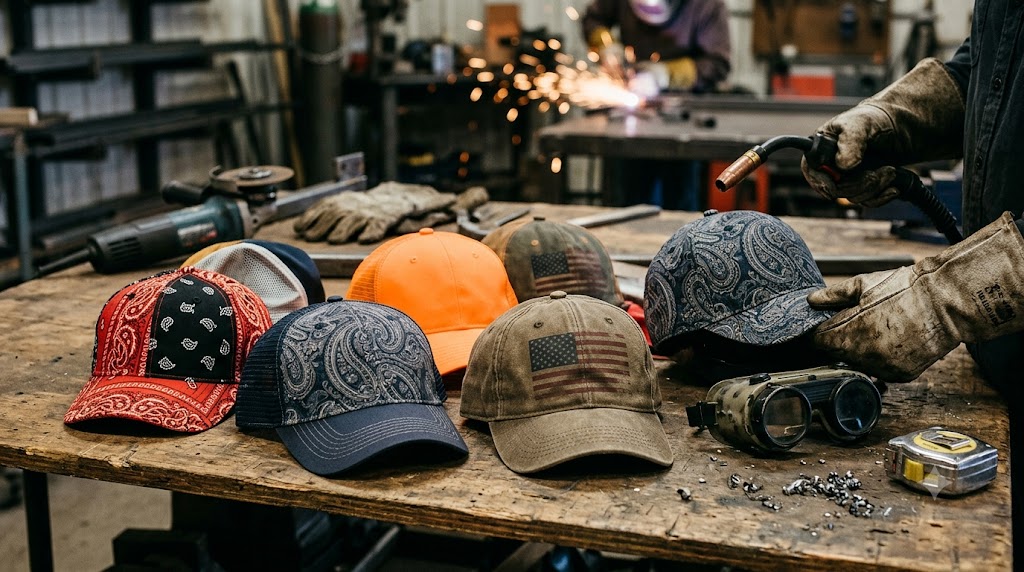
The first time a bead of molten spatter rolled off my hood and found the bare skin behind my ear, I dropped my stinger and slapped at my own head like I was putting out a campfire. That little burn taught me more than any safety poster ever did. A good welding cap is the cheap piece of gear that keeps sparks out of your hair, off your scalp, and away from your neck while you are buried under a hood for eight hours straight. In this welding cap buying guide, I will walk you through what actually matters, from cotton versus flame-resistant fabric to panel count, crown depth, and fit under a hard hat. I have worn most of these caps in real shops, and I will tell you which ones earn a spot in your gear bag and which ones you can skip.
What a Welding Cap Actually Does
A welding cap is a soft, brimmed skullcap worn under your welding helmet or hard hat. Its job sounds simple, but it does three things at once. First, it shields your scalp, ears, and the back of your neck from sparks, grinding dust, and UV bounce that sneaks past the hood. Second, it soaks up sweat so it does not drip into your eyes or fog the inside of your lens at the worst possible moment. Third, it keeps your hair contained, which matters more than you think when you are leaning into an overhead joint and gravity is not on your side.
Most caps use a long soft brim that you can rotate. Point it forward to shade your face, spin it to the side or back to cover an ear when you are welding out of position. The brim is the feature that separates a real welding cap from a fashion beanie. That flexibility is why welders have worn this same basic design for generations, and why it still belongs in every shop.
Which Welding Cap Should You Buy?
If you want the short answer, here it is. For most hobby and light production welders, a quality 100 percent cotton reversible cap like the Comeaux Caps Reversible Welding Cap is the classic default, and for good reason. It is heavy cotton, made in the USA, and it holds its shape and brim after dozens of washes. It is the cap I hand to new hires.
If you run structural, pipe, or any high-spatter work where sparks rain constantly, step up to a flame-resistant cap. The BOCOMAL FR Welding Cap uses a genuine FR-treated fabric rated to a real arc protection level, so a shower of spatter smolders and self-extinguishes instead of catching. Plain cotton resists sparks but is not certified flame resistant, and that difference matters when the sparks are relentless.
If you run hot and sweat hard, a mesh-lined option like the RIVERWELD Cotton Mesh-Lined Welding Cap breathes noticeably better than a solid double-layer crown.
Here is the honest catch. There is no single perfect cap. The right pick depends on how much heat you throw, whether you wear a hard hat, and whether your head sits between common sizes. Match the cap to your work, not to the flashiest pattern. Nail material and fit first, and everything else is preference. The rest of this guide breaks down exactly how to make that call.
Cotton Versus Flame-Resistant Fabric
This is the decision that trips up most buyers. Standard welding caps are 100 percent cotton, usually a heavier weight than a T-shirt. Cotton is a natural fiber, so it chars and smolders instead of melting the way polyester does. That is why you never want a synthetic blend anywhere near an arc. A dropped spark on a poly cap can melt fabric straight into your skin.
Plain cotton, however, is not the same as flame resistant. Untreated cotton can still ignite and keep burning if enough spatter lands in one spot. FR-treated caps, like the BOCOMAL HRC2 cap or the YESWELDER Reversible 8-Panel FR Welding Cap, use chemically treated fabric that self-extinguishes. The National Fire Protection Association covers flame-resistant clothing under NFPA 2112, and if your employer requires arc-rated gear, an untreated cotton cap will not satisfy that rule.
For weekend fabrication and light MIG work, quality heavy cotton is plenty. For all-day stick or flux-core in a spark-heavy environment, spend the extra and get FR. Your scalp is not the place to save a few minutes of comfort.
Panel Count and Crown Depth
Welding caps are stitched from panels, typically six or eight. More panels mean more curved seams, which gives the crown a rounder, deeper shape that hugs your head instead of pointing up like a paper hat. The YESWELDER 8-panel cap sits deeper and stays put better under a hood than a shallow four or five panel design.
Crown depth matters for coverage. A shallow cap rides up and exposes the back of your neck. A deep crown pulls down over your ears and stays there when you tilt your head. If you have a larger head or wear your caps low, prioritize an 8-panel deep-crown build.
Brim Direction and Reversible Designs
The soft brim is the whole point. You rotate it to shade whichever side is taking sparks. Reversible caps, like the Comeaux and the Black Stallion BC5W BSX Cotton Welding Cap, can be flipped inside out to swap patterns or to put the cleaner side forward. That is a nice bonus, though I care more about how the brim holds its shape than about the print.
Sizing and Fit Under a Hard Hat
Sizing is where most complaints come from. Fitted caps are sold by hat size, so measure the circumference of your head just above your ears and match it to the chart. Fitted caps like the Black Stallion give the most reliable, snug fit if you know your number. One-size caps like the Lincoln Electric Welding Cap K3203-ALL are convenient but tend to run either loose or tight depending on your head.
If you wear a hard hat, remember that a deep crown plus a suspension liner can feel bulky. Choose a low-profile cap and expect fitted cotton to shrink a bit on the first hot wash, so buy accordingly.
Comparison of the Best Welding Caps
| Cap | Material | Flame Resistant | Panels | Sizing | Best Use |
|---|---|---|---|---|---|
| Comeaux Reversible | 100% cotton | No | 6-panel | Fitted | All-around classic default |
| YESWELDER FR | FR-treated | Yes | 8-panel | Fitted | Deep coverage, high spatter |
| Black Stallion BC5W | 100% cotton | No | 6-panel | Fitted | Snug reliable fit |
| Lincoln Electric K3203 | Cotton | No | 6-panel | One size | Grab-and-go convenience |
| RIVERWELD Mesh-Lined | Cotton, mesh lining | No | 6-panel | Fitted | Hot shops, heavy sweat |
| BOCOMAL HRC2 10oz | FR 10oz cotton | Yes | 6-panel | Fitted | Structural and pipe work |
A quick word on the honest flaws. The Comeaux runs true but the cotton shrinks on the first hot wash, so size up if you are between numbers. The YESWELDER FR cap is warm, and in a hot shop that deep crown traps heat, so skip it if you already overheat. The Black Stallion has a shorter brim than some welders like for full ear coverage. The Lincoln one-size cap is a gamble on fit and can slide on smaller heads, so skip it if you know your size. The RIVERWELD trades some spark protection for breathability, so it is not the pick for constant spatter. The BOCOMAL is stiff and hot out of the bag and takes a few washes to break in.
You will also see custom handmade Etsy caps and folks welding in doo rags and beanies. Handmade caps can look great, but verify the fabric is untreated natural cotton before you trust it near an arc. Doo rags and beanies have no brim and often contain synthetics, so I do not recommend them for real welding.
My Final Take
If I could only own one, I would keep the Comeaux cotton cap in my bag for daily MIG and TIG, and a BOCOMAL FR cap for the days I know I will be eating spatter. That two-cap setup covers almost everything a working welder runs into. Buy cotton for comfort and everyday work, buy FR when the sparks get serious, measure your head before you order, and rotate that brim toward the heat. A cap costs almost nothing compared to the gear on your bench, yet it protects the one part of you that never stops sweating under the hood.
Frequently Asked Questions
Do I really need a welding cap or is a beanie fine? You need a cap with a brim. A beanie has no way to shield your ear or neck from directional sparks, and many beanies contain synthetic fibers that melt. A proper cotton or FR cap is purpose-built for the arc.
Are cotton welding caps flame resistant? Not by default. Cotton chars instead of melting, which is safer than synthetics, but untreated cotton can still ignite. For certified flame resistance under standards like NFPA 2112, choose an FR-treated cap.
How do I find my welding cap size? Wrap a soft tape around your head just above your ears and eyebrows, then match that measurement to the maker’s hat-size chart. Fitted caps are more reliable than one-size options if you know your number.
Will a fitted cap shrink after washing? Cotton caps commonly shrink a little on the first hot wash. If you are between sizes, order the larger one and wash it hot once before judging the fit.
Can I wear a welding cap under a hard hat? Yes, and many welders do. Pick a lower-profile cap so the crown and brim do not fight the hard hat suspension. A very deep 8-panel crown can feel bulky under a liner.
Which way should the brim face? Point it toward whatever direction the sparks are coming from. Forward shades your face, and rotating it to the side or back covers an exposed ear during out-of-position work.
How many caps should I own? At least two, so you always have a clean, dry one while the other is in the wash. Sweat-soaked caps stop absorbing and start smelling fast.
Are 8-panel caps better than 6-panel caps? They fit rounder and sit deeper, which improves coverage and stability under a hood. Six-panel caps are lighter and cooler, so it comes down to how much coverage you want.
References
https://www.osha.gov/laws-regs/regulations/standardnumber/1910/1910.252 https://www.cdc.gov/niosh/topics/welding/default.html https://www.aws.org/standards https://www.nfpa.org/codes-and-standards/nfpa-2112-standard-development/2112