Welding Cap and Respirator Combo Fit: How to Stack Everything Under the Hood
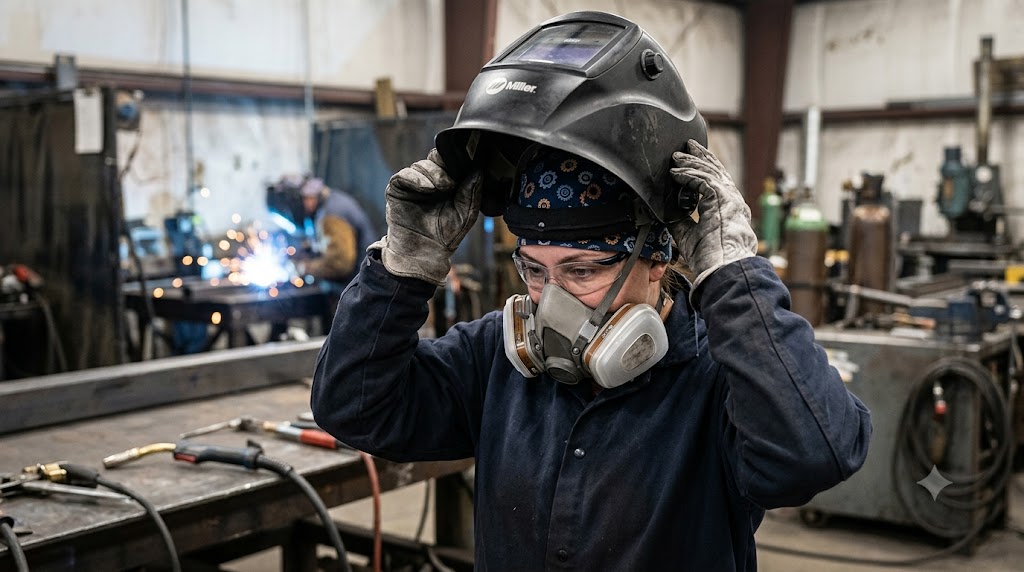
Fitting a welding cap, a respirator, and an auto-darkening helmet together in a way that all three work properly is one of those problems that sounds minor until you are standing at the bench with your lens fogging, your respirator seal breaking, and the bill of the cap poking you in the back of the head. The welding cap and respirator combo fit is a real ergonomic puzzle, but it has a reliable solution once you understand what is competing for space and in what order to layer the pieces.
Why This Combination Is Tricky
A respirator, even a low-profile half-mask, needs a firm, uninterrupted seal against the face. That seal breaks if fabric from a welding cap intrudes under the face seal, if the respirator straps pull unevenly across the head, or if the helmet headgear crowds the mask and breaks the seat at the cheek or chin. Meanwhile, the welding cap is solving a different problem: protecting your head and hair from spark and spatter under the helmet and preventing the headgear harness from sitting directly on bare scalp.[^https://industrialmonitordirect.com/blogs/knowledgebase/fitting-low-profile-respirators-under-welding-hoods]
The lens can also fog when a respirator exhausts upward, because the warm exhaled air rises into the helmet and condenses on the inside cover lens. That is a ventilation routing problem, not a hardware deficiency.
The Right Respirator for Under-the-Hood Work
Not all respirators fit comfortably under a welding helmet. The design features that work under a hood:
- **Low-profile body.**The respirator should sit flat and close to the face without protruding enough to prevent the helmet from resting at the right distance. The GVS Elipse P100 is one of the most popular under-hood respirators precisely because its lens-shaped body sits nearly flat against the face.[^Check on Amazon]
- Downward-venting exhale valve. A valve that exhausts air downward prevents breath from fogging the lens by routing exhaled air away from the viewing area.[^https://industrialmonitordirect.com/blogs/knowledgebase/fitting-low-profile-respirators-under-welding-hoods]
- Simple, smooth headgear. Bulky respirator straps with thick cinch buckles create pressure points against the helmet harness. Respirators with simple elastic or low-profile straps fit better in the layer sandwich. The 3M 6500 Series Quick Latch and the 3M 7503 both have relatively low-profile straps that layer under a helmet harness without significant conflict.
The Miller LPR-100 was specifically designed as a low-profile respirator for under-helmet use and is a common recommendation from Miller themselves, though it does not have a verified current Amazon listing at the time of writing.
How to Layer Everything Correctly
1. Start with the welding cap. The cap goes on first, over your hair and ears, before anything else. It sits on your head the way any cap does. Its job is heat and spark protection, and it creates a stable base.
2. Fit the respirator next. Put the respirator on over the cap and perform a seal check: cover the exhalation valve and breathe out gently, checking for leaks at the cheek and chin seal. Make sure the cap’s fabric is not interrupting the face seal anywhere. If cap fabric bridges the gap between the mask and your cheek, either fold the cap’s ear flap clear or choose a cap with a lower profile.
3. Check for headgear clearance. Route the respirator’s top strap so it sits either in front of or behind the helmet headgear ratchet, whichever keeps it flat against the head without creating a pressure point. Many welders run the top strap up the back of the head and over the crown, where it fits under the helmet harness without conflict.
4. Put on the helmet. Adjust the headgear so the lens sits a comfortable distance from your face. Slightly more distance from face to lens than usual gives the respirator room and keeps it from pressing harder against your face under the helmet.[^https://industrialmonitordirect.com/blogs/knowledgebase/fitting-low-profile-respirators-under-welding-hoods]
5. Test the seal and the fog. Do a final seal check with the helmet on, then simulate a welding position. If the lens fogs, the respirator exhale valve is venting upward. Try a model with a downward-directed valve, or tilt the helmet’s lower edge slightly forward.
When the Combination Still Will Not Work
Welders with beards, unusual facial geometry, or a large face sometimes cannot achieve a reliable seal between a half-mask respirator and their face regardless of the respirator model chosen. For these welders, a PAPR system is the right answer: it does not require a face seal at all, it uses positive pressure airflow inside the helmet, and it eliminates the layering problem entirely.[^https://www.3m.com/3M/en_US/p/c/ppe/welding-protection/welding-helmet-respirator-sets/]
Who should skip the half-mask under the helmet: welders with significant facial hair or large-face fit issues, for whom a PAPR is the correct system rather than a workaround.
The Bottom Line
A welding cap, low-profile respirator, and auto-darkening helmet can work together reliably when you choose a flat-profile respirator with a downward exhale valve, layer in the right order (cap first, respirator second, helmet third), keep cap fabric out of the face seal zone, and adjust headgear for a little more lens-to-face clearance. The GVS Elipse is the community’s most-cited respirator for this setup. If none of that works for your face geometry, a PAPR is not a compromise: it is the right tool.
Frequently Asked Questions
Can I wear a respirator under my welding helmet? Yes, but not every respirator fits comfortably. A low-profile half-mask with a downward exhale valve is the standard choice. The GVS Elipse and 3M 6500 series are frequently recommended for under-hood use.
Why does my welding lens fog when I wear a respirator? The exhale valve is venting upward, routing warm exhaled air into the helmet interior where it condenses on the inside cover lens. Choose a respirator with a downward-venting exhale valve.
How do I stop the respirator from breaking seal under the helmet? Keep cap fabric out of the face seal zone, adjust the headgear to give a little more lens-to-face clearance, and route respirator straps so they do not create a pressure point against the helmet harness.
What is the best low-profile respirator for under a welding helmet? The GVS Elipse P100 is the most frequently cited option. The 3M 6500 Series Quick Latch and 3M 7503 are also widely used. The Miller LPR-100 was specifically designed for under-helmet use.
Does the welding cap go on before or after the respirator? Before. Cap first, then respirator, then helmet. The cap sits on the head as a base layer; the respirator goes over it.
What if I have a beard and cannot get a good respirator seal? A half-mask does not seal over a beard. A PAPR system (positive pressure, no face seal) is the correct solution. It also eliminates the layering problem entirely.
Does the GVS Elipse work under a welding helmet? Yes. The Elipse’s lens-shaped low-profile body sits nearly flat against the face and fits under most auto-darkening helmets with the helmet headgear adjusted for slightly more clearance.
References
- Fitting Low-Profile Respirators Under Welding Hoods (Industrial Monitor Direct, strap routing and lens clearance): https://industrialmonitordirect.com/blogs/knowledgebase/fitting-low-profile-respirators-under-welding-hoods
- 3M Welding Helmet Respirator Systems (3M, compatible respirator and PAPR options): https://www.3m.com/3M/en_US/p/c/ppe/welding-protection/welding-helmet-respirator-sets/
- GVS Elipse P100 NIOSH Respirator (low-profile design specs): https://www.gvs.com/en/catalog/elipse-p100-niosh-respirator