Welding Gloves Falling Apart Fast: Why It Happens and How to Stop It
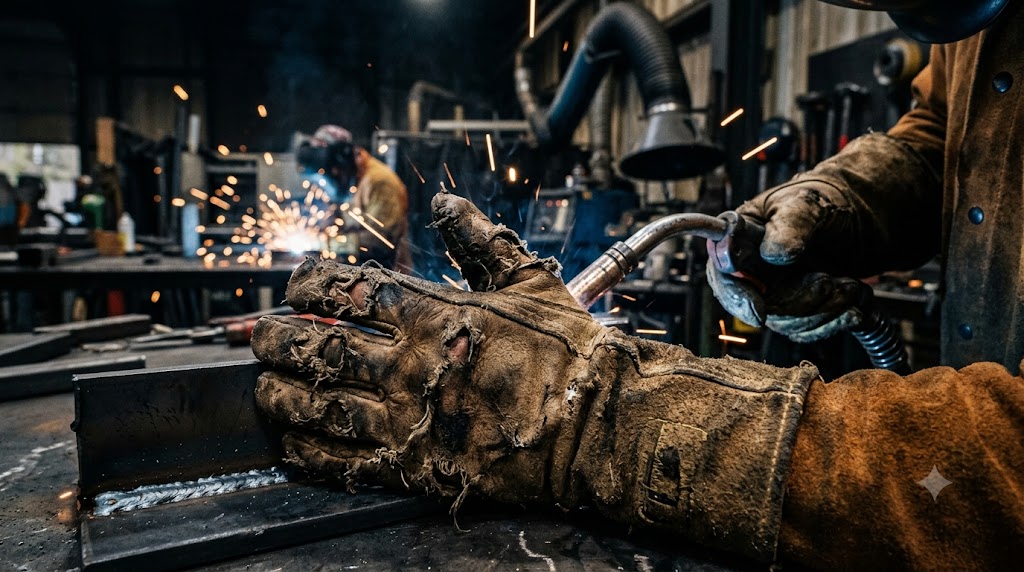
A pair of welding gloves that shreds in two weeks is not bad luck, it is a mismatch. When welding gloves keep falling apart fast, the cause is almost always the wrong leather for the process, the wrong glove for the heat, or a seam built more for looks than durability. Understanding what is actually in your gloves, and what the leather was designed for, is how you stop cycling through a new pair every month and start wearing gloves that outlast the job.
Leather Type Is Everything
Welding gloves come in several leathers, and they are not interchangeable in terms of durability versus dexterity.
- Goatskin and deerskin: thin, supple, excellent feel at the fingers. Ideal for TIG welding and detail work. They also wear faster under rough handling, heat, and abrasion because the trade is dexterity for longevity.[^https://bakersgas.com/pages/how-to-choose-welding-gloves]
- Cowhide and split leather: thicker, more resistant to heat and abrasion. The standard for MIG and stick welding. Harder to move your fingers in, but they last significantly longer.
- Elkskin: a premium leather that balances softness and durability well. Heat resistant, comfortable for long days, and holds up better than goat or deer under heavy use.
If your TIG gloves are dying on MIG work, that is not a glove quality failure. That is using a dexterity-first glove on a job that needs a durability-first one.
The Palm Is Where Most Gloves Die
Look at where your gloves fail first. It is almost always the palm, for three reasons. The palm grips the torch, the stinger, or the work continuously. It absorbs heat through direct contact. And many gloves are built with an exposed seam running across the palm, which creates a fault line: once the seam thread fails, a hole opens right in the working surface.[^https://www.ishn.com/articles/99020-how-to-determine-the-durability-of-hand-protection]
When buying, look for reinforced palms with double stitching, and check that the palm seam is not running across the grip area. A reinforced palm with Kevlar stitching adds meaningful lifespan for grip-intensive work.[^https://www.mcrsafety.com/arm-hand-protection/welding/welding-gloves/]
Assembly Grip Trades Durability for Dexterity
Some gloves are built with an assembly-grip cut, multiple pieces joined with exposed seams across the palm area, to improve finger flexibility. The honest trade: more dexterity, less durability. Welders who do fast, detailed work love them. Welders who do hard, abrasive fabrication eat through them.[^https://www.ishn.com/articles/99020-how-to-determine-the-durability-of-hand-protection] If you are choosing a glove by comfort at the point of sale and then surprised it dies in a week, the assembly-grip cut may be why.
Heat and Sweat Degrade Leather
High heat stiffens and dries leather, cracking it at flexion points. Sweat is salt water, and salt water slowly breaks down leather fibers from the inside. Gloves left sweaty and scrunched up dry hard and crack. A little leather conditioner, applied occasionally, keeps the fibers supple and slows this process significantly. And never rest the back of your glove against hot metal or slag, which scorches leather from the outside in.
Match the Glove to the Amperage
TIG gloves work well up to roughly 200 amps, after which the radiant heat becomes enough to stress thin leather quickly. Above that threshold, swap to a heavier MIG or stick glove.[^https://www.reddit.com/r/Welding/comments/1fvns0h/do_you_actually_use_the_thick_migstick_gloves_i/] Using TIG gloves at high-amperage stick welding burns through them not because the glove is defective, but because it was never built for that heat load.
Repair, Not Replace, Minor Damage
A small pinhole in a decent pair of gloves does not mean they are done. Products like the Weldas Glove Medic are exactly for this: sealing a small hole before it becomes a tear. A tube of this in your toolbox extends the useful life of expensive gloves and stops the cycle of throwing away mostly-good gloves over a hole you could have fixed in two minutes.
Who should skip this: anyone running low-cost gloves specifically to burn through them on rough, spatter-heavy processes. That is a legitimate strategy. Just do not buy dexterity gloves for a destruction-duty job.
The Bottom Line
Welding gloves falling apart fast is a selection problem more than a quality problem. Thin goatskin and deerskin gloves are designed for TIG dexterity, not MIG abuse. Check that your palms have reinforced, double-stitched seams. Match the leather weight to the amperage and process. Condition them occasionally to fight heat and sweat damage. Repair small holes before they become large ones. Get those four things right and a good pair of welding gloves stops being a monthly expense and starts being the tool it is built to be.
Frequently Asked Questions
Why do my welding gloves keep falling apart so fast? Usually the wrong leather for the process (TIG gloves on MIG or stick work), a palm seam failure, or heat and sweat damage from never conditioning the leather.
What leather lasts longest in welding gloves? Elkskin and thick cowhide last longest under heat and abrasion. Goatskin and deerskin are more durable than they seem but are designed for dexterity (TIG), not durability-first work.
Can I use TIG gloves for MIG welding? Yes, for lower-amperage MIG, but above roughly 200 amps the radiant heat will stress thin TIG leather quickly. Swap to a heavier cowhide or elkskin MIG glove for high-amperage work.
Why does the palm of my glove fail first? The palm grips continuously, absorbs heat through contact, and in many gloves carries an exposed seam across the working surface. That seam fails and opens a hole. Look for double-stitched, reinforced palms.
How do I stop my gloves drying out and cracking? Occasionally apply a light leather conditioner to keep the fibers supple. Never store gloves compressed and wet, and keep them away from direct contact with hot metal or slag.
Can I repair a hole in welding gloves? Yes. Products like the Weldas Glove Medic seal small holes before they become tears. Repair minor damage early and you extend the gloves’ useful life significantly.
What gloves hold up best for stick welding? Thick cowhide or elkskin gauntlet gloves with reinforced palms and Kevlar stitching. These are built for the sustained heat and abrasion of stick welding rather than for dexterity.
References
- How to Choose the Correct Welding Gloves (Baker’s Gas, leather types and process matching): https://bakersgas.com/pages/how-to-choose-welding-gloves
- How to Determine the Durability of Hand Protection (ISHN, seam failures and assembly grip): https://www.ishn.com/articles/99020-how-to-determine-the-durability-of-hand-protection
- MCR Safety Welding Gloves (reinforced palms and Kevlar stitching): https://www.mcrsafety.com/arm-hand-protection/welding/welding-gloves/