welding jacket
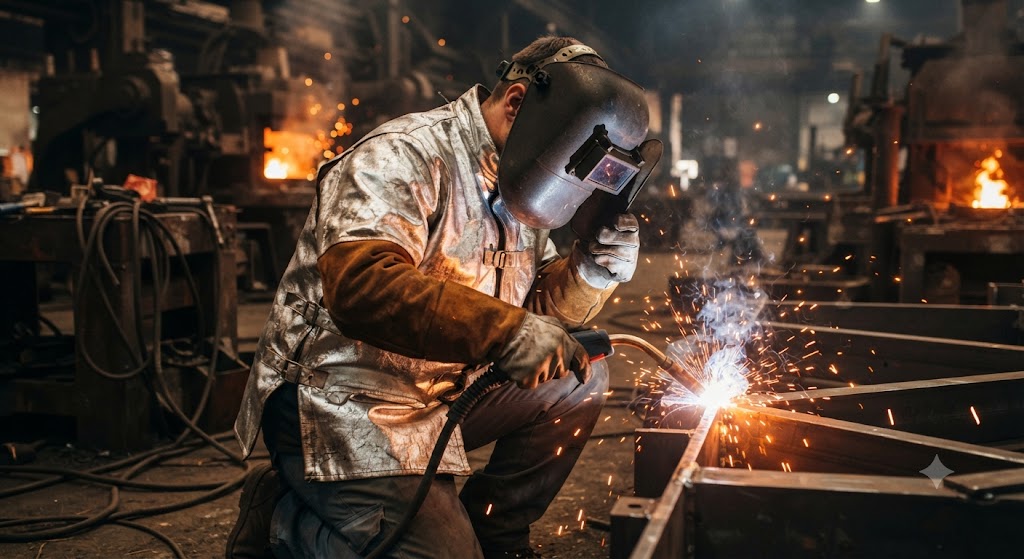
The first time a spatter ball rolls down your collar and finds bare skin, you learn fast that a good welding jacket is not optional gear. You feel it before you see it, a hot bead burning through a cotton hoodie like it was tissue. A proper welding jacket puts a real barrier between your body and everything a torch throws at it, and the right one lets you work all day without feeling like you are wrapped in a tarp. This guide walks you through the two material families, how to size and fit one correctly, and which specific picks earn their place on the rack.
What a welding jacket actually is
A welding jacket is a torso and arm covering made from flame resistant material, built to stop sparks, spatter, slag, and radiant heat from reaching your skin and clothing. Unlike a regular work coat, it either resists ignition by design (treated or inherently flame resistant cotton) or blocks heat by mass (leather). The goal is simple, which is to prevent burns and to keep a stray spark from smoldering into an open flame on your body.
Personal protective equipment for welding is treated seriously by regulators and standards bodies for a reason. OSHA addresses protective clothing for welding and cutting under its general welding standards, and the American Welding Society (AWS) publishes guidance on safety in welding through documents like AWS Z49.1. The National Institute for Occupational Safety and Health (NIOSH) also documents burn and thermal hazards tied to hot work. Read together, the message is consistent, which is that your clothing is a primary line of defense, not an afterthought.
Which pick should you buy
If you want one straight answer, buy the Lincoln Electric K2985 FR cotton welding jacket for most stick, MIG, and general shop work. It breathes, it moves, and it takes light to medium spatter without cooking you. If you run heavy amperage, do a lot of overhead work, or weld all day in high heat, step up to the Lincoln Electric XVI series split leather FR welding jacket for the extra thermal mass. Those two cover the large majority of welders.
FR cotton versus leather, and when to choose each
The two material families solve the same problem in opposite ways.
Flame resistant (FR) cotton is light, breathable, and flexible. It is the better call for light to medium duty MIG and stick work, for warm shops, and for long sessions where fatigue and heat stress matter more than raw spark resistance. The tradeoff is that FR cotton has a lower tolerance for large, sustained spatter and heavy slag, and treated fabrics can lose some protection over many aggressive wash cycles.
Leather is the heavy hitter. Split cowhide and similar hides absorb and deflect big spatter, grinding sparks, and radiant heat that would eventually chew through cotton. Choose leather for high amperage welding, overhead work, pipe work, and heavy fabrication. The tradeoff is weight and heat retention. Leather does not breathe, so you pay for that protection in comfort, especially in a hot shop or in summer.
A practical rule, which is that the hotter and heavier the job, the more you lean leather, and the lighter and longer the job, the more you lean FR cotton. Many welders own one of each and pick per task.
Fit, length, and collar features that matter
Protection fails at the gaps, so fit is not vanity. Look for these details.
Sleeve length and cuff. Sleeves should reach your wrist with your arms extended forward in a welding posture, not just standing straight. A snug cuff keeps spatter from rolling up your forearm.
Body length. A jacket that ends at the hip protects your lap and belt line when you sit to weld. Shorter waist length jackets are cooler but expose more when seated.
Collar. A tall, snug stand up collar is the single most underrated feature. It stops the exact spatter roll down the neck that ruins your day. Snaps beat zippers here, since metal zippers can conduct heat and plastic can melt.
Fit through the shoulders. You want room to raise and cross your arms without the back pulling tight. A contoured cut helps mobility, while a boxy cut gives more airflow.
The picks, with honest flaws
Lincoln Electric K2985 FR cotton welding jacket
This is the do everything shop jacket. The Lincoln Electric K2985 FR cotton welding jacket breathes well, moves with you, and shrugs off light to medium spatter from MIG and stick work. Lincoln Electric builds it as flame resistant cotton, so it is comfortable for long sessions where a leather jacket would leave you soaked.
Named flaw. The FR cotton does not love heavy, sustained slag, and big overhead spatter will find its limits faster than leather.
Who should skip it. If you run high amperage all day, do a lot of overhead or pipe work, or handle constant heavy spatter, skip this and go leather.
Black Stallion BSX BX9C contoured FR cotton welding jacket
If the standard cotton jacket feels like a sack on you, the Black Stallion BSX BX9C 9 oz contoured FR cotton welding jacket is the fit upgrade. The 9 oz FR cotton is lightweight, and the contoured cut hugs the torso and shoulders so there is less loose fabric to snag or bunch. For hobbyists and lighter fabrication where mobility matters, it feels less like armor and more like a jacket.
Named flaw. That lighter 9 oz fabric gives up some margin against heavy spatter compared to a thicker jacket.
Who should skip it. Skip it if you want a roomy, airy fit or if your work throws heavy spatter that demands leather.
Lincoln Electric XVI series split leather FR welding jacket
When the job gets hot, reach for leather. The Lincoln Electric XVI series split leather FR welding jacket uses split leather to absorb and deflect big spatter, grinding sparks, and radiant heat from high amperage work. This is the jacket for overhead beads, heavy fabrication, and anywhere cotton would slowly surrender.
Named flaw. Leather does not breathe, so it holds heat and weight, and a hot shop in summer turns it into a sauna.
Who should skip it. Skip it for light duty work in warm conditions, or if heat stress and all day comfort matter more to you than maximum spark resistance.
Miller Classic Cloth navy FR cotton welding jacket (value FR cotton)
If you want dependable FR cotton coverage without frills, the Miller Classic Cloth navy FR cotton welding jacket is the value pick. It is straightforward flame resistant cotton for light to medium duty, an easy first jacket for a new welder or a spare to keep at a second bench.
Named flaw. It is a basic build, so you give up the tailored mobility of a contoured jacket and the heavy duty margin of leather.
Who should skip it. Skip it if you want a performance fit or if your work regularly pushes into heavy spatter and high heat.
FR cotton picks compared
| Jacket | Material | Best for | Fit | Watch out for |
| Lincoln Electric K2985 | FR cotton | General shop, light to medium duty | Standard, roomy | Struggles with heavy slag |
| Black Stallion BSX BX9C | 9 oz FR cotton | Mobility focused light work | Contoured, trim | Tight if broad or layering |
| Lincoln Electric XVI | Split leather | High heat, heavy and overhead work | Standard, heavier | Hot and does not breathe |
| Miller Classic Cloth | FR cotton | Value, first jacket, spare | Basic, standard | Fewer features, no leather margin |
How to choose in under a minute
Start with your heat. Low to medium amperage MIG and stick in a warm shop points you to FR cotton, so look at the K2985 or the Miller Classic Cloth. High amperage, overhead, or heavy fabrication points you to the XVI leather. Then check your fit. If standard cotton jackets swim on you, the contoured BSX BX9C solves that. Finally, confirm the collar stands tall and snaps shut, since that is where most sneaky burns happen.
The bottom line
For most welders, an FR cotton jacket like the K2985 is the everyday workhorse, and a leather jacket like the XVI is the tool you grab when the amperage and the heat climb. Match the material family to the job, get the length and collar right so sparks have nowhere to sneak in, and you will spend your energy on the weld instead of on the burns.
Frequently asked questions
Is FR cotton or leather better for a welding jacket? Neither is better in every case. FR cotton is lighter and more breathable for light to medium duty and warm conditions, while leather blocks more heat and heavy spatter for high amperage and overhead work. Match the material to the job.
Can I just wear a regular cotton hoodie or denim jacket to weld? No. Untreated cotton and denim can ignite and continue to burn, and synthetic fabrics can melt onto skin. Welding calls for flame resistant clothing, a point reinforced by OSHA welding standards and AWS Z49.1 guidance on protective clothing.
How should a welding jacket fit? It should cover your wrists when your arms are extended forward, reach at least to the hip so your lap is protected when seated, and close snugly at a tall collar. You want mobility in the shoulders without gaps where spatter can enter.
Why does the collar matter so much? The neck is a common entry point for rolling spatter. A tall stand up collar that snaps closed blocks that path. Snaps are preferred over metal zippers, which can conduct heat.
Will washing ruin a flame resistant welding jacket? Treated FR cotton can lose some protective performance over many aggressive wash cycles, so follow the manufacturer care instructions from brands like Lincoln Electric, Miller, and Black Stallion. Leather is not laundered the same way and is cleaned and conditioned instead.
Do I need a leather jacket if I only weld occasionally at home? Usually not. For occasional light to medium duty work, an FR cotton jacket such as the K2985 or the Miller Classic Cloth is comfortable and protective. Move to leather only if you take on high heat or heavy spatter jobs.
What safety standards apply to welding protective clothing? OSHA regulates protective equipment for welding and cutting, AWS publishes safety guidance including AWS Z49.1, and NIOSH documents thermal and burn hazards from hot work. These sources agree that flame resistant clothing is essential.
References
- Occupational Safety and Health Administration (OSHA), welding, cutting, and brazing standards and personal protective equipment guidance, osha.gov
- American Welding Society (AWS), Z49.1 Safety in Welding, Cutting, and Allied Processes, aws.org
- National Institute for Occupational Safety and Health (NIOSH), guidance on welding hazards and thermal burn risks, cdc.gov/niosh
- Lincoln Electric, welding gear and apparel product information and care guidance, lincolnelectric.com
- Miller (ITW Welds), welding apparel product information, millerwelds.com
- Black Stallion (Revco Industries), BSX welding apparel product information, revcoindustries.com