Welding Jacket Sizing and Fit Guide: Get It Right the First Time
A welding jacket that fits wrong is not just uncomfortable, it is less safe. Too tight and you cannot reach across a weld without the sleeve riding up and baring your wrist to spatter. Too loose and the extra fabric snags, bunches, and gives sparks a pocket to land in. Getting welding jacket sizing right the first time saves you both a burn and a return shipping label.
The quick answer: measure your chest at the fullest point and your sleeve from the back of your neck around a bent elbow to the wrist, then match those two numbers to the brand’s own chart, and when you fall between sizes, size up so you can layer and still move.
Why welding jacket fit is a safety issue, not just comfort
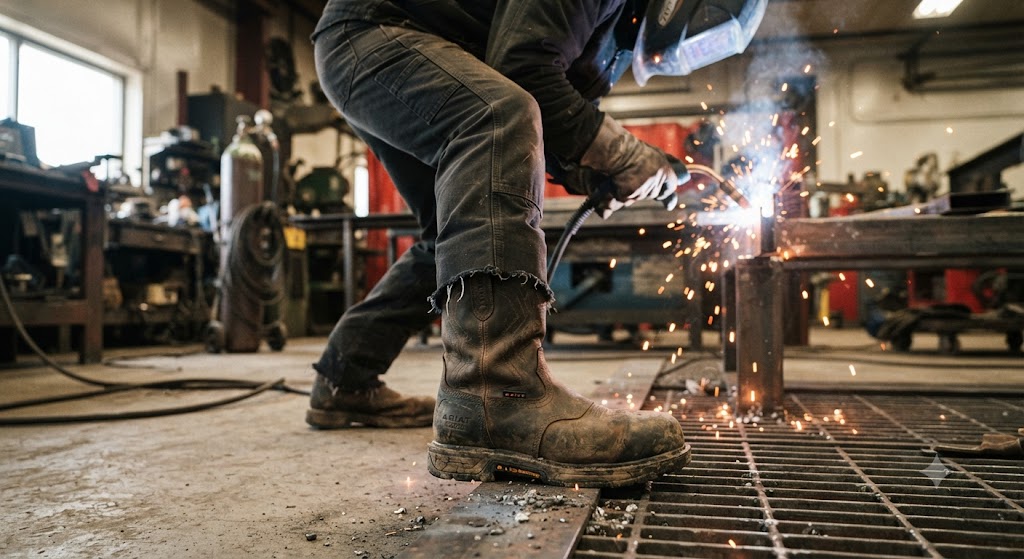
Coverage is the whole job of the jacket. A sleeve that is an inch short exposes your wrist every time you extend your arm, and the wrist is a tender, often-burned spot. A body that is too short rides up when you sit to weld and leaves your lap unprotected. Fit is how the jacket keeps doing its job while you actually work, not just while you stand still.
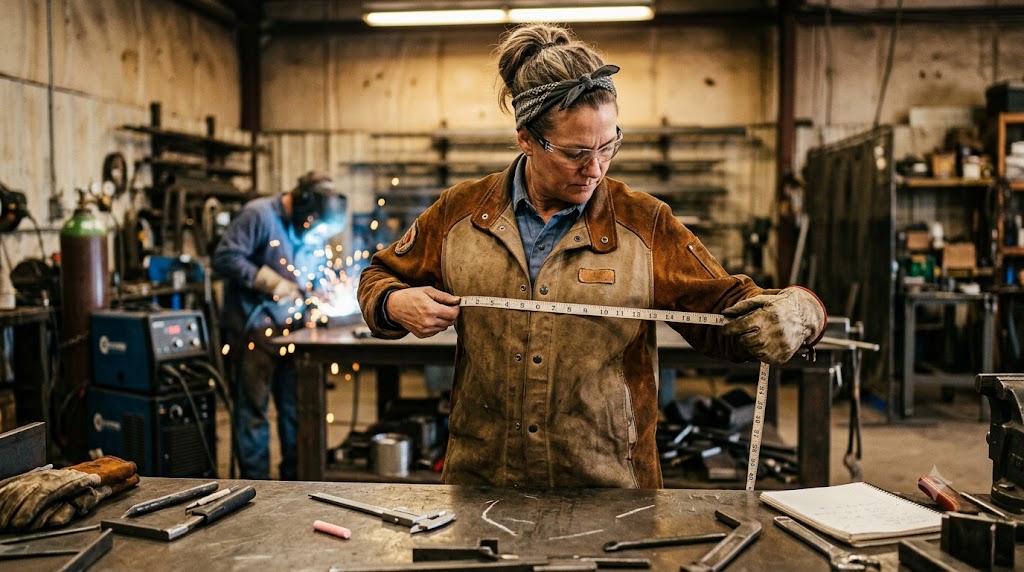
How to measure yourself in two numbers
You need a soft cloth tape and, ideally, a friend to read it.
- Chest: measure under the armpits, around the fullest part of your chest, keeping the tape level. Do not puff up or suck in.
- Sleeve: bend your elbow, then measure from the nape of your neck, across the shoulder, around the elbow, and down to your wrist bone.
Those two measurements drive every welding jacket size chart worth trusting. Measure over a t-shirt, not a heavy sweater, and record the numbers in inches.
Reading a brand size chart (they are not all the same)
Here is the part that trips people up: sizing is not standard across brands, so a Large in one line is not a Large in another. Always pull the specific maker’s chart before you buy.
As a real example, Black Stallion’s men’s chart maps chest ranges like this: Small 33 to 37 inches, Medium 37 to 41, Large 41 to 45, XL 45 to 49, 2XL 49 to 53, with sleeve length climbing from about 33 inches at Small to 36 and beyond on the bigger sizes. Tillman publishes its own chart with jacket lengths measured from the nape to the hem, and Lincoln and Miller each print theirs. The numbers differ enough that guessing by your t-shirt size will burn you.
The layering rule: when in doubt, size up
Most sizing guides, including Lapco’s, give the same advice for a reason: if you land between two sizes, choose the larger one. A welding jacket is outerwear. You will wear a shirt under it, sometimes a hoodie in a cold shop, and you need to raise both arms overhead without the jacket pinning your shoulders. A slightly roomy jacket you can move in beats a snug one that binds every time you reach.
There is a limit, though. Too big is its own hazard, so size up one step, not two.
Leather versus FR cotton: the fit feels different
Leather jackets tend to run stiffer and can feel smaller until the hide breaks in, so account for a few wears before they soften to your shape. FR cotton is more forgiving out of the bag but can shrink slightly on the first wash, so follow the care label and do not run it hot. If you are between a leather size, the break-in usually earns you a little room, which is another quiet vote for sizing up.
Common fit mistakes to avoid
- Buying by your shirt size instead of measuring. Jackets are cut with room for movement and layers, so the numbers rarely match your street size.
- Ignoring sleeve length. A jacket can fit your chest and still leave your wrists exposed, which is the most common real-world burn.
- Forgetting the collar. A stand-up welder’s collar only protects your neck if the jacket sits right on your shoulders.
The verdict
Get two numbers, chest and sleeve, then trust the specific brand’s chart over your instinct. Size up when you are on the fence so you can layer and reach, account for leather break-in and FR cotton shrinkage, and never let a good chest fit distract you from a short sleeve. Do that and the jacket will actually cover you while you work, which is the only fit that counts.
Frequently asked questions
How should a welding jacket fit? Roomy enough to raise both arms overhead over a shirt or light layer, with sleeves that reach your wrist bone when your arm is extended and a body long enough to cover your lap when seated.
How do I measure for a welding jacket? Measure your chest at the fullest point, level and relaxed, and your sleeve from the nape of your neck, around a bent elbow, to the wrist. Match both to the brand’s chart.
Should welding jackets be tight or loose? Neither extreme. Aim for a close but mobile fit. If you are between sizes, size up so you can layer and move without binding.
Do welding jackets shrink? FR cotton can shrink slightly on the first wash, so follow the care label and avoid hot water and high heat drying. Leather does not shrink but stiffens until broken in.
Is a Large the same across brands? No. Black Stallion, Tillman, Lincoln, and Miller each use their own chart. Always check the maker’s specific size chart before buying.
Why does sleeve length matter so much? Because an extended arm is exactly when spatter reaches your wrist. A short sleeve that fits your chest still leaves the most vulnerable spot exposed.
References
- Black Stallion, Jackets and Shirts Size Chart (manufacturer sizing): https://www.blackstallion.com/resource-hub/size-charts.html
- Tillman, Sizing Chart (manufacturer PDF): https://jtillman.com/wp-content/uploads/2021/05/Tillman_Sizing_Chart.pdf
- Miller Electric, How to Choose the Proper Welding Apparel for Safety: https://www.millerwelds.com/en-US/resources/knowledge-hub/welding-safety/how-to-choose-the-proper-welding-apparel-for-safety
URL slug: welding-jacket-sizing-and-fit-guide Excerpt: A welding jacket that fits wrong is a jacket that burns you. Learn the two measurements that matter, why brand charts differ, when to size up for layering, and how leather and FR cotton fit differently.