Welding Jacket Stiff Break-In Guide: How to Soften Leather and FR Cotton
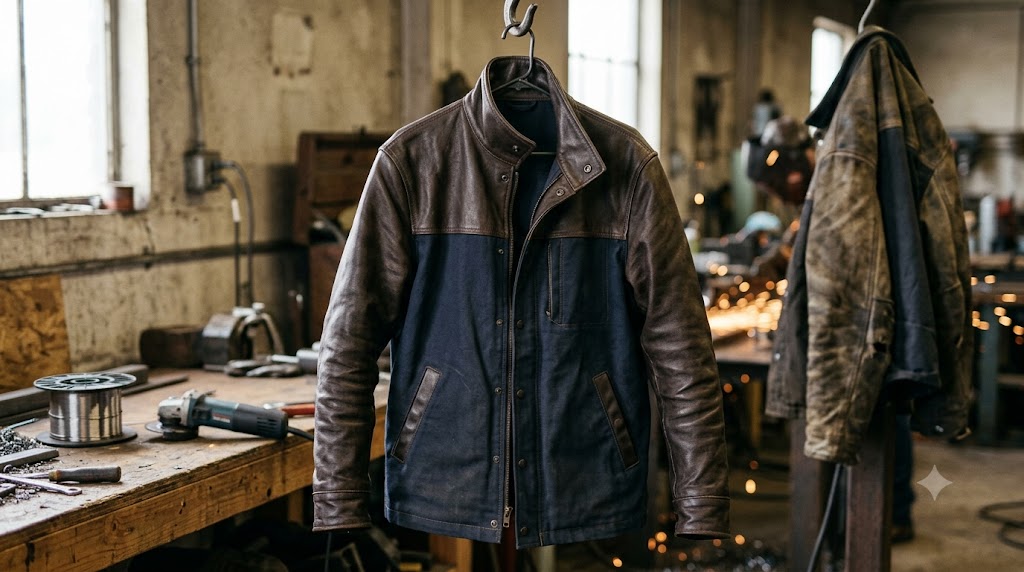
A new welding jacket that feels like wearing a piece of plywood is a right of passage, but it does not have to stay that way for long. Whether your jacket is leather or FR cotton, there is a method to break it in without wrecking the material or stripping the flame resistance that makes it worth wearing. This welding jacket stiff break-in guide covers both materials, because the approach differs and using the wrong method can do real damage.
Why New Welding Jackets Are Stiff
Leather jackets are stiff when new because the tanning process leaves the leather fibres dense and dry, and the jacket has not yet conformed to the shape of your body. The stiffer the hide, the heavier the protection: the trade is always dexterity for durability, and the stiffness is a sign of a jacket built for real heat rather than comfort at the rack.
FR cotton jackets are stiff because untreated or newly treated FR cotton fabric has a denser weave and treatment layer that softens with washing and use, similar to a heavy canvas work shirt on its first wear.
Breaking In a Leather Welding Jacket
1. Clean it first. Spot-clean the jacket with a barely damp cloth and a small amount of mild soap. Do not soak it, because soaking a leather welding jacket can make it go rigid, lose its shape, or develop mold as it dries.[^https://waylanderwelding.com/blog/top-leather-welding-jacket-questions]
2. Condition the leather. Apply a leather conditioner or neatsfoot oil to the stiff areas, working it into the grain with a clean rag. Conditioning replenishes moisture in the leather fibres and makes them more pliable. Focus on the sleeves, elbows, and any crease points where stiffness is worst.[^https://waylanderwelding.com/blog/top-leather-welding-jacket-questions]
3. Wear it. This is irreplaceable. The only way to truly break in a leather jacket is to wear it so that it molds to your own movement and posture. Wear it around the shop for short sessions first, flex your arms, rotate your shoulders, move the way you do when you weld. Each session the leather relaxes a little more.[^https://waylanderwelding.com/blog/how-to-clean-leather-welding-jackets]
4. Store it flat on a hanger. Never leave a leather jacket crumpled or compressed. Hang it on a wide hanger so the shoulders and arms keep their natural shape while they dry and settle.
What Not to Do to a Leather Jacket
Do not machine wash a leather welding jacket. Do not soak it in water. Do not apply fabric softener. Do not dry it in a dryer or with direct heat from a heat gun. All of these either stiffen the leather further, cause it to shrink and harden, or crack it at the creases.[^https://waylanderwelding.com/blog/top-leather-welding-jacket-questions]
One method welders mention for general leather is rubbing in a little neatsfoot oil or mink oil heavily, then working the jacket over a door edge or curved surface while it is damp. This does work, but use conditioner rather than motor oil or petroleum products, which can degrade some leathers and attract heat.
Breaking In an FR Cotton Welding Jacket
FR cotton is simpler. Wash it according to the manufacturer’s instructions: usually warm (not hot), no bleach, no fabric softener (fabric softener coats the fibres and can reduce flame resistance), and tumble dry low. The fabric softens naturally with washing and body heat during wear. Each wash cycle loosens the weave slightly. By the third or fourth washing, most FR jackets feel noticeably more pliable.[^https://woahbros.us/blogs/woahbros-welding-blog/the-complete-guide-to-washing-and-caring-for-fr-clothing]
Who should skip aggressive conditioning: owners of very new premium leather jackets covered by a care-and-use warranty. Check the warranty first, because some specify the only approved conditioners, and using the wrong product can void coverage.
The Honest Expectation
No conditioning accelerates break-in to a single day. A good leather jacket takes weeks of regular wear to truly conform to your body, and that is the price of the protection level it offers. Think of the stiffness not as a defect but as a measurement of the jacket doing its job before it has had time to adapt to you.
The Bottom Line
Breaking in a stiff welding jacket takes two things working together: leather conditioner to open the fibres, and wear to let the jacket conform to your movement. For leather, skip the water soak and the dryer, and condition before you wear. For FR cotton, let regular low-heat washing do the work and never use fabric softener. The jacket that felt like armour on day one will feel like a second skin by week three, and the protection that made it stiff is still fully intact.
Frequently Asked Questions
How do I soften a stiff new leather welding jacket? Apply a leather conditioner to the stiff areas after spot-cleaning, then wear the jacket regularly. Wearing is the real break-in, and the conditioner makes the process faster by replenishing moisture in the leather fibres.
Can I machine wash a leather welding jacket? No. Machine washing can make leather go rigid, lose its shape, or develop mold. Spot clean with a barely damp cloth and mild soap.
Can I put a leather welding jacket in the dryer? No. Dryer heat dries and cracks leather. Hang it on a wide hanger and air dry.
Will soaking a leather jacket in water soften it? Briefly, but as it dries it typically goes rigid and can develop mold. Use conditioner and wear instead.
How do I break in an FR cotton welding jacket? Wash it warm on gentle (no bleach, no fabric softener) and tumble dry low. The fabric softens naturally with washing and regular wear over a few cycles.
Why can’t I use fabric softener on an FR jacket? Fabric softener coats fibres and can reduce the flame resistance of FR-treated cotton, which defeats the purpose of the jacket.
How long does it take to fully break in a leather welding jacket? Weeks of regular wear, depending on the weight of the leather. Conditioning helps, but conforming to your body shape takes repeated movement and body heat.
References
- Top Leather Welding Jacket Questions (Waylander Welding, soak risk, conditioning and softening): https://waylanderwelding.com/blog/top-leather-welding-jacket-questions
- How to Clean Leather Welding Jackets (Waylander Welding, wear as break-in): https://waylanderwelding.com/blog/how-to-clean-leather-welding-jackets
- The Complete Guide to Washing and Caring for FR Clothing (WoahBros, FR care rules): https://woahbros.us/blogs/woahbros-welding-blog/the-complete-guide-to-washing-and-caring-for-fr-clothing