Welding Pants Buying Guide
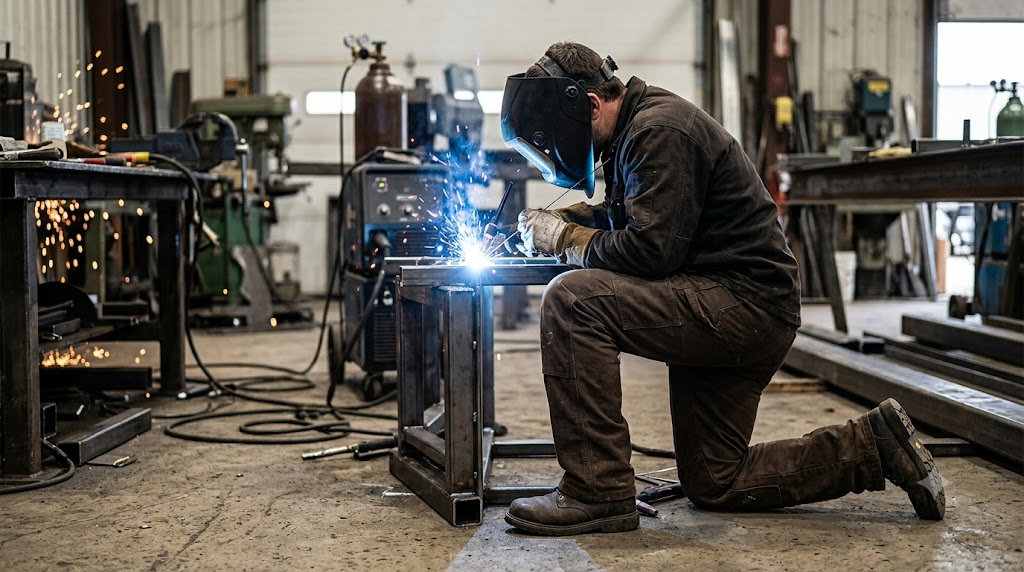
The first pair of pants I ever ruined in a shop were my favorite jeans, the soft broken-in kind you never want to throw away. I was tacking a bracket overhead, a fat glob of slag rolled off, landed on my thigh, and sat there quietly melting a hole clean through the denim while I finished the bead. That was the day I learned that not all welding pants are created equal, and that the wrong pair can turn a good day into a burn clinic visit. If you weld for a living or even just weekends in the garage, the pants you pick matter almost as much as your hood. Let me walk you through what actually keeps you safe, what marketing wants you to believe, and which pairs I trust on real jobs.
What Welding Pants Actually Are
Welding pants are heavy-duty work pants built to resist sparks, spatter, slag, and radiant heat while you stand, kneel, and crouch near an arc. They come in two broad camps. The first is flame-resistant, usually shortened to FR, which means the fabric is engineered or treated so it will not sustain a flame after the ignition source leaves. When spatter hits FR fabric, it may char but it self-extinguishes instead of feeding a fire on your leg.
The second camp is heavyweight natural-fiber pants that are not certified FR but still resist burn-through far better than street clothes. Think 100% cotton duck, thick denim, or canvas. Cotton chars and smolders rather than melting, so it buys you time even without FR treatment. What you must never wear is anything with polyester, nylon, or spandex blended in. Synthetics melt, stick to skin, and cause deeper burns. That single rule separates safe pants from dangerous ones, and it is the reason your favorite stretchy work pants have no business near a torch.
Do You Need FR Welding Pants or Will Cotton Work
Here is the straight answer you came for. If you weld professionally, work under an arc-rated dress code, or do any high-amperage, high-spatter, or overhead work, get certified FR pants that meet NFPA 2112 with a stated arc rating. It is not overkill, it is the standard your safety officer will hold you to, and it is what protects you in a flash fire.
If you are a hobbyist doing light MIG or stick work in a home shop, honest truth, heavyweight 100% cotton duck or thick denim will protect you from the vast majority of falling spatter and slag. Cotton does not melt, and a 12 ounce to 14 ounce cotton pant shrugs off most rolling BBs of hot metal. Plenty of career welders wore nothing fancier for decades.
That said, untreated cotton will still catch fire if enough heat sits on it long enough. FR fabric is the difference between a char mark and a pant leg that keeps burning after you have already felt the sting. So the tiebreaker is exposure. Occasional sparks, cotton is fine. Sustained heat, heavy spatter, confined spaces, or any employer requirement, go FR and do not think twice. My own rule after that ruined-jeans day is simple. If I am getting paid, I am in FR.
Fabric Choices: Denim vs Duck vs Canvas
The base fabric shapes how the pants feel and how they wear over time.
Denim is the everyday favorite. It breathes reasonably well, moves with you, and in FR form it looks close enough to normal jeans that you can run to the supply house without feeling like a walking hazmat sign. It is my default for all-day wear.
Cotton duck is the tank of work fabrics. It is dense, stiff at first, and takes real time to break in, but it stands up to abrasion, kneeling on concrete, and dragging across sheet metal edges. If you are hard on your knees and thighs, duck lasts.
Canvas splits the difference, tough but a little more flexible than duck. Whatever you choose, weight matters. Look for midweight fabric around 7 ounces per square yard as a comfortable all-arounder, and heavier 10 ounce and up when you want maximum protection and durability over comfort.
Fit and Details That Keep You Safe
Fabric is only half the story. The cut of the pant decides whether a spark lands harmlessly or finds your skin.
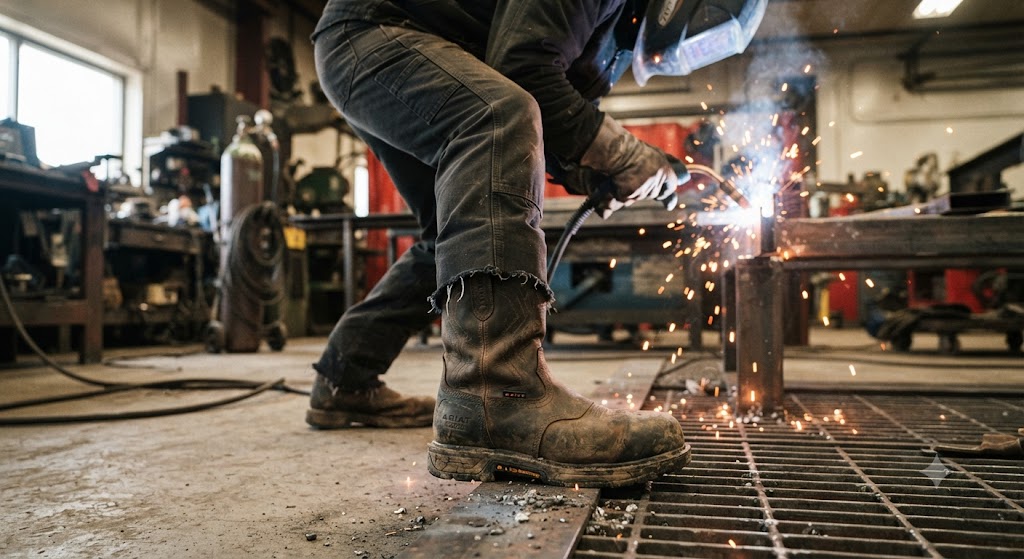
Go boot-cut or straight-leg so the hem drapes over the top of your boots. A tapered ankle exposes the boot opening, and that gap is exactly where a rolling BB likes to settle against your sock. A leg that covers the boot top sheds spatter to the floor.
Never wear cuffs. A folded cuff is a spark trap, a little shelf that catches hot metal and holds it against you. If your pants have cuffs, they are the wrong pants for welding.
Watch the fit. Too tight and the fabric sits right against your skin, so heat transfers faster and you lose mobility for kneeling and climbing. Too baggy and you snag on everything and trip on grating. Aim for a relaxed but not sloppy fit. Also mind the pockets. Big open cargo pockets can catch spatter, so if you love cargo styling, get a design with covered or flapped pockets.
For heavy overhead or out-of-position work, add leather welding chaps over your pants for a sacrificial layer that takes the worst of the abuse. And to be clear, plain 100% cotton duck non-FR pants are a legitimate budget option for light work, just know their limits.
Understanding NFPA 2112 and Arc Ratings
Two standards come up constantly, and you should know what they mean before you spend a dime.
NFPA 2112 is the standard for flame-resistant garments protecting industrial workers against short-duration flash fire. Pants certified to it have passed thermal and flame testing, so this is the label you want if your worksite demands FR.
Arc rating, often shown as ATPV in calories per square centimeter, tells you how much thermal energy the fabric can block before you would suffer a second-degree burn. Higher numbers mean more protection. This matters most where an arc flash is a real risk, such as electrical-adjacent work. For general welding, an NFPA 2112 pant with a modest arc rating covers the majority of shops. If your safety manager gives you a required minimum arc rating, that number wins over anything I say here.
My Top Welding Pants Picks
I have worn, borrowed, or watched crewmates run every category below. Here is where each pair earns its keep and where it falls short.
Carhartt FR Relaxed Straight Rigby Pant
This is the pair I hand a new welder who wants one do-everything option. FR-rated, relaxed straight leg that sits nicely over boots, and Carhartt’s build quality means the seams do not blow out in a month.
Verdict: the best all-around FR pant for daily shop use. Honest flaw: the fabric runs on the lighter, softer side, so if you kneel on rough concrete constantly, the knees wear faster than heavy duck. Who should skip it: pipeline and heavy structural welders who abuse their knees all day and want maximum ruggedness over comfort.
Wrangler Riggs Workwear FR Advanced Comfort Relaxed Jean
If comfort keeps you from wearing FR, this is your fix. Wrangler built these with a softer, more flexible FR denim that feels closer to regular jeans, so you actually keep them on all shift.
Verdict: the most comfortable FR jean here, great for long days on your feet. Honest flaw: that comfort-first denim is not the most abrasion-resistant, so expect them to look worn sooner than a stiff duck pant. Who should skip it: anyone who values armor over comfort or drags across sharp edges all day.
Ariat FR M4 Low Rise Boot Cut Jean
Ariat nailed the boot-cut geometry. The leg opening genuinely covers boot tops, which is exactly what you want for shedding spatter, and the low rise plus boot cut looks sharp enough to wear off the clock.
Verdict: the best boot-cut fit for keeping sparks out of your boots. Honest flaw: the low rise can gap at the back when you squat, so if you crouch a lot you may want an undershirt tucked in. Who should skip it: welders who prefer a higher waist for full coverage when bending.
Lapco FR Modern Jeans
Lapco is a welding-supply staple for a reason. These lean toward the traditional heavier FR denim, so you get serious protection and a slightly more structured feel that holds up to daily grind.
Verdict: the best value in dependable, no-nonsense FR denim. Honest flaw: the stiffer fabric needs a real break-in period, so the first week is not the softest. Who should skip it: anyone who wants that broken-in feel right out of the bag.
BOCOMAL FR Cargo Pants Midweight 7.5oz
When you carry tools, tips, and a soapstone everywhere, cargo pockets earn their place. These midweight 7.5 ounce FR cargos give you storage plus flame resistance in a relaxed, roomy cut.
Verdict: the best FR option for tool-toting welders who want pockets. Honest flaw: cargo pockets sit on the outside of the thigh where spatter can land, so you need to be mindful of what you stash and how you position. Who should skip it: precision fab welders in tight spaces who do not want extra bulk snagging on fixtures.
How the Five Compare
| Pant | Fabric | Weight | FR Type | Fit | Best Use |
|---|---|---|---|---|---|
| Carhartt FR Rigby | FR cotton denim | Midweight | Certified FR | Relaxed straight | All-around daily shop work |
| Wrangler Riggs FR Advanced Comfort | FR denim, flex | Mid to light | Certified FR | Relaxed | Long shifts, comfort priority |
| Ariat FR M4 | FR denim | Midweight | Certified FR | Low rise boot cut | Covering boot tops from spatter |
| Lapco FR Modern | FR denim | Mid to heavy | Certified FR | Modern straight | Value and rugged daily FR |
| BOCOMAL FR Cargo | FR cotton | Midweight 7.5oz | Certified FR | Relaxed cargo | Carrying tools with FR coverage |
The Bottom Line on Picking Your Pair
If you want one pair that does almost everything and you are not sure where to start, buy the Carhartt FR Rigby and get to work. If comfort is the reason you keep skipping FR, the Wrangler Riggs Advanced Comfort will change your mind. Want sparks kept out of your boots, go Ariat boot cut. Want the most protection per dollar, the Lapco is the honest workhorse. And if your pockets are always stuffed, the BOCOMAL cargos carry the load. Whatever you pick, follow the two rules that day with the ruined jeans burned into me: never wear synthetics near an arc, and cover your boot tops. Do that, add chaps when the work gets nasty, and your legs will thank you at the end of every shift.
Frequently Asked Questions
Are regular jeans okay for welding? Only if they are 100% cotton and heavyweight. Cotton chars instead of melting, so thick denim handles light spatter. Any jean with polyester, nylon, or spandex is dangerous because synthetics melt onto skin. For paid or heavy work, use certified FR pants.
What does FR actually mean? FR stands for flame resistant. The fabric is engineered or treated so it self-extinguishes once the ignition source is removed. It will still char, but it will not keep burning on your leg the way untreated fabric can.
Do I really need NFPA 2112 pants? If your employer requires it, yes, without question. For high-amperage, overhead, or heavy-spatter work, it is strongly recommended. For light hobby welding, heavyweight cotton is a reasonable budget path, though it offers less protection than certified FR.
Why boot cut instead of tapered legs? A boot-cut or straight leg drapes over the top of your boots so rolling spatter falls to the floor. Tapered legs leave the boot opening exposed, and that gap is where hot metal likes to settle against your sock.
Why no cuffs on welding pants? A folded cuff is a shelf that catches and holds hot spatter against your ankle. That is a burn waiting to happen. Always wear a plain hem for welding.
How heavy should the fabric be? Around 7 ounces per square yard is a comfortable all-day midweight. Step up to 10 ounces and heavier when you want maximum protection and abrasion resistance and are willing to trade some comfort.
Can I just wear leather chaps over normal pants? Chaps are an excellent sacrificial layer for heavy or out-of-position work, but they leave the back of your legs and seat exposed. Wear them over proper FR or heavyweight cotton pants, not over synthetics.
How long do FR pants stay flame resistant? Inherent FR fabrics keep their protection for the life of the garment. Treated FR can degrade with improper washing, so follow the care label, skip bleach and fabric softener, and retire pants once they are heavily worn or contaminated with flammable residue.
References
https://www.osha.gov/ https://www.nfpa.org/ https://www.aws.org/ https://www.cdc.gov/niosh/
SEO Title: Welding Pants Buying Guide: FR Picks